


Inlaid Rosewood Tea Table
An inlaid rosewood tea table combines rich tropical timber with precise decorative work, offering a sophisticated surface for entertaining and display.

Inlaid Rosewood Tea Table
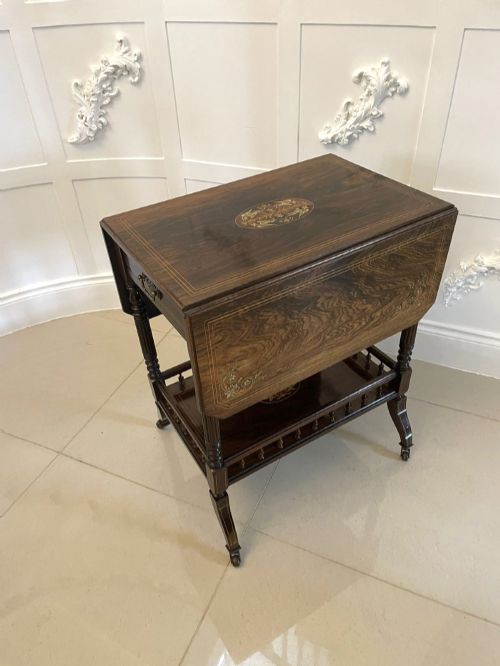
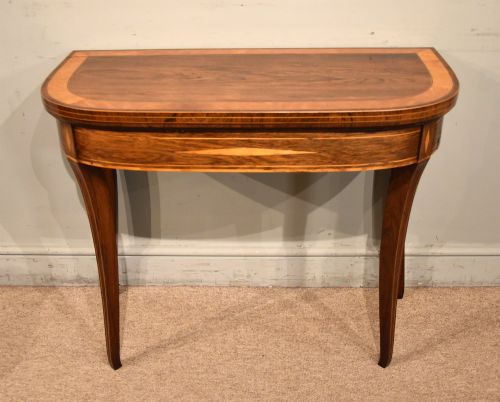
An inlaid rosewood tea table appears in various guises across the Georgian, Regency, Victorian, and Edwardian eras. Buyers encounter fold-over card tables, occasional tables, and drop-leaf forms alongside specialised tea tables designed for period drawing rooms.
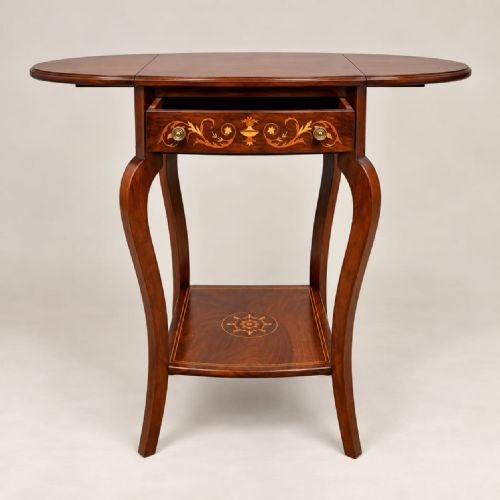
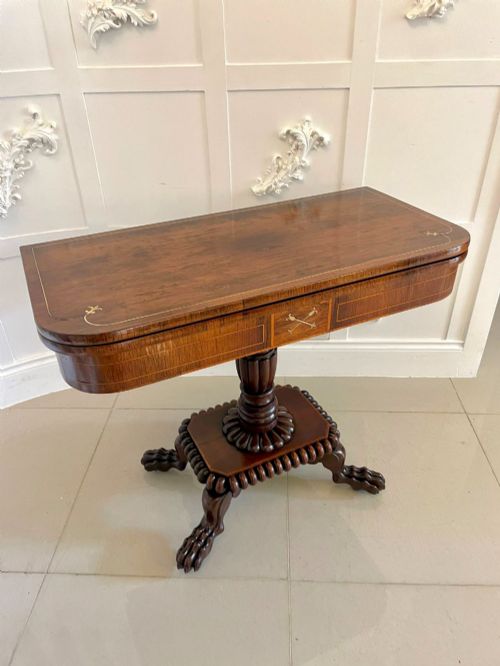
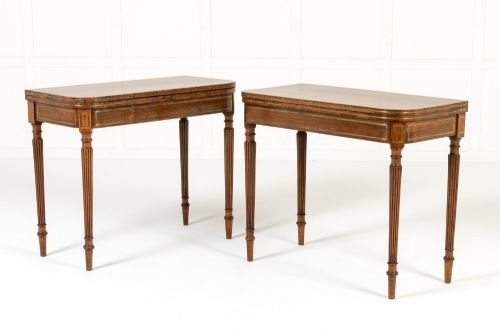
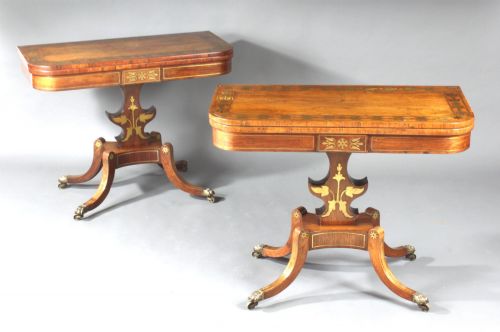
The selection ranges from early nineteenth-century Regency pieces featuring formal brass stringing to late nineteenth-century Anglo-Indian creations and Edwardian marquetry designs. These pieces function as centre tables, games tables, or side tables within traditional and modern interiors alike.
Materials and construction
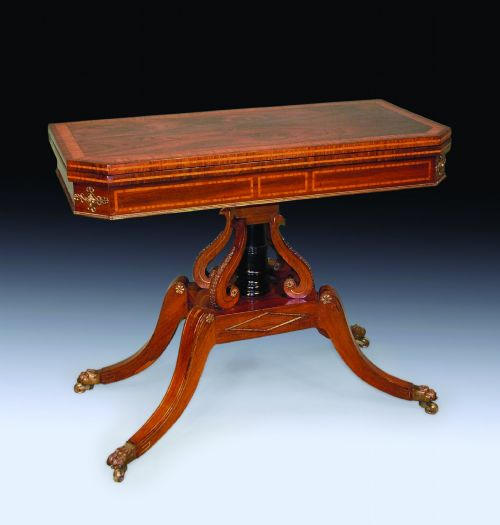
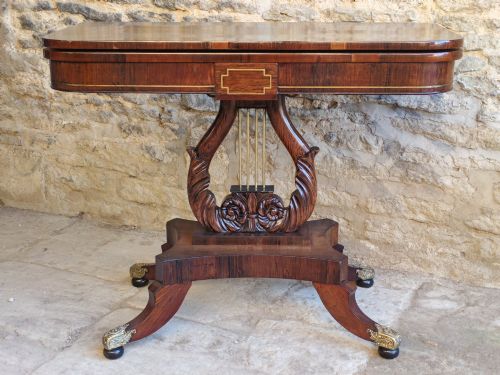
Cabinet makers utilised dense rosewood as a primary ground, often embellishing the dark timber with contrasting satinwood, boxwood, and mother-of-pearl inlay. Brass stripwork and fine stringing delineate the edges and surfaces of Regency examples.
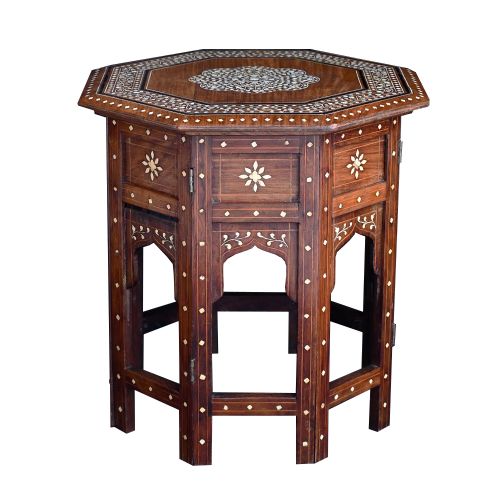
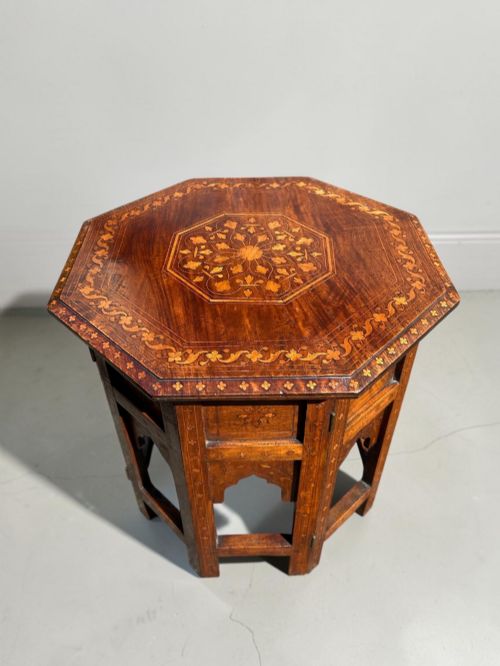
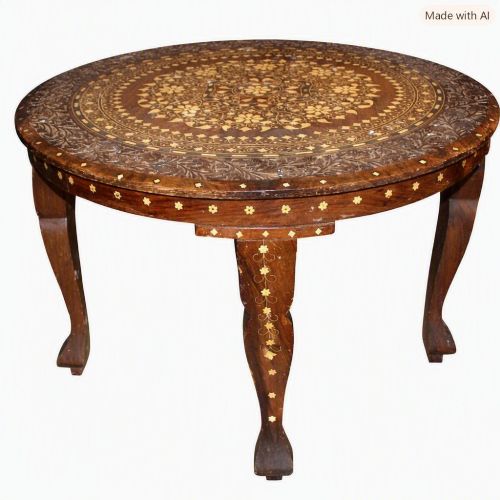
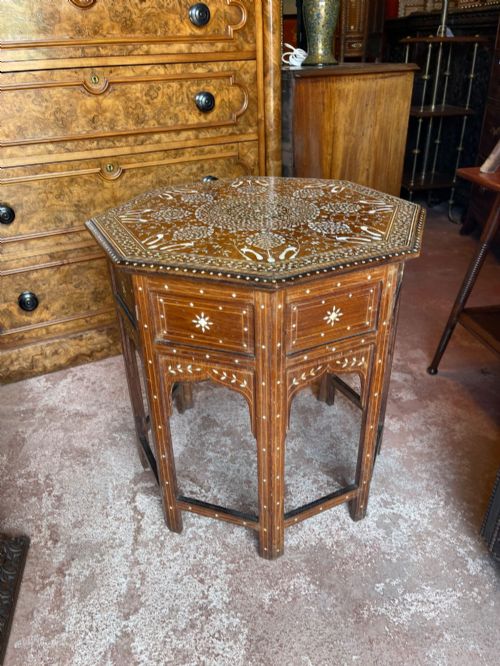
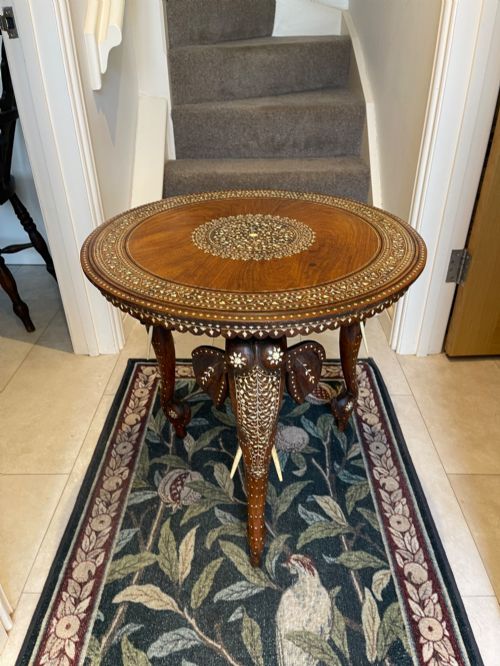
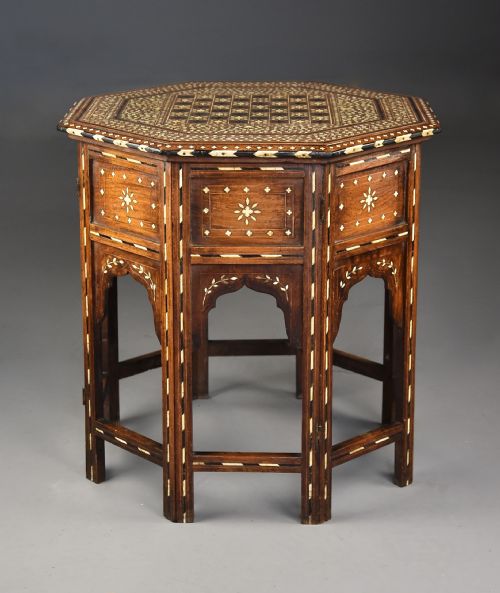
Anglo-Indian pieces incorporate intricate bone inlay and deep carving across octagonal and circular table forms. Specialised work includes marquetry floral motifs and sturdy pedestal or scroll bases fitted with castors and sabots.
Recorded forms include card tables, drop-leaf occasional tables, octagonal Hoshiarpur pieces, and swivel-top games tables.
Assessing craftsmanship
The standard of an inlaid rosewood tea table rests on the crispness of the timber preparation and the precision of the contrasting inlays. Superior examples display seamless integration of brass, satinwood, or bone without gaps along the joints and borders.
Structural integrity in the pivoting mechanisms, pedestals, and fold-over hinges separates utilitarian furniture from finer cabinet work. Balance in the carving and restraint in the decorative scheme distinguish workshop output of higher distinction.
George Bullock·Edwards & Roberts·Liberty & Co
The Inlaid Rosewood Tea Table Glossary
- Rosewood
- A dense, heavily figured dark timber favoured for fine cabinet making and decorative veneers. Its natural oil content and deep grain provide a rich visual foundation for contrasting inlay.
- Marquetry
- The art of creating decorative patterns on furniture using thin veneers of various woods, shells, or metals. Craftsmen fit these elements together meticulously to form pictorial or geometric designs.
- Stringing
- Thin lines of contrasting timber or light-coloured wood inlaid into channels on a furniture surface. This technique outlines panels, borders, and table edges to define the form.
- Sabot
- A metal sleeve or mount fitted to the foot of a furniture leg for protection and ornamentation. In Regency work, these are typically cast in brass to match other hardware.
- Drop leaf
- A table top featuring hinged flaps that fold down on either side to save space. Brackets or swing legs support the leaves when raised for use.
Inlaid Rosewood Tea Table: Frequently Asked Questions
How do I date a rosewood tea table?
Dating relies on stylistic markers such as pedestal bases, brass stringing, and the complexity of the inlay work. Regency examples often feature bold brass mounts and scroll supports, while Edwardian pieces lean toward lighter marquetry.
Examining the secondary timbers underneath and the construction methods used in the hinges or pivot mechanism further clarifies the period of manufacture.
Were these tables used only for tea?
While designated as tea tables, many fold-over examples served a dual purpose for card games and social gatherings. The clever mechanism allowed households to clear or expand the surface area as occasions demanded.
Occasional tables and centre tables were later adapted for general display and reading within the formal rooms of the house.
How do I care for antique rosewood?
Rosewood benefits from stable indoor humidity and protection from direct sunlight to prevent the dark grain from fading. Regular dusting with a soft, dry cloth preserves the polished finish without the need for heavy chemical polishes.
Maintaining consistent room temperatures prevents the timber and delicate inlaid veneers from shrinking or cracking over time.
What is the difference between Regency and Edwardian pieces?
Regency tables tend to feature bold architectural forms, brass inlay, and dark rosewood surfaces designed with formal symmetry. Edwardian interpretations often present lighter proportions, intricate floral marquetry, and broader stylistic influences.
Understanding these shifts in taste helps collectors distinguish between early nineteenth-century craftsmanship and later revival pieces.