




Octagonal Wooden Coffee Table
An octagonal wooden coffee table brings geometric warmth and intricate global craftsmanship into a room.

Octagonal Wooden Coffee Table
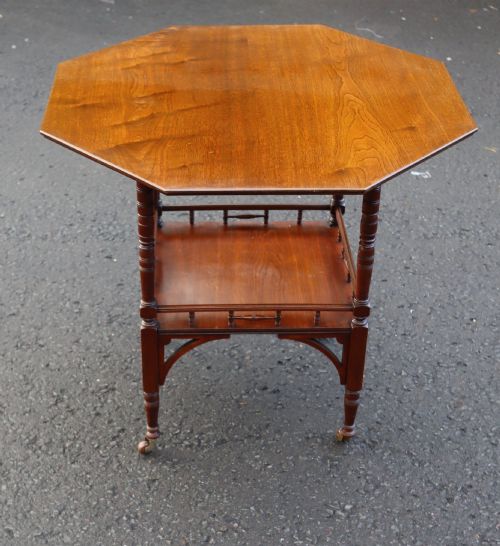
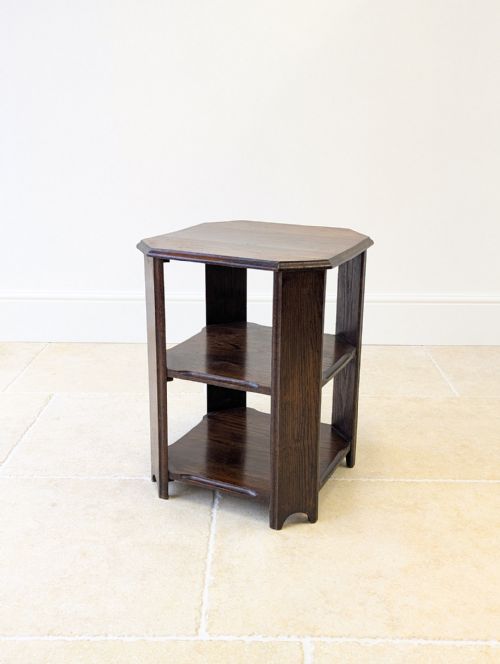
When searching for an octagonal wooden coffee table, one encounters a fascinating convergence of Victorian British tastes and traditional eastern craftsmanship. These low and occasional tables frequently originate from colonial workshops in India, Burma, and North Africa, alongside domestic British interpretations from the Arts and Crafts and Art Deco movements.
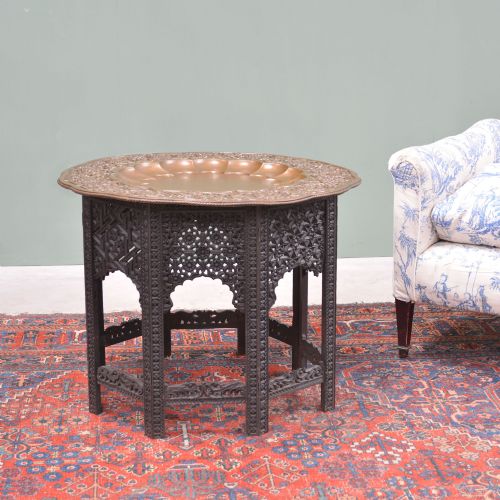
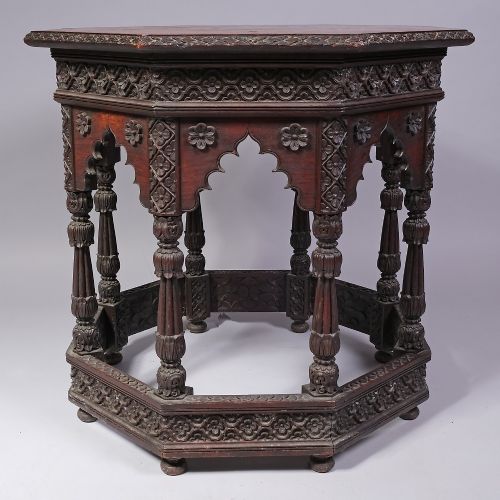
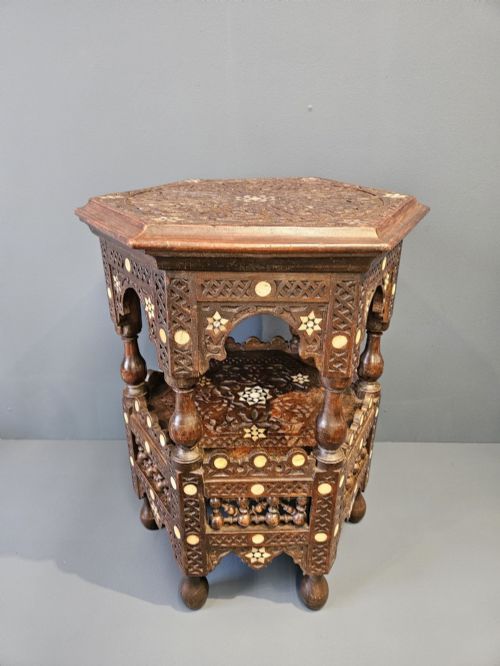
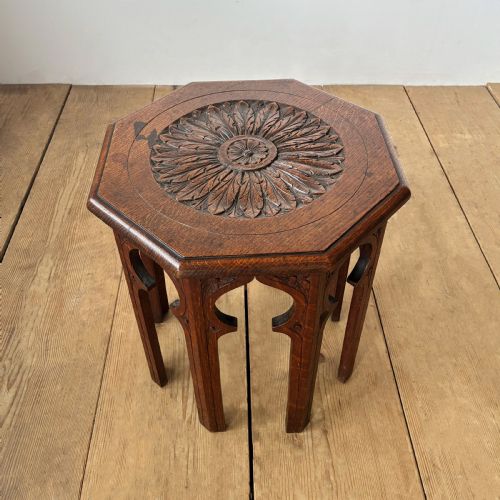
The selection on this page relies heavily on nineteenth-century and early twentieth-century examples, spanning the Victorian era through to the nineteen-thirties. Forms range from folding Damascus tables and tray top designs to substantial carved hardwood pieces featuring animal motifs or intricate geometric bases.
Materials extend beyond standard timber to incorporate exotic hardwoods embellished with contrasting metals, bone, and shell. Buyers find everything from heavy teak and padauk to ebonised wood and walnut, often shaped with eight-sided tops specifically designed to anchor a central seating arrangement.
How they were made
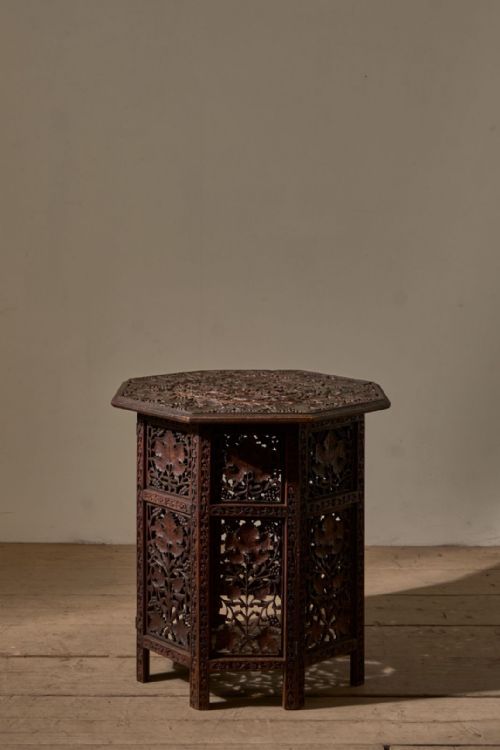
Construction relies on a combination of dense indigenous timbers and European framing techniques, utilising solid hardwoods like teak, rosewood, oak, and walnut. Many pieces employ collapsible folding bases formed from interlocking wooden panels that require no metal hinges.
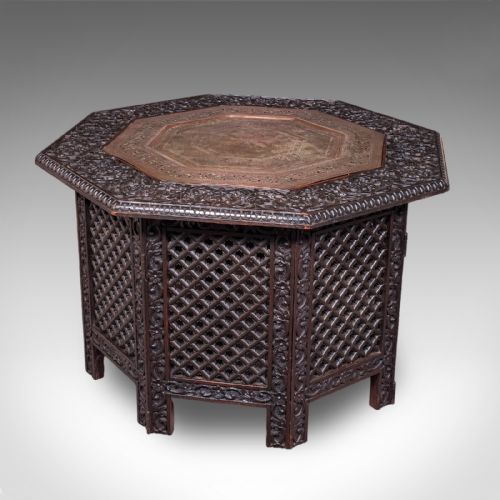
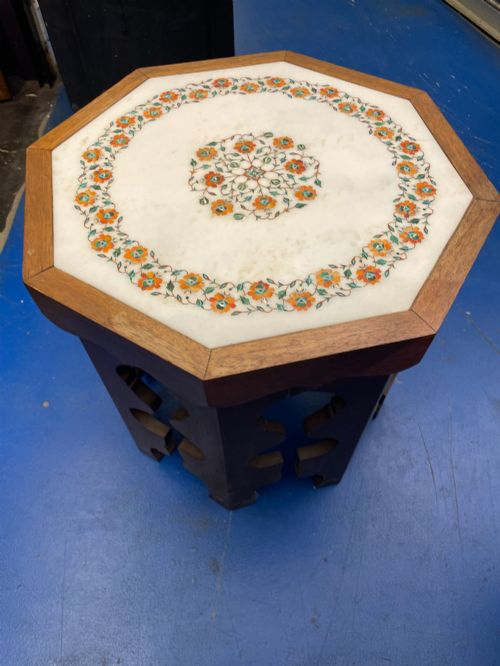
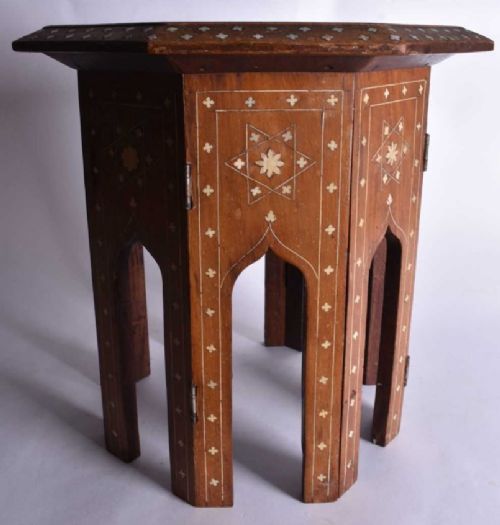
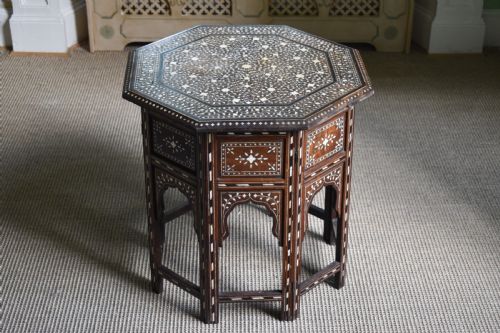
Surface ornamentation defines the group, featuring deep hand-carving alongside intricate marquetry and inlay work. Artisans set brass, copper, bone, and mother-of-pearl into carved recesses within the wood, creating striking contrasts of tone and texture.
Octagonal Wooden Coffee Table Retail Price Guide 2026
Typical asking prices for octagonal wooden coffee table among the pieces listed under this phrase on Sellingantiques today, from the lower quarter to the upper quarter. They describe what is for sale here now, not the wider market.
Several unusual nineteenth-century examples feature carved elephant figures and camel shapes supporting the octagonal tops.
What varies in quality
Quality rests in the precision of the joinery and the depth of the carving. Superior examples display crisp, undercut wooden relief work and tightly fitted inlay where metal or shell sits flush with the surrounding timber rather than relying on heavy adhesive.
The integrity of the structural base dictates durability, particularly on folding or multi-panel frames where inferior hinges or warped wood cause instability. Finer pieces maintain structural alignment through seasoned timber that resists seasonal movement.
Liberty And Co·Gillows
The Octagonal Wooden Coffee Table Glossary
- Anglo-Indian
- A descriptive term for furniture made in India during the British colonial period, combining traditional local forms with European requirements. These items often showcase exceptional indigenous carving skills.
- Hoshiarpur
- A town in Punjab renowned for intricate woodwork involving delicate inlay of brass, copper, or bone into shisham or walnut timber. Pieces from this region are instantly recognizable by their dense geometric patterns.
- Ebonised
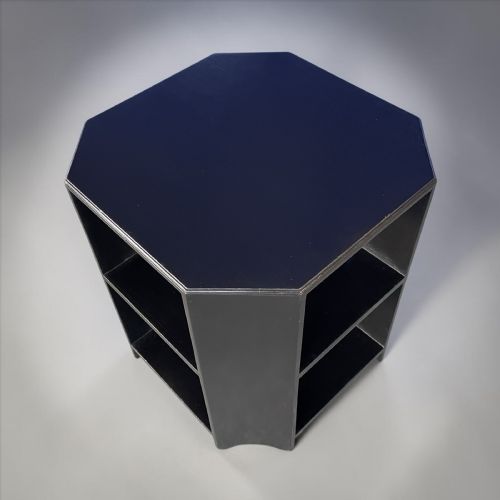
- Wood that has been chemically treated or stained to resemble expensive ebony. This finish was widely utilised during the Victorian era and later revived during the Art Deco period for dramatic contrast.
- Padauk
- A heavy, durable tropical hardwood prized for its rich reddish-brown colour and stability. It was frequently selected by makers of nineteenth-century colonial campaign and side furniture.
Octagonal Wooden Coffee Table: Frequently Asked Questions
Are folding tables stable enough for daily use?
Many eastern tables utilise an ingenious interlocking panel system that forms a remarkably rigid base when fully assembled. They hold drinks and books securely without needing metal hardware.
However, one should handle the hinges and pivot points with care during relocation to preserve the original wooden joints.
How do I care for inlaid wooden surfaces?
Maintain the wood and metal inlay by applying a minimal amount of microcrystalline wax rather than liquid polish. This protects the grain and prevents moisture from loosening tiny pieces of brass or bone.
Keep these tables away from direct heat sources to prevent the dry climate from shrinking the timber and causing inlays to lift.
What is the difference between Moorish and Anglo-Indian styles?
Moorish style tables typically draw inspiration from Islamic architecture, featuring pointed arches, lattice work, and star-shaped geometric motifs. They frequently incorporate dense mother-of-pearl or bone inlay.
Anglo-Indian pieces lean towards British furniture heights and functions while utilising native Indian carving traditions, foliage designs, and dense tropical hardwoods.
Can these antique tables function as modern coffee tables?
Many nineteenth-century occasional and plant stands match the height and proportions required for modern seating areas. Their compact octagonal footprints fit neatly beside contemporary sofas.
One should check the specific height dimensions listed, as some low occasional tables sit closer to the floor than standard modern coffee tables.