



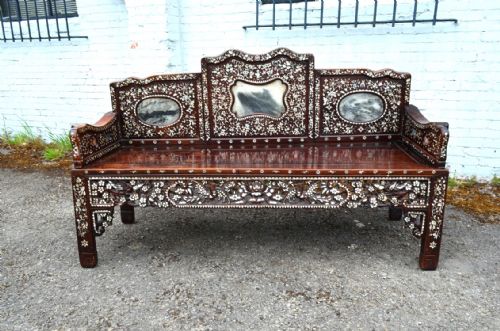


Inlaid Rosewood Seat
An inlaid rosewood seat brings rich timber grain and precise contrasting detail into a room, spanning forms from intimate window seats to grand dining sets.
Inlaid Rosewood Seat
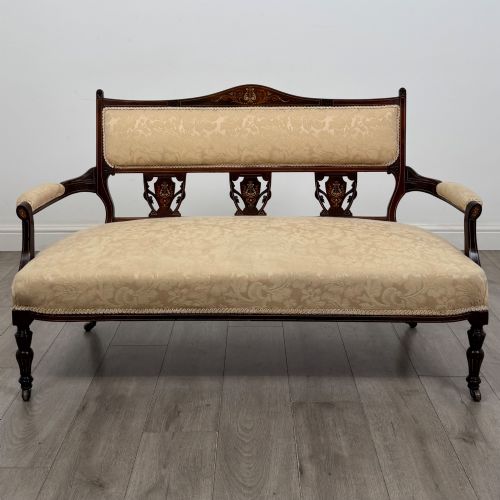
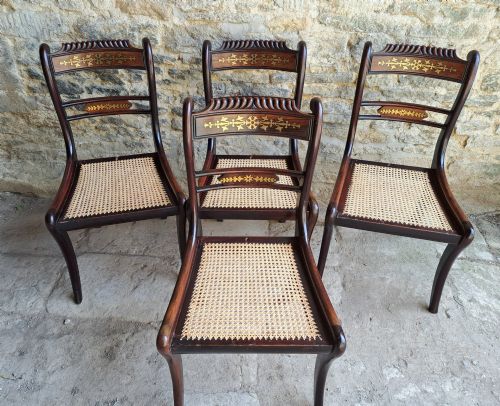
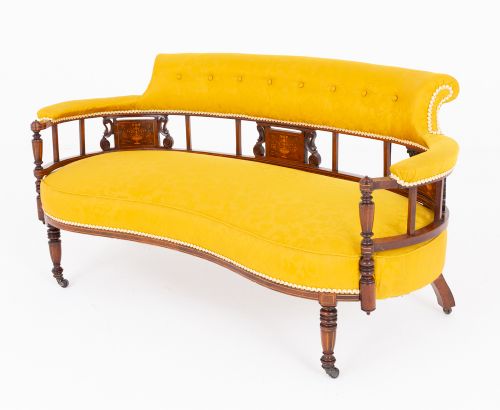
An inlaid rosewood seat encompasses everything from single window seats and music stools to extensive dining sets and large settees. You are most likely to encounter Regency dining chairs and Edwardian parlor seating on this page.
The material palette relies heavily on rosewood and simulated rosewood, paired with contrasting light wood stringing or brass inlay. Pieces originate across the nineteenth and early twentieth centuries, reflecting changing domestic fashions.
Makers adapted these forms for specific domestic spaces, producing hall seats, piano stools, and library chairs. Each piece combines structural timber with decorative surface enrichment in the form of marquetry or metal work.
Materials and Construction
Cabinet makers built the structural frames using dense hardwoods like rosewood and mahogany, sometimes substituting beech or simulated rosewood. Surfaces received intricate detailing through brass inlay, boxwood stringing, and floral marquetry.
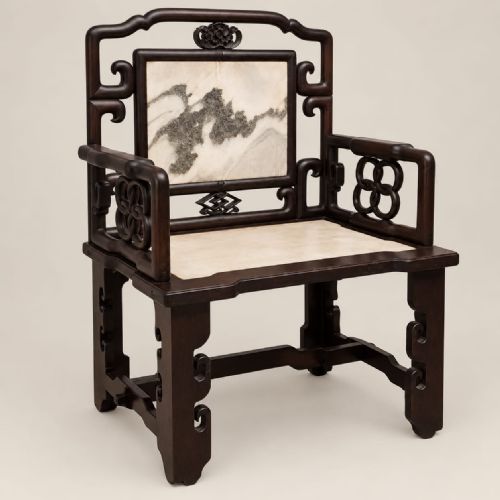
Workshops integrated mother-of-pearl accents into specific Chinese export pieces to create shimmering surface patterns. Upholstery methods ranged from cane webbing to sprung upholstered pads covered in fabric.
Some piano stools allow you to spin the top endlessly to adjust your height, proving that Victorian office furniture knew how to have fun.
Judging Quality
Quality reveals itself in the crispness of the brass and wood inlay and the depth of the rosewood grain. Master workshops achieved seamless flush fits between the contrasting materials and the primary timber.
The architectural integrity of the frame and the retention of original components determine the standing of a piece. Finer examples display meticulous attention to carved detail and proportion across both single chairs and matched dining sets.
JOHN GEE
The Inlaid Rosewood Seat Glossary
- Marquetry
- Decorative veneer patterns applied to a furniture structure to form pictures or ornamental designs. This technique frequently employs contrasting woods to achieve pictorial depth.
- Stringing
- Thin strips of light wood inlaid into darker timber channels to outline panels or structural edges. Boxwood is a common choice for this precise linear work.
- Faux rosewood
- Timber painted or stained to imitate the dark grain and warm tone of genuine rosewood. Beech served as a frequent base for this simulated finish.
- Rise and fall
- An adjustable mechanism operated by twisting the seat top on piano or music stools. It allowed musicians to alter their seating height.
- Cane seat
- Woven plant material forming a light, resilient surface across a chair frame. It appears frequently on Regency dining and window seats.
Inlaid Rosewood Seat: Frequently Asked Questions
What is an inlaid rosewood seat?
An inlaid rosewood seat is a piece of antique furniture built from dark timber and decorated with contrasting wood or brass details. These items range from small piano stools to large dining sets.
Craftsmen utilised rosewood, mahogany, and simulated woods to construct frames intended for parlours, dining rooms, and hallways. The resulting forms combine functional seating with ornate surface decoration.
How do I identify a Regency period chair?
Regency chairs typically feature classical proportions, sabre legs, and precise brass inlay integrated into the dark timber. These pieces often date from the early nineteenth century.
Many examples utilise simulated rosewood on beech frames while maintaining the characteristic neoclassical lines of the era. Examining the joinery and inlay style helps confirm the period of production.
Where were window seats placed?
Window seats were designed specifically to fit into deep bay windows or hallways in large period homes. They provided compact, elegant seating for domestic spaces.
Upholstered pads, cane panels, or cushion tops made these benches comfortable for reading or resting. Their slim profiles allowed them to sit flush against walls or beneath window ledges.
How do I care for antique rosewood?
Antique rosewood requires stable indoor humidity and protection from direct sunlight to prevent timber drying and fading. Regular dusting with a dry cloth maintains the polished surface.
Avoid applying modern silicone polishes, which can build up and damage historic finishes. Professional wax formulated for antiques preserves the natural lustre of the wood grain.