
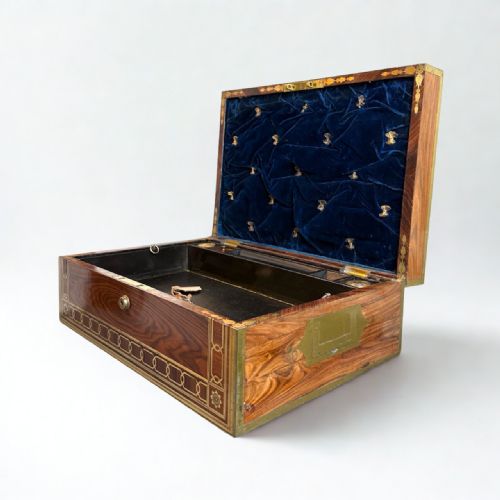


Inlaid Rosewood Lap Desk
An inlaid rosewood lap desk offers a portable writing surface that brings Georgian and Victorian craftsmanship directly to your desktop.
Inlaid Rosewood Lap Desk
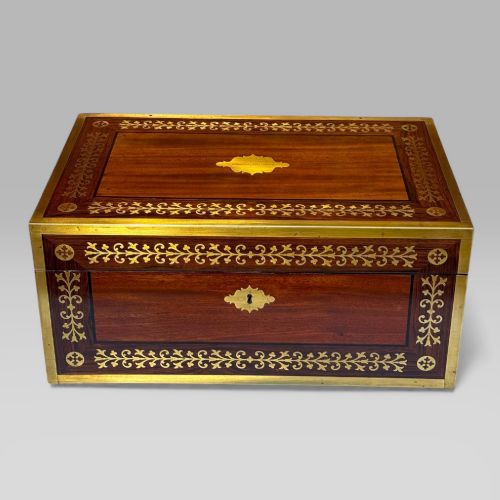
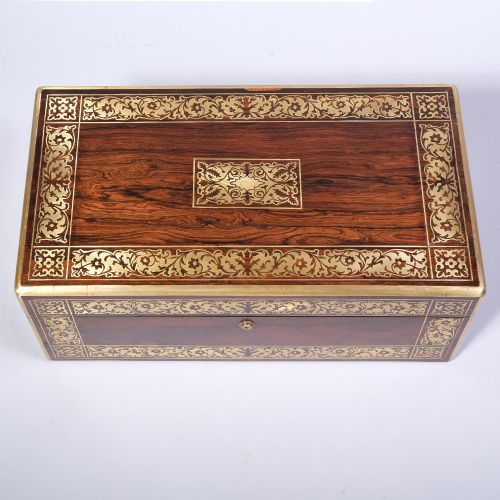
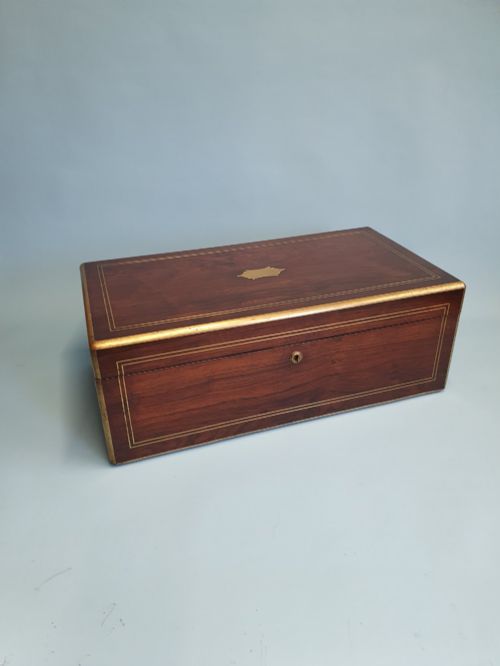
An inlaid rosewood lap desk takes the form of a portable writing slope or box, designed to fold open and create a slanted writing surface. These pieces appear frequently across Georgian, Regency, and Victorian periods, spanning the nineteenth century.
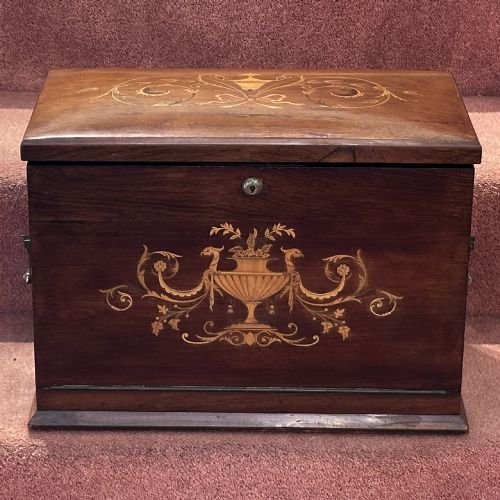
The selection includes campaign boxes, document boxes, and stationery boxes alongside standard writing slopes. Examples range from compact travel boxes to substantial table top writing slopes with secret drawers.
Origins include English workshops, Scottish makers, and Anglo Indian or Chinese export examples using exotic hardwoods. The Regency and Victorian items dominate the available selection on this page.
Materials and Technique
Constructed primarily from rosewood, these boxes incorporate contrasting veneers such as satinwood and mahogany. Craftsmen added structural strength and decorative contrast using brass inlays, brass mounts, and brass binding.
Surface decoration relies heavily on detailed boxwood inlay and foliate cut brass work. Artisans also used mother of pearl and abalone shell to create gleaming geometric or floral motifs set into the dark wood.
Some nineteenth century writers hid their love letters behind secret wooden panels that only opened after sliding a hidden peg.
Craftsmanship and Proportion
Quality rests in the precision of the metal and wood inlays, where flush surfaces and tight joints separate standard utility boxes from superior examples. The crispness of foliate brass cutting and the integration of shell elements indicate higher workshop skill.
Internal fittings dictate another tier of distinction, with finer boxes featuring leather writing surfaces, concealed secret drawers, and matched pigeonholes. The weight of the rosewood timber and the integrity of original brass campaign mounts also separate basic desk boxes from elite pieces.
George Austin Dublin
The Inlaid Rosewood Lap Desk Glossary
- Lap desk
- A portable box designed to hold writing materials and provide a slanted surface for correspondence while sitting or travelling. These objects often include compartments for inkwells and pens.
- Campaign box
- A sturdy portable desk fitted with brass corners and recessed handles for military transport. Officers used these durable boxes in the field during the nineteenth century.
- Writing slope
- A hinged box that opens to reveal a slanted writing plane, usually covered in leather or velvet. Interior compartments store paper, nibs, and stationery.
- Foliate cut brass
- Metalwork shaped into leaf and vine patterns and inlaid directly into the wood veneer. This decorative technique appears on many Regency pieces.
- Secret drawers
- Hidden compartments concealed behind false panels or activated by internal release mechanisms. Makers built these small spaces to secure valuables and private letters.
Inlaid Rosewood Lap Desk: Frequently Asked Questions
How do I use a lap desk today?
These boxes function well on modern desks as storage for stationery, letters, and small office supplies. The fold-out surface still provides a practical space for writing notes or displaying fountain pens.
Opening the slope reveals compartments originally designed for inkwells and nibs, which now hold contemporary writing tools. Many people keep them closed as decorative decorative objects on side tables.
How do I date a rosewood lap desk?
Dating relies on stylistic shifts in hardware, inlay materials, and cabinet construction methods. Regency examples often feature extensive foliate brass inlay and brass banding.
Victorian pieces frequently incorporate mother of pearl and abalone shell motifs alongside satinwood stringing. Documented makers and specific campaign mounts help narrow the production decade.
Where were these boxes made?
The majority originate from English and Scottish workshops operating during the Georgian and Victorian eras. Regional centres like Dublin also produced documented examples.
Alternative origins include Chinese export workshops utilising materials like huanghuali wood, and Anglo Indian colonial makers adapting traditional forms for British officers.