

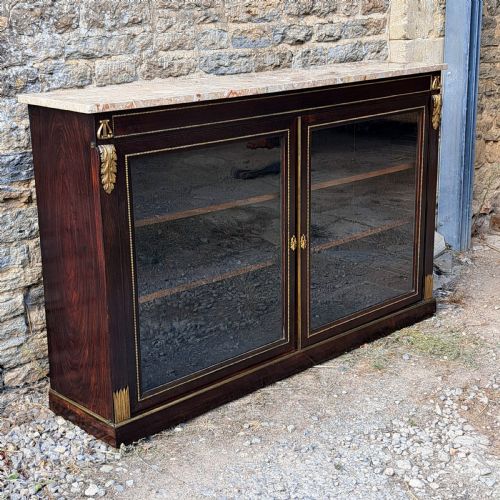
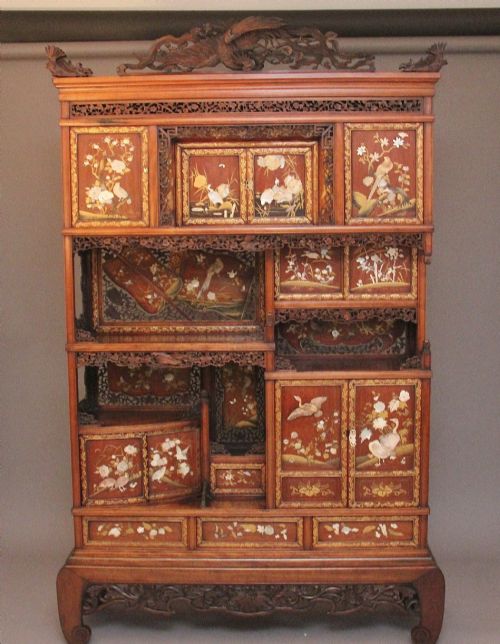
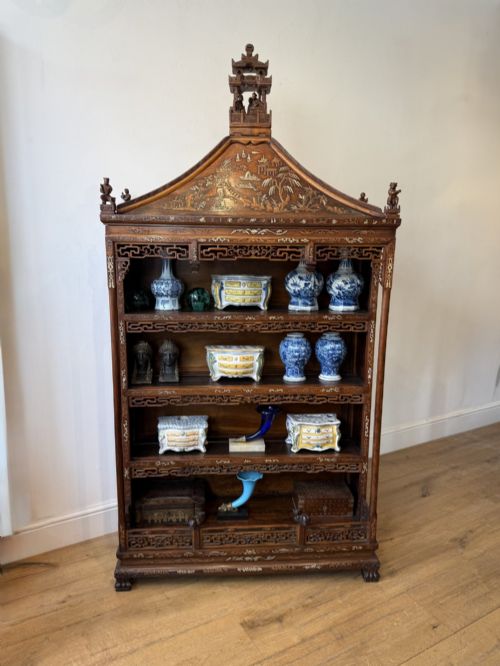
Inlaid Rosewood Display Cabinet
An inlaid rosewood display cabinet brings together rich timber and meticulous craft to show off treasured objects in any room.
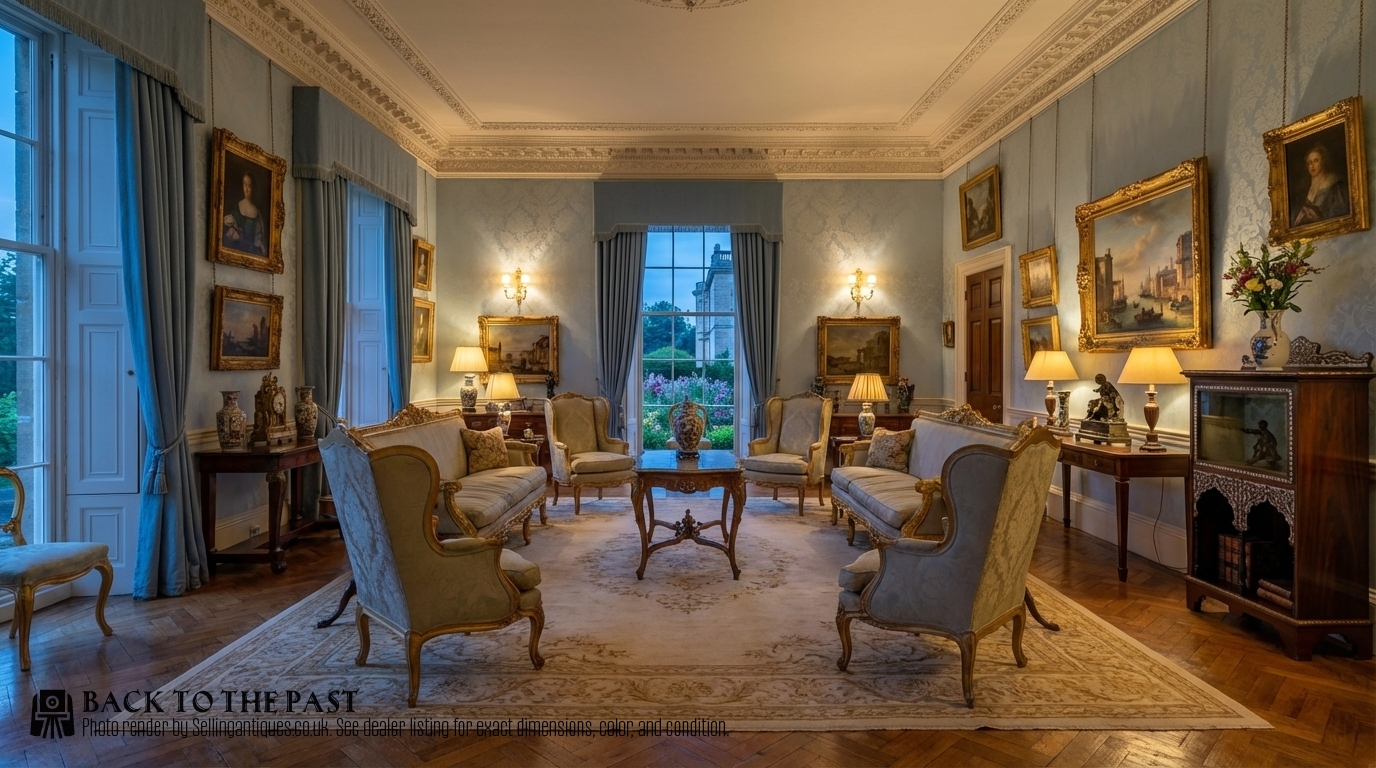
Inlaid Rosewood Display Cabinet
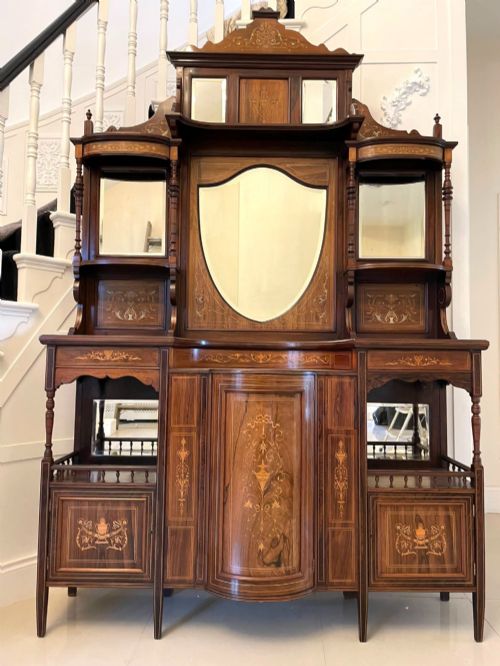
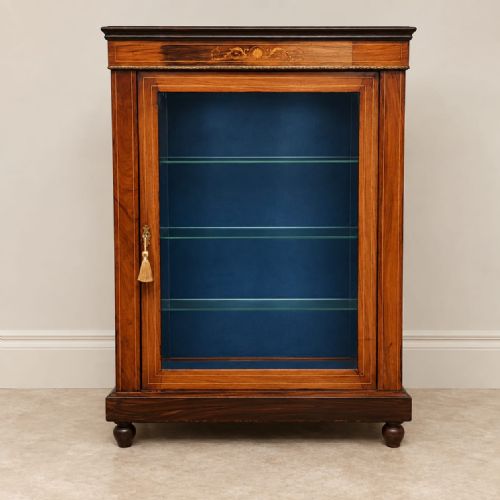
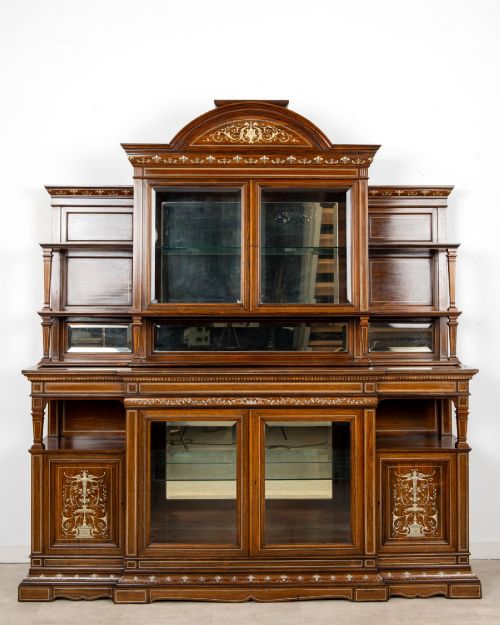
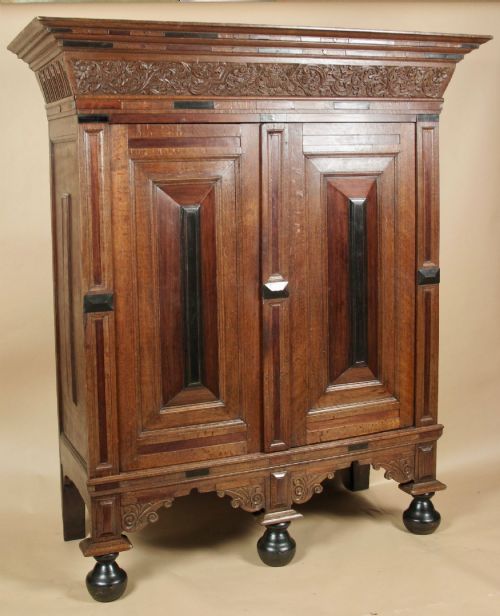
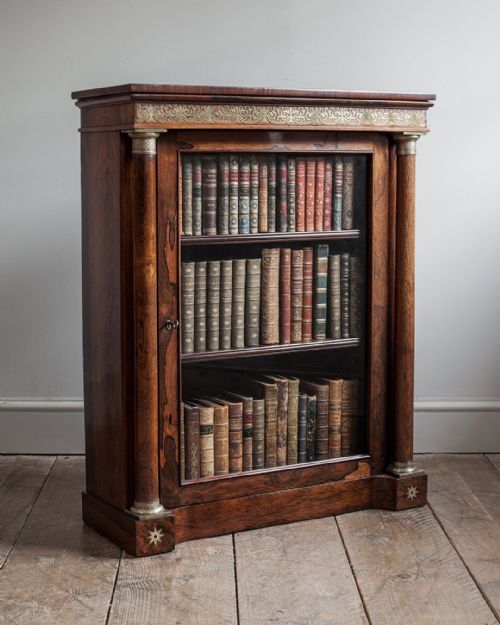
An inlaid rosewood display cabinet is a refined piece of furniture designed to protect and showcase precious items behind glass panels. These cabinets frequently appear from the 19th Century, spanning Victorian, Regency, and Edwardian periods.
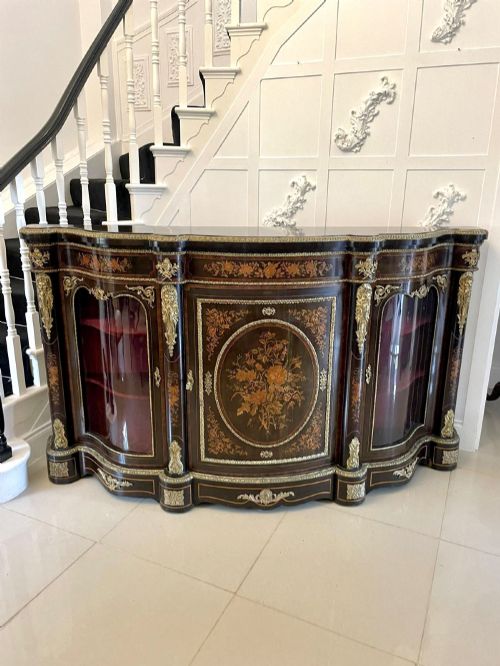
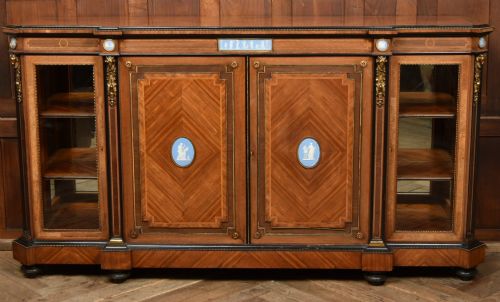
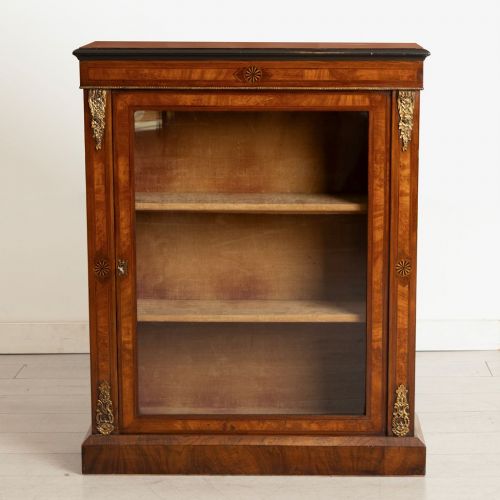
The form ranges from compact pier cabinets and corner cupboards to large breakfront bookcases and parlour cabinets. Most examples on this page are Victorian or Edwardian productions featuring delicate contrasting wood or brass details.
Makers and workshops of the 19th Century adapted earlier styles to create sophisticated storage fitted with shelves and glazed doors. The primary function remains the exhibition of porcelain, glassware, or curiosities within a formal interior.
How They Were Made
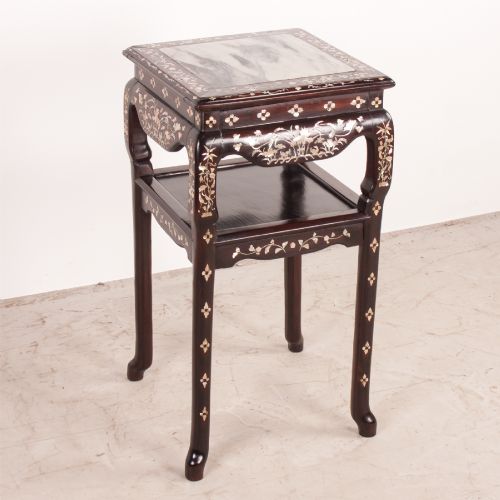
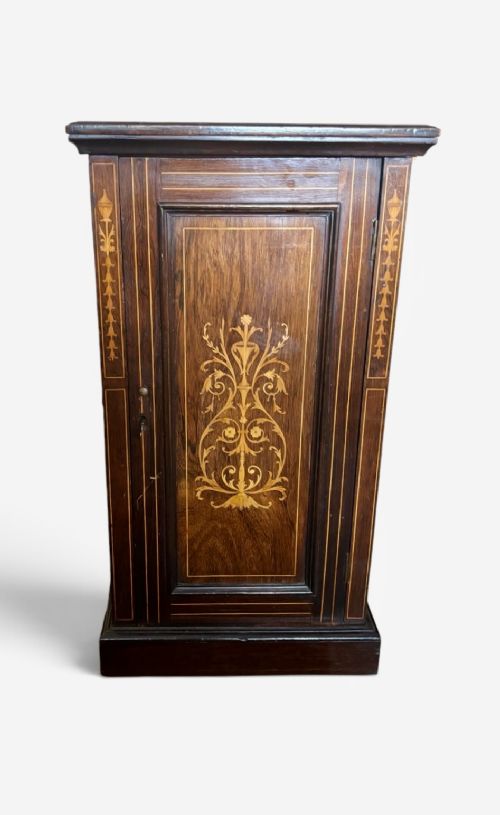
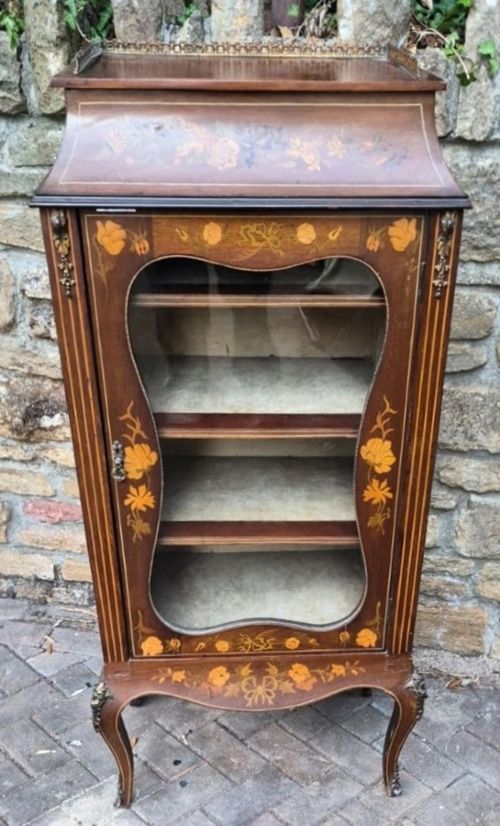
Cabinet makers utilised dense rosewood as a dark foundation, often framing panels of satinwood, ebony, or burr walnut. Brass stringing and mother of pearl were precisely embedded into the timber surface to form geometric or floral patterns.
Marquetry techniques involved cutting thin veneers of various coloured woods to assemble pictorial motifs before application to the carcase. Ormolu mounts and mirrored backs were frequently added to enhance the reflective quality inside the display chamber.
Listings feature 19th Century, Victorian, and Edwardian periods utilising rosewood, satinwood, glass, and brass materials.
What Varies in Quality
The standard of an inlaid rosewood display cabinet rests on the precision of the marquetry and the depth of figure in the rosewood timber. Finer pieces demonstrate seamless integration of brass inlay and meticulously cut floral motifs without gaps in the veneer.
Construction details such as original glass panes, finely cast ormolu mounts, and branded maker signatures elevate certain examples above standard production. The crispness of the carving and the balance of the proportions distinguish workshop output.
Collinson and Lock·Edwards and Roberts·Maple and Co.
The Inlaid Rosewood Display Cabinet Glossary
- Marquetry
- Decorative veneer work forming pictures or patterns by assembling pieces of different woods. This technique requires immense skill to fit various timbers into a cohesive surface.
- Ormolu
- Gilded bronze mounts applied to furniture for decorative effect. These metallic elements add architectural definition to the cabinet corners and feet.
- Pier Cabinet
- A narrow cabinet designed to stand against the wall space between windows. These upright forms were especially popular during the Victorian period.
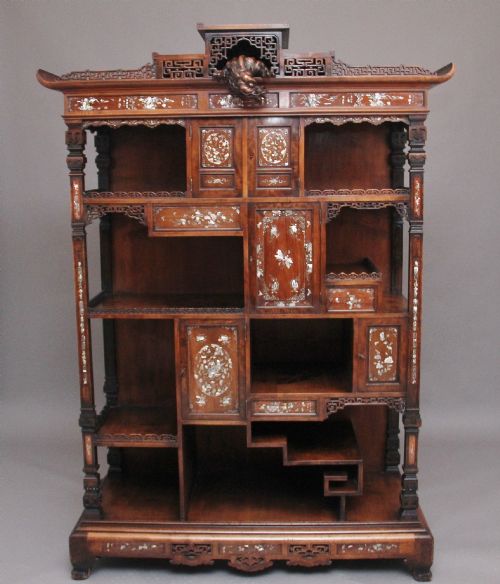
- Shodona
- A Japanese display cabinet style featuring asymmetrical shelving and cabinet compartments. These forms influenced late 19th Century European design.
- Stringing
- Thin lines of contrasting wood or brass inlaid into channels cut into the furniture surface. It defines the borders of panels and drawers.
Inlaid Rosewood Display Cabinet: Frequently Asked Questions
Where should I place a display cabinet?
These cabinets suit drawing rooms or dining spaces where natural light highlights the glazed panels and internal contents without direct sun damage.
Ensure the floor is level so the doors hang correctly and the delicate frame maintains its structural balance over time.
How do I clean rosewood furniture?
Dust the timber gently with a soft, dry cloth to prevent accumulation in the intricate inlaid sections.
Avoid chemical polishes and moisture, applying a traditional beeswax sparingly only when the wood appears dry.
What items belong inside these cabinets?
Historic glass, ceramics, and small decorative objects fit securely on the original wooden or glass shelving provided.
Keep heavier items on the lower base shelves to maintain stability and protect the delicate proportions of the upper structure.
How do I identify a Victorian piece?
Look for dense rosewood timber combined with rich floral marquetry, brass stringing, and often a mirrored back panel.
Construction traits like hand-cut dovetails and period lock mechanisms help confirm the nineteenth-century origins of the cabinet.