
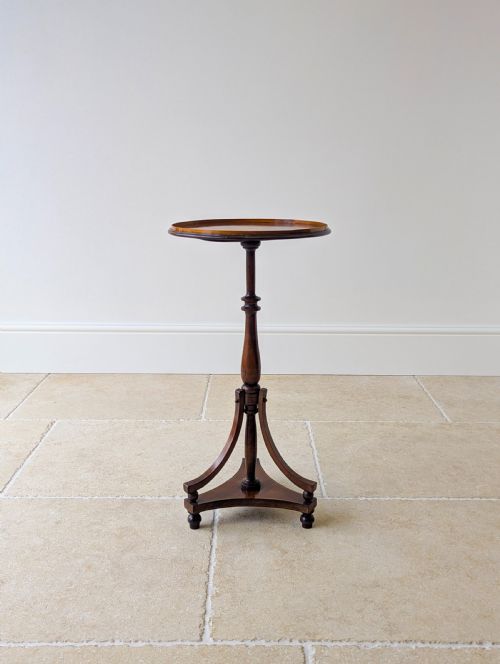
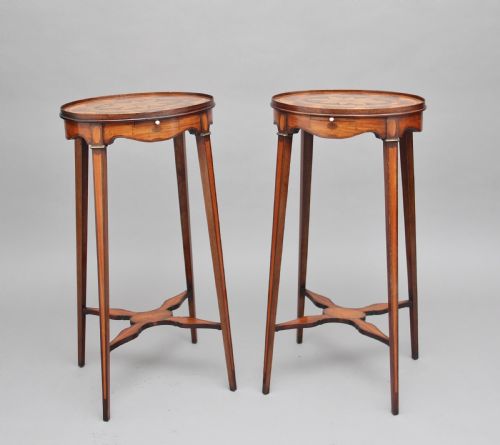


Inlaid Plant Pedestal
An inlaid plant pedestal brings botanical display into domestic rooms, offering a raised stage for ferns and urns through marquetry and figured timbers.
Inlaid Plant Pedestal
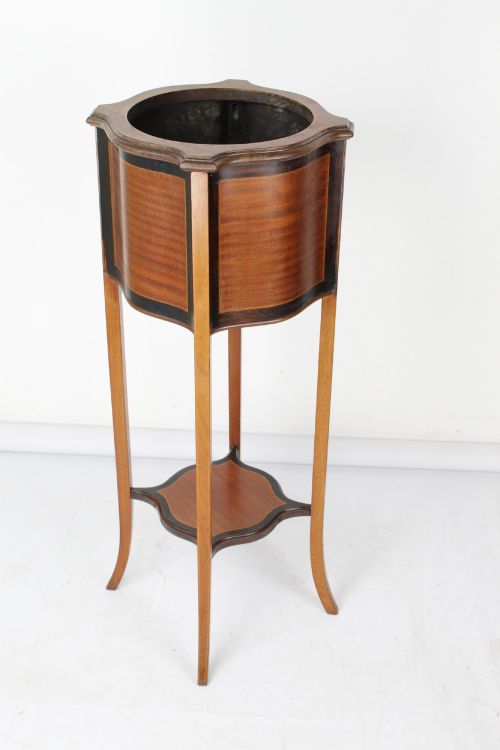
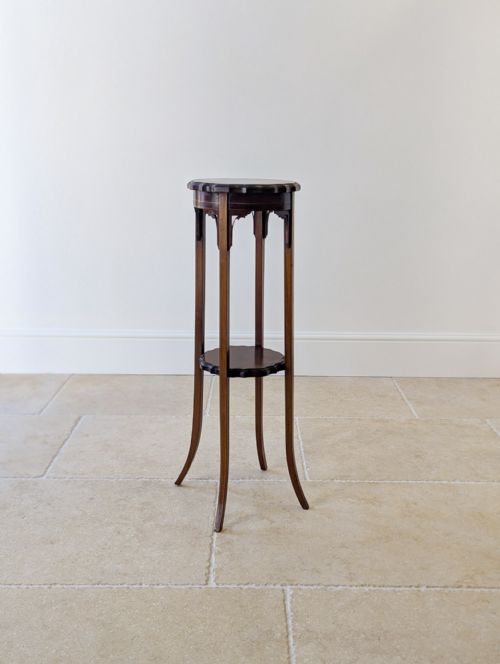
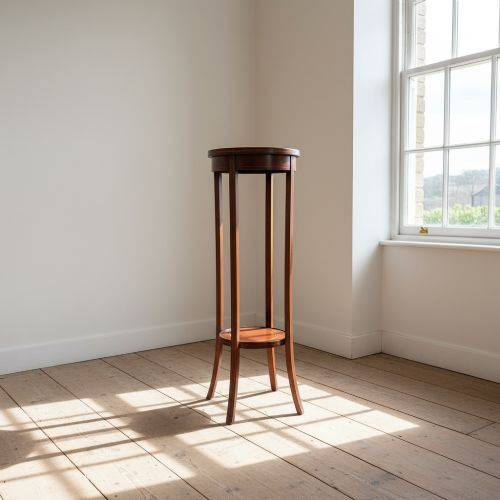
When you search for an inlaid plant pedestal, you look at elevated surfaces designed to hold flowers or jardinieres, appearing most frequently in Edwardian mahogany and nineteenth-century forms.
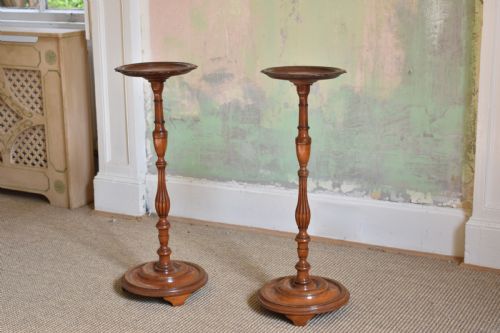
These pieces cross paths with wine tables, torchères, and occasional stands, serving domestic spaces as slender display furniture rather than heavy desks.
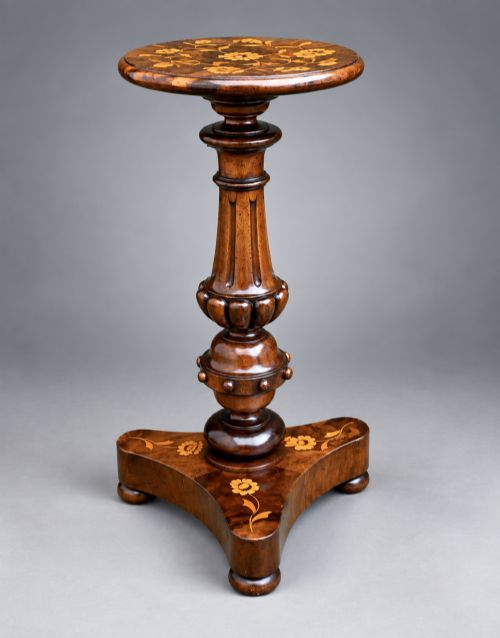
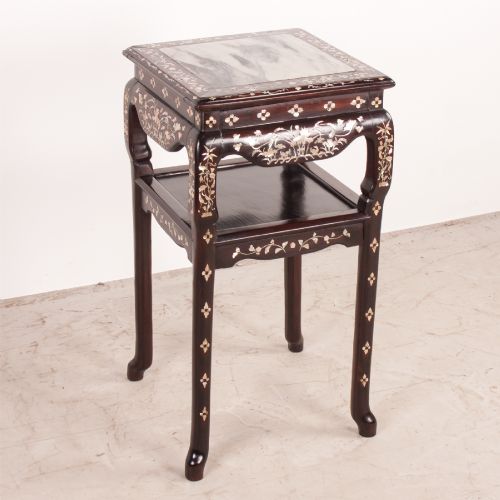
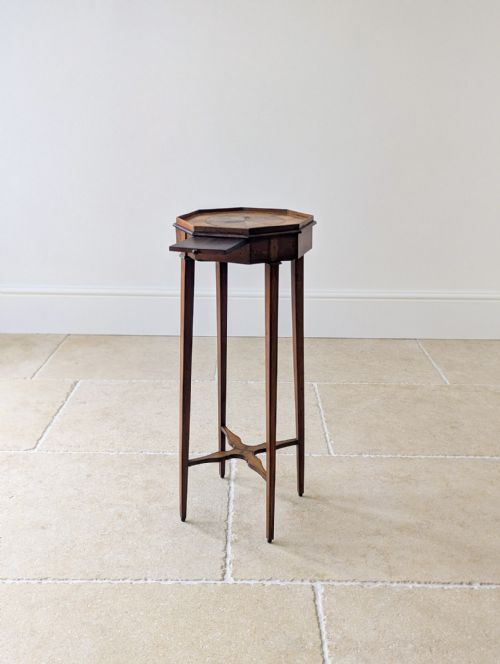
Examples range from Georgian revival urn stands to Dutch marquetry wine tables and Chinese hardwood pieces featuring mother-of-pearl work.
How they were made
Cabinetmakers utilised primary timbers like mahogany, walnut, rosewood, and oak, often pairing them with contrasting satinwood or bone inlay.
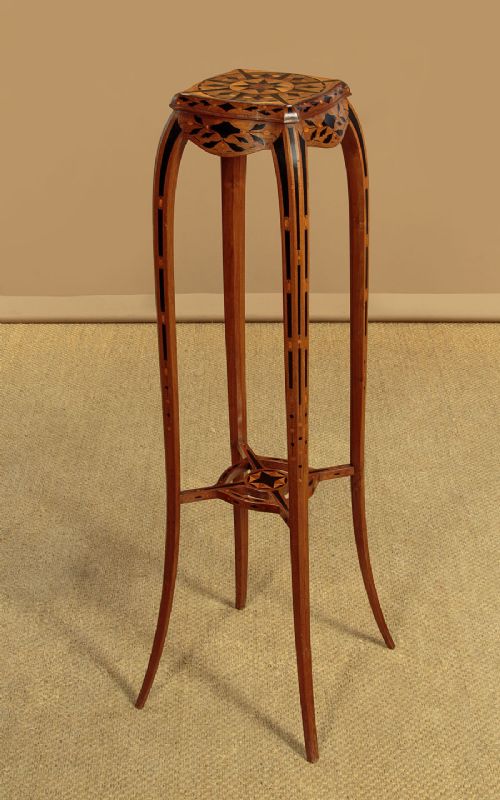
Surface decoration relied on marquetry techniques, fitting floral or geometric veneers into the wood grain alongside mother-of-pearl details.
Listings span multiple eras from Georgian and Victorian to Edwardian, utilising mahogany, walnut, rosewood, and marble.
What varies in quality
Quality rests in the precision of the timber selection and the crispness of the inlay work, distinguishing workshop output from mass production.
The integrity of the structural joinery, particularly in slender tripod bases and tall columns, determines how well the piece supports weight.
The Inlaid Plant Pedestal Glossary
- Marquetry
- The art of forming decorative patterns by fitting together veneers of different woods, metals, or bone. This technique defines the floral panels seen on many tables.
- Torchère
- A tall, slender stand designed to hold a light or a plant. These vertical pieces take up minimal floor space while elevating botanical displays.
- Urn stand
- A small occasional table traditionally used for holding liquid containers. Their proportions suit modern use as plant pedestals.
- Jardinière
- A decorative pot or stand for holding plants and flowers. French examples often incorporate specialised metal liners.
Inlaid Plant Pedestal: Frequently Asked Questions
Where should I place a plant pedestal?
These pieces suit corners, window spaces, or hallways where vertical height adds interest to a room without crowding the floor.
Keep them away from direct heat sources to protect the polished wood surfaces and delicate inlay.
Can these stands hold heavy pots?
Most pieces were built to support moderate botanical displays, though the stability depends on the width of the base.
Tripod legs and heavier marble or hardwood tops offer different balances that suit various pot sizes.
How do I date an inlaid pedestal?
Dating relies on timber choice, construction methods, and the style of the marquetry or stringing work.
Edwardian pieces often feature lighter mahogany and satinwood, while nineteenth-century versions show darker woods and heavier carving.
What is the difference between a torchère and a plant stand?
Torchères were originally designed to carry lighting fixtures, while plant stands served botanical displays.
In practice, both share a tall, narrow profile that makes them interchangeable for modern plant placement.