
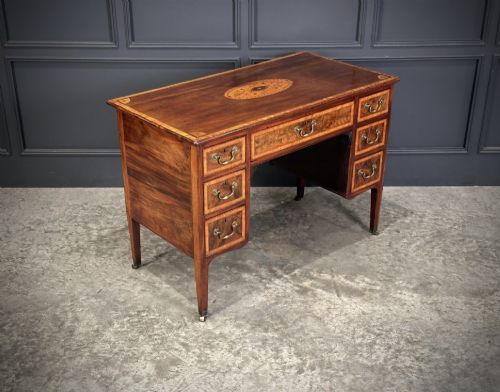
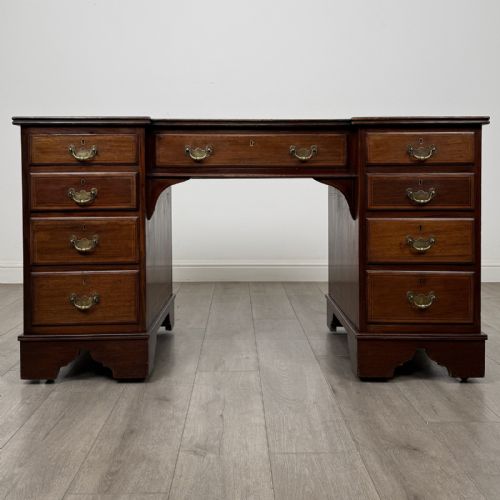
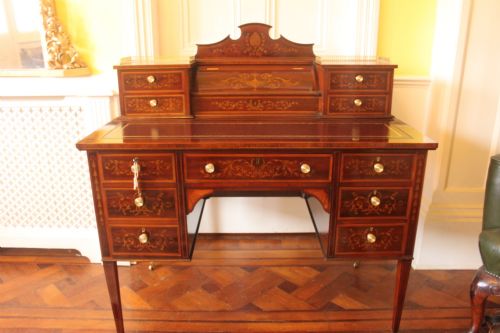
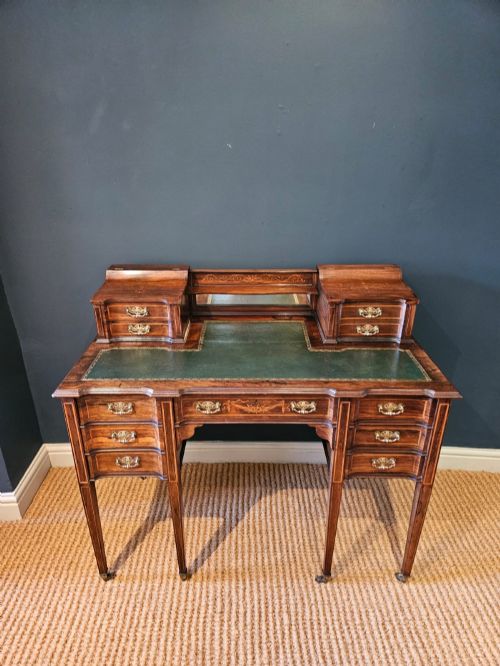

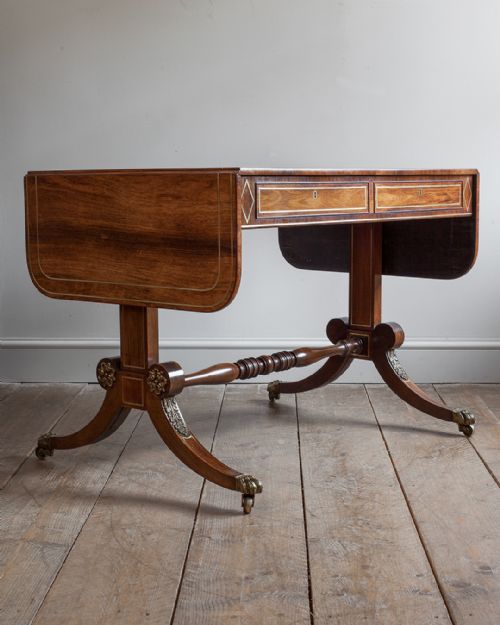
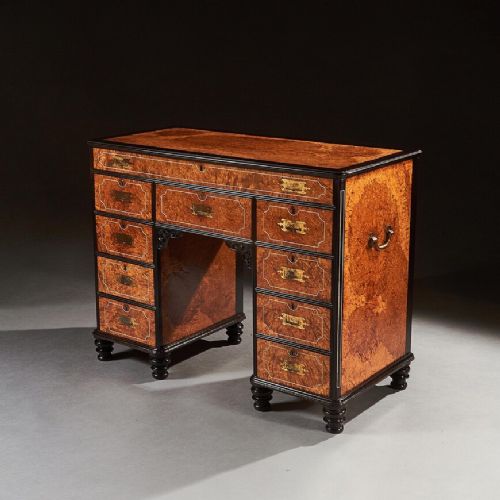
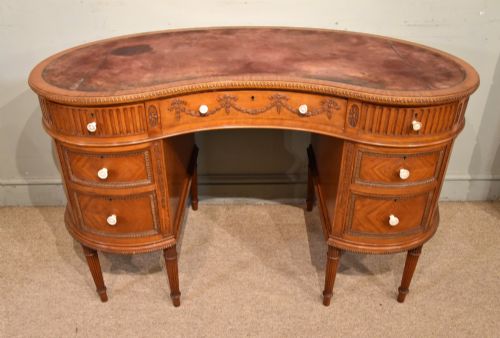
Inlaid Pedestal Desk
An inlaid pedestal desk combines heavy double-pedestal timber architecture with delicate decorative marquetry, offering a grand workspace suited to both traditional studies and modern rooms.
Inlaid Pedestal Desk
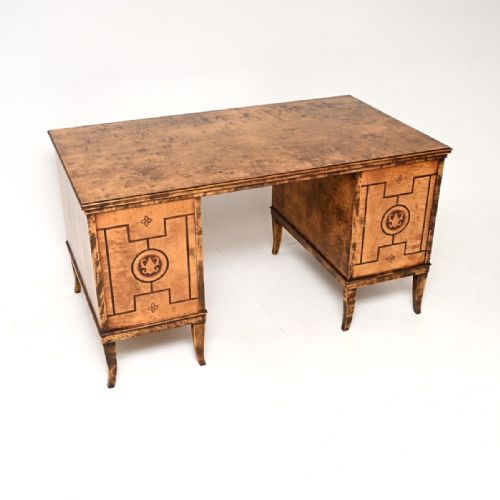
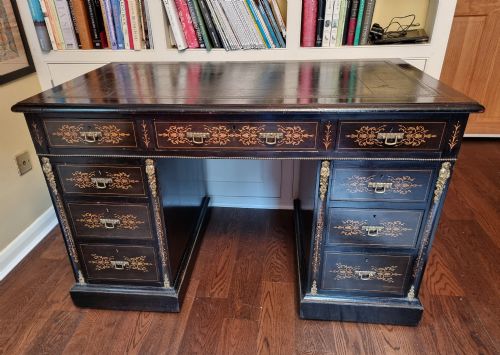
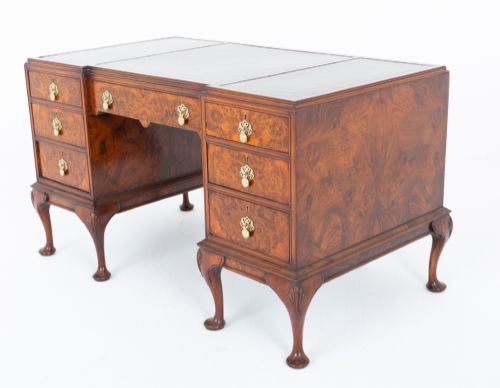
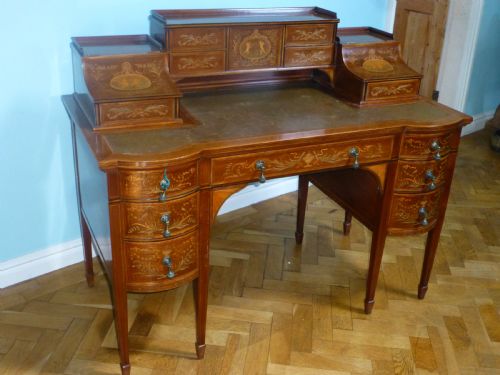
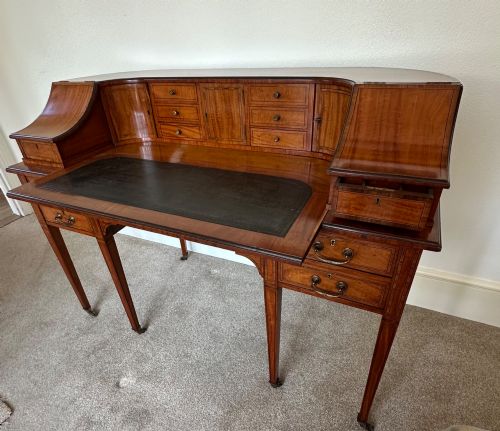
An inlaid pedestal desk is a substantial workspace featuring twin supporting pedestals beneath a wide writing surface, commonly encountered in mahogany, walnut, and satinwood. These pieces emerge predominantly from the Victorian, Edwardian, and nineteenth-century periods, often displaying classical Sheraton Revival or marquetry ornamentation.
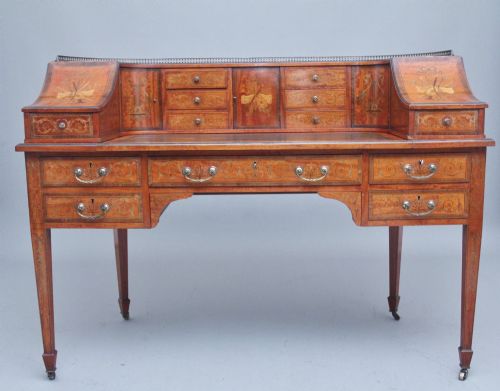
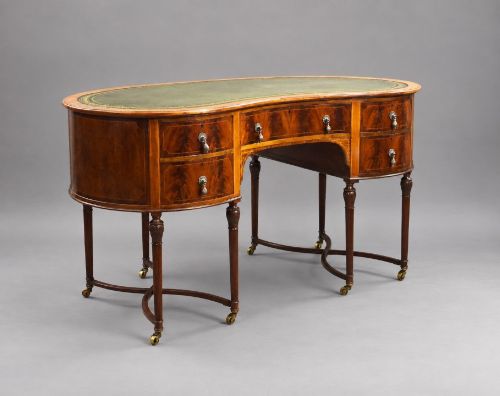
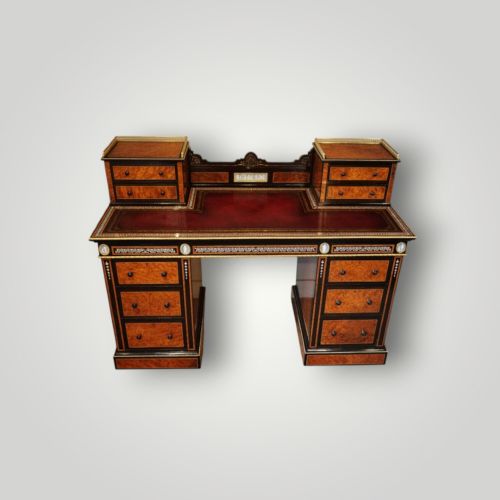
The layout typically incorporates banks of drawers flanking a central kneehole, sometimes complemented by leather inserts, brass banding, or elaborate veneer work. Variations range from standard twin pedestal formats to kidney-shaped writing tables and specialised Carlton House desks.
Materials and Technique
Cabinetmakers constructed these desks using dense primary hardwoods like mahogany, rosewood, and walnut, frequently accented with contrasting satinwood, boxwood, and ivory stringing or marquetry. Brass hardware, such as original handles and banding, provided both structural reinforcement and decorative contrast.
Surfaces were often fitted with tooled leather writing inserts, while intricate inlay techniques incorporated mother of pearl, thuya wood, and ebony to create elaborate floral or geometric motifs across drawers and top panels.
Some nineteenth-century writers hid secret compartments behind false drawer fronts to safeguard inkwells and letters.
Distinctions in Execution
Superior examples derive their standing from the precision of the marquetry and the choice of figured timber, such as flame mahogany or burr walnut, rather than simple surface decoration. The crispness of the brass fittings, the presence of original leather and handles, and the integrity of internal drawer construction mark the difference between standard production and masterwork output.
Piecework executed by renowned retail makers demonstrates finer joinery details, balanced proportions, and careful timber selection that endure across generations of use.
Edwards and Roberts·Maple and Co·Jas Shoolbred·Jackson and Graham·Gill and Reigate·Wolfe and Hollander
The Inlaid Pedestal Desk Glossary
- Pedestal desk
- A heavy freestanding desk supported by two distinct banks of drawers or cupboards beneath the main writing surface. This twin-pedestal format provides substantial storage and a balanced architectural presence.
- Marquetry
- The art of applying pieces of veneer to a structure to form decorative patterns and pictorial designs. Craftsmen utilise various contrasting timbers and shell to achieve detailed ornamentation.
- Satinwood
- A lustrous, hard timber native to Ceylon and India, prized for its golden-yellow colour and silky sheen. It appears frequently in fine Edwardian and Sheraton Revival writing furniture.
- Crossbanding
- A narrow strip of veneer laid around the border of a furniture top or drawer front with the grain running perpendicular to the main panel. This technique frames the primary timber and adds visual depth.
- Kneehole
- The central recessed space beneath a desk designed to accommodate the legs of the person sitting at work. It is typically flanked by vertical pedestals of drawers.
Inlaid Pedestal Desk: Frequently Asked Questions
What is an inlaid pedestal desk?
An inlaid pedestal desk is a heavy double-pedestal writing table featuring decorative wood veneers, banding, or marquetry across its drawers and top surface. These large pieces were designed for executive studies and libraries.
They combine practical drawer storage with ornamental details such as satinwood stringing, brass mounts, and leather writing inserts.
How do I date an inlaid pedestal desk?
Dating involves examining the timber species, construction methods, and prevailing decorative styles, which range from Georgian proportions to Victorian revivalism and Edwardian satinwood work. Maker signatures, lock stamps, and hardware styles also help narrow down the decade of manufacture.
Later Victorian and Edwardian pieces often exhibit lighter satinwood marquetry, whereas earlier nineteenth-century examples lean towards dense mahogany and brass detailing.
Where should I place a pedestal desk?
Because many pedestal desks are finished on all sides as freestanding items, they can sit centrally within a room rather than pushed directly against a wall. This positioning displays the craftsmanship of the back panels and pedestals.
Ensure there is sufficient floor clearance around the twin pedestals and kneehole to allow comfortable seating and drawer access.
How do I care for leather desk tops?
Leather writing surfaces require gentle cleaning with a slightly damp cloth followed by a suitable leather cream to prevent drying and cracking. Avoid abrasive cleaning agents or excessive moisture near the wood veneer surrounds.
Maintaining a stable room temperature away from direct sunlight protects both the leather insert and the polished timber finish.