

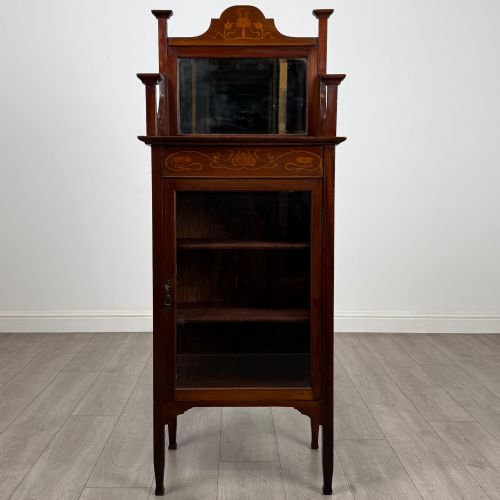
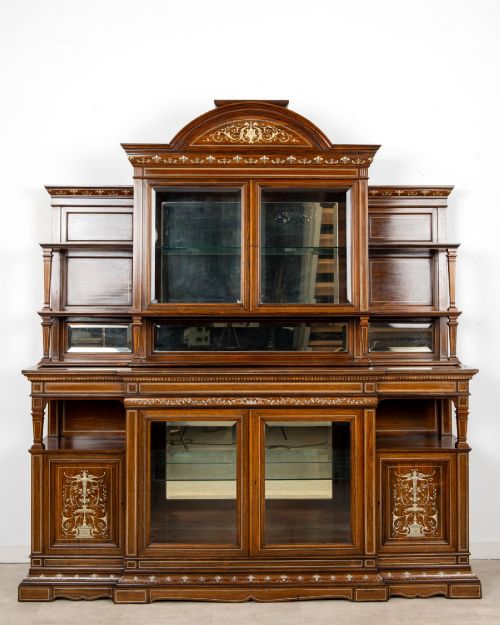
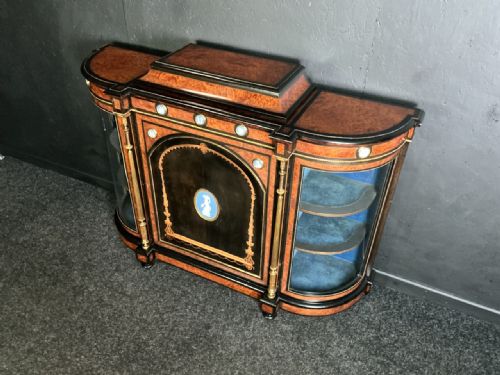
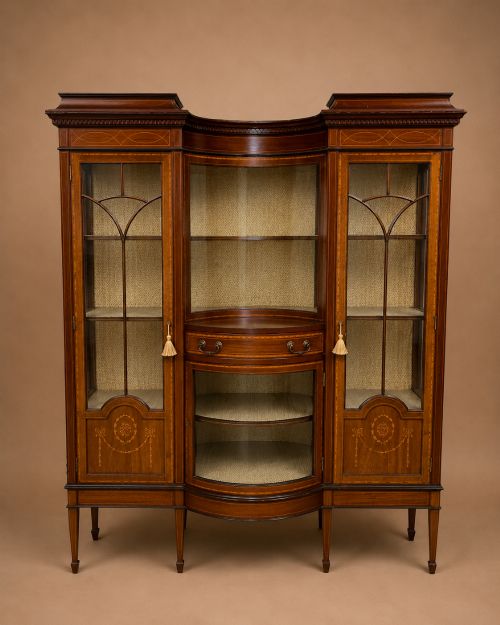
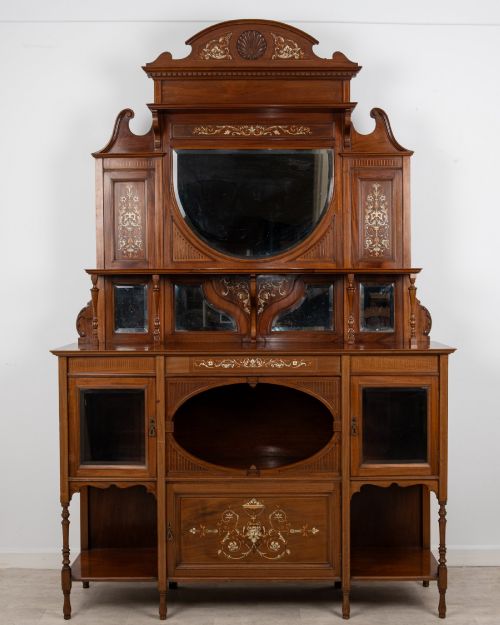
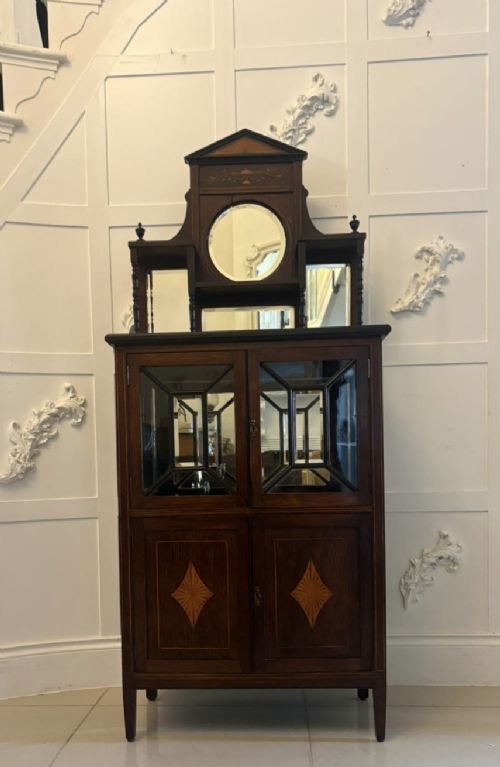
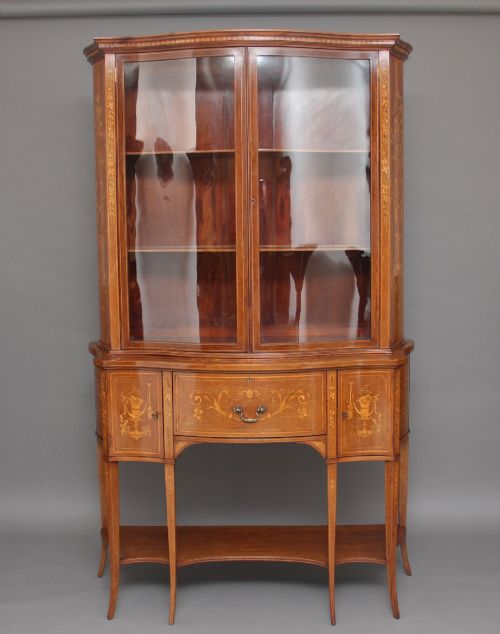
Inlaid Parlour Cabinet
An inlaid parlour cabinet brings disciplined 19th-century elegance and refined storage to a room through meticulous botanical and geometric marquetry.
Inlaid Parlour Cabinet
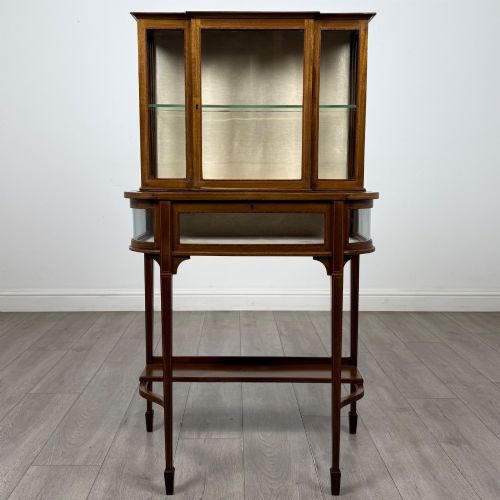
An inlaid parlour cabinet unites the formal reception room furniture of the Victorian and Edwardian eras with practical display and enclosed shelving. These pieces emerge predominantly from the nineteenth and early twentieth centuries, spanning periods from early Victorian walnut credenzas to Edwardian satinwood and mahogany display cabinets.
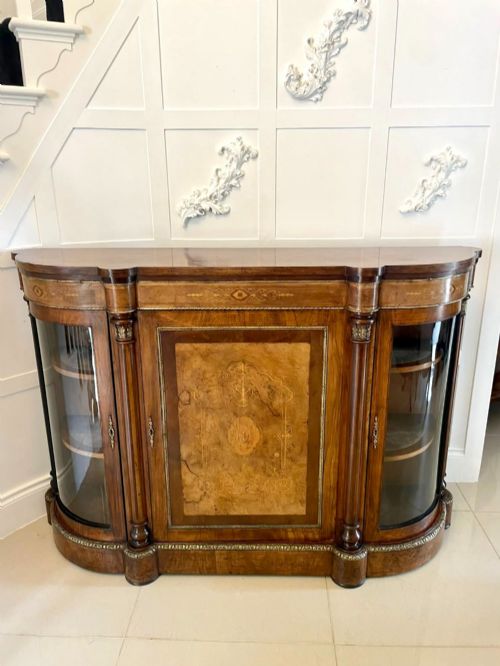
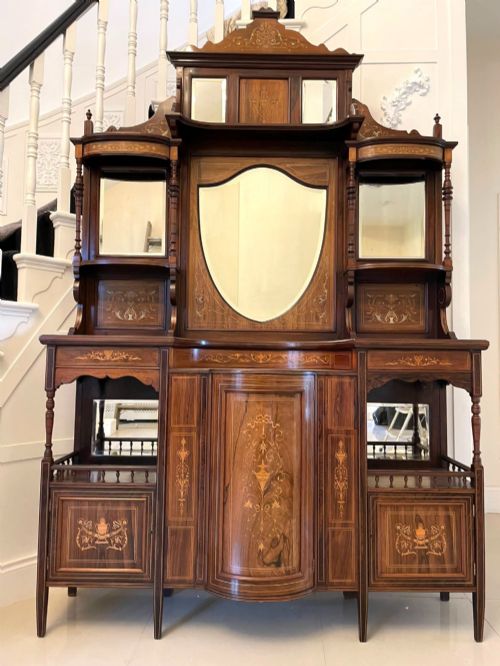
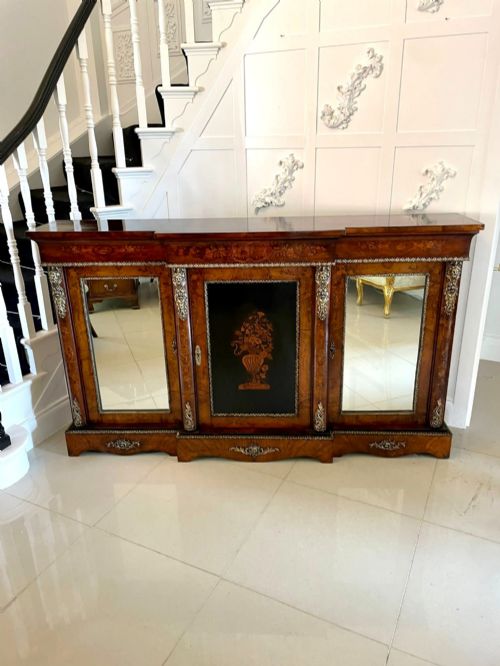
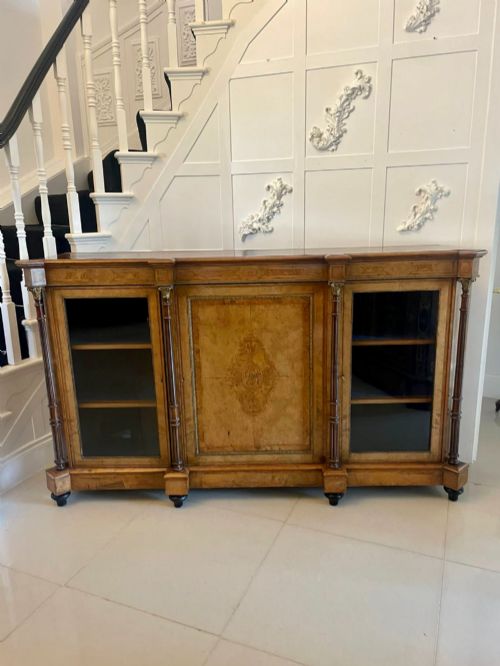
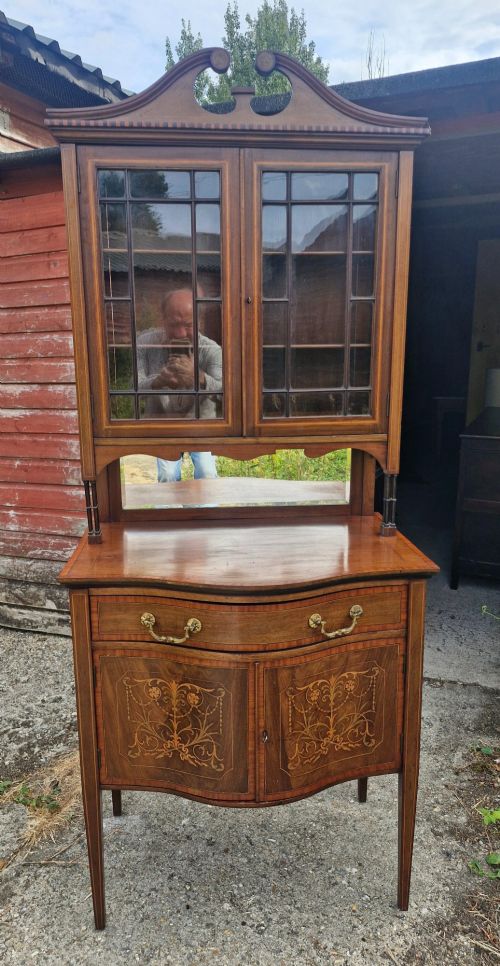
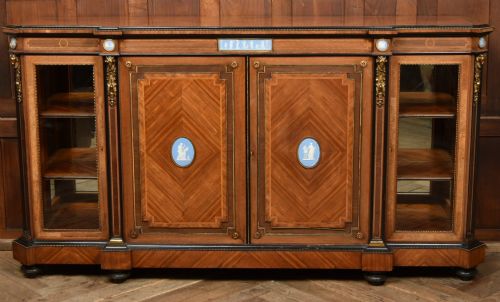
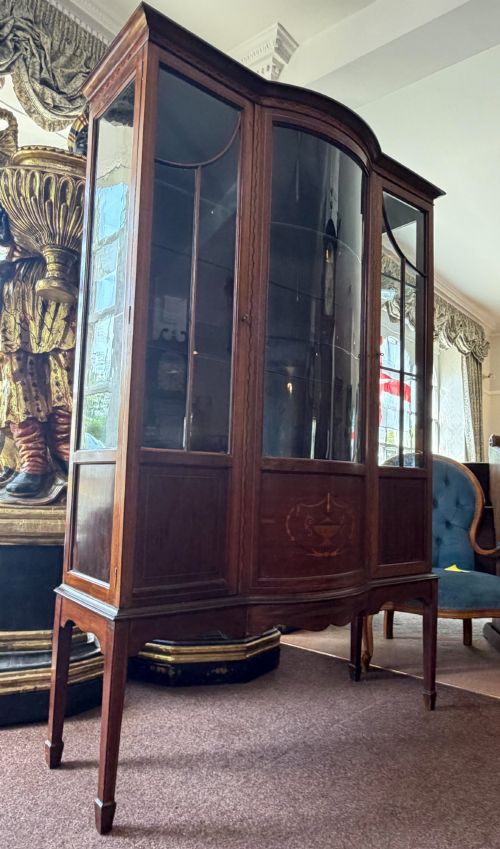
The versions most commonly met on this page are rosewood, mahogany, and burr walnut cabinets, frequently taking the form of credenzas, side cabinets, and two-part display cabinets. Many incorporate glass doors or mirrored backs intended to reflect light and showcase porcelain or glassware within the principal rooms of a house.
Stylistically, the selection shifts between Victorian Sheraton Revival, Aesthetic Movement, Art Nouveau, and French-influenced designs. Makers adapted classical symmetry and curvilinear organic motifs to suit the changing tastes of urban drawing rooms.
Materials and Technique
Cabinetmakers utilised rich timber grounds of rosewood, mahogany, satinwood, and burr walnut, selecting veneers for their deep grain patterns and varied natural hues. These timber carcases serve as a dark canvas for contrasting light woods and metal details.
Decoration relies on intricate marquetry and fine stringing executed in lighter contrasting timbers, brass, and mother-of-pearl. Ormolu mounts and bevelled mirror glass frequently complete the construction, combining joinery with decorative metalwork.
Listings feature rosewood, mahogany, satinwood, and burr walnut across Victorian and Edwardian periods.
Standards of Execution
The calibre of an inlaid parlour cabinet rests upon the depth of the timber selection and the precision of the marquetry cut. Superior pieces display seamless joints in the inlay where contrasting woods meet without unsightly filler.
Structural heft and secondary timbers also divide standard production from exhibition pieces. Heavier carcases, well-figured burr walnut, and robust brass or ormolu mounts signal workshops that invested greater labour in the interior construction and exterior finish.
Collinson and Lock·Edwards and Roberts·Hampton and Sons·Maple and Co
The Inlaid Parlour Cabinet Glossary
- Marquetry
- Decorative patterns formed by fitting together thin slices of wood veneer onto a structural carcase. This technique allows for complex floral and geometric compositions across cabinet doors and friezes.
- Credenza
- A low-standing reception room cabinet, often featuring central glass doors flanked by curved side cupboards. They serve as both display surfaces and substantial storage units.
- Stringing
- Thin lines of contrasting wood inlaid into channels cut into the furniture's surface. It frames panels and outlines drawer fronts to create linear geometric definition.
- Ormolu
- Gilded bronze mounts applied to furniture edges and feet. The technique provides metallic highlights against dark rosewood and mahogany surfaces.
- Satinwood
- A pale, hard timber native to Ceylon and India used extensively for contrasting inlay work and entire cabinet carcases during the Sheraton Revival period.
Inlaid Parlour Cabinet: Frequently Asked Questions
Where were parlour cabinets placed?
These cabinets occupied principal reception spaces such as drawing rooms and parlours where families entertained guests. They acted as focal points for displaying prized ceramics and small decorative objects.
Their polished tops also provided extra surface area for lamps and books during evening gatherings.
How do I care for rosewood?
Rosewood surfaces benefit from minimal interference using clean, dry cloths to remove dust without abrasive polishes. Maintaining stable room humidity prevents the timber and delicate veneer from drying out.
Direct sunlight should also be avoided to preserve the natural depth of the dark grain.
What is the Sheraton Revival?
Sheraton Revival furniture looks back to the neoclassical designs of the late eighteenth century. These later Victorian and Edwardian interpretations favour lighter timbers, satinwood panels, and painted or inlaid classical motifs.
They offer refined proportions suited to smaller domestic spaces than heavy mid-century furniture.
Are mirror backs original?
Many Victorian and Edwardian cabinets incorporate bevelled mirror glass within back panels to brighten darker drawing rooms. Original mirrors often show faint foxing or tiny spots behind the glass due to age.
Replacement mirrors are common, so inspecting the silvering helps confirm the period integrity of the piece.