

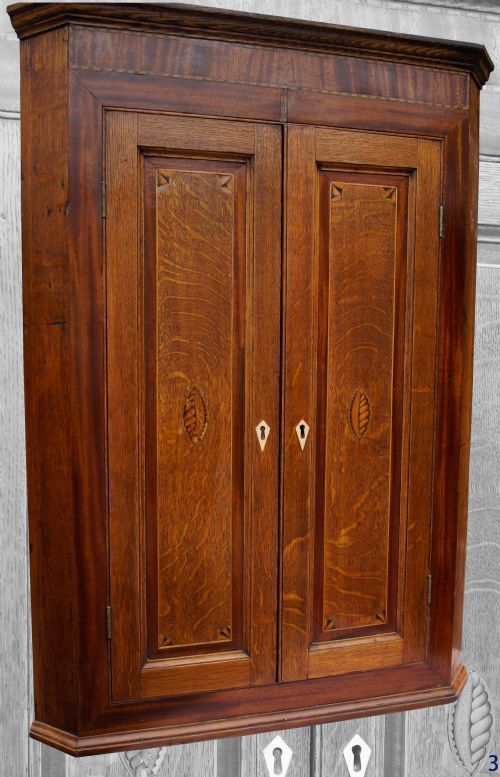

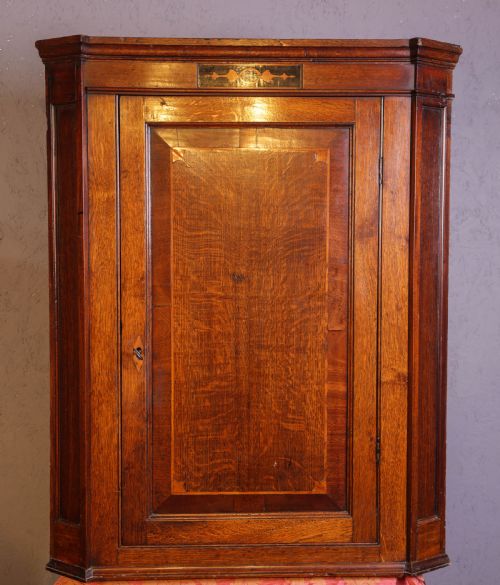


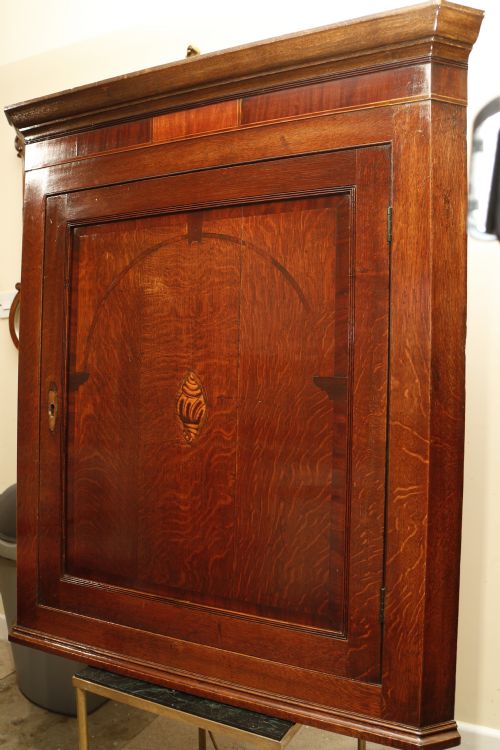
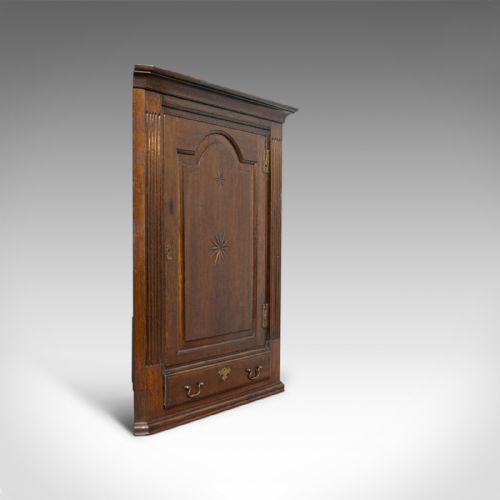


Inlaid Oak Hanging Cabinet
An inlaid oak hanging cabinet brings warmth and practical wall storage to a room, drawing the eye with contrasting timber details.
Inlaid Oak Hanging Cabinet
An inlaid oak hanging cabinet is a wall-mounted storage piece designed to fit neatly into room corners or hang flat against plaster, saving floor space while displaying precious items. When searching for an inlaid oak hanging cabinet, buyers generally encounter Georgian and eighteenth-century examples featuring corner doors and modest dimensions.
The primary forms appearing here are corner cupboards and wall cabinets, often constructed with bow fronts or flat panels. These provincial and country pieces served domestic needs for generations before finding favour as decorative architectural fittings in modern homes.
How they were made
Cabinet makers built these pieces using solid oak planks for the primary carcase, applying secondary timbers like mahogany and fruitwood for crossbanding and decorative detailing. Surface ornamentation relies on marquetry inlay and wood inlay techniques to create geometric patterns and contrasting borders.
Brass hinges and latches secure the doors, while glass panels occasionally feature in the upper sections of later variants. Traditional joinery methods, including pegged joints and dovetailed cornices, hold the structure together without modern adhesives.
Inlaid Oak Hanging Cabinet Retail Price Guide 2026
Typical asking prices for inlaid oak hanging cabinet among the pieces listed under this phrase on Sellingantiques today, from the lower quarter to the upper quarter. They describe what is for sale here now, not the wider market.
What varies in quality
The standard of an inlaid oak hanging cabinet rests upon the crispness of its marquetry and the choice of contrasting timbers used by the maker. Finer examples display meticulous crossbanding in mahogany or satinwood that frames the primary oak panels with exact geometry.
Proportion and timber selection dictate the visual weight of the piece, with superior specimens showing rich grain depth and retained original brass hardware. Provincial pieces vary from robust utilitarian cupboards to refined urban commissions with elaborate decorative detailing.
The Inlaid Oak Hanging Cabinet Glossary
- Crossbanding
- A border technique where thin strips of veneer are laid across the grain of the primary wood. This method frames panels and adds visual contrast.
- Bow front
- A convex, outwardly curved front facade common on eighteenth-century corner cupboards. This shape softens the angular geometry of a room corner.
- Marquetry
- The art of creating decorative patterns on furniture using fitted pieces of various coloured woods. Craftsmen cut these veneers to form intricate pictorial or geometric designs.
- Corner cupboard
- A triangular or pentagonal storage unit designed specifically to mount flush into a room corner. These pieces maximise neglected spatial areas.
- Satinwood
- A durable tropical timber known for its yellowish-gold sheen and reflective grain. Makers utilised this material for bright stringing and inlay accents.
Inlaid Oak Hanging Cabinet: Frequently Asked Questions
How do I hang a heavy oak cabinet safely?
These wall-mounted pieces require fixing directly into solid masonry or locating the timber studs behind plasterboard. Using appropriate heavy-duty brackets ensures the weight of the timber and its contents is supported securely.
Professional installation is recommended for older cabinets to protect the original framework from undue stress. Distributing weight evenly inside prevents the door hinges from sagging over time.
Where were these cabinets placed originally?
Georgian households utilised corner cupboards in parlours, dining rooms, and kitchens to store drinking vessels, spices, or kitchen knives. Placing them aloft kept valuable provisions away from damp floors and household pests.
Today, they suit similar domestic spaces, functioning as drinks cabinets or display units for ceramics. Their elevated position draws the eye upward, enhancing the proportions of smaller rooms.
How do I distinguish eighteenth-century oak from later copies?
Examining the timber surfaces reveals tool marks, hand-cut dovetails, and uneven board widths characteristic of period workshop practices. Later imitations often display uniform machine milling and modern fixings.
Patina develops naturally through decades of waxing and handling, giving genuine oak a warm, mellow tone. Inspecting the interior secondary woods provides further clues regarding the period of construction.
What is the difference between an inlay and marquetry?
Inlay involves setting pieces of contrasting material into recessed cavities carved directly into the solid oak background. This creates crisp geometric lines and simple borders.
Marquetry assembles an entire picture or pattern from assembled veneer sheets before applying it to the surface as a single unit. Both techniques enrich the visual appeal of eighteenth-century furniture.