



Country Oak Wall Unit
A country oak wall unit brings genuine period warmth and practical storage to a room through sturdy timbers and honest vernacular craftsmanship.
Country Oak Wall Unit
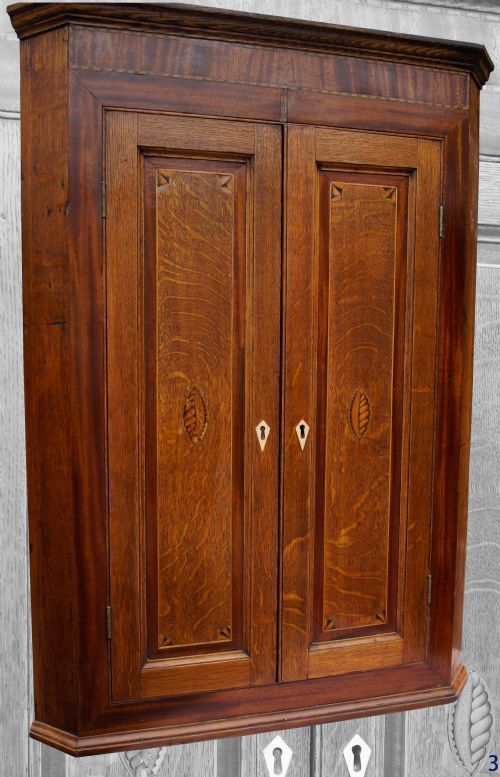
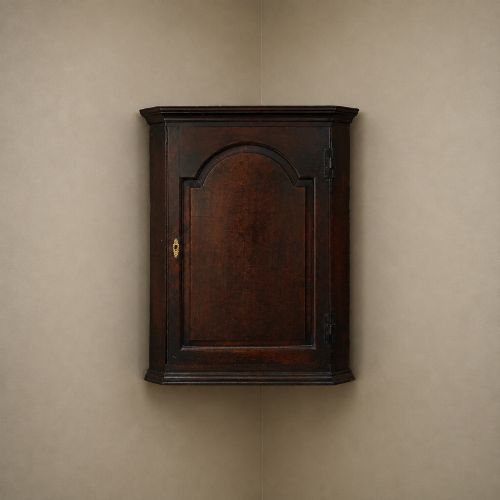
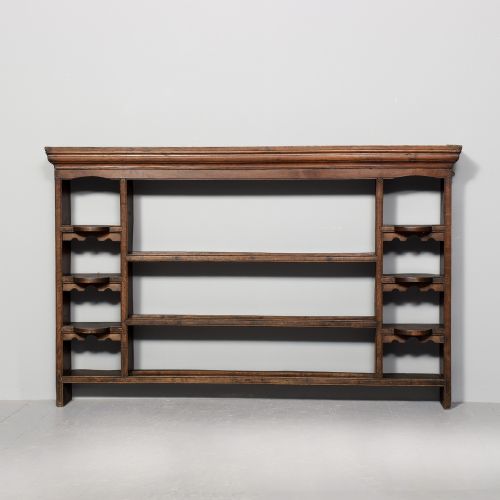
A country oak wall unit serves as a functional storage fixture, typically taking the form of a hanging corner cupboard, wall shelf, or plate rack designed to utilise vertical space efficiently. These pieces originate predominantly from the eighteenth and nineteenth centuries, spanning Georgian and provincial French styles.
Buyers will most frequently encounter hanging corner cupboards and corner cabinets on this page, alongside smaller wall shelves and plate racks. These items are constructed primarily in solid oak, occasionally supplemented by fruitwood or bleached oak variants.
The aesthetic is rooted in English country and Georgian vernacular traditions rather than urban formality. Simple panel doors, brass hinges, and practical shelving define the standard format of these domestic fixtures.
How they were made
Makers utilised solid oak alongside secondary timbers like fruitwood, shaping boards with hand tools to build sturdy hanging frames and corner units. Surfaces were finished simply to highlight the natural grain, relying on traditional joinery such as pegged mortise and tenon joints.
Metalwork played a functional role, with wrought iron and brass employed for hinges, latches, and hanging brackets. Glazed panels appeared in select cabinets, integrating glass alongside timber to enclose display spaces securely.
Country Oak Wall Unit Retail Price Guide 2026
Typical asking prices for country oak wall unit among the pieces listed under this phrase on Sellingantiques today, from the lower quarter to the upper quarter. They describe what is for sale here now, not the wider market.
Listings feature oak, fruitwood, and bleached oak materials across eighteenth and nineteenth-century Georgian and provincial styles.
What varies in quality
The distinction between standard examples and finer pieces lies in the selection of timber and the restraint of the joinery. Superior items exhibit well-figured oak boards, balanced proportions, and careful integration of brass or iron hardware that suits the vernacular style.
Regional execution also influences character, where regional British or French provincial workshops demonstrated differing levels of refinement in moulding details and panel construction. The integrity of the original hanging structure remains a primary marker of quality.
The Country Oak Wall Unit Glossary
- Corner cupboard
- A storage unit specifically built with a triangular footprint to fit neatly into the corner of a room, saving valuable floor space. These items usually feature a single hinged door enclosing internal shelves.
- Plate rack
- A wall-mounted wooden frame designed with vertical slats or grooves to display plates upright. They offer both practical kitchen storage and a decorative display method.
- Bleached oak
- Oak timber that has undergone a lightening process to soften the natural dark tones of the wood. This finish appears on specific French provincial pieces.
- Vernacular
- Architecture or furniture built by local craftsmen using traditional regional methods and materials, rather than following formal academic design rules. It prioritises utility and local availability.
Country Oak Wall Unit: Frequently Asked Questions
How do I hang a heavy oak wall cupboard safely?
Hanging a heavy oak unit requires locating solid wall studs or masonry to support the substantial weight of the timber. Secure fixings must be attached directly through the internal backboards into the structural wall.
Professional installation is recommended to ensure the vintage brackets and frame bear the load securely without pulling away from the plaster.
Are these corner cupboards suitable for modern kitchens?
These cabinets integrate well into modern spaces by providing period character and compact storage in unused room corners. They function effectively for storing glassware, ceramics, or everyday kitchen items.
The modest depth of corner units allows them to fit above countertops or furniture without dominating the room layout.
How do I tell an 18th-century piece from a 19th-century one?
Eighteenth-century pieces often display hand-sawn timber marks, pegged joinery, and simpler iron or brass hardware characteristic of early vernacular workshops. Nineteenth-century examples may incorporate machine-sawn components and slightly more standardised construction methods.
Examining the backboards and interior construction reveals the hand tools used during manufacture.
Should I wax or oil my oak wall unit?
Applying a traditional beeswax helps nourish the dry oak timber and maintains a soft sheen without sealing the wood permanently. Avoid modern synthetic varnishes that can alter the natural appearance of antique surfaces.
Gentle cleaning with a soft, dry cloth is sufficient for routine maintenance.