
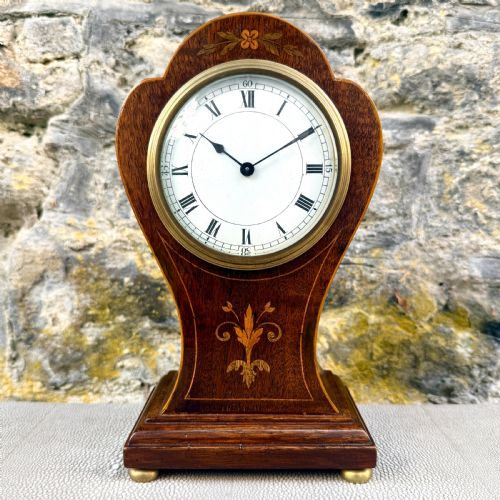
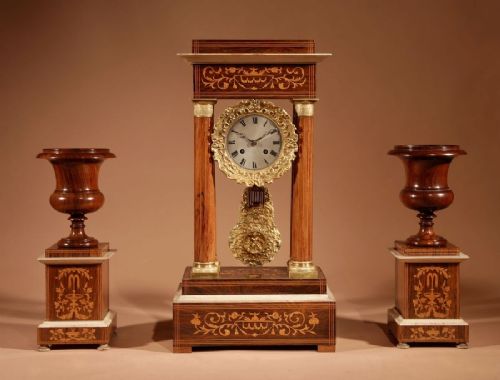
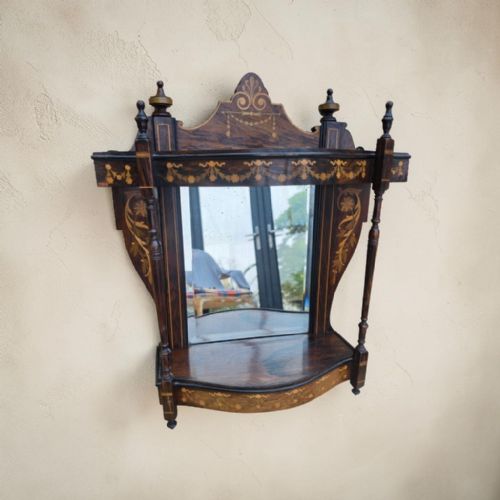
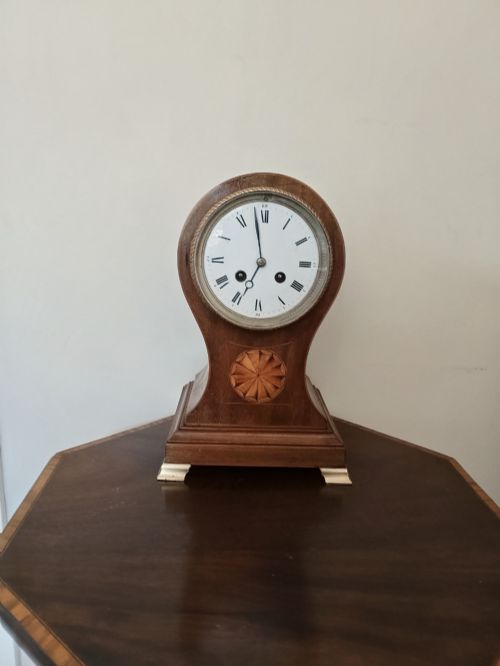

Inlaid Marquetry Shelves
Inlaid marquetry shelves combine precise woodcraft with practical display space, offering collectors a refined way to exhibit objects.
Inlaid Marquetry Shelves
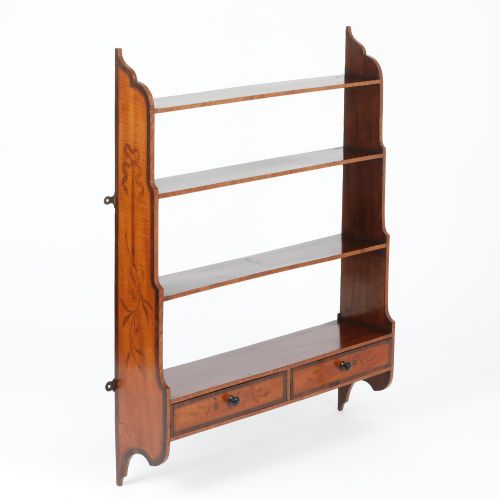
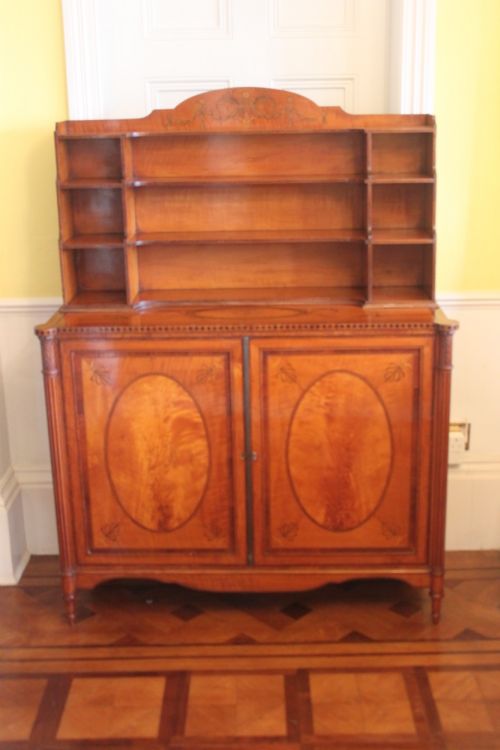
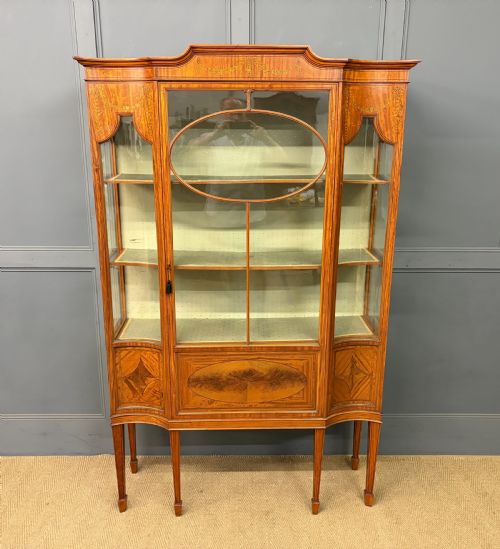
Inlaid marquetry shelves encompass wall-mounted tiers, hanging waterfall bookshelves, and multi-layered étagères designed for display and storage. The search phrase covers pieces originating from the 19th Century, Victorian, Edwardian, and Sheraton periods.
How they were made
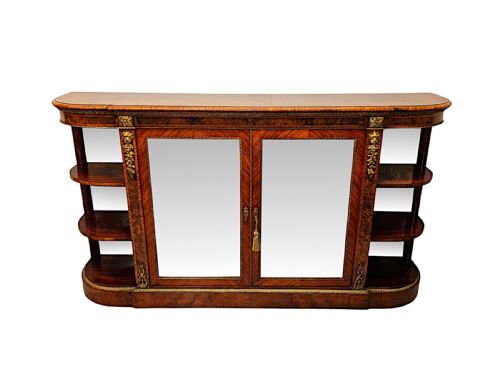
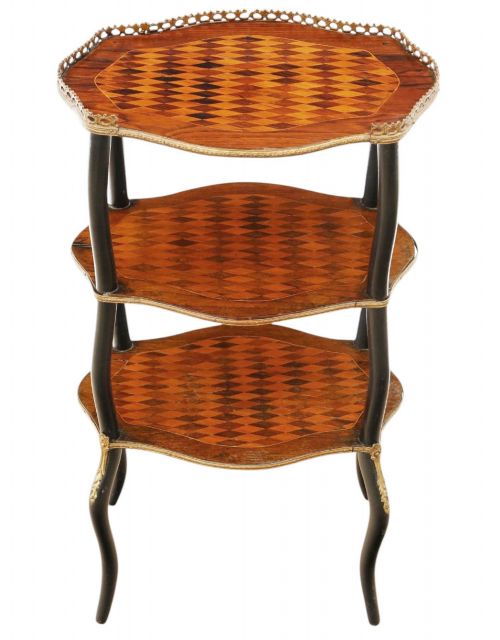
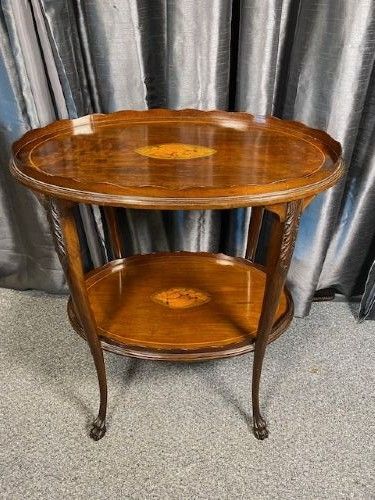
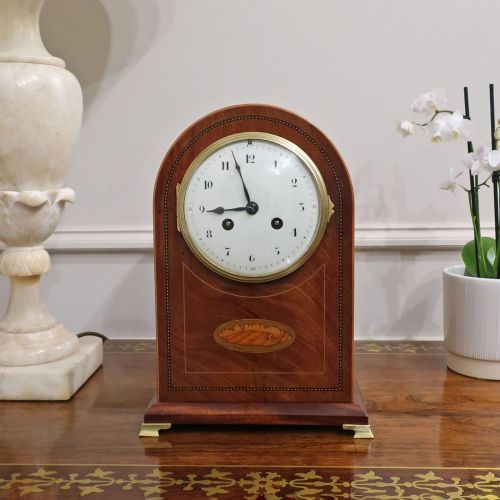
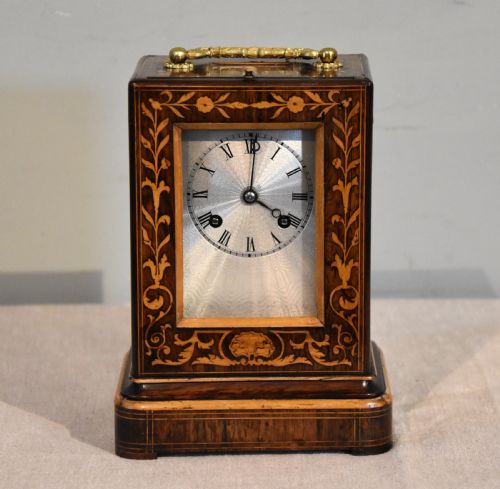
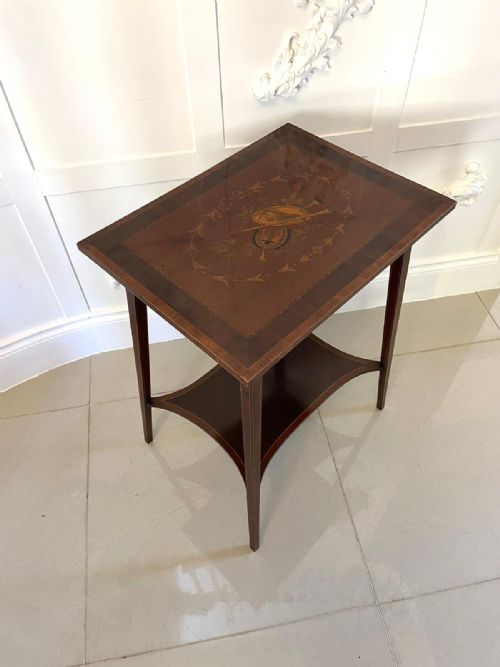
Craftsmen utilised foundational timbers such as mahogany, walnut, and rosewood, applying contrasting veneers of satinwood and exotic woods to create intricate marquetry and parquetry patterns. Surfaces often incorporated brass inlay, ormolu mounts, and ebonised detailing to accent the grain.
Joinery techniques combined solid timber construction with delicate framing for tiered shelving, glazed cabinets, and hanging units. Makers secured decorative panels and brass elements by hand, finishing surfaces to highlight the natural variation in olive wood, walnut, and mahogany.
Sorrento workshops specialised in turning humble olive wood into intricate corner shelves for Victorian parlours.
What varies in quality
The sophistication of the marquetry and parquetry work dictates the tier of the piece, separating standard production from master craftsmanship. Finely executed floral or geometric veneer patterns demand precise cutting and matching of contrasting woods.
The choice of secondary materials and structural hardware distinguishes finer examples. The inclusion of heavy ormolu mounts, cast brass details, and high-grade timbers such as burr walnut or satinwood elevates a functional shelf into a decorative focal point.
Gillows·Maple and Co·Edwards and Roberts
The Inlaid Marquetry Shelves Glossary
- Marquetry
- Decorative veneer work arranged in pictorial or geometric patterns on a wooden surface. It differs from parquetry by forming pictorial designs rather than repeating geometric tiles.
- Étagère
- A piece of furniture consisting of a set of open shelves for displaying small objects or ornaments. These pieces typically feature multiple tiers supported by slender columns or uprights.
- Ormolu
- Gilded bronze ornamentation applied to furniture, clocks, and decorative objects. This technique was widely utilised during the 19th Century French and Belle Epoque periods.
- Parquetry
- A geometric mosaic of wood pieces used for decorative floors and furniture surfaces. This technique creates regular patterns like squares, triangles, and lozenges.
- Satinwood
- A durable, lustrous yellow-brown timber imported from the tropics and frequently used for fine cabinet-making and inlay work. It provides a bright contrast against darker woods like mahogany and rosewood.
Inlaid Marquetry Shelves: Frequently Asked Questions
What is the difference between an etagere and hanging shelves?
An etagere is a freestanding multi-tiered piece of furniture designed for displaying ornaments and small objects across several open levels. Hanging shelves are compact units built to be mounted directly onto a wall.
Freestanding etageres often incorporate enclosed cabinets or glazed sections at the base alongside their open tiers. Hanging shelves focus purely on vertical display space without floor contact.
How do I identify Edwardian inlaid shelves?
Edwardian pieces typically date from around 1900 and feature lighter timbers such as satinwood or pale mahogany. The inlay work often displays floral garlands, ribbons, or neoclassical motifs influenced by Sheraton revivals.
Construction from this era tends to be refined and lighter in scale compared to heavier Victorian furniture. Brass fittings and delicate stringing details are common hallmarks of the Edwardian period.
Where were these shelves placed in a home?
These decorative shelves found places in formal drawing rooms, parlours, and bedrooms for displaying porcelain, small clocks, and collectibles. Corner shelves were specifically utilised to maximise awkward room angles without blocking pathways.
Smaller hanging units and etageres provided accessible display surfaces in tighter domestic spaces. Their combination of woodwork and open tiers suited the Victorian and Edwardian desire for curated interior styling.
What woods were used for marquetry inlay?
Craftsmen employed a palette of contrasting timbers including satinwood, rosewood, walnut, and ebonised wood to create distinct pictorial patterns. Lighter woods stood out sharply against darker foundational bases like mahogany or burr walnut.
Specialist woods like olive wood also appeared in specific regional pieces, such as Sorrento productions. The natural grain variation of each timber added texture and depth to the inlaid designs.