





Inlaid Mahogany Timekeeper
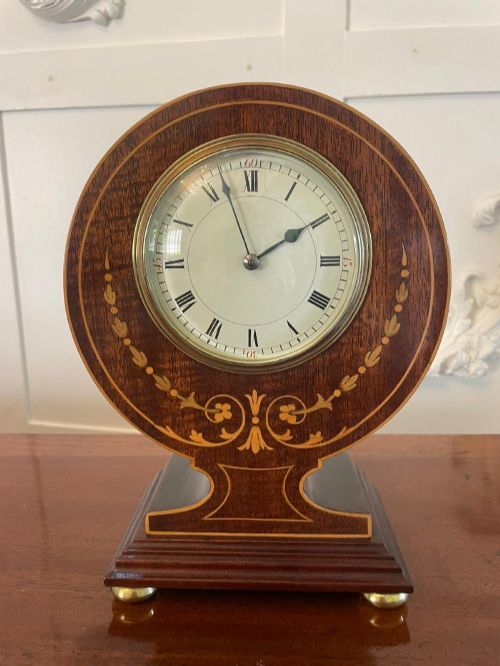
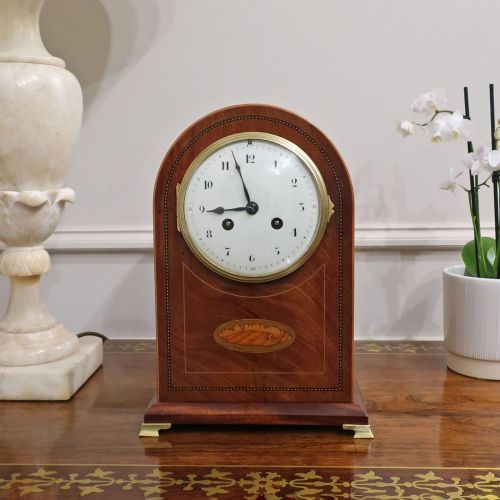
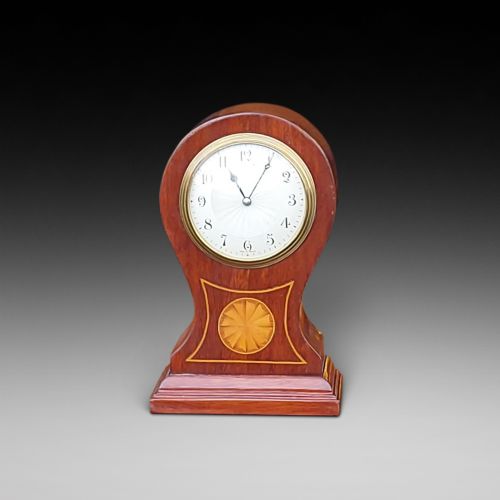
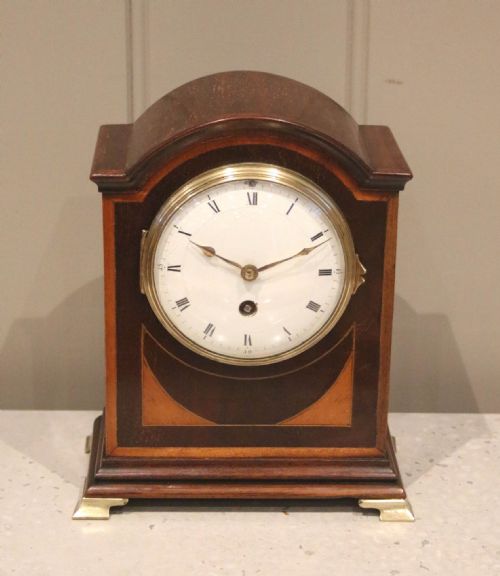
An inlaid mahogany timekeeper brings warmth and precision into a room, combining rich timber cases with delicate contrasting line work.
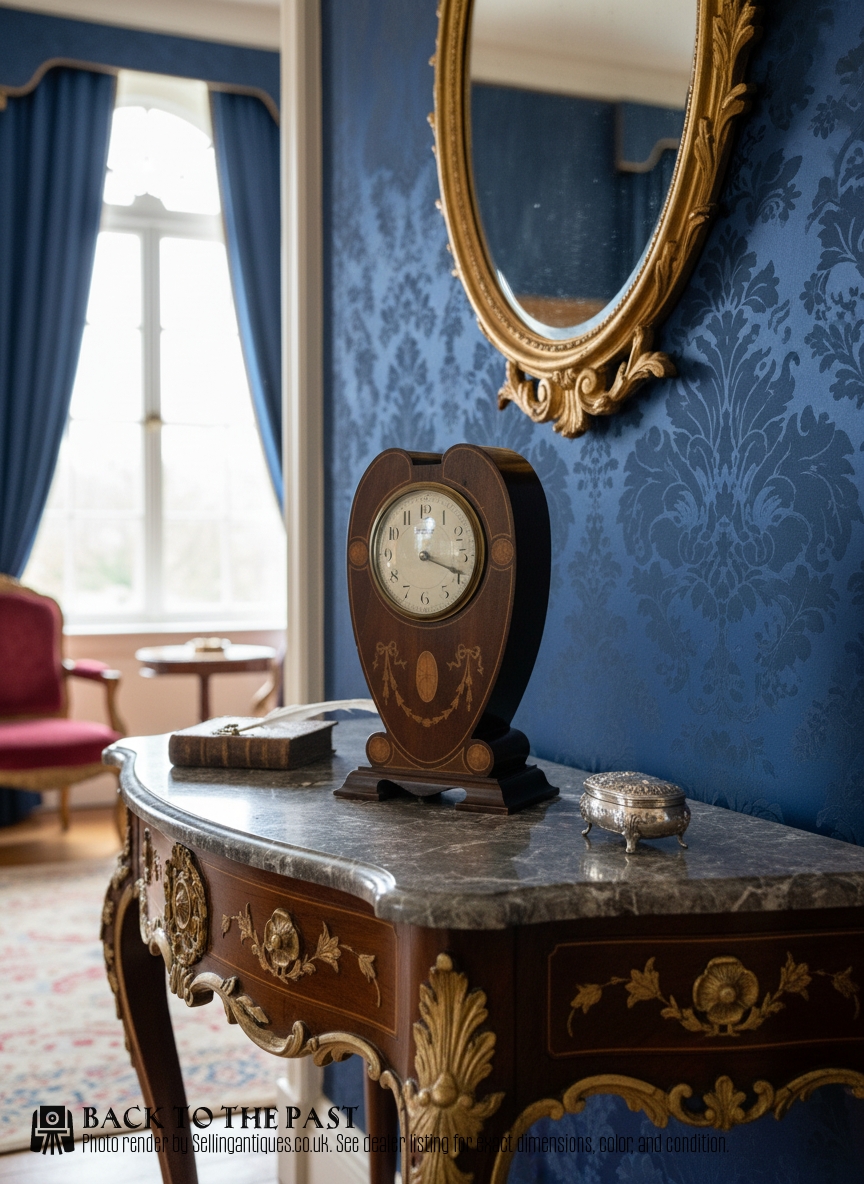
Inlaid Mahogany Timekeeper
An inlaid mahogany timekeeper is primarily a mantel clock, desk clock, bracket clock or longcase clock enclosed in a timber case. When buyers search for an inlaid mahogany timekeeper, they encounter pieces ranging from compact Edwardian desk examples to taller Georgian and Regency bracket or longcase forms.
The material palette centres on mahogany, often enhanced with satinwood, boxwood, and marquetry inlay. These examples span several periods, with Edwardian and Victorian pieces appearing most frequently alongside Regency and Georgian formats.
How they were made
Cabinet makers constructed these bodies from solid mahogany and veneers, embedding contrasting light woods such as satinwood and boxwood into the surfaces. Marquetry inlay techniques formed floral motifs, notably poppies, directly into the timber facades.
Clockmakers integrated brass fittings, glass bezels, and white enamel dials into the cases, powering movements by single fusee mechanisms or eight-day gear trains. Carved details occasionally supplemented the inlaid lines on French and English chassis.
Listings feature brass, glass, and enamel alongside mahogany, satinwood, and boxwood across Edwardian, Victorian, Regency, and Georgian periods.
What varies in quality
The refinement of the timber and the crispness of the boxwood or satinwood inlay define the upper tier of these clocks. Finely detailed marquetry, such as floral poppy designs, distinguishes superior Edwardian and Victorian cases from plain housings.
The presence of named makers such as W. Burton or Dent of London elevates a desk or mantel clock beyond standard production. Movement complexity, including single fusee and eight-day systems, further separates standard timepieces from exceptional examples.
W. Burton·Dent of London
The Inlaid Mahogany Timekeeper Glossary
- Fusee
- A conical pulley used in spring-driven clocks to equalise the torque of the mainspring as it winds down. This mechanism ensures consistent timekeeping across the duration of the wind.
- Marquetry
- The art of applying pieces of veneer to a structure to form decorative patterns. Craftsmen utilised satinwood and boxwood on mahogany bases to achieve contrasting designs.
- Bracket clock
- A portable spring-driven clock originally designed to sit on a wall bracket or table. These pieces frequently feature brass handles and glazed panels.
- Moon dial
- A specialised clock face displaying the phases of the lunar cycle alongside the standard hours. Such dials appear on taller Georgian longcase formats.
- Enamel dial
- A fused glass surface fired onto metal to create a smooth, durable face for numerals. These dials provide a crisp white background against dark mahogany cases.
Inlaid Mahogany Timekeeper: Frequently Asked Questions
Where should I place a mantel clock?
These clocks sit comfortably on a mantelpiece, sideboard, or desk where the wood grain and inlay remain visible. Stable, level surfaces protect the internal pendulum or balance wheel.
Keep them away from direct sunlight and damp environments to preserve the polished mahogany finish and delicate satinwood stringing.
How do I wind an eight day clock?
An eight day clock requires winding approximately once a week using a matching key inserted into the dial holes. Turn the key gently until you feel resistance, avoiding over-winding.
Consult the specific movement type, such as a single fusee system, to ensure correct handling of the gear train.
How do I tell Edwardian from Victorian clocks?
Edwardian timepieces often display lighter mahogany tones, simpler satinwood inlay, or delicate floral marquetry like poppies. Victorian examples tend to feature heavier proportions and darker timber finishes.
Examining the dial construction and internal movement helps confirm the period alongside the exterior cabinet style.
What is a bracket clock?
A bracket clock is a portable timepiece housed in a substantial wooden case, frequently fitted with a brass carrying handle on top. Originally designed to rest on a wall bracket, they transitioned to table and mantel use.
These pieces showcase sophisticated joinery and frequently incorporate fusee movements.