


Inlaid Mahogany Dressing Mirror
An inlaid mahogany dressing mirror brings refined timber and adjustable glass together on a tabletop or floor stand.
Inlaid Mahogany Dressing Mirror
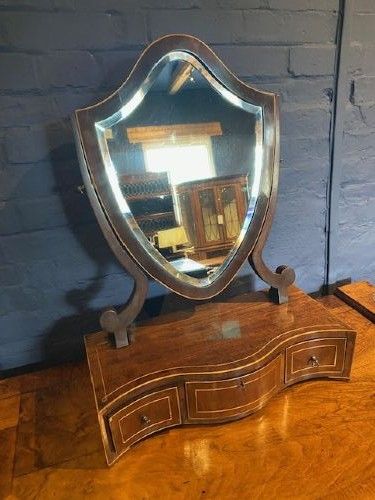
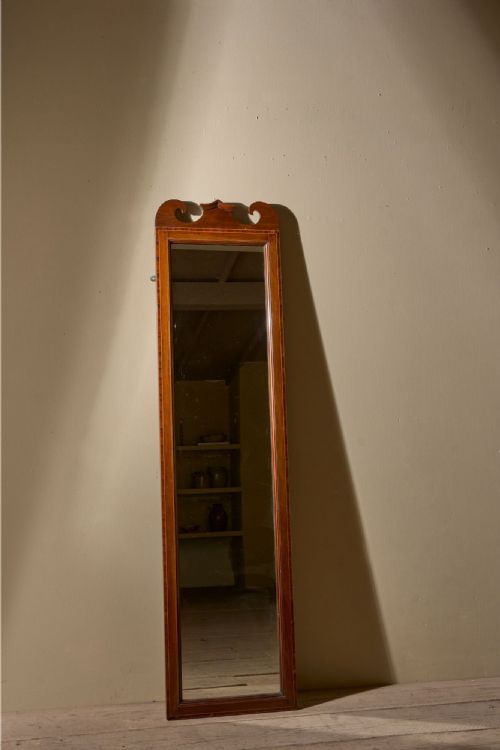
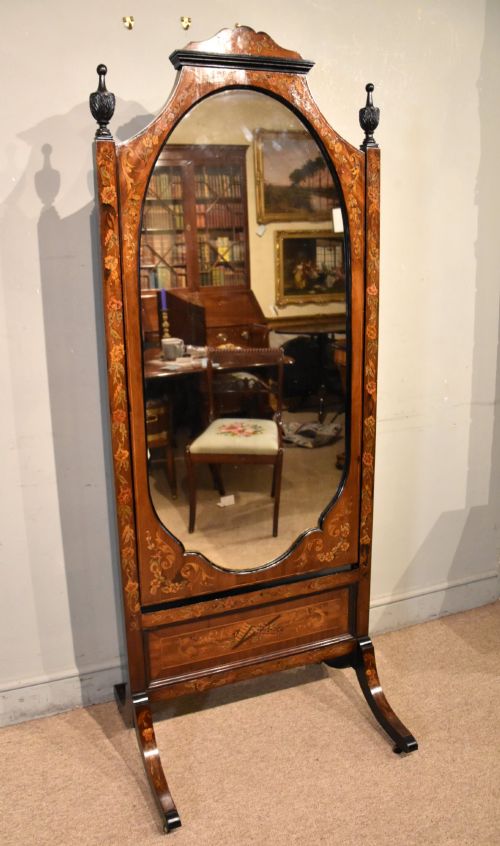
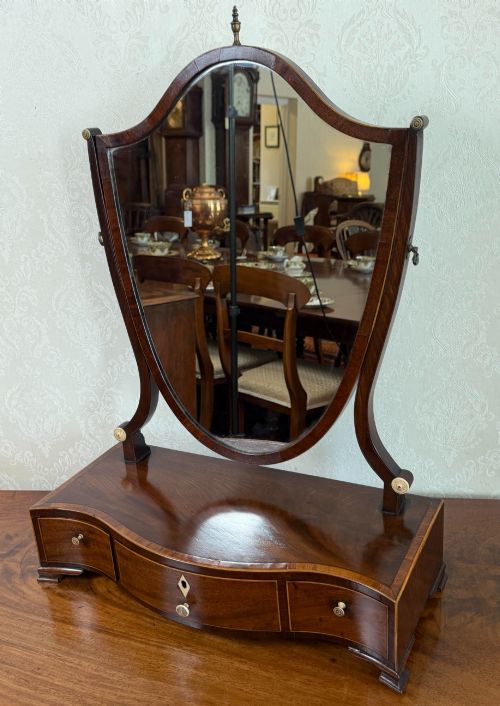
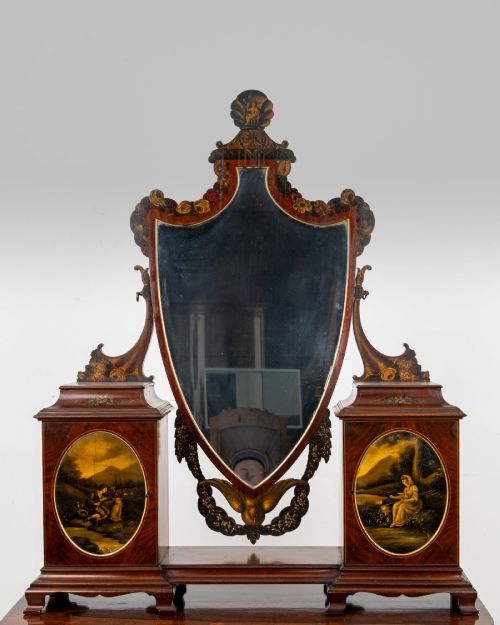
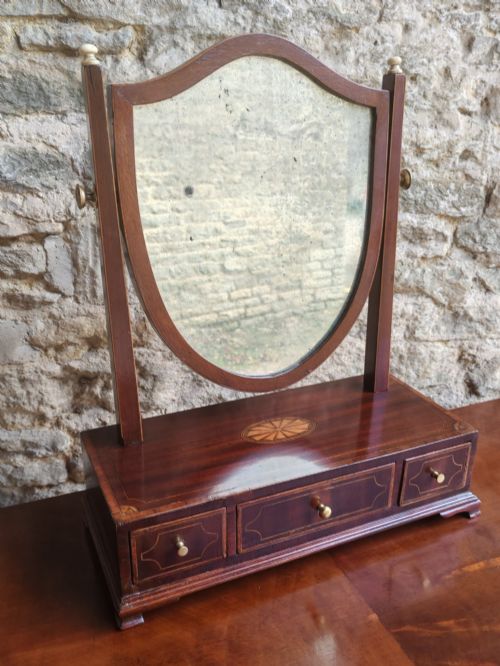
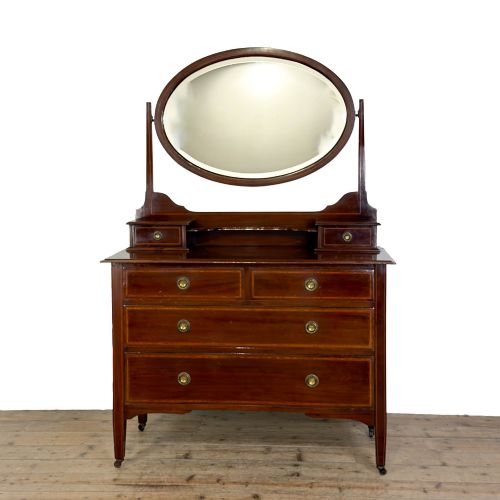
When you search for an inlaid mahogany dressing mirror, you encounter pieces spanning from the eighteenth century into the Edwardian period, with table-standing swing mirrors and tall cheval glasses appearing most often. These objects range from compact shield-shaped toilet mirrors on small drawer boxes to large adjustable cheval mirrors and dressing tables equipped with multiple compartments.
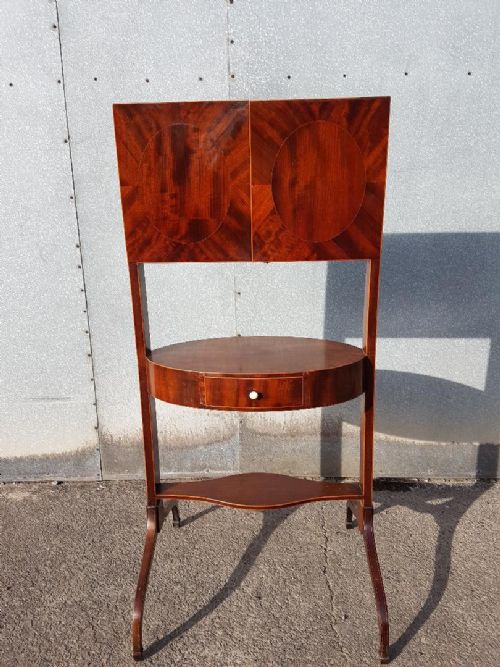
The evidence shows forms originating across Georgian, Regency, Victorian, and Edwardian eras, encompassing Sheraton Revival designs and Dutch marquetry styles. Table top toilet mirrors and larger floor-standing dressing mirrors dominate the selection, alongside related pieces such as shaving stands and ladies worktables.
Materials and Construction
Makers utilised solid mahogany and mahogany veneers as the primary timber, combined with clear mirror glass and supporting brass hardware. Decorative detailing relied on contrasting timbers such as satinwood, boxwood, and ebony inlay to create geometric lines or elaborate marquetry motifs.
Mirrors were engineered with pivoting swing frames mounted on upright arms, often above base boxes containing small drawers. Floor-standing cheval mirrors utilised sturdy standing frames to hold large adjustable glass plates securely.
Listings span multiple eras from Georgian and Regency to Victorian and Edwardian periods, constructed using mahogany, satinwood, and boxwood inlay.
Distinctions in Quality
The standard of execution in the timber inlay distinguishes standard pieces from exceptional examples. Crispness in the boxwood and satinwood stringing, alongside fine dovetailing on the drawer boxes, marks the work of superior cabinet makers.
Proportion and the retention of original mirror glass and brass mounts define the better specimens. Finer examples display balanced proportions between the glass frame and the supporting base structure.
Edwards & Roberts
The Inlaid Mahogany Dressing Mirror Glossary
- Cheval mirror
- A tall floor-standing mirror mounted on a frame that allows the glass to tilt. This form permits the viewer to see their entire outfit.
- Toilet mirror
- A smaller mirror designed to sit upon a dressing table, chest of drawers, or washstand. These usually feature a small box base fitted with drawers.
- Marquetry
- Decorative woodwork where pieces of various coloured timbers are fitted into a veneer to form patterns. Floral and pictorial designs are common on these surfaces.
- Shield shaped
- A mirror glass cut into the curved outline of a heraldic shield. This silhouette gained popularity during the Georgian period.
- Boxwood inlay
- Narrow strips of pale yellowish boxwood inserted into grooves in darker mahogany. It creates sharp linear borders around drawers and frames.
Inlaid Mahogany Dressing Mirror: Frequently Asked Questions
What is a cheval mirror?
A cheval mirror is a tall dressing glass mounted on a vertical frame with pivots, allowing the entire plate to swing. These freestanding pieces were designed for full-length viewing in bedrooms and dressing rooms.
They appear in various period styles, supported by stable floor feet or cross-braced stands.
How do I date an antique mirror?
Dating relies on observing construction methods, timber choice, and the style of the inlay work. Georgian and Regency pieces often show hand-cut dovetails and subtle boxwood stringing, while Edwardian examples adopt Sheraton Revival motifs.
The edge bevelling of the mirror glass and the type of brass hardware also provide clues to the decade of manufacture.
Where should I place a dressing mirror?
Table top versions sit comfortably on top of chests of drawers, sideboards, or dedicated dressing tables. Ensure the surface is stable and deep enough to support the weight of the base box.
Floor-standing cheval mirrors require adequate clearance around the base to allow the frame to tilt freely without obstruction.