
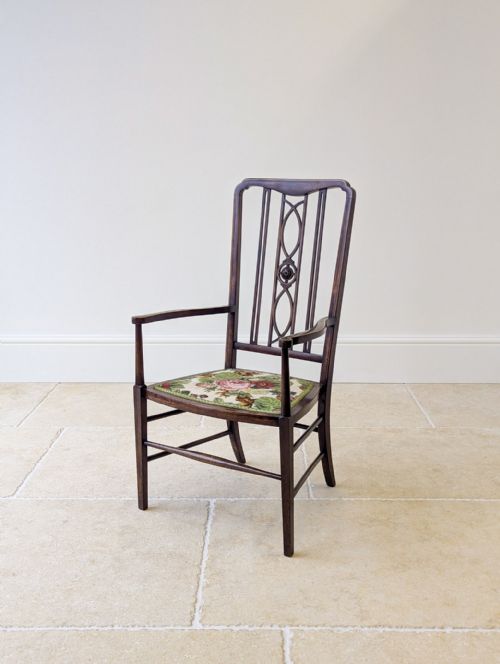
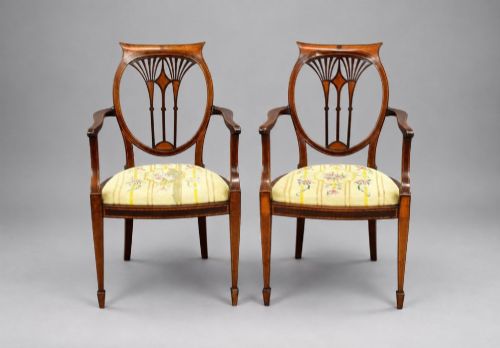
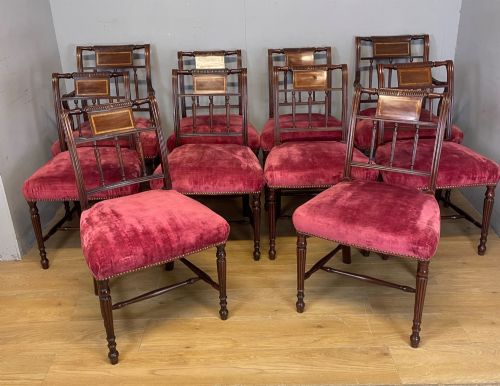
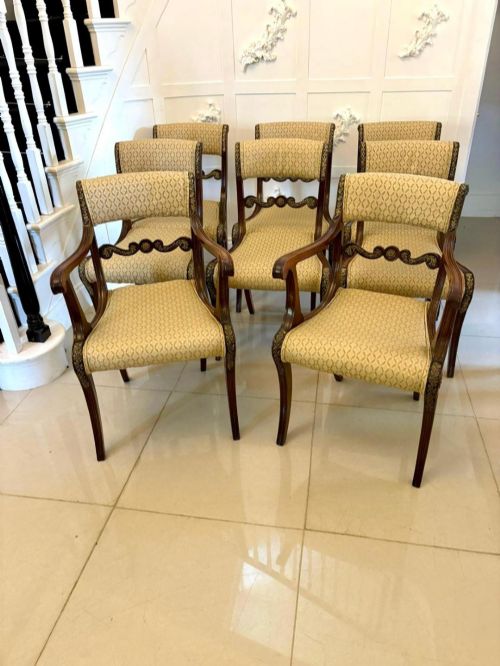

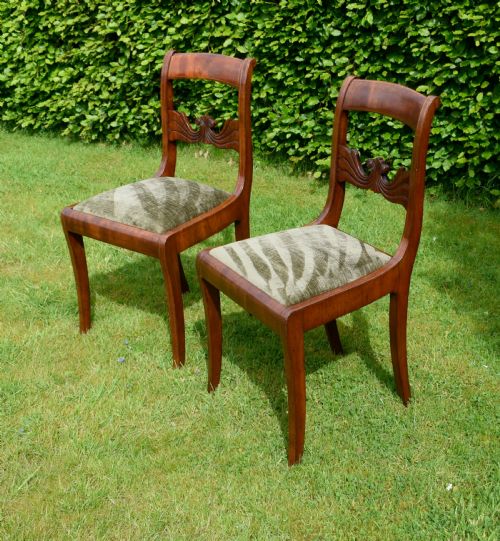


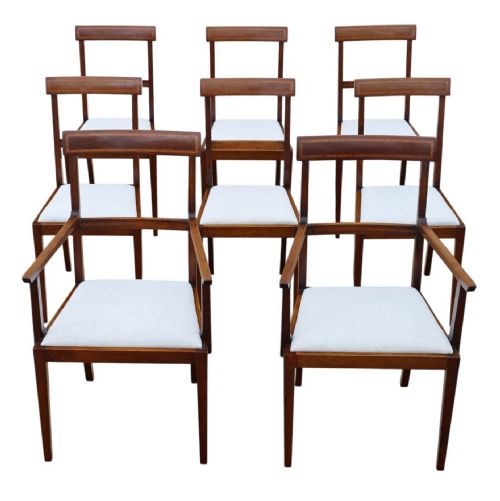


Inlaid Mahogany Dining Chairs
Inlaid mahogany dining chairs bring together rich timbers and precise decorative banding to anchor a traditional room.
Inlaid Mahogany Dining Chairs
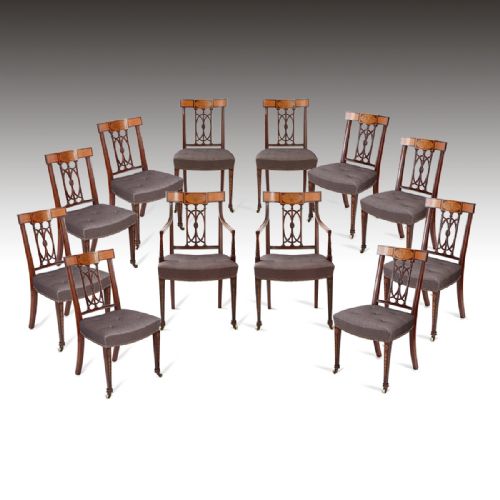
When you search for inlaid mahogany dining chairs, you encounter seating designed for formal domestic interiors across several historic periods. The selection spans Georgian, Regency, Victorian, and Edwardian eras, offering everything from single carvers to matched sets of twelve.
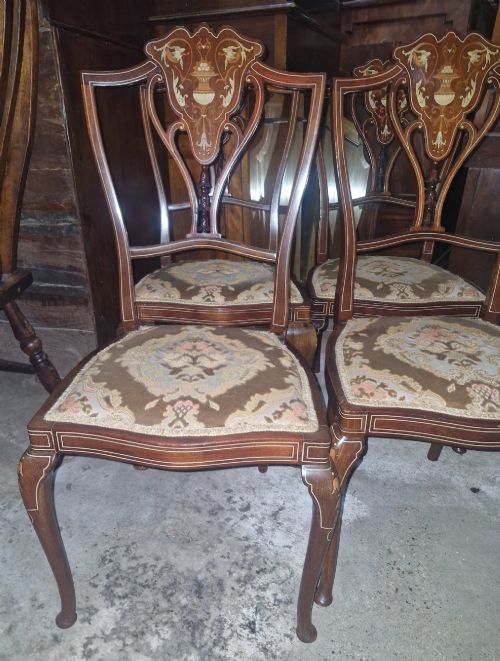
The versions you are most likely to meet on this page include Edwardian interpretations, Sheraton Revival suites, and earlier 19th-century Regency examples. These pieces typically function around the dining table, though occasional salon and bedroom chairs also appear.
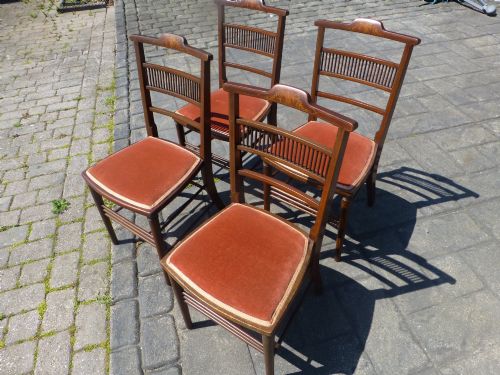
Construction forms range from straightforward side chairs with vertical splats to robust armchairs and elbow seats upholstered in leather, fabric, or silk. Matched sets frequently survive intact, reflecting their original commissioning for substantial dining rooms.
Materials and Technique
Cabinetmakers built these frames primarily using solid mahogany, valued for its stability, depth of grain, and dark reddish-brown colour. Workshops often paired this primary timber with contrasting lighter veneers such as satinwood for decorative effect.
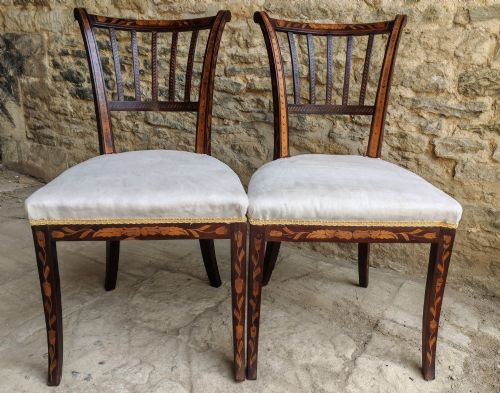
The defining ornamental technique involves contrasting wood inlay, stringing, and marquetry cut precisely into the primary surface. Some Regency and later pieces incorporate brass inlay alongside timber banding to highlight the structural lines of the backrest.
Several chairs feature wheatsheaf marquetry designs, bringing agricultural symbolism straight to the dining room.
Assessing Quality and Execution
The standard of an inlaid mahogany dining chair rests on the crispness of its joinery and the precision of the timber inlay. Finely made examples display tightly fitted joints, smooth hand-carved details, and flush inlay work that remains perfectly level with the surrounding mahogany.
Proportion and scale separate standard regional pieces from high-status commissions. Superior sets retain their original matching frames, balanced splats, and harmonious grain patterns across every chair in the suite.
Gillows·Lamb of Manchester·Shoolbred
The Inlaid Mahogany Dining Chairs Glossary
- Carver
- An armchair designed with open sides to accommodate formal clothing, usually placed at the head of a dining table.
- Stringing
- A thin, linear strip of contrasting light or dark wood inlaid into a channel cut into the mahogany surface.
- Marquetry
- Elaborate decorative patterns formed by fitting together small pieces of various veneers into a larger wooden panel.
- Splat
- The vertical central strip of wood forming the middle of a chair back.
- Regency
- A style period spanning the early 19th century, known for classical restraint and occasional brass inlay.
Inlaid Mahogany Dining Chairs: Frequently Asked Questions
How do I spot a matched set?
Examine the timber grain patterns and the minor variations in hand-cut joinery across the group. Matched sets usually share identical dimensions, turning details, and wear patterns that confirm they originated from the same workshop.
Individual chairs assembled later into a set often display subtle differences in backrest height or inlay execution upon close inspection.
Were these chairs used daily?
Most formal dining chairs were built for specific social occasions rather than heavy everyday use. Their sturdy mahogany frames allowed them to endure generations of dining, though upholstery and seat padding frequently required replacement.
Survivors in original condition often show minimal wear on the structural joints compared to ordinary household furniture.
How do I care for mahogany?
Protect the polished timber surfaces by keeping them away from direct sunlight and sudden temperature shifts. Regular dusting with a dry cloth helps preserve the natural sheen of the mahogany.
Avoid commercial silicone polishes, which can build up on the wood and dull the contrast of the delicate inlay work.
How do I date an inlaid chair?
Look to the overall silhouette, the style of the leg, and the complexity of the inlay motifs to establish the period. Georgian and Regency pieces rely on classical proportions and sparse brass or satinwood lines, while Edwardian and Sheraton Revival examples often feature lighter frames and more intricate marquetry.
Construction methods inside the seat frame also provide clear physical evidence of the manufacturing era.