
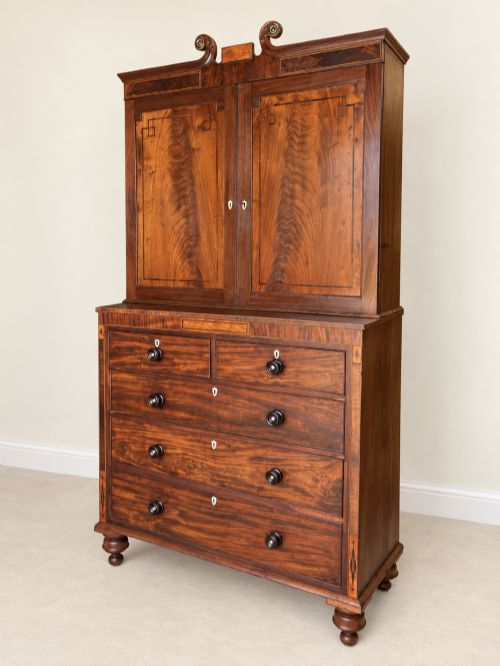
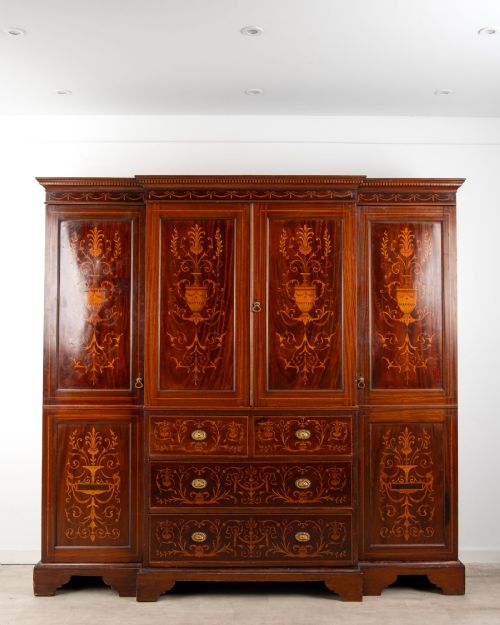
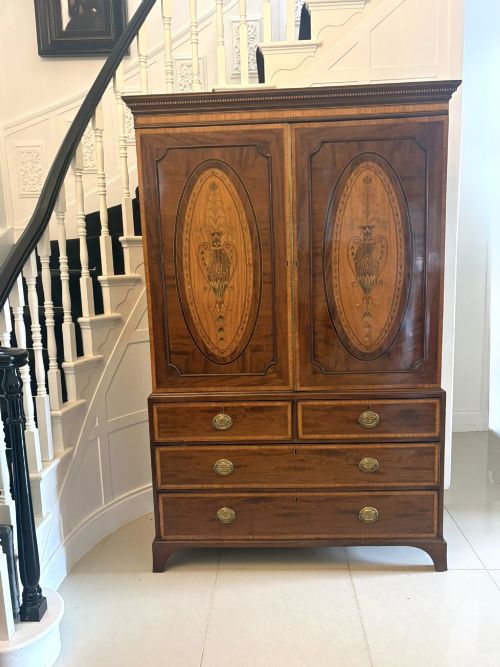
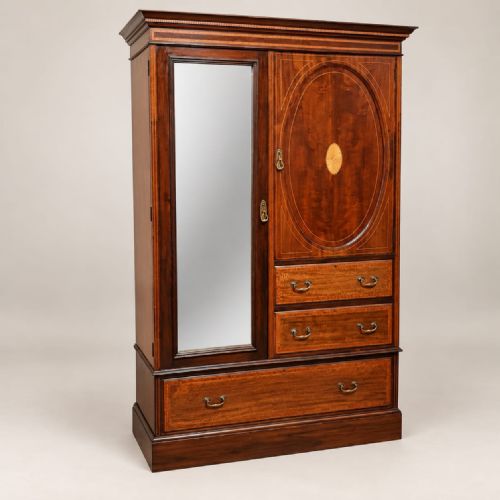
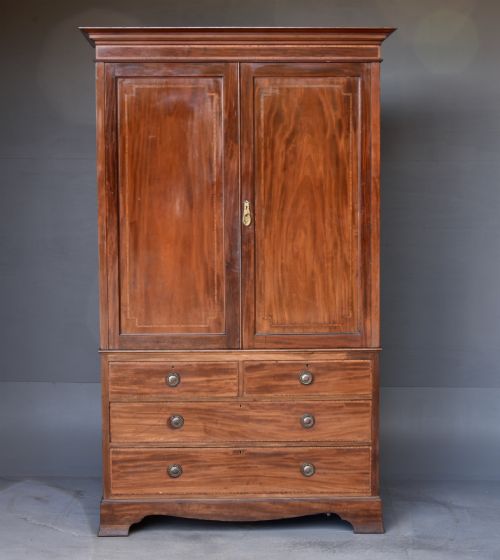
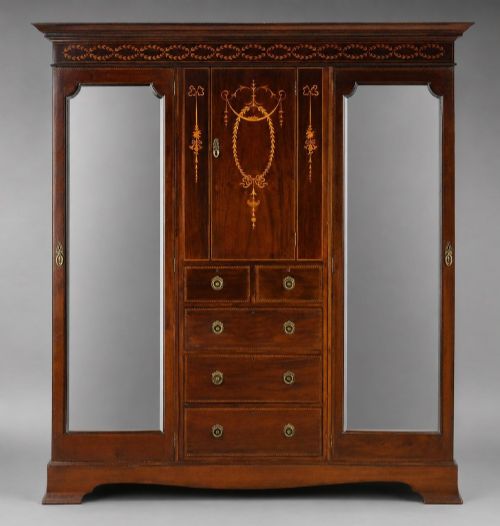
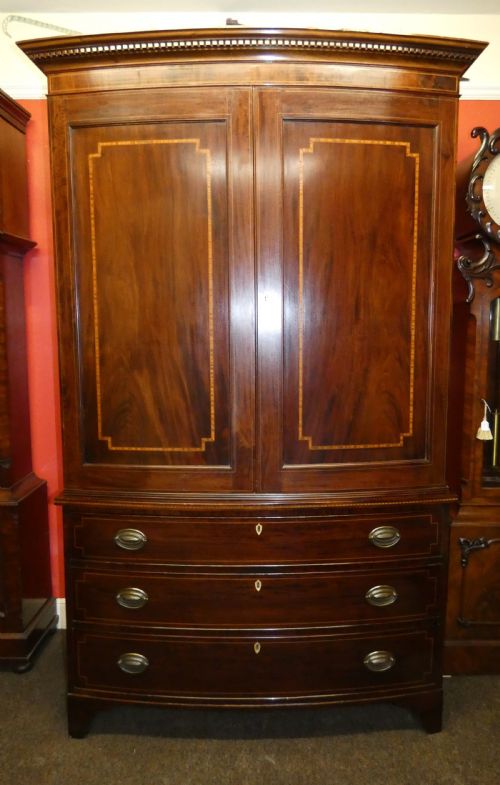
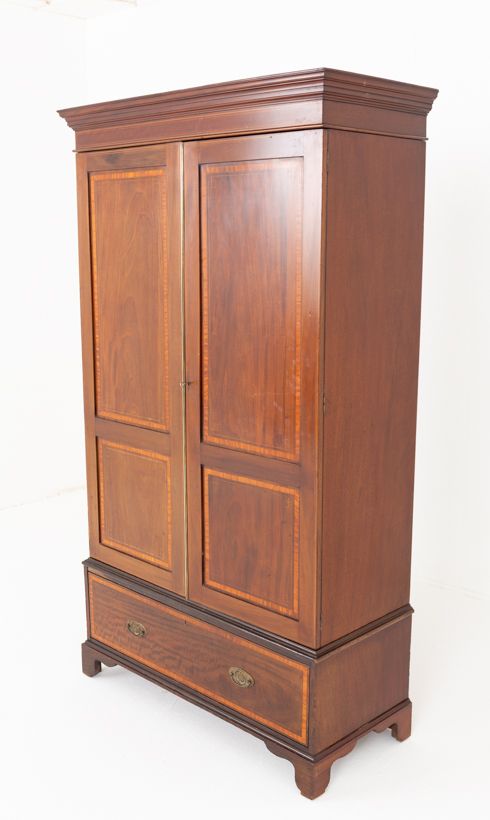
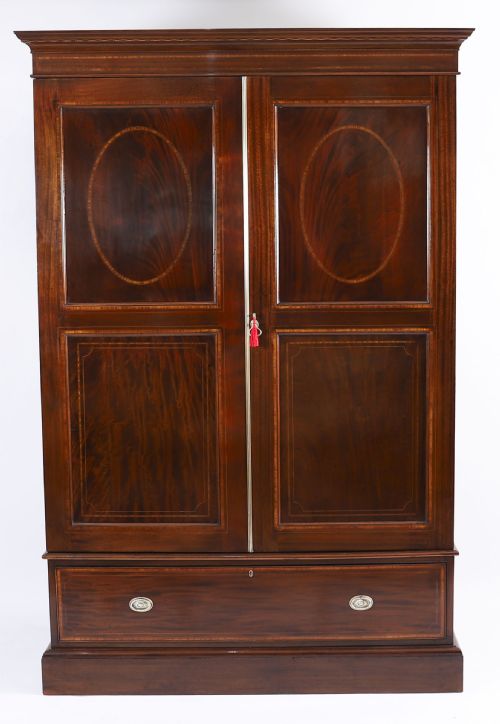
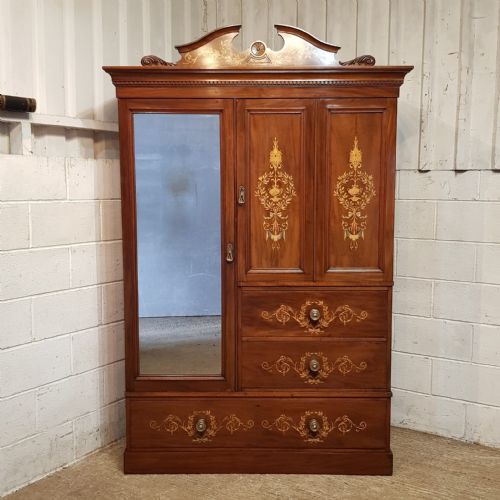
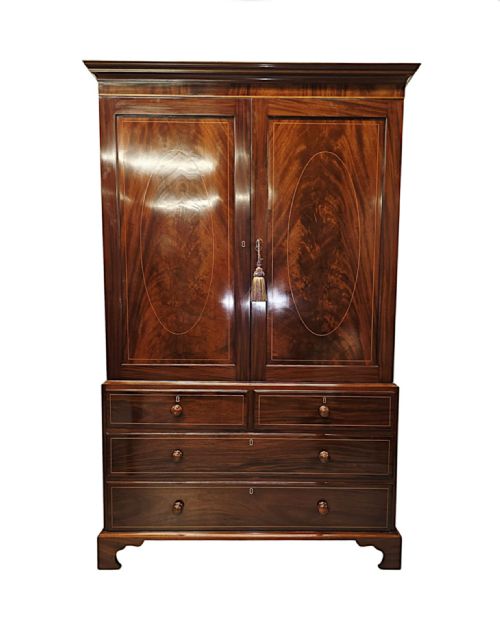
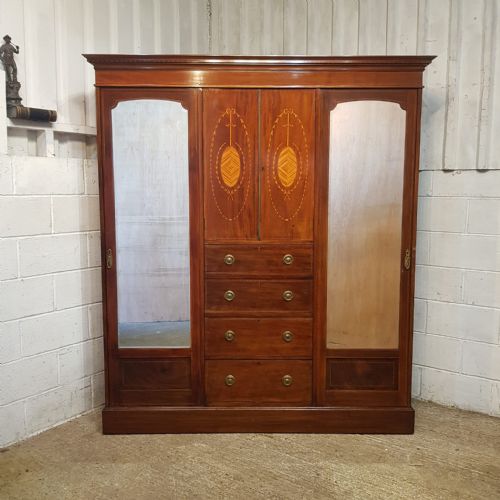
Inlaid Mahogany Clothes Press
An inlaid mahogany clothes press provides substantial bedroom storage through fitted interior trays or hanging space enclosed by grand timber doors.
Inlaid Mahogany Clothes Press
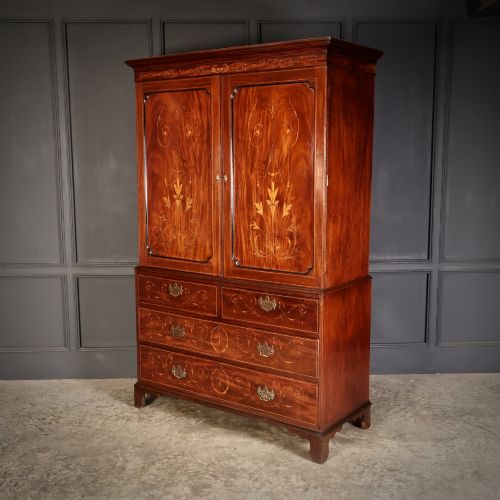
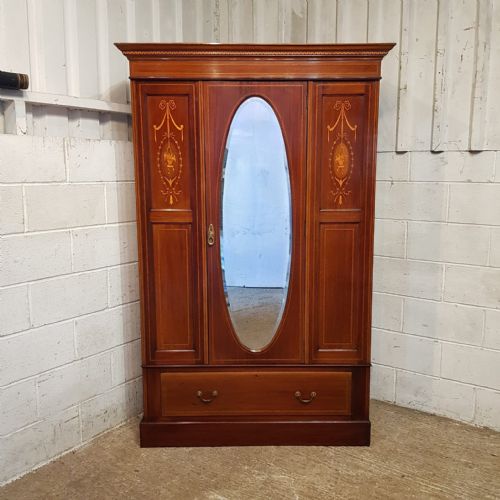
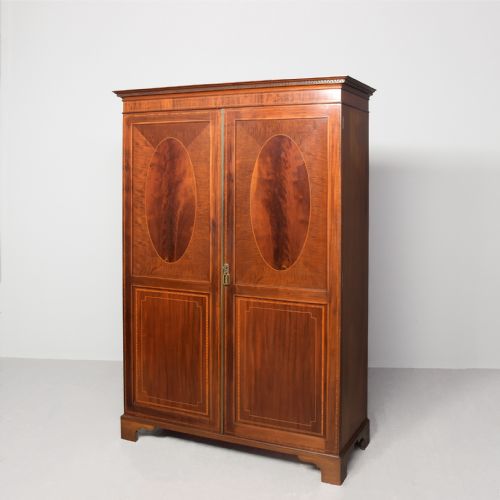
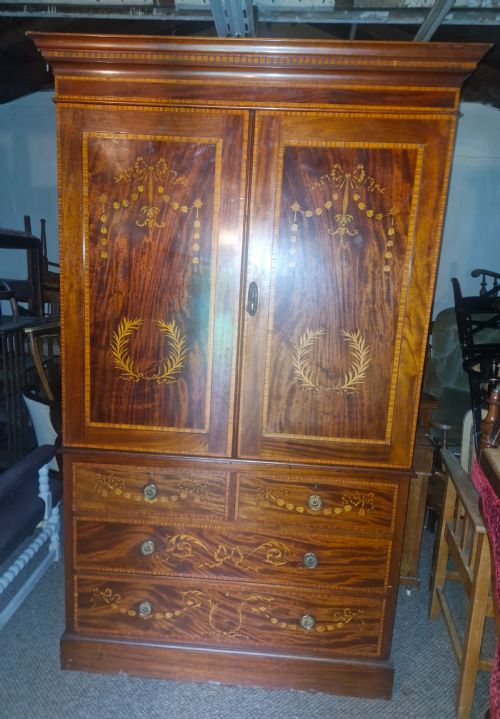
An inlaid mahogany clothes press combines deep storage architecture with decorative timber work spanning multiple centuries of cabinet making. These large case pieces appear in forms ranging from compact Edwardian wardrobes to expansive Georgian linen presses and breakfront cupboards.
The layout typically unites upper linen storage or hanging sections with lower drawer compartments, frequently described in period terminology as housekeepers wardrobes or gentleman's cabinets. Buyers encounter examples originating across the Georgian, Regency, Victorian and Edwardian eras, often displaying regional variations such as Channel Island proportions.
How they were made
Cabinet makers constructed these large carcasses primarily using solid mahogany and flame mahogany veneers over secondary timbers, selecting cuts to highlight natural grain movement. Workshops applied contrasting details using boxwood and satinwood inlay, alongside geometric bandings and marquetry motifs.
Structural hardware relied upon cast brass escutcheons and handles, while internal fittings incorporated sliding linen trays and clothes rails. Joinery techniques encompassed framed panel doors, hand-cut dovetails for drawer construction, and architectural cornices.
Inlaid Mahogany Clothes Press Retail Price Guide 2026
Typical asking prices for inlaid mahogany clothes press among the pieces listed under this phrase on Sellingantiques today, from the lower quarter to the upper quarter. They describe what is for sale here now, not the wider market.
Object forms span compact single wardrobes, linen presses, breakfront cabinets, and Channel Island hall wardrobes.
What varies in quality
The standard of an inlaid mahogany clothes press rests upon the selection of timber veneers, where highly figured flame mahogany and crisp, balanced satinwood or boxwood inlay indicate superior workshop output. Precision in the alignment of marquetry panels and the crispness of carved or banded details separate standard utility items from master cabinet work.
Internal construction integrity also dictates grade, visible through the depth and dovetailing of internal linen slides, the weight of cast brass furniture, and the stability of large door panels. Pieces retaining original fitted interiors and functional locking mechanisms command higher regard among collectors.
maples & co·Druce & Co.·WYLIE LOCHHEAD·E. A. TAYLOR·Edwards & Roberts
The Inlaid Mahogany Clothes Press Glossary
- Clothes press
- A large cabinet designed for storing folded garments, textiles, or linens, typically featuring sliding trays behind upper doors above lower drawers.
- Compactum wardrobe
- A multi-compartment wardrobe combining hanging space, shelves, and drawers within a single unified case piece.
- Flame mahogany
- A veneer cut from the fork of a mahogany tree where the branches join the trunk, producing a distinctive flickering flame pattern.
- Satinwood inlay
- Contrasting blonde timber sections inserted into the mahogany surface to create geometric borders, fans, or floral motifs.
- Marquetry
- Elaborate decorative patterns formed by fitting together different veneers of wood, shell, or ivory onto a structural ground.
Inlaid Mahogany Clothes Press: Frequently Asked Questions
How do I use a clothes press today?
A clothes press serves as a primary bedroom wardrobe, using its internal sliding trays for folded garments and lower drawers for general apparel.
Larger combination models also accommodate modern hanging rails within their upper cabinet sections while maintaining their traditional exterior presence.
What is the difference between a press and a wardrobe?
A traditional press incorporates internal sliding trays designed for flat linen storage behind upper doors, whereas a standard wardrobe focuses primarily on vertical hanging space.
Many surviving pieces bridge both categories through combination layouts developed during the nineteenth and early twentieth centuries.
How do I date an inlaid mahogany piece?
Dating relies upon architectural proportions, timber selection, and inlay styles, moving from Georgian architectural cornices and delicate satinwood banding toward heavier Victorian breakfronts and Edwardian Neo-Classical motifs.
Secondary woods, construction methods, and hardware styles provide additional chronological markers for the cabinet.
Will a large clothes press fit in a modern room?
These pieces require careful measurement of both floor footprint and ceiling height, particularly grand breakfront or triple wardrobe variants designed for large period rooms.
Many examples dismantle into modular sections, such as cornices, upper carcases, and base drawer units, to assist with transport and positioning.