
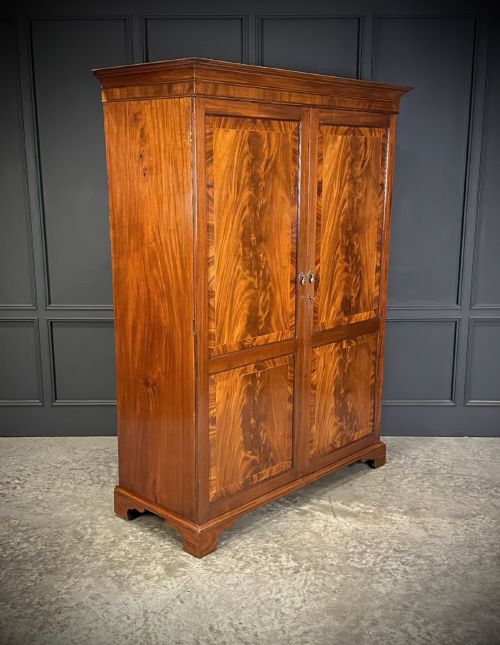
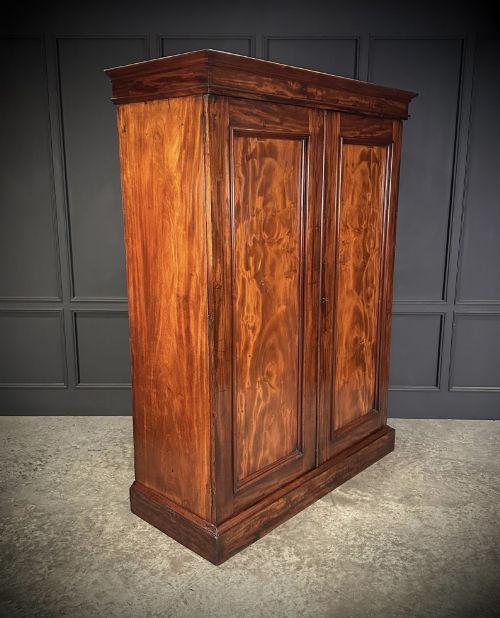
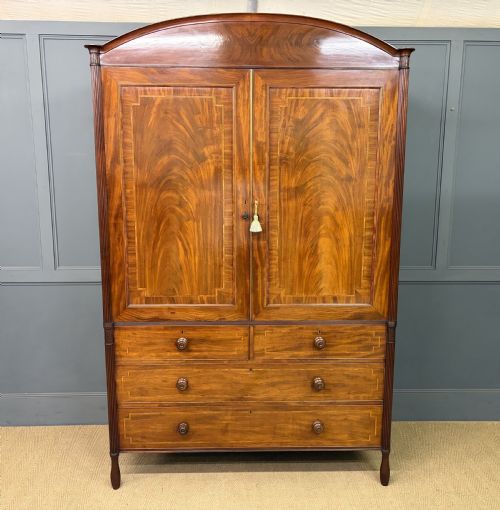

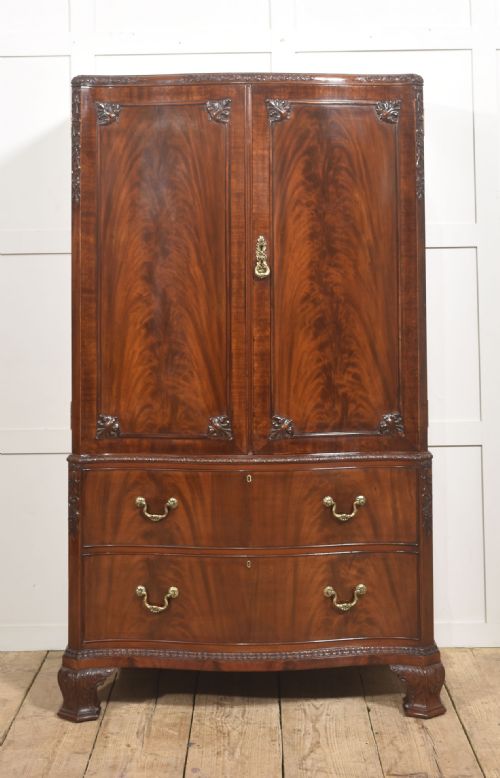

Georgian Flame Mahogany Wardrobe
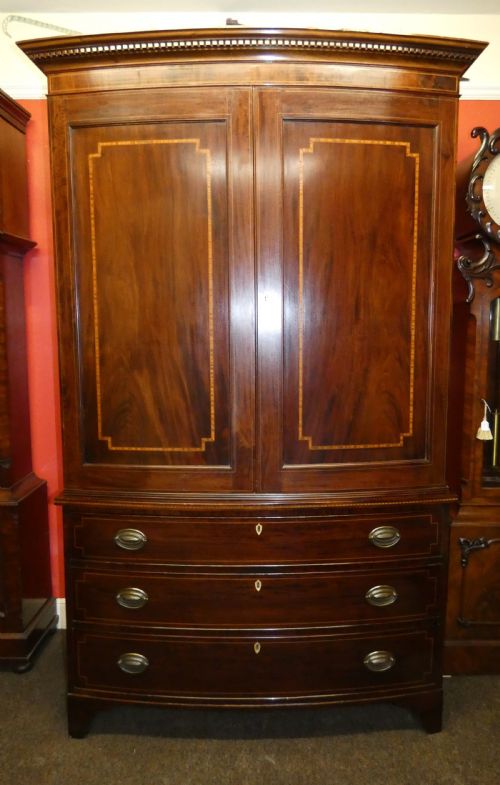
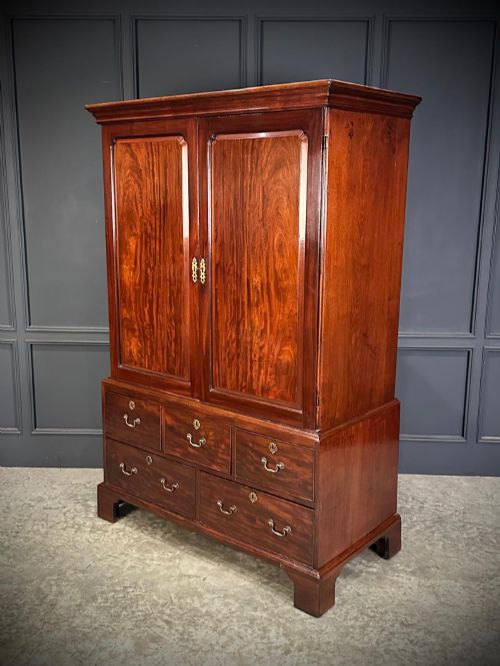
A georgian flame mahogany wardrobe brings deep, figured timber and grand architectural presence into a bedroom.
Georgian Flame Mahogany Wardrobe
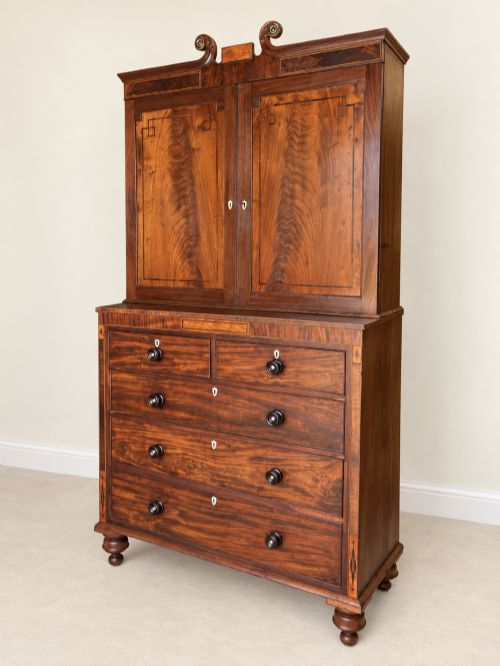
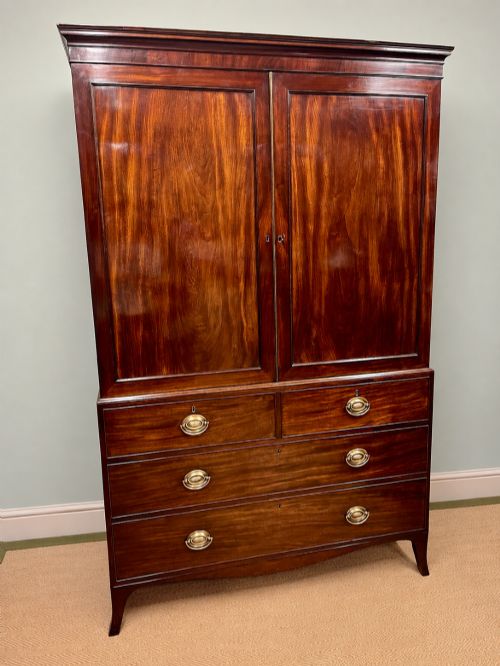
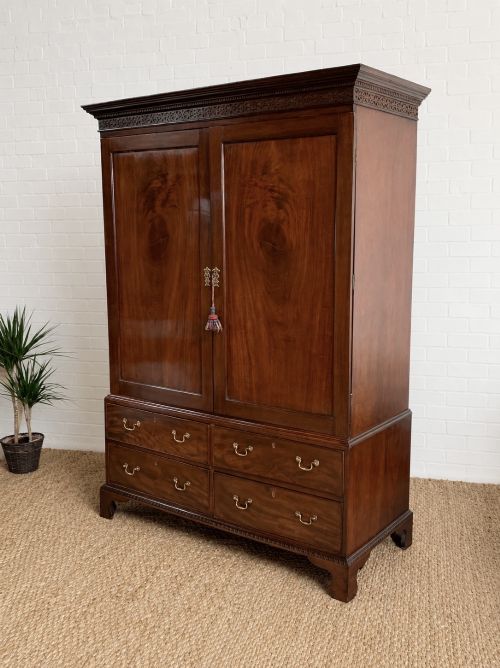
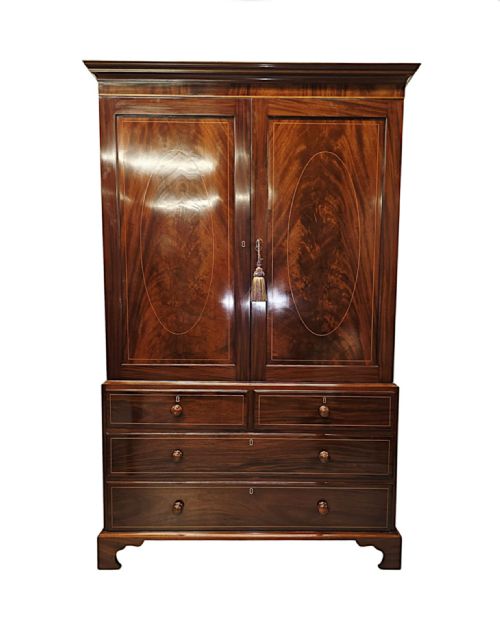
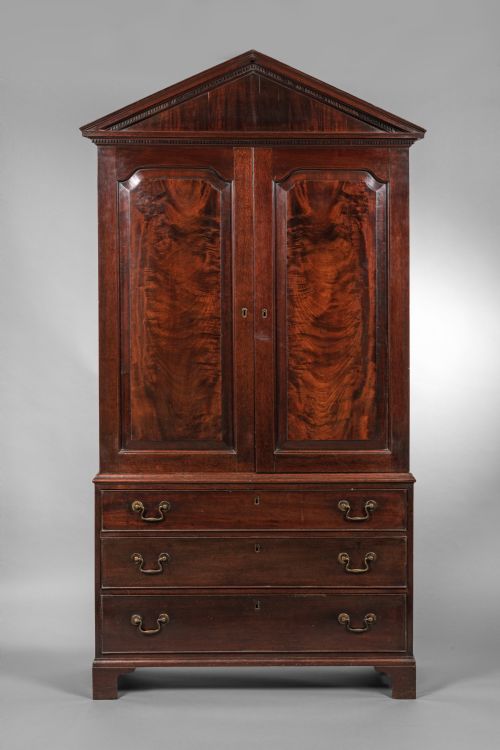
When you search for a georgian flame mahogany wardrobe, you encounter large storage furniture built during the eighteenth and nineteenth centuries. These pieces frequently take the form of linen presses, combining upper cupboard doors with lower drawer chests.
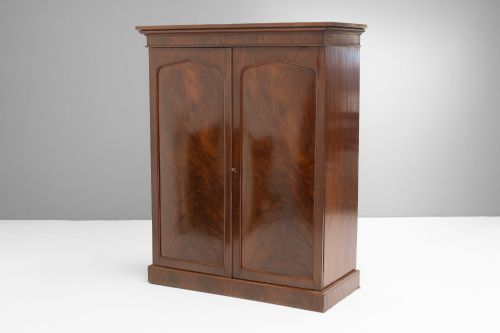
You are most likely to meet examples from the George III and Regency periods, alongside later nineteenth-century interpretations. The selection also includes breakfront cabinets and compactum wardrobes designed for stately bedrooms.
How they were made
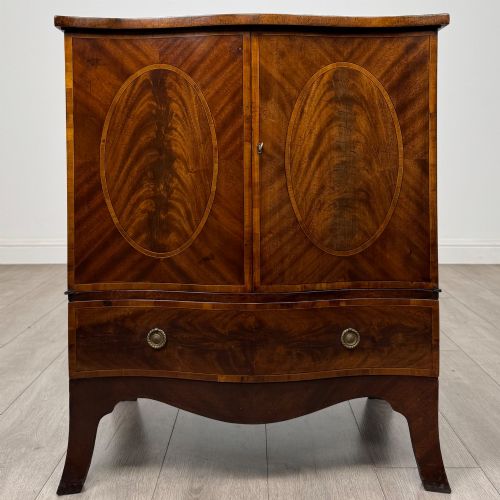
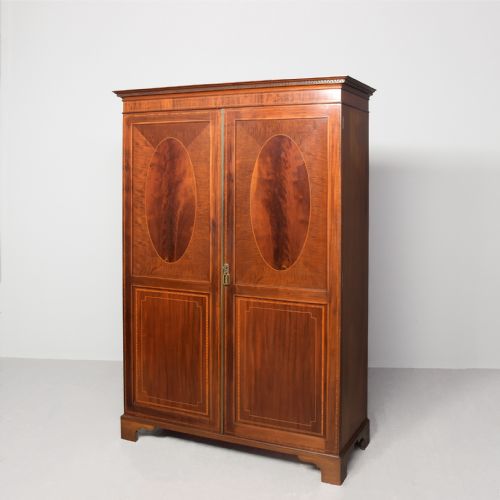
Cabinet makers laid highly figured flame mahogany veneers over stable secondary timbers such as oak. They utilised contrasting woods like boxwood and satinwood for delicate stringing and inlay details around the doors and drawers.
Structural elements incorporated solid mahogany for frames and drawer linings, secured with traditional joinery. Brass hardware, including drop handles and escutcheons, completed the construction of these substantial pieces.
Listings on this site demonstrate that these wardrobes frequently employ oak as a secondary timber beneath mahogany veneers.
What varies in quality
The visual impact of a piece depends heavily on the book-matching and symmetry of the flame mahogany veneer across the doors. Master cabinet makers selected timber curls that created dramatic, balanced patterns that draw the eye.
Proportion and architectural detailing set finer pieces apart from standard workshop production. Carved cornices, blind fretwork, and well-executed secondary inlays indicate a higher grade of craftsmanship.
Thomas Chippendale
The Georgian Flame Mahogany Wardrobe Glossary
- Flame mahogany
- A veneer cut from the branch junctions of the mahogany tree, producing a distinctive rippled, flame-like grain pattern. This timber was prized for principal display surfaces on high-status furniture.
- Linen press
- A large storage cabinet featuring upper sliding trays or shelves enclosed by doors, positioned above a chest of drawers. These pieces were originally used to store flat linens and garments.
- Breakfront
- A piece of furniture where the central section projects forward from the flanking outer sections. This architectural form added depth and formal presence to large wardrobes.
- Compactum
- A fitted wardrobe containing a combination of hanging space, sliding trays, and drawers within a single carcass. These versatile pieces maximised storage efficiency in period bedrooms.
- Blind fretwork
- Carved ornamentation applied to a flat surface in an openwork geometric or interlaced pattern that does not pierce through to the background. It is often found along the cornice of eighteenth-century case furniture.
Georgian Flame Mahogany Wardrobe: Frequently Asked Questions
What is a linen press?
A linen press is a tall case piece designed with upper doors enclosing sliding trays for folded textiles. The lower section typically incorporates a chest of drawers for additional garments.
Historically, these cabinets held household linens flat before the widespread use of hanging wardrobes. They formed an essential element of bedroom furniture in country houses and town residences alike.
How do I date a mahogany wardrobe?
Dating relies on examining construction methods, timber selection, and stylistic details such as cornice carving and bracket feet. Pieces from the eighteenth century often display hand-cut dovetails and solid timber secondary woods.
Later nineteenth-century iterations incorporate machine-sawn elements and different veneer thicknesses. Comparing hardware fixings and secondary woods helps narrow the period of manufacture.
How do I care for flame mahogany?
Flame mahogany requires protection from direct sunlight and extreme humidity fluctuations to prevent veneer cracking or fading. Maintaining a stable indoor climate preserves the natural oils in the timber.
Applying a traditional beeswax polish occasionally nourishes the wood and enhances the figure of the grain. Avoid modern silicone sprays and harsh chemical cleaners.
Will a wardrobe dismantle for moving?
Many period wardrobes and linen presses separate into distinct modular sections, such as a cornice, upper carcass, and lower drawer base. This modular construction assisted original transport up narrow staircases.
Larger breakfront examples may dismantle further into side bays and a central section. Professional installation ensures structural alignment remains undisturbed during assembly.