




Georgian Gentlemans Wardrobe
These Georgian gentlemans wardrobe pieces offer enduring storage in rich mahogany, bringing period craftsmanship straight into a traditional bedroom.
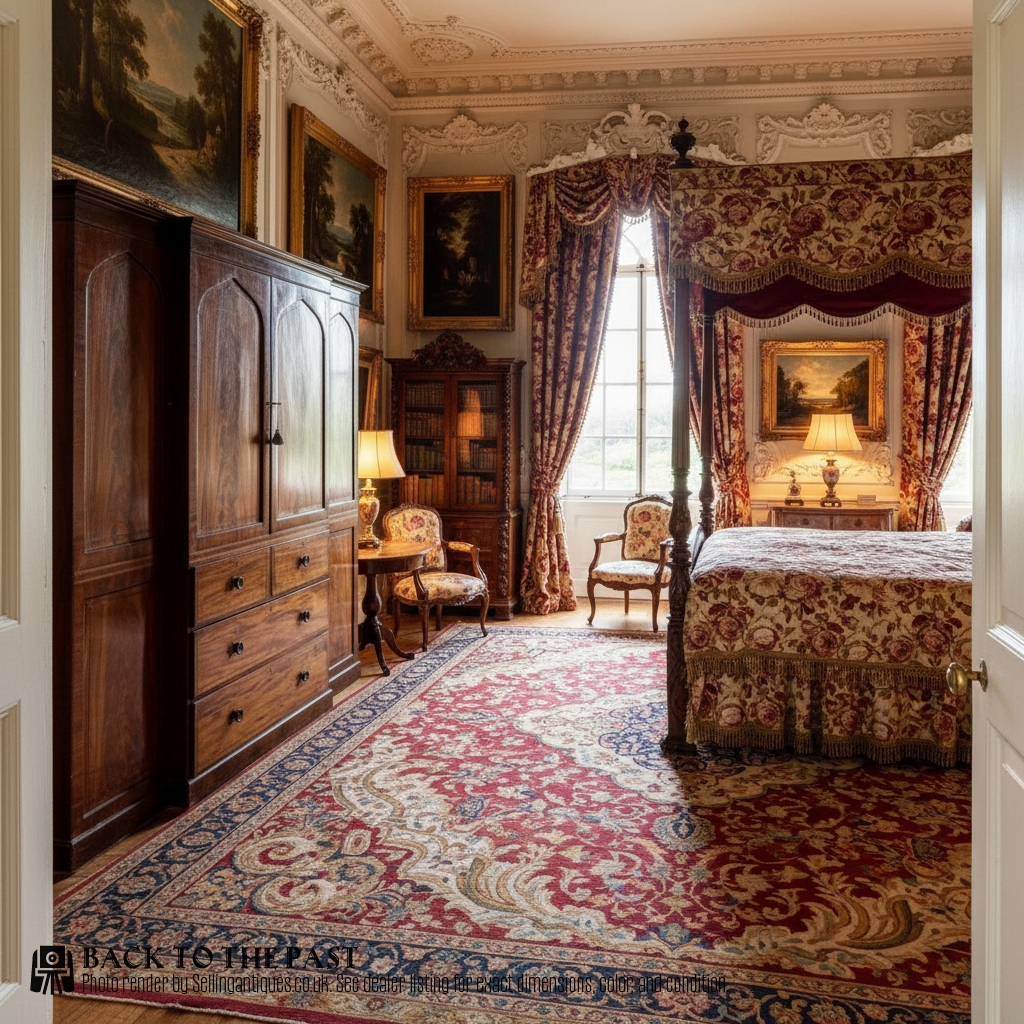
Georgian Gentlemans Wardrobe
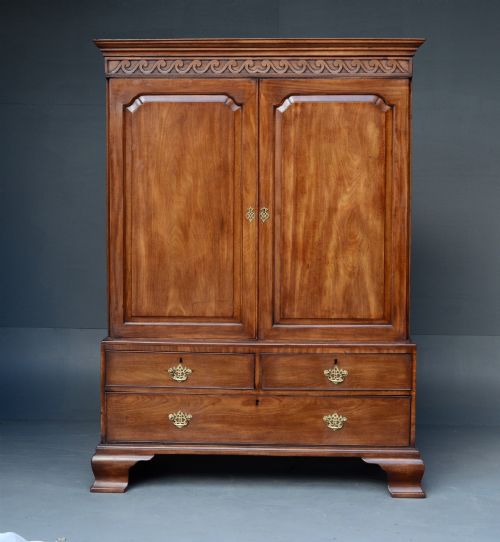
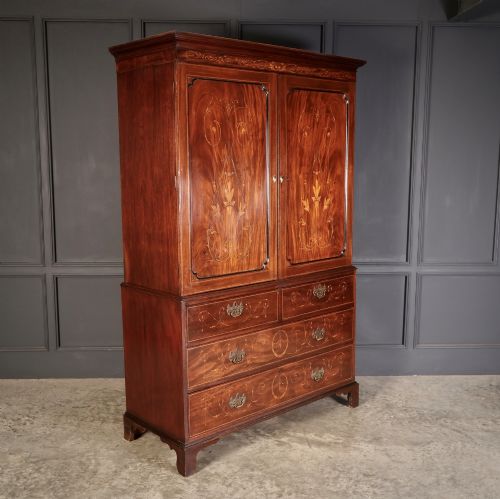
A georgian gentlemans wardrobe is a substantial piece of case furniture designed to store gentlemen's attire across the eighteenth and nineteenth centuries. These items appear in formats including wardrobes, linen presses, cabinets, and compactum wardrobes.
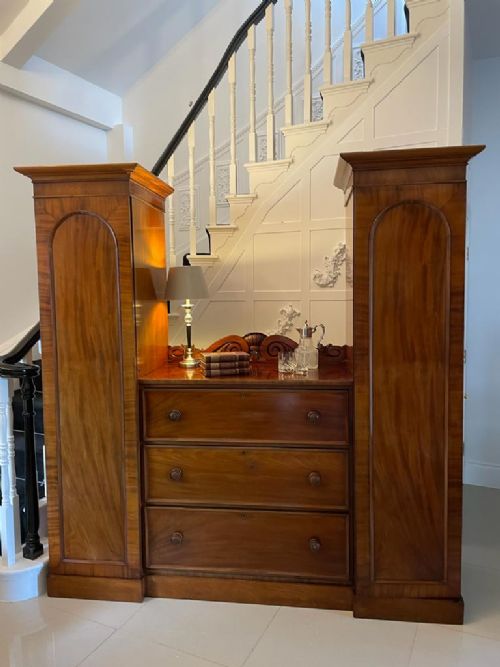
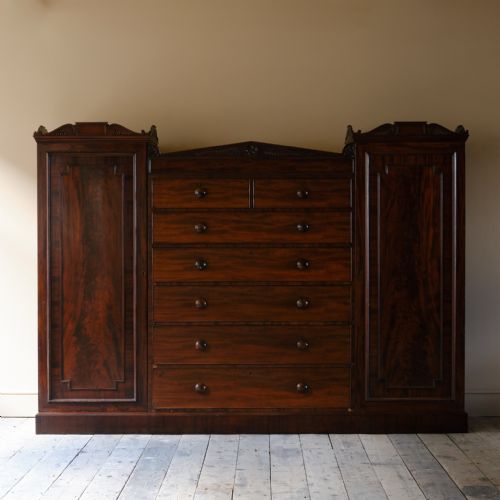
Buyers will encounter tall breakfront configurations, cabinet-on-chest structures, and linen press combinations designed for hanging garments and folding textiles. These utilitarian storage forms served prosperous households by keeping formal clothing pressed and protected.
How They Were Made
Cabinetmakers built these pieces primarily from solid mahogany and flame mahogany veneer, sometimes accented with satinwood banding for visual contrast. Secondary timbers such as oak frequently appear in the internal construction of drawers and shelving.
Joinery techniques relied on heavy timber framing to support the substantial weight of large double doors and internal sliding trays. Hardware included brass fixtures for handles, escutcheons, and hinges, securing the heavy timber doors.
Georgian Gentlemans Wardrobe Retail Price Guide 2026
Typical asking prices for georgian gentlemans wardrobe among the pieces listed under this phrase on Sellingantiques today, from the lower quarter to the upper quarter. They describe what is for sale here now, not the wider market.
Many of these grand wardrobes require partial disassembly just to fit through modern doorways, continuing a multi-century tradition of spatial negotiation.
What Varies in Quality
Superior examples display carefully selected flame mahogany veneers matched symmetrically across large door panels, whereas lesser pieces utilise plain timber planks with less dramatic grain patterning. The integration of contrasting satinwood banding indicates higher workshop ambition.
Proportion and scale distinguish finer breakfront and compactum designs from simpler utilitarian presses. Well-executed architectural mouldings and original brass hardware elevate the status of a piece within the hierarchy of period furniture.
The Georgian Gentlemans Wardrobe Glossary
- Flame mahogany
- A veneer cut from timber where the branch meets the trunk, producing a rippling, flame-like grain pattern. This decorative surface treatment was favoured by cabinetmakers for principal door panels.
- Linen press
- A tall piece of furniture featuring upper sliding trays for folded textiles and lower drawers for bulkier garments. These items evolved into dedicated hanging wardrobes over time.
- Compactum
- A multi-compartment wardrobe combining hanging space, drawers, and shelving within a single unified carcass. This configuration maximised storage capacity in period dressing rooms.
- Breakfront
- A large piece of case furniture where the central section projects forward from the flanking wings. This architectural arrangement creates depth and shadow across the facade.
- Satinwood
- A pale, hard timber used primarily for contrasting stringing and banding details on drawer fronts and cornices. It originates from tropical trees and provides a bright visual accent against dark mahogany.
Georgian Gentlemans Wardrobe: Frequently Asked Questions
What is a gentlemans wardrobe?
A gentlemans wardrobe is a large period storage piece designed for men's garments, typically combining hanging space with sliding trays or drawers.
These pieces date from the Georgian and William IV eras, serving as the primary wardrobe furniture in traditional bedrooms.
How do I date these wardrobes?
Dating relies on stylistic markers, timber selection, and construction methods associated with the Georgian, George III, and William IV eras.
Earlier eighteenth-century pieces often feature solid mahogany and simpler lines, while later nineteenth-century examples incorporate flame veneers and breakfront proportions.
Are these pieces suitable for modern clothes?
Many interiors require internal adaptation because historic wardrobes were built for folded textiles and shorter historical garments rather than modern long dresses.
Buyers often assess the internal depth and hanging clearance before placing contemporary clothing inside these historic carcasses.
What is the difference between a press and a wardrobe?
A linen press traditionally houses sliding wooden trays in the upper section for folded shirts and linens, sitting above a chest of drawers.
A wardrobe contains vertical hanging space for garments behind full-length doors, though many hybrid examples combine both functions.