


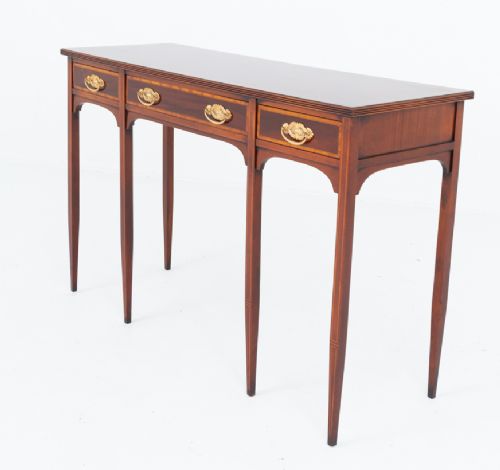

Inlaid Mahogany Buffet Table
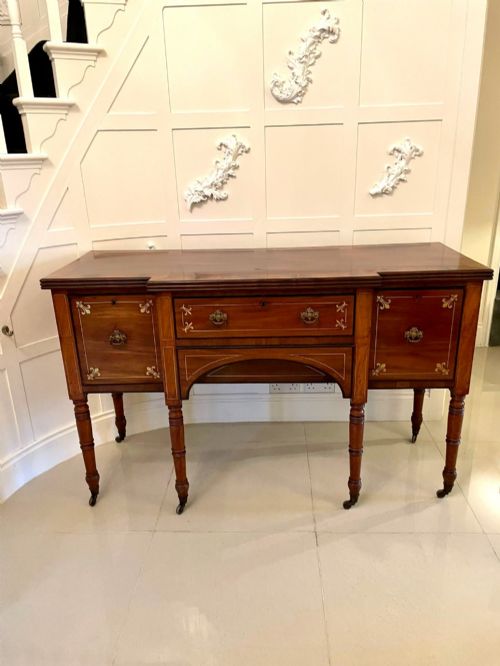
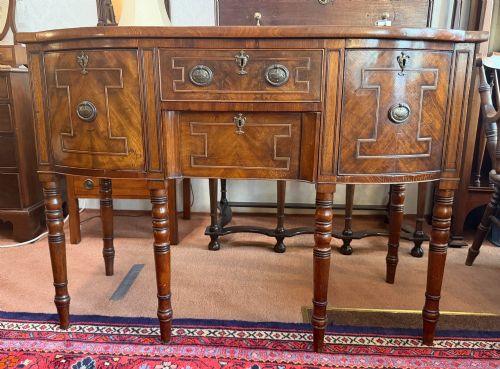
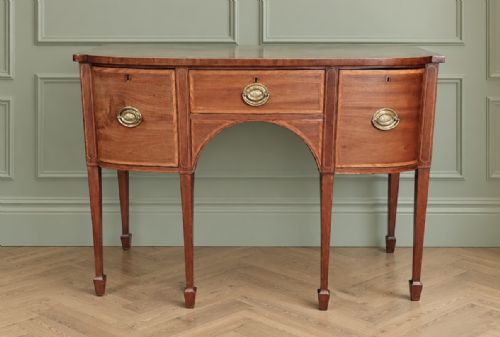
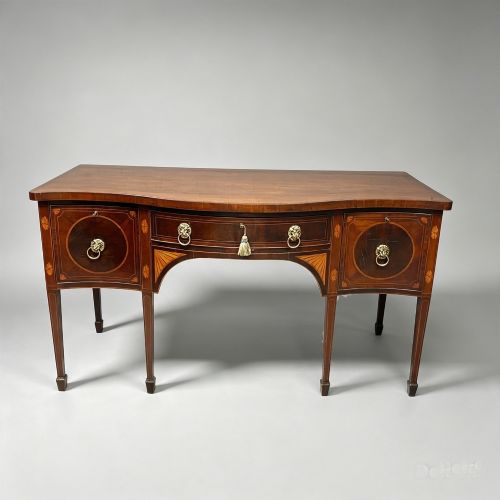
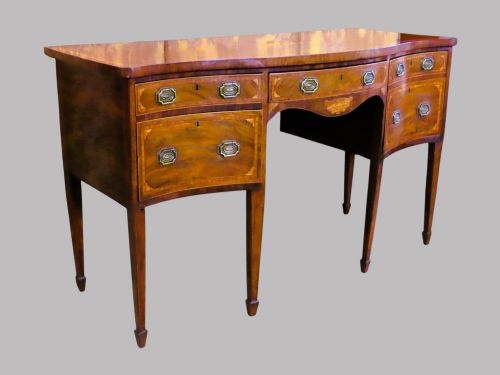
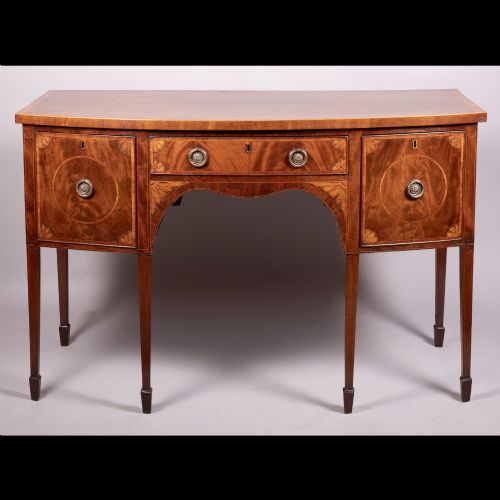
An inlaid mahogany buffet table combines rich timber and crisp stringing, serving as a formal dining room centrepiece.
Inlaid Mahogany Buffet Table
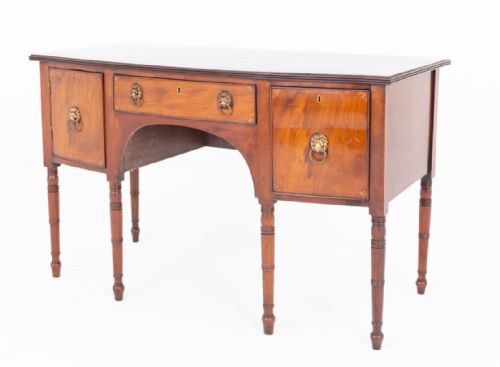
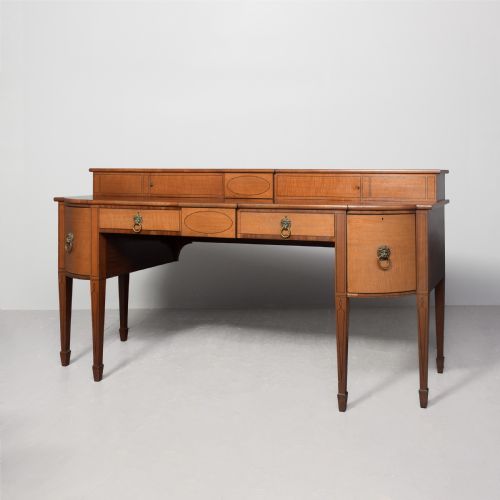
When searching for an inlaid mahogany buffet table, buyers encounter various forms including sideboards, serpentine servers, and bow-fronted tables. These pieces originate across the Georgian, Regency, and Edwardian periods, reflecting shifting interior fashions.
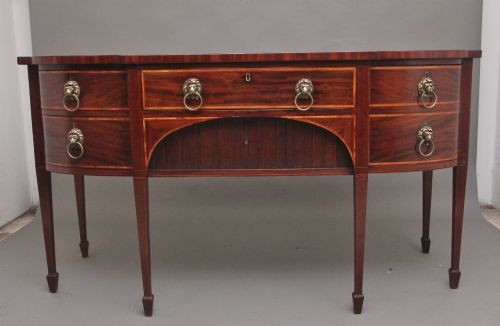
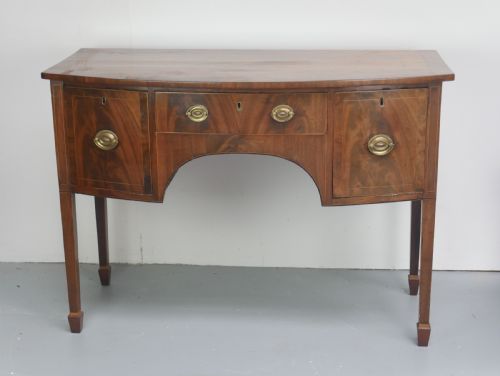
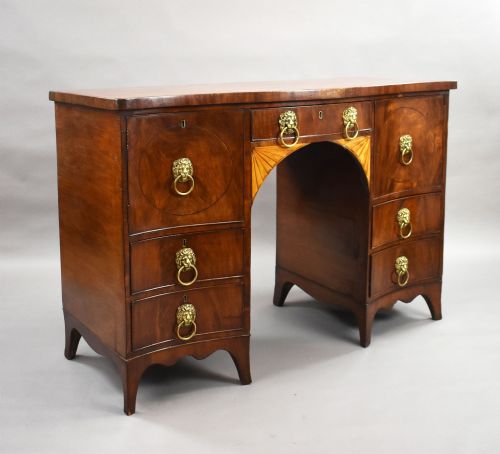
The version most frequently met on this page is the bow-fronted or serpentine sideboard shaped from rich timber. Such items provide substantial storage while maintaining a graceful silhouette against the dining room wall.
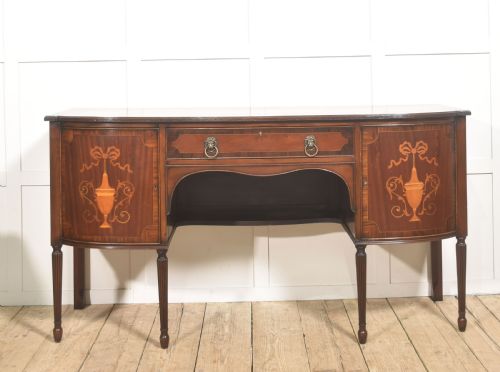
Makers of these items utilised distinct stylistic idioms, ranging from strict George III proportions to later Sheraton Revival interpretations. Each piece demonstrates the enduring appeal of figured timber combined with contrasting linear details.
Materials and construction
Cabinet makers built these pieces using solid mahogany and flame mahogany veneers over secondary timbers. The natural grain of the wood provides deep red-brown tones that anchor the design.
Surface decoration relies heavily on contrasting stringing and crossbanding using satinwood and boxwood. Craftsmen also incorporated brass fittings, such as handles and inlay, to accent the timber work.
Listings span the Georgian, Regency, and Edwardian periods, uniting mahogany with boxwood, satinwood, and brass.
Judging quality and execution
Quality separates through the selection of timber figures, such as heavily marked flame mahogany veneer, and the precision of the boxwood and satinwood inlay. Superior examples display seamless integration of contrasting woods along curved drawer fronts.
The crispness of the serpentine or bow-front shaping and the proportion of the brass hardware distinguish finer pieces from standard production. Construction integrity in the drawer framing and leg joinery determines the structural merit.
The Inlaid Mahogany Buffet Table Glossary
- Bow-front
- A convex curved cabinet front that projects outward in a smooth arc. This shape softens the room's geometry while adding interior depth.
- Serpentine
- A front design featuring a convex centre flanked by concave curves. It requires advanced woodworking skill to execute cleanly.
- Crossbanding
- A narrow strip of veneer applied border-wise around a panel with the grain running perpendicular. This frames the primary timber surface.
- Satinwood
- A pale, lustrous exotic timber used extensively for contrasting inlay work. Its yellow tone brightens darker mahogany panels.
- Stringing
- Thin lines of light or dark wood inlaid into grooves on the furniture surface. It creates delicate geometric borders.
- Pedestal sideboard
- A form consisting of two separate pedestals connected by a central serving board. These grand items date primarily to the Georgian and Regency eras.
Inlaid Mahogany Buffet Table: Frequently Asked Questions
Where should I place a sideboard?
These pieces suit dining rooms or large hallways where their surface and storage prove useful. They provide ample top space for serving dishes and drinks during gatherings.
Ensure the room has sufficient clearance for the curved doors or drawers to open fully without obstruction. Positioning the piece against a primary wall lets the timber grain and inlay catch the ambient light.
How do I care for mahogany?
Maintain the timber by dusting regularly with a soft, dry cloth and avoiding synthetic silicone sprays. Natural wax applied sparingly preserves the sheen without building up residue.
Keep the item away from direct heat sources and strong sunlight to prevent the mahogany and inlay from fading or drying out. Stable indoor humidity protects the wood and veneer joints.
What defines the Georgian style?
Georgian design emphasises classical proportions, symmetrical balance, and restrained ornamentation. Furniture from this era relies on the natural beauty of mahogany rather than heavy carving.
Inlaid details during this period remain crisp and geometric, often utilising boxwood and satinwood. The overall silhouette prioritises architectural dignity and utility.
How do I distinguish Regency pieces?
Regency items often incorporate bolder brass inlay, lion paw feet, and architectural motifs inspired by classical antiquity. The timber choices lean toward dark, heavily figured mahogany.
Surfaces may feature distinct breakfront configurations and heavier brass hardware. These elements give the furniture a more assertive visual presence than earlier Georgian models.