



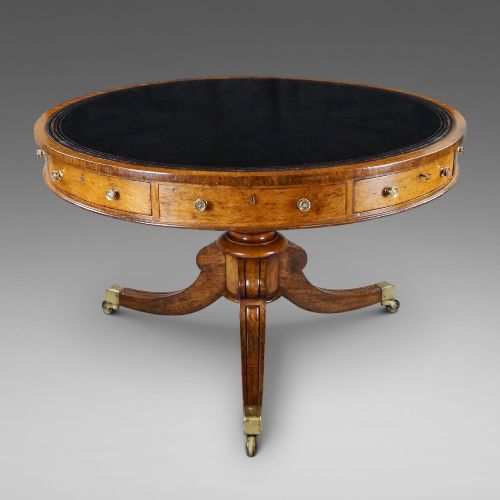
Inlaid Leather Writing Table
An inlaid leather writing table brings structured workspace and refined craftsmanship together, offering a surface for correspondence grounded in period materials.
Inlaid Leather Writing Table
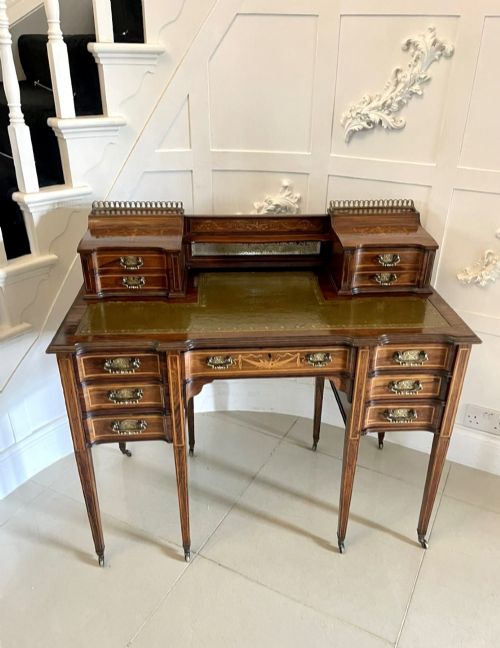
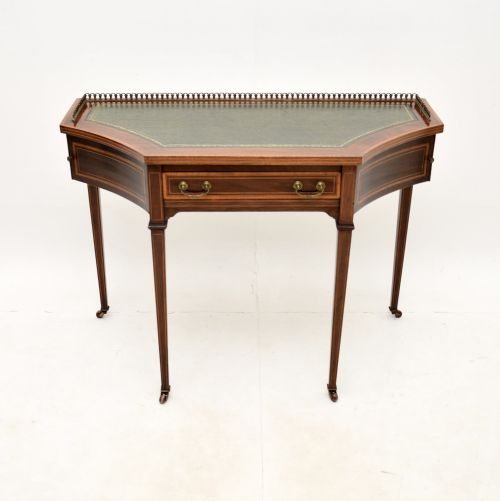
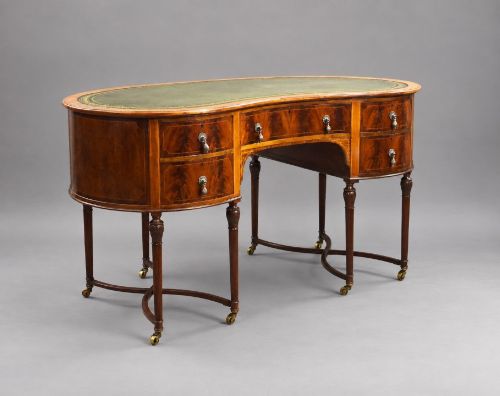
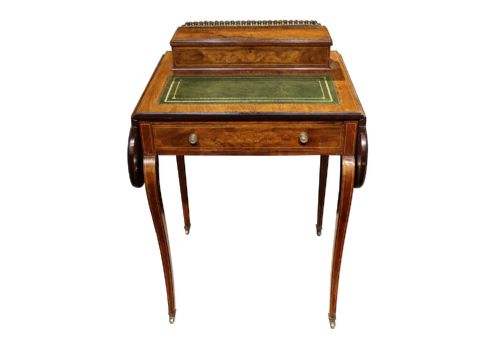
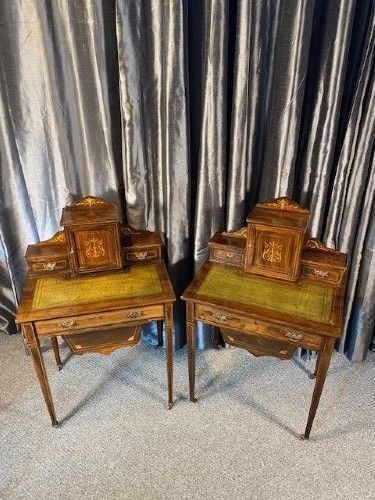
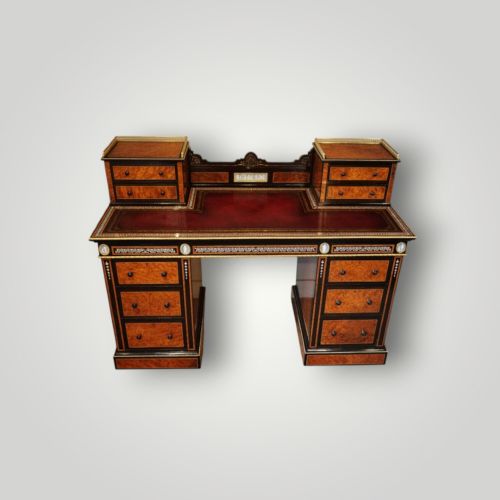
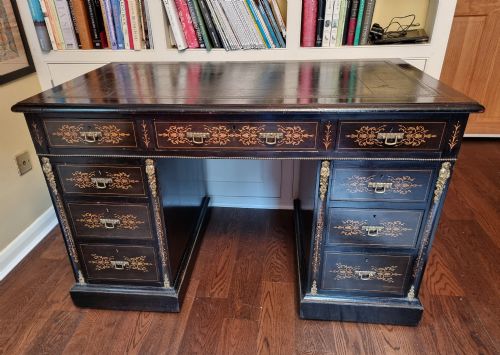
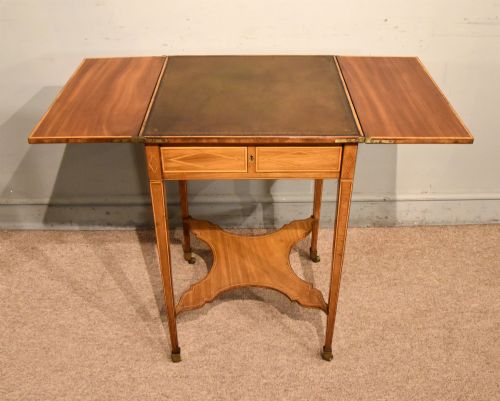
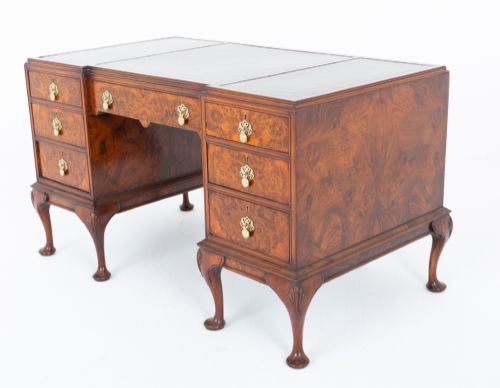
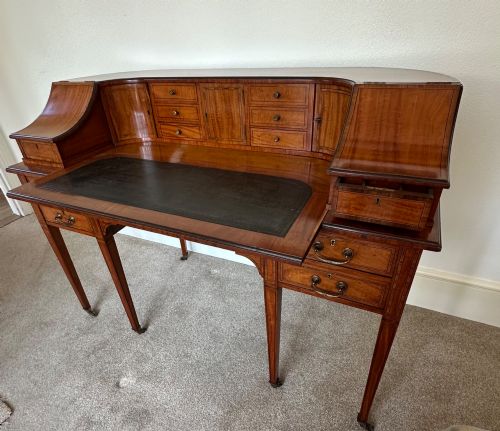
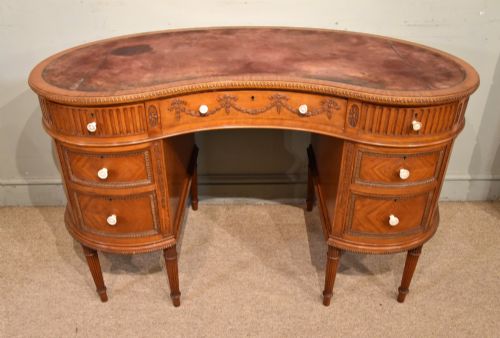
An inlaid leather writing table provides a dedicated surface for daily writing and administration, featuring leather working inserts surrounded by decorative woodwork. The search phrase covers freestanding tables, pedestal formats, and specialised forms such as Carlton House desks and kidney-shaped pieces.
Most examples found here date from the Victorian and Edwardian periods, stretching from the late nineteenth century into the early twentieth century. These pieces reflect late Georgian revival styles alongside practical domestic designs intended for studies, libraries, and drawing rooms.
Makers and workshops of the era produced these desks in various timbers, incorporating fitted interiors, drawers, and gallery rails. The combination of supple leather and cabinet-maker inlay defines the functional character of each table.
How They Were Made
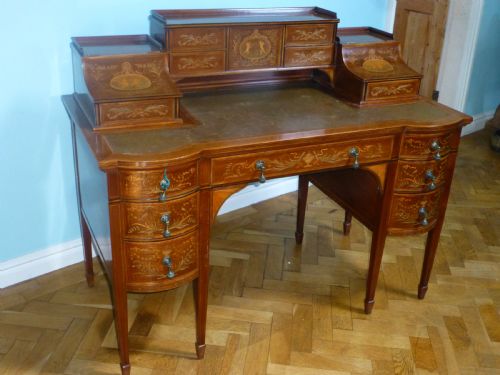
Cabinet-makers constructed carcass frames from dense timbers including mahogany, walnut, and rosewood, often applying contrasting veneers such as satinwood and kingwood. Fine marquetry and stringing details provide geometric or floral ornamentation across the tops and drawers.
Writing surfaces feature inset leather panels, typically tooled with gold leaf borders around the perimeter. Brass handles, banding, and occasionally ormolu mounts complete the structural assembly.
Listings feature items spanning the 19th Century, Victorian, Edwardian, and 1920 periods, utilising mahogany, satinwood, rosewood, walnut, and leather.
What Varies in Quality
The degree of refinement in the timber selection and inlay work separates standard utility desks from high-workshop commissions. Finely figured mahogany or burr walnut paired with intricate satinwood banding indicates superior material grade.
Maple & Co·Edwards & Roberts·Gill & Reigate·Jackson & Graham·Wolfe & Hollander·S & H Jewell
The Inlaid Leather Writing Table Glossary
- Marquetry
- Decorative patterns formed by fitting together small pieces of wood veneer onto a structural surface. This technique allows for elaborate floral or pictorial designs across the desk top.
- Carlton House desk
- A distinctive form of writing table featuring a curved superstructure of small drawers and pigeonholes wrapping around the back and sides of the writing surface. The design originated in the late eighteenth century and remained popular during the Edwardian revival.
- Bureau Plat
- A freestanding writing table fitted with one or more drawers in the frieze, typically of French origin and finished on all sides for placement in the centre of a room.
- Kidney-shaped
- Describing a writing desk with a curved, kidney outline that wraps partially around the user. This ergonomic form appears frequently in satinwood and mahogany during the Edwardian period.
- Stringing
- Thin lines of contrasting wood inlay used to outline drawer fronts, borders, and panel edges. It provides subtle geometric definition to the timber surface.
Inlaid Leather Writing Table: Frequently Asked Questions
How do I maintain the leather insert?
The leather writing surface benefits from occasional conditioning with neutral wax or leather balms to prevent drying and cracking. Avoid using harsh chemical cleaners that might damage the gold-tooled borders.
Keeping the surface free from abrasive objects preserves both the leather texture and the surrounding wooden borders.
Where should I place a freestanding writing table?
A freestanding writing table is finished on all sides, allowing placement in the centre of a room rather than strictly against a wall. This positioning highlights the finished back panels and symmetrical design.
Ensure adequate natural light falls across the leather writing surface from the side for comfortable daily use.
How do I distinguish Edwardian from Victorian pieces?
Victorian writing tables generally display heavier proportions, darker timbers like rosewood or walnut, and robust structural mass. Edwardian interpretations tend to be lighter and brighter, frequently employing satinwood and Sheraton Revival motifs.
Examination of the secondary woods inside drawers and the specific style of brass hardware helps clarify the period of manufacture.