




Inlaid Games Board
An inlaid games board brings centuries of social play into a room, combining fine cabinetmaking with surfaces designed for chess, backgammon and cribbage.
Inlaid Games Board
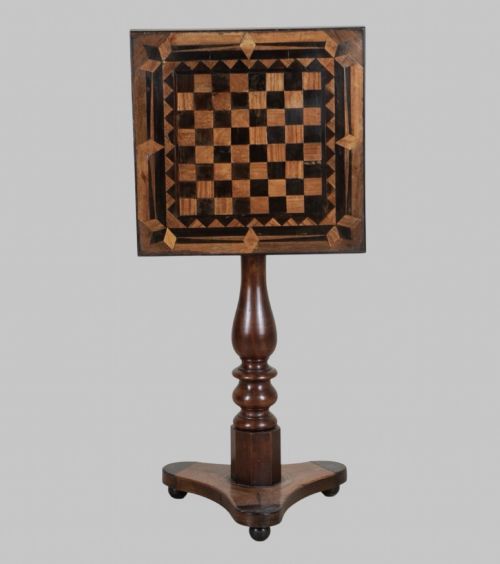
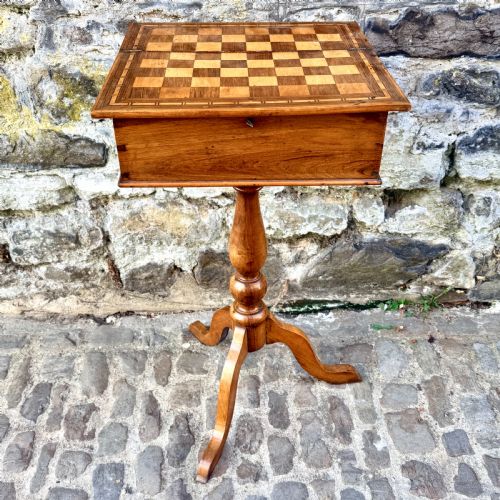
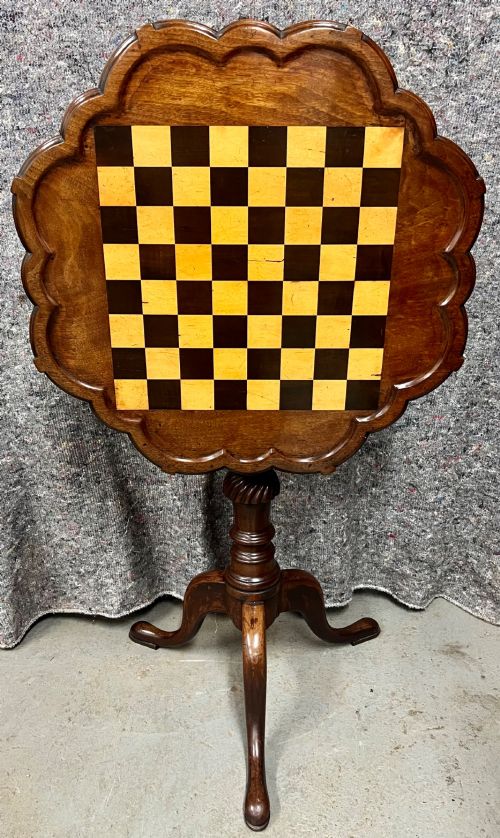
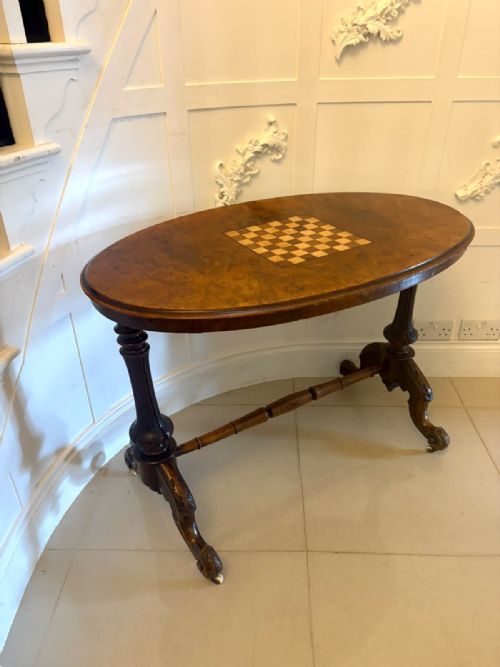
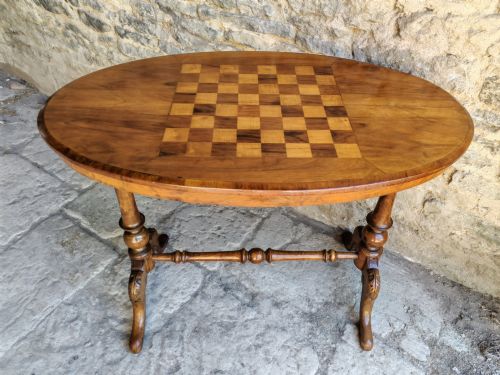
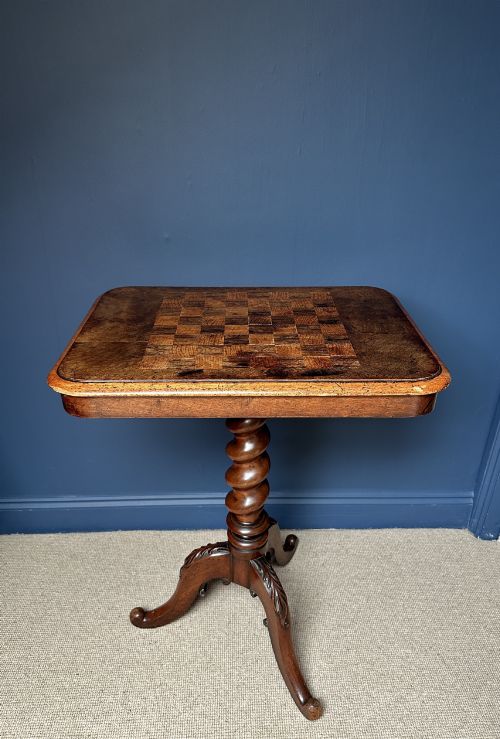
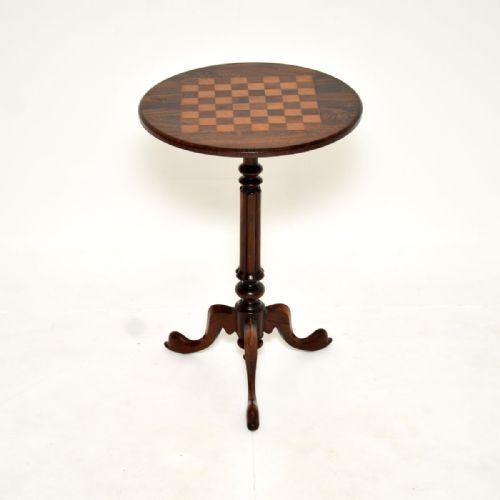
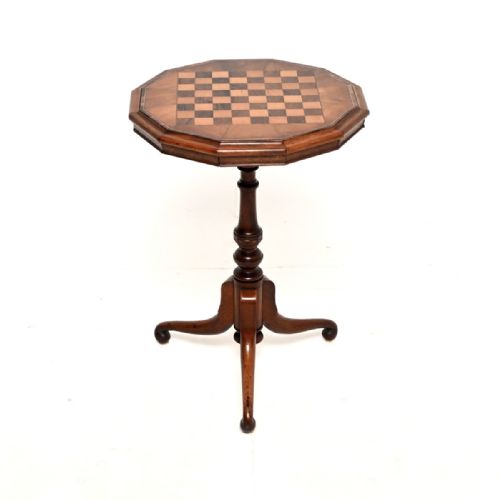
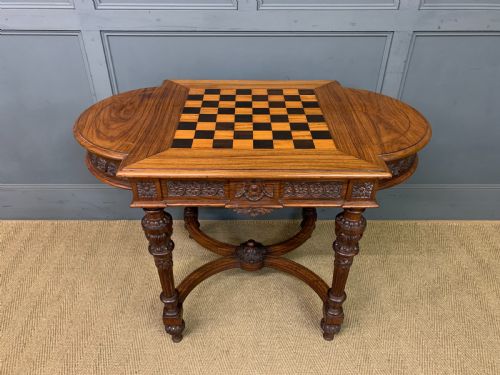
When you search for an inlaid games board, you encounter a variety of antique forms ranging from standalone pedestal tables and folding boxes to portable boards designed for travel. The most common examples on this page are Victorian and Regency tables featuring integrated chess or backgammon surfaces worked directly into the timber.
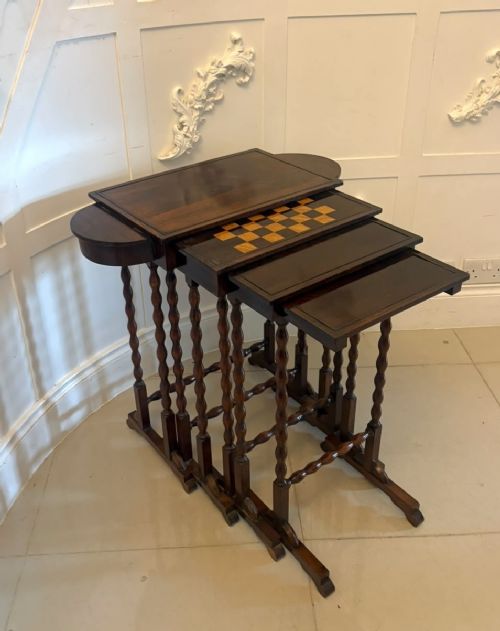
Many pieces double as occasional furniture, work tables or sewing boxes, concealing playing surfaces beneath fold-over tops or sliding lids. Regional variations such as French Provincial, Anglo-Indian and Swedish Biedermeier examples appear alongside standard English pieces from the Georgian and Victorian eras.
Compositions range from simple folding boards to elaborate games compendiums equipped with multiple playing boards and accessories. The materials and structural formats reflect the domestic pastimes of the nineteenth century, combining utility with decorative wood inlay.
Materials and construction
Cabinetmakers utilised dense timbers such as rosewood, mahogany and walnut for the primary structures, often selecting burr walnut veneers for ornamental effect on tabletops. Lighter woods including boxwood, sycamore and birch provide the contrasting squares required for chequerboards.
Surface decoration frequently relies on precise wood inlay, marquetry or contrasting veneers to delineate playing grids, sometimes augmented by mother-of-pearl or brass mounts. Portable boards and boxes incorporate tight hinges and internal compartments to secure pieces during travel.
Listings feature walnut, rosewood and mahogany as the predominant primary timbers, complemented by boxwood and sycamore inlay.
Factors of quality
The standard of a piece rests on the precision of the wood inlay and the selection of timber figures on the top. Crisp alignment of the contrasting squares on a chequerboard indicates careful craftsmanship by the cabinetmaker.
Structural integrity and the retention of original interior fittings determine the standing of individual tables and boxes. Pieces that maintain smooth mechanical actions on fold-over tops and drawers demonstrate superior original manufacture.
Gillows·Burroughes and Watts·The British Chess Company
The Inlaid Games Board Glossary
- Chequerboard
- A squared grid pattern of alternating dark and light tiles used for games like chess and draughts. It forms the primary decorative surface on many tables.
- Marquetry
- The art of applying pieces of veneer to a structure to form decorative patterns and pictures. It appears on the lids of games boxes and tabletops.
- Cribbage box
- A specialised receptacle designed to hold cribbage boards and playing cards. These boxes often feature intricate Tunbridge ware or kingwood construction.
- Compendium
- A single container holding equipment for multiple different games. These sets typically include chess, backgammon and cribbage components.
- Turned
- Shaped on a lathe to create cylindrical supports such as table legs or chess pieces. It defines the structural framing of tripod games tables.
Inlaid Games Board: Frequently Asked Questions
What games were played on these boards?
These boards accommodated pastimes such as chess, backgammon, draughts and cribbage. Many designs integrated multiple boards into a single piece of furniture.
Interior compartments and reversible surfaces allowed players to switch between different games during a single evening.
Were these boards used for travel?
Portable travelling boards and folding boxes were produced specifically for use on journeys. These compact items secured pieces within enclosed wooden cases.
Many incorporated peg-in-hole designs or folding mechanisms to prevent pieces from shifting while in transit.
How should I care for an antique games table?
Keep wooden surfaces away from direct sunlight and excessive heat fluctuations to protect the veneer and inlay. Regular dusting with a dry cloth preserves the finish.
Avoid using harsh chemical polishes that can damage older French polish or wax surfaces.