
Inlaid French Bureau
An inlaid french bureau brings Continental elegance and fine marquetry work into a study, offering a refined workspace with historical depth.
Inlaid French Bureau
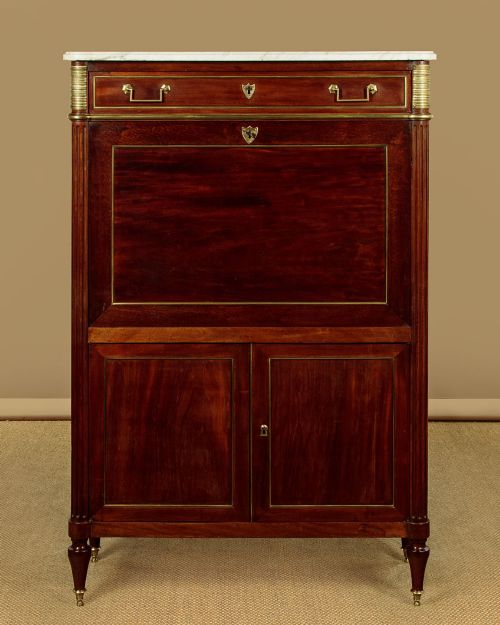
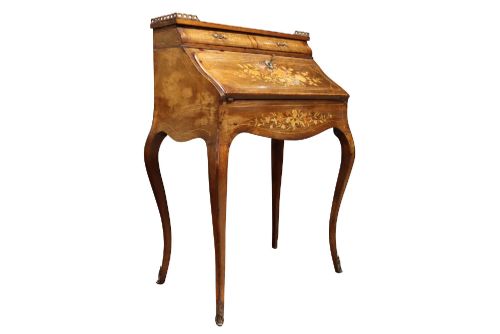
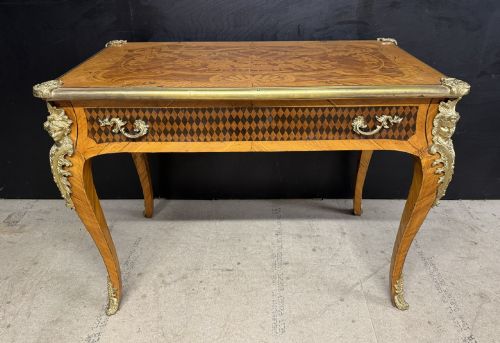
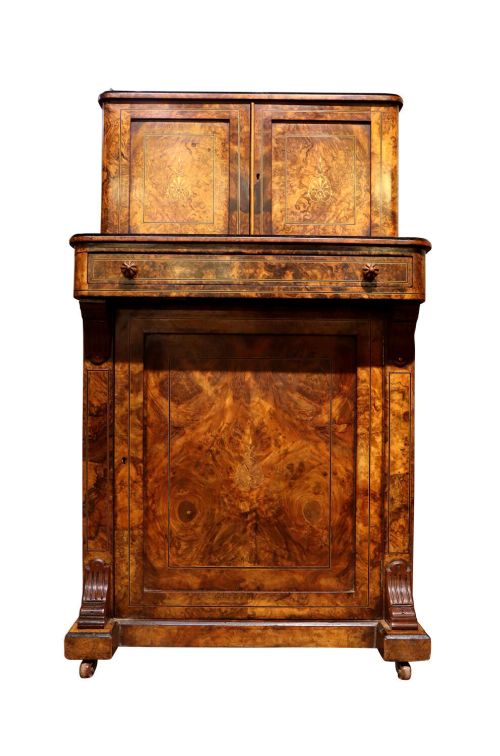
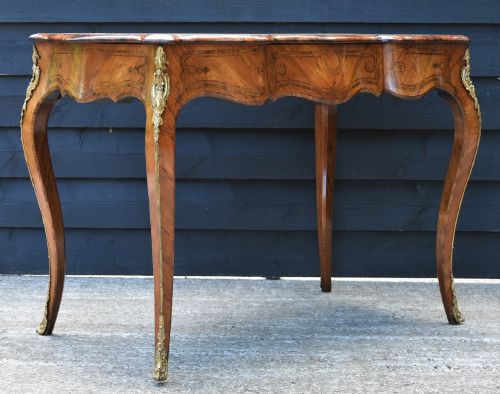
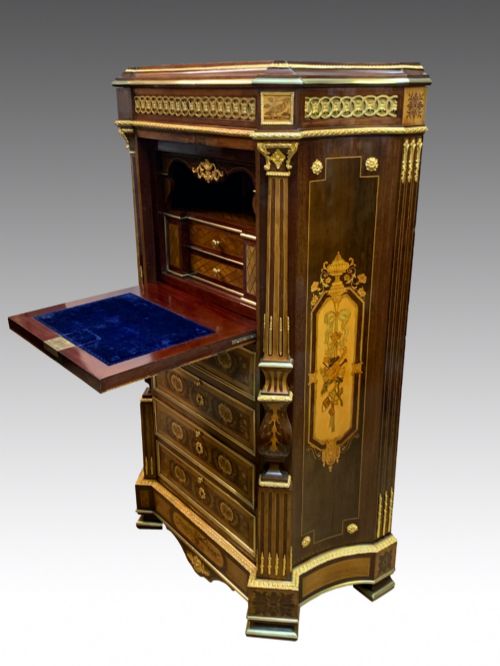
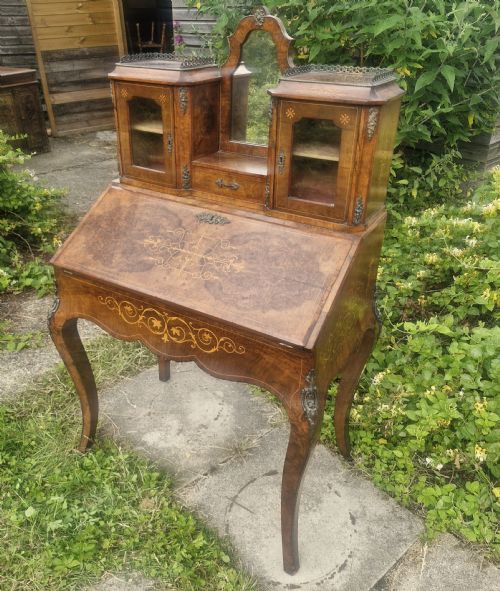
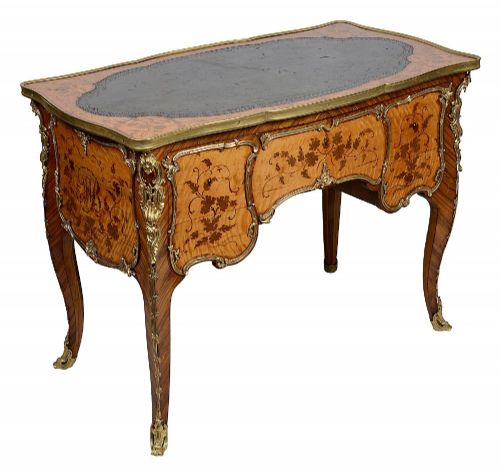
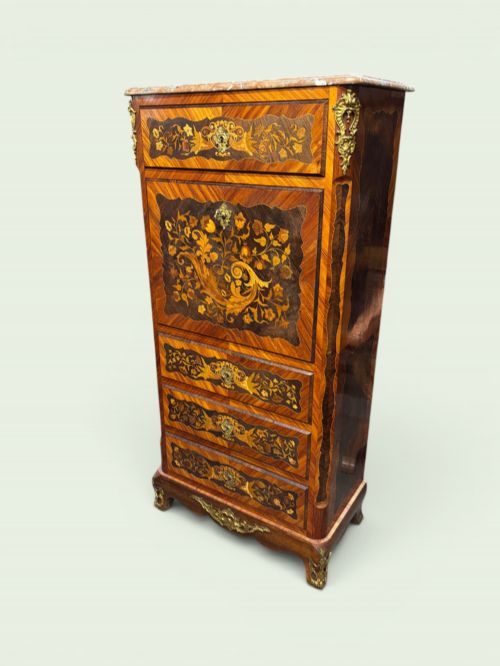
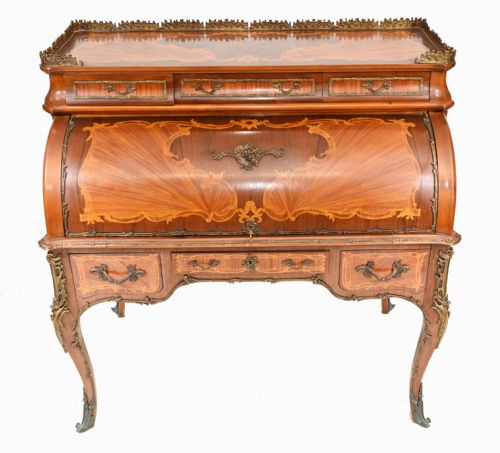
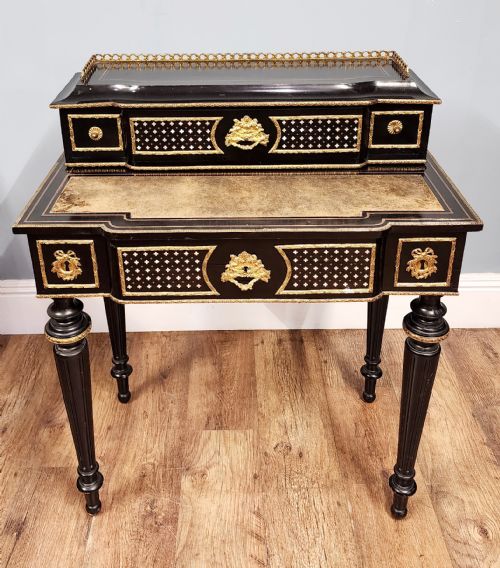
An inlaid french bureau encompasses a variety of writing furniture, from the compact bureau de dame and bonheur-du-jour to the grander bureau plat and secretaire abattant.
The pieces appearing on this page span the nineteenth century, with strong representation from Victorian revivals alongside continental workshops.
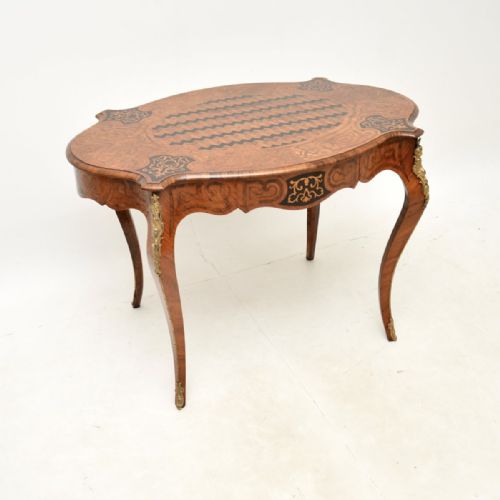
Buyers will most frequently encounter walnut, kingwood, and rosewood surfaces detailed with intricate floral or geometric patterns.
Materials and Technique
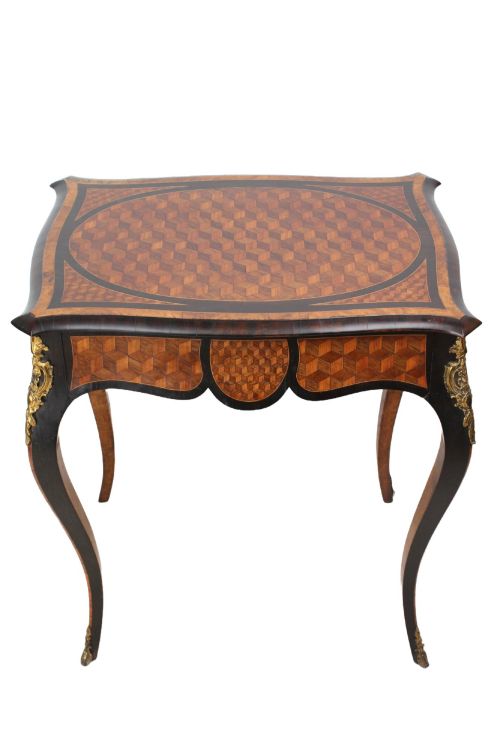
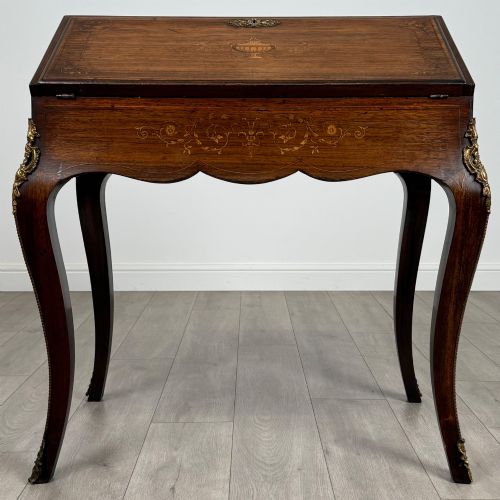
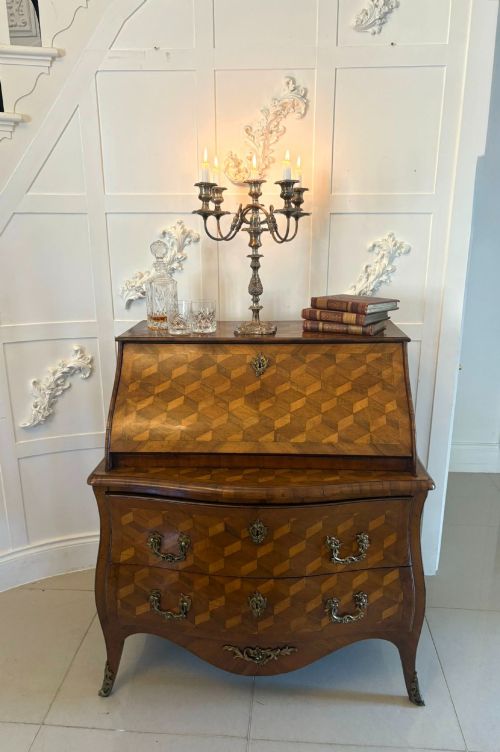
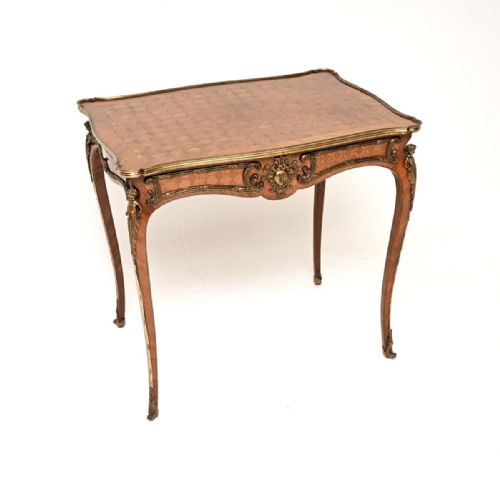
Cabinetmakers utilised exotic timbers like kingwood, rosewood, and satinwood cut into delicate veneers to create elaborate marquetry and parquetry designs across the writing surfaces.
Cast ormolu mounts, brass banding, and leather writing inserts were frequently integrated to accent the contours of serpentine and bombe forms.
Many a nineteenth century letter was penned upon these walnut surfaces while the inkwell stayed firmly put.
Judging Quality
The distinction between standard production and top tier pieces rests on the precision of the veneer cutting and the natural alignment of the wood grain within the marquetry panels.
Superior examples display crisp casting in their ormolu mounts and retain original fitted internal compartments alongside well preserved leather writing surfaces.
JAS Shoolbred·Maison Krieger·Edwards and Roberts·Donald Ross
The Inlaid French Bureau Glossary
- Marquetry
- Decorative veneer work arranged in pictorial or floral patterns across the surface of the desk. This technique contrasts different coloured timbers to create detailed pictorial designs.
- Bureau Plat
- A freestanding double sided writing table featuring a flat top, typically bordered with ormolu and lined with leather. These desks were designed to sit away from walls in the centre of a room.
- Bonheur-du-Jour
- A light ladies writing desk featuring a small cabinet or set of drawers superstructure upon the main writing surface. It became particularly fashionable during the nineteenth century revival periods.
- Secretaire Abattant
- A tall upright cabinet featuring a fall front writing flap that conceals a fitted interior of pigeonholes and small drawers. They often combine marble tops with rich veneer work.
- Ormolu
- Gilt bronze mounts applied to the corners, legs, and aprons of furniture for decorative effect. The metal is cast and then finished with a layer of gold.
Inlaid French Bureau: Frequently Asked Questions
How do I care for the leather top?
Leather writing inserts require occasional treatment with a neutral wax to maintain suppleness and prevent cracking over time. Keep moisture away from the surface during daily use.
Avoid placing these desks in direct sunlight to protect both the leather dye and the delicate wood veneers beneath.
Where should I place a bureau plat?
A bureau plat is designed as a freestanding piece with finished decoration on all sides, making it ideal for the centre of a study or library. Ensure there is adequate clearance around the desk for chairs and movement.
Positioning the piece away from direct heat sources protects the timber expansion and veneer joints.
How are different periods identified?
Nineteenth century pieces often adopt Louis XV and Louis XVI revival styles, characterised by asymmetrical curves or strict neoclassical symmetry. Construction methods, secondary timbers, and lock mechanisms provide further clues to dating.
Victorian interpretations frequently incorporate burr walnut and elaborate brass inlay alongside traditional French silhouettes.
What is a bureau de dame?
A bureau de dame is a small, elegant ladies desk intended for correspondence rather than heavy administrative work. They frequently feature cabriole legs and elaborate floral marquetry.
These compact writing desks fit easily into smaller reception rooms or bedrooms while retaining decorative presence.