
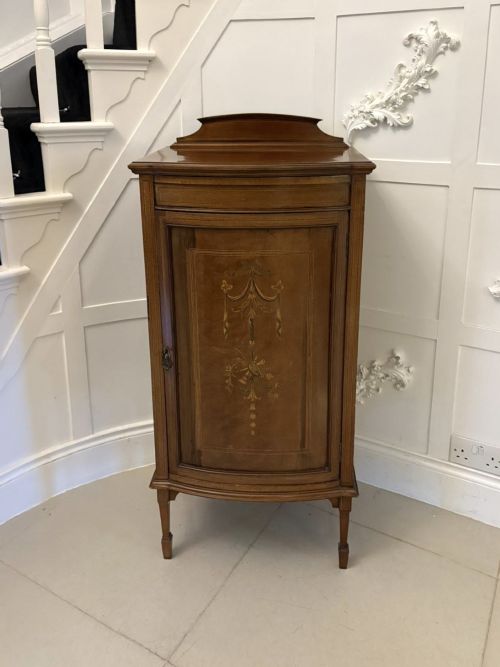
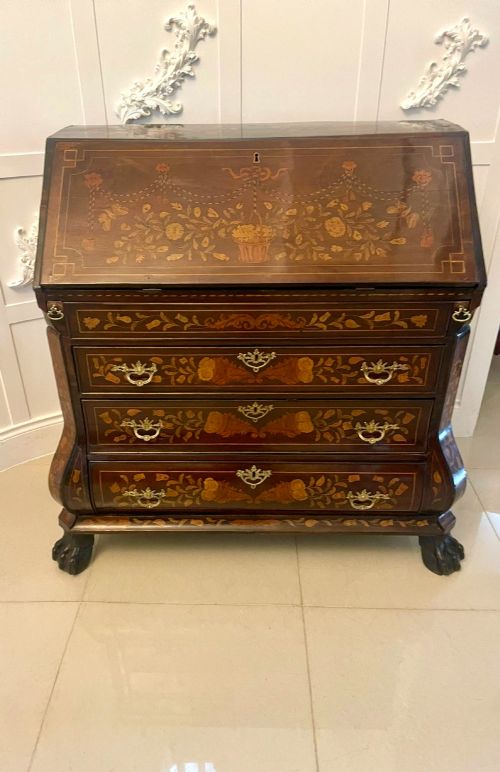
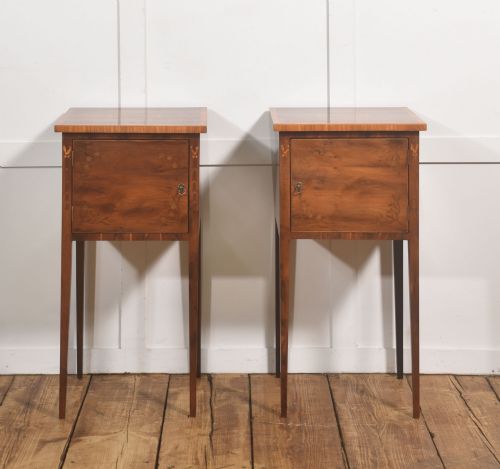
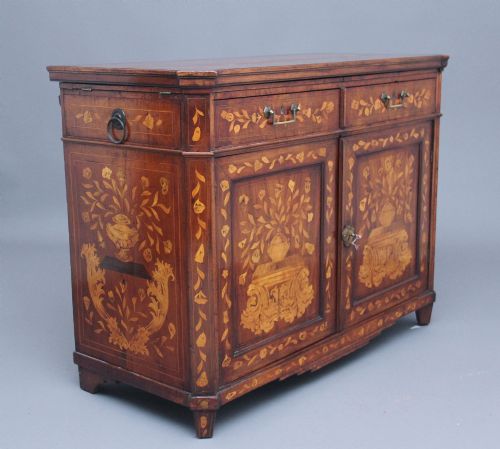


Inlaid Floral Marquetry Cabinet
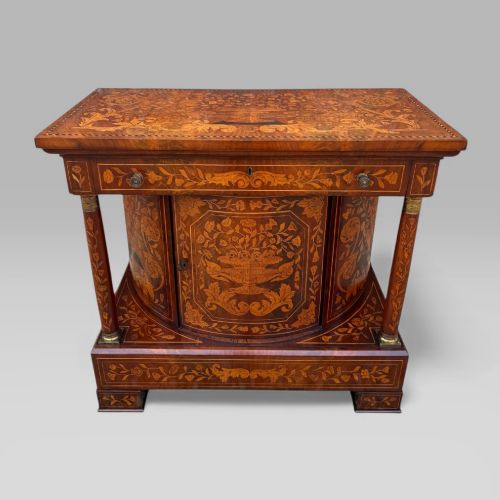
An inlaid floral marquetry cabinet brings together meticulous woodworking and botanical decoration, offering practical storage disguised as a botanical canvas.
Inlaid Floral Marquetry Cabinet
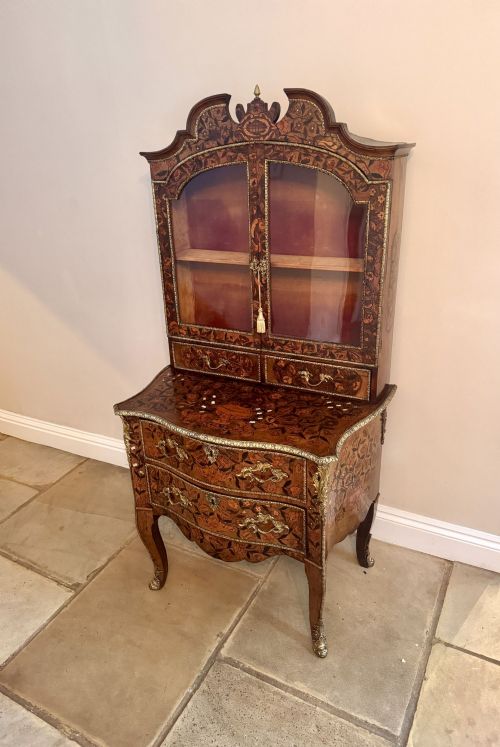
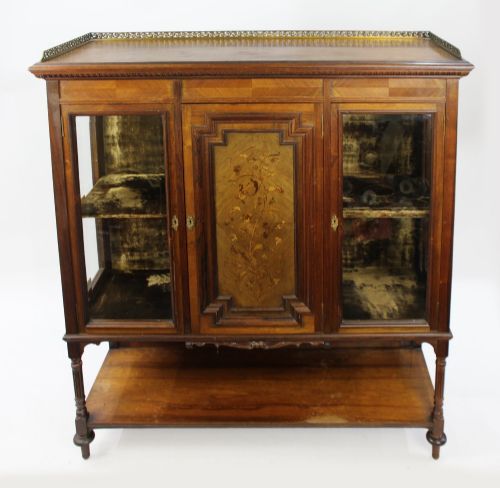
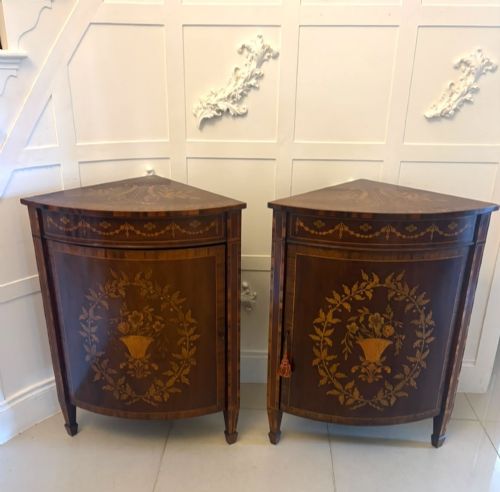
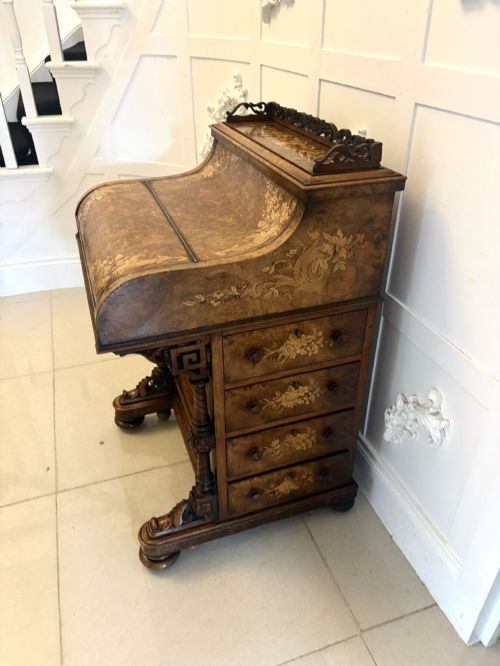
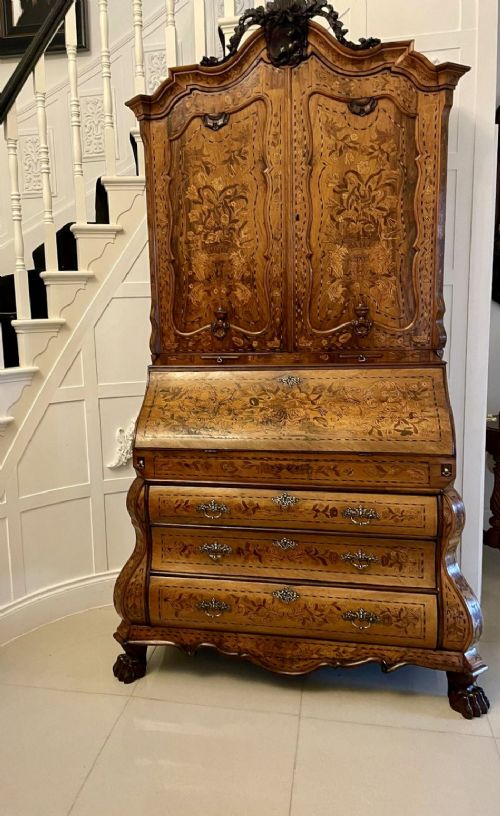
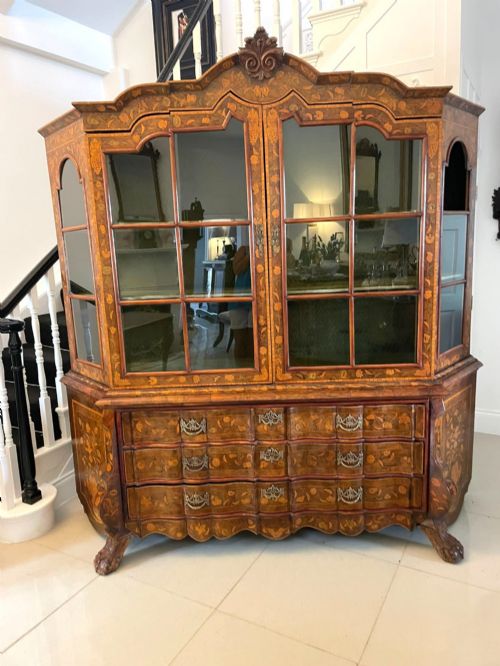
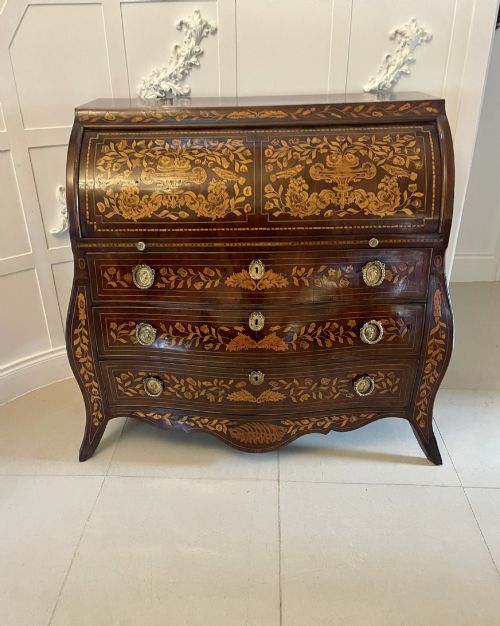
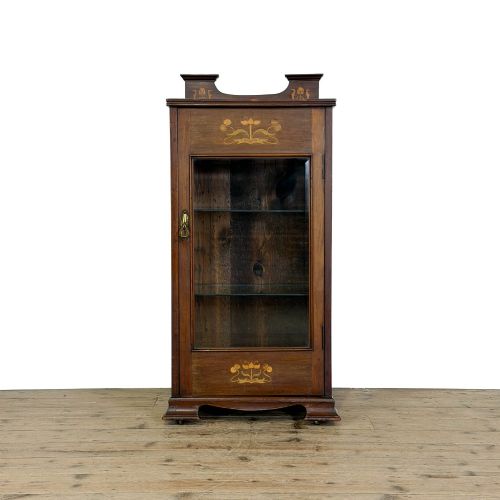
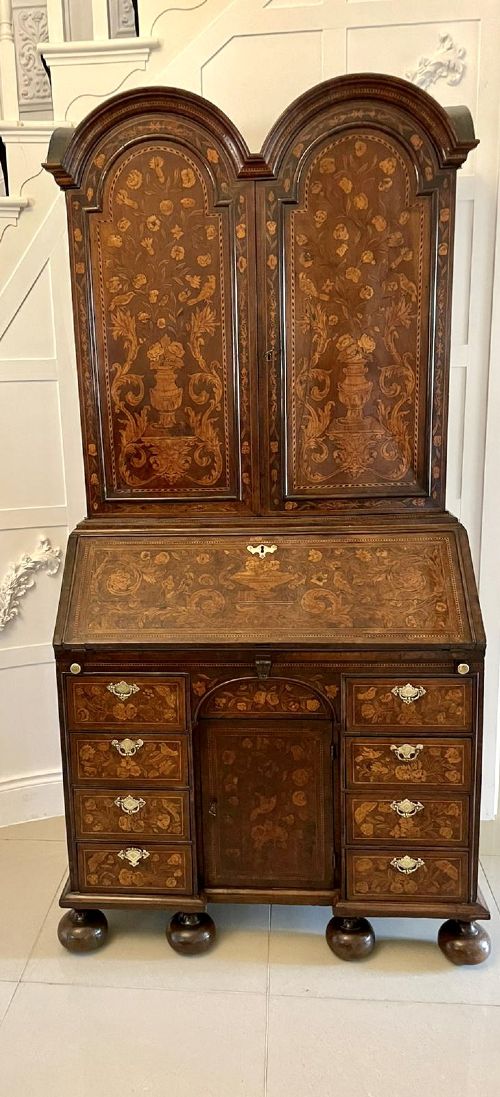
An inlaid floral marquetry cabinet appears in various forms on this page, ranging from grand bureau bookcases and serpentine credenzas down to compact bedside cupboards and corner units. Buyers searching this phrase encounter examples spanning the seventeenth century through to the twentieth century, with strong representation from the eighteenth-century Dutch tradition and the Victorian era.
The practical function of these pieces shifts according to their scale. Large bureau bookcases and display cabinets provide prominent storage and shelving for books or porcelain, whilst smaller bedside cabinets and lamp tables serve intimate domestic spaces.
Geographic origins recorded in the listings point towards English workshops, Dutch cabinetmakers, and French ateliers influenced by Louis styles. The designs adapt floral marquetry to suit domestic furniture types popular across different European periods.
Materials and Technique
Cabinetmakers construct the carcases of these pieces using foundational timbers such as mahogany, walnut, and burr walnut, sometimes applying fruitwood, rosewood, and satinwood for contrasting tones. Surfaces receive intricate marquetry panels where different tinted woods fit together to form floral motifs.
Craftsmen employ precise veneer-cutting techniques, occasionally incorporating brass, pewter, or glass details to enhance the botanical scenes. Secondary woods and structural frames support the decorative outer veneers, maintaining stability across large display cabinets and curved bombe shapes.
Several seventeenth-century Dutch cabinets incorporate subtle pewter inlay alongside wood veneers to catch the candlelight.
Distinctions in Execution
The sophistication of the floral marquetry dictates much of the distinction between pieces, where fluid plant stems and delicately shaded petals show superior hand-cutting compared to rigid, simplified designs. The choice of underlying timber also plays a role, with richly figured burr walnut and dense mahogany framing the inlay with greater depth.
Structural complexity influences the standing of a piece, separating straightforward rectilinear cupboards from bombe-shaped bureau bodies or serpentine credenzas that demand advanced joinery. Ormolu mounts and well-fitted internal compartments further distinguish the more ambitious commissions from standard production items.
Hewetsons London
The Inlaid Floral Marquetry Cabinet Glossary
- Marquetry
- A decorative technique where small pieces of veneer are assembled into pictorial patterns, such as floral arrangements, and glued to a structural carcase.
- Bombe
- A bulging, outward-curving profile seen on the front and sides of certain eighteenth-century bureau bodies and cabinets.
- Credenza
- A low, freestanding sideboard or cabinet designed for storage and display, frequently mounted with ormolu and detailed inlay during the Victorian period.
- Bureau bookcase
- A dual-purpose tall furniture form combining a slant-front writing desk below with enclosed shelving or cabinet doors above.
- Burr walnut
- A prized timber harvested from the gnarled growths of walnut trees, noted for its swirling, highly figured grain patterns.
Inlaid Floral Marquetry Cabinet: Frequently Asked Questions
How do I distinguish Dutch marquetry from English work?
Dutch pieces frequently utilise walnut carcases paired with elaborate, all-over floral marquetry that covers the entire surface, including sides and drawer fronts. Eighteenth-century examples often favour bombe silhouettes.
English furniture of similar periods tends to apply marquetry selectively onto mahogany or satinwood backgrounds, frequently within framed panels rather than across the whole carcase.
Where should I place a display cabinet at home?
Display cabinets with glass doors and delicate inlay benefit from positioning away from direct sunlight to protect antique timbers and internal veneers from fading. Placing them in a principal reception room or study allows the glazed upper sections to showcase collections.
Ensure the floor surface is level, as tall eighteenth and nineteenth-century cabinet structures require stable support to maintain door alignment.
What is the difference between a credenza and a side cabinet?
A credenza typically denotes a long, low nineteenth-century sideboard featuring central cupboards flanked by curved glass display doors, often enhanced with ormolu mounts and intricate marquetry. They sit low to the ground and anchor large wall spaces.
Side cabinets encompass a broader, more upright category of furniture designed for general storage against a wall, lacking the specific low architectural proportions of the Victorian credenza.
How do I care for antique floral marquetry?
Maintain a stable room temperature and avoid placing the furniture near radiators or heat sources, which can cause old veneers to dry out and lift. Regular dusting with a soft, dry cloth prevents particulate accumulation in the recessed joints of the inlay.
Apply a microcrystalline wax polish occasionally to nourish the timber surface without building up excessive residue that clouds the fine detail of the marquetry.