
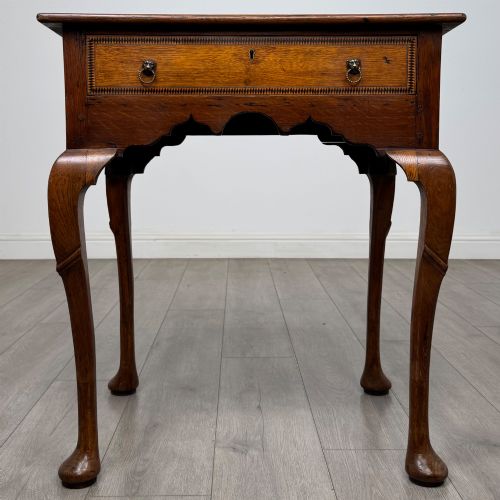
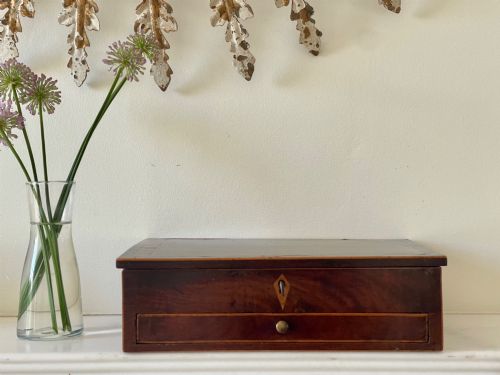
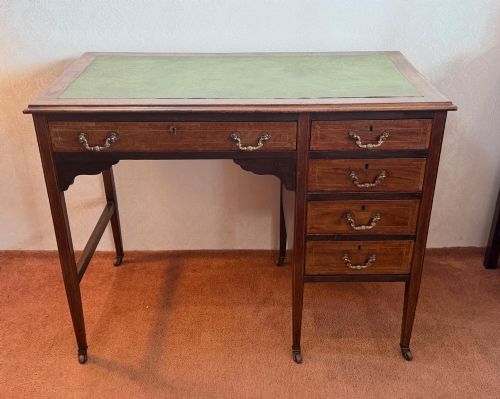
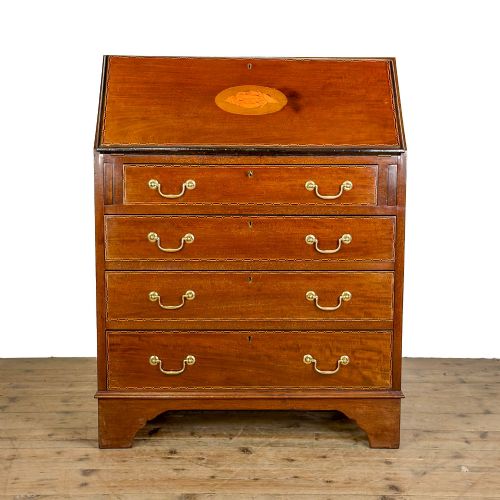
Inlaid Desk with Drawers
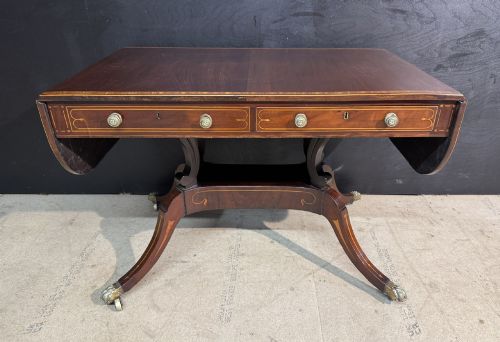
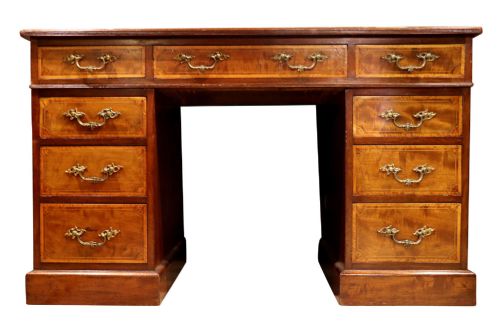
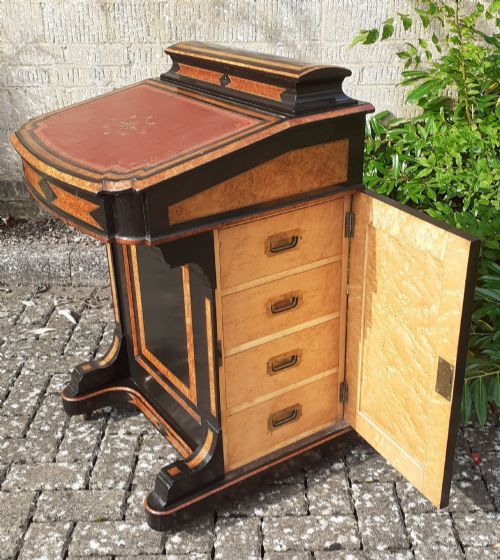
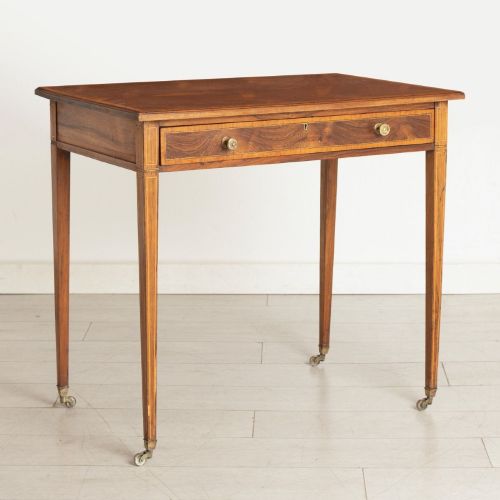
An inlaid desk with drawers offers fitted compartments and banded surfaces, ranging from compact Edwardian writing tables to substantial Georgian bureau bookcases.
Inlaid Desk with Drawers
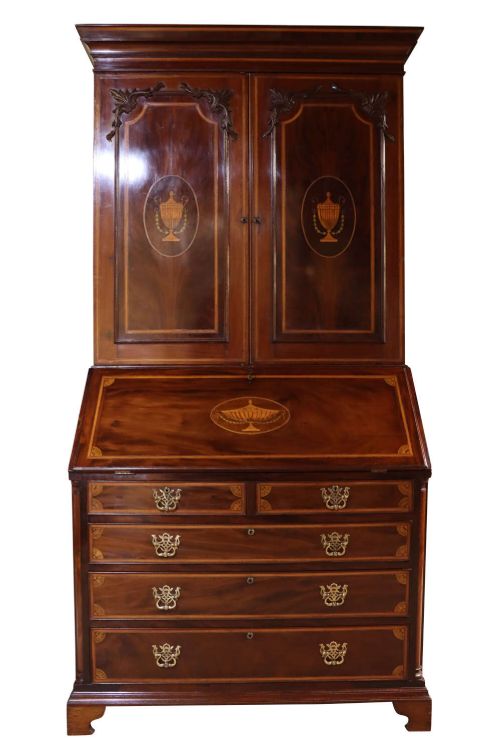
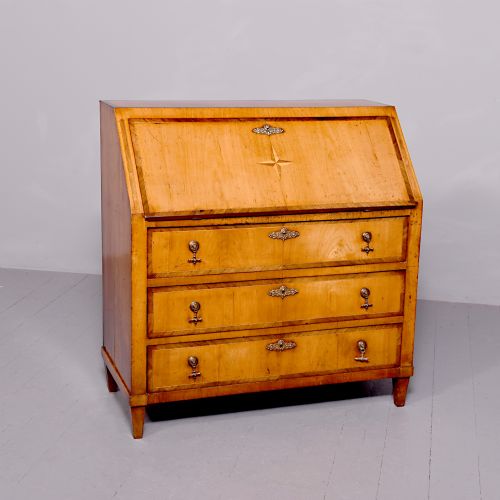
When you search for an inlaid desk with drawers, you encounter a variety of forms including writing slopes, bureau bookcases, pedestal desks, and Carlton House desks. These pieces span from the 18th century through the Victorian and Edwardian periods.
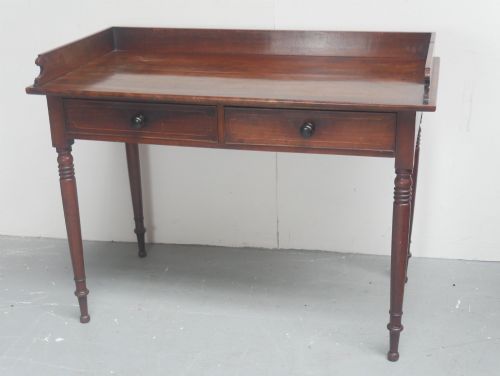
The pieces listed on this page appear most frequently as Edwardian and Victorian examples in mahogany, walnut, and rosewood, incorporating satinwood inlay and brass mounts. Alongside these, earlier Georgian and Regency pieces surface in smaller quantities.
Makers and regional workshops from England, continental Europe, and Malta contribute diverse structural variations, from compact kneehole desks to large bureau bookcases fitted with secret compartments and original hardware.
Materials and construction
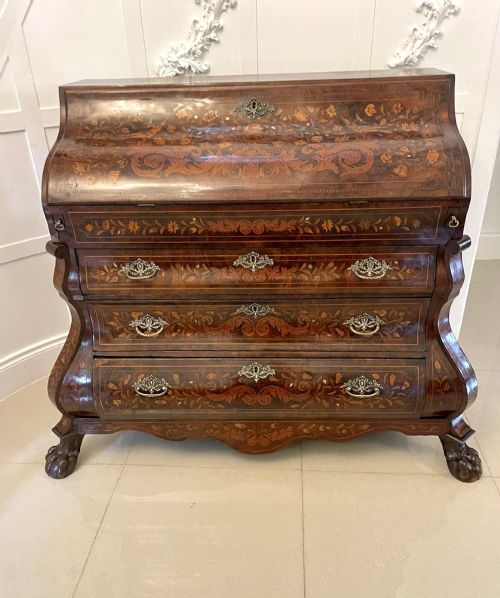
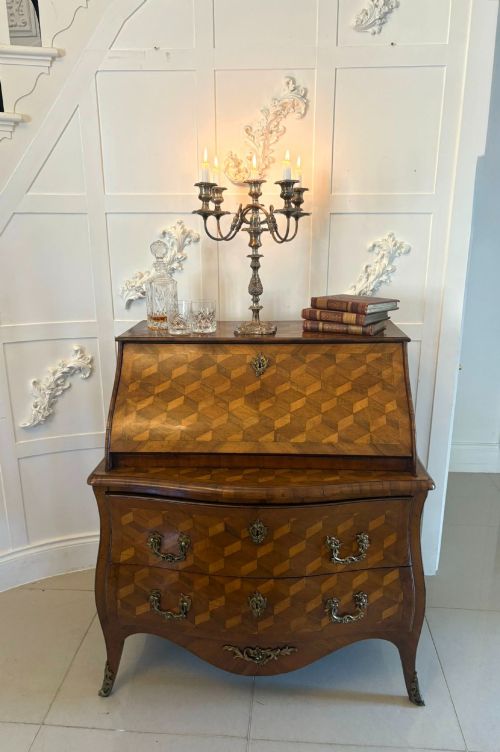
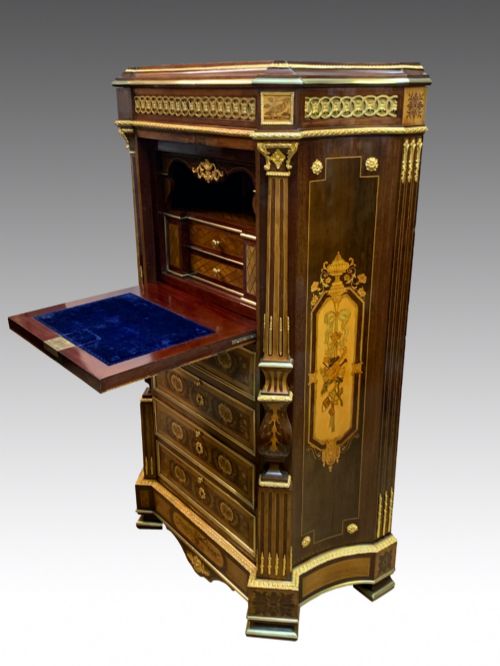
Cabinetmakers constructed these desks using solid timbers and veneers of mahogany, walnut, rosewood, and satinwood, often applying crossbanding and floral marquetry to writing surfaces and drawer fronts.
Interior elements incorporate secondary woods like oak for drawer linings, alongside brass handles, locks by makers such as Bramah, and occasionally ormolu mounts and marble tops on continental pieces.
Listings feature mahogany, walnut, rosewood, and satinwood alongside brass hardware and leather writing surfaces across Victorian, Edwardian, and Georgian periods.
Distinctions in manufacture
Quality rests in the precision of the cabinetwork, seen in tightly fitted drawer linings, symmetrical veneer matching, and the crisp execution of satinwood inlay or floral marquetry rather than painted substitutes.
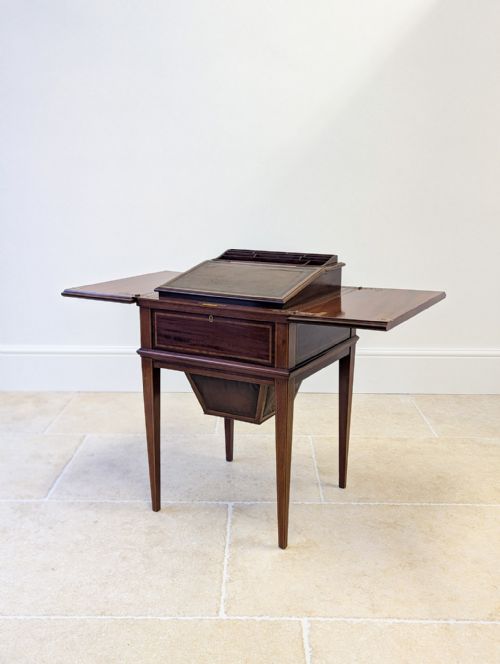
The presence of original handles, working locks with keys, and retained structural integrity across hinged writing flaps and metamorphic mechanisms elevate an example above later alterations.
Edwards & Roberts·Wright & Hunter of Belfast
The Inlaid Desk with Drawers Glossary
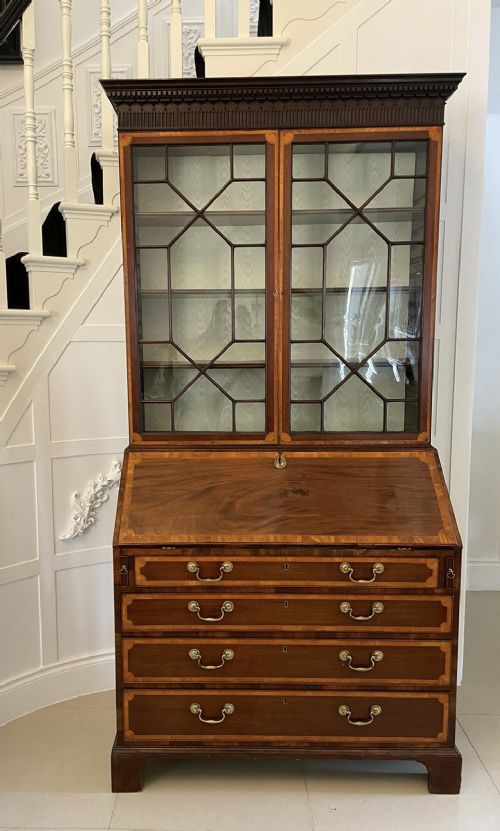
- Bureau bookcase
- A writing cabinet featuring a fall-front desk section combined with upper shelving enclosed by doors. These pieces often incorporate numerous small drawers and pigeonholes inside.
- Carlton House desk
- A horseshoe-shaped writing desk fitted with a raised tiered superstructure containing small drawers and compartments. This form originated in the late 18th century.
- Crossbanding
- A decorative border of veneer laid around the perimeter of a panel or drawer front so that the grain runs at right angles to the central surface. It frames the primary wood.
- Marquetry
- Elaborate patterns formed by fitting together contrasting veneers of wood, shell, or ivory to create pictorial or floral designs. It covers surfaces on continental and British pieces.
- Writing slope
- A portable or stationary box with a hinged sloping lid designed for correspondence, frequently fitted with internal compartments and secret drawers. Examples often feature brass binding.
Inlaid Desk with Drawers: Frequently Asked Questions
What is a bureau bookcase?
A bureau bookcase combines a lower writing desk with an upper shelving unit enclosed by doors. The desk section usually employs a sloping fall-front that opens to reveal internal drawers.
Cabinetmakers built these pieces primarily in mahogany and walnut during the 18th and 19th centuries, providing substantial storage for books and correspondence.
How do I spot secret drawers?
Secret compartments and hidden drawers usually conceal themselves behind removable panels, sliding partitions, or faux book spines within the primary interior pigeonholes.
Makers of writing slopes and pedestal desks incorporated these concealed spaces to secure valuables, often requiring specific release pins or sequence steps to open.
Are writing slopes portable?
Writing slopes are portable boxes featuring a sloping lid that folds flat to form a writing surface. They travel easily and contain internal compartments for inkwells and stationery.
Larger versions require a designated table surface, while smaller variants function as lap desks used across the Victorian and Georgian periods.
What is satinwood inlay?
Satinwood inlay involves setting pale, lustrous satinwood into contrasting darker timbers like mahogany or rosewood to create linear banding or decorative motifs.
Cabinetmakers utilised this technique heavily during the Sheraton Revival and Edwardian eras to brighten writing surfaces and drawer fronts.
How do I care for antique walnut?
Antique walnut requires protection from direct sunlight and drastic humidity changes to prevent the timber and delicate veneers from drying or splitting.
Regular dusting with a dry lint-free cloth preserves the polished finish, avoiding silicone-based polishes that degrade historic surfaces over time.