

Inlaid Circular Centre Table
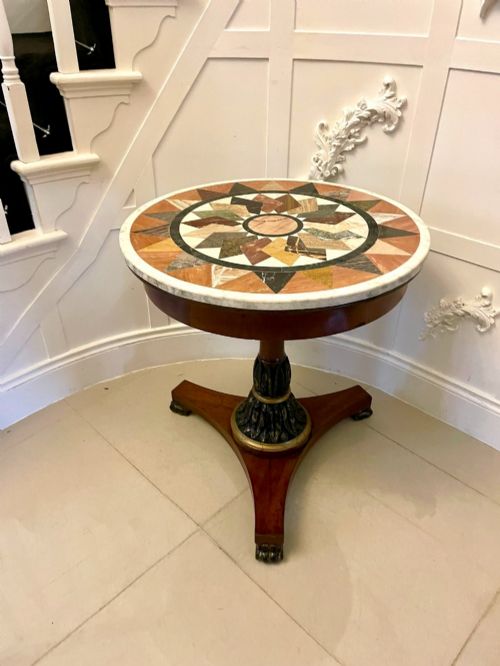
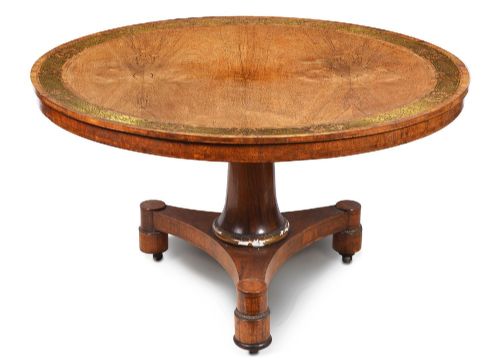
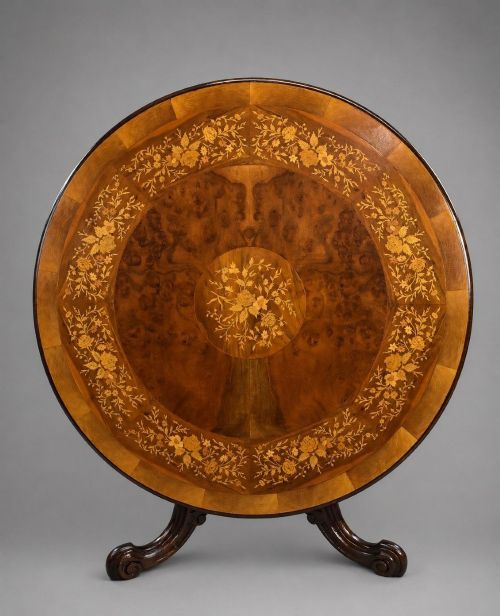
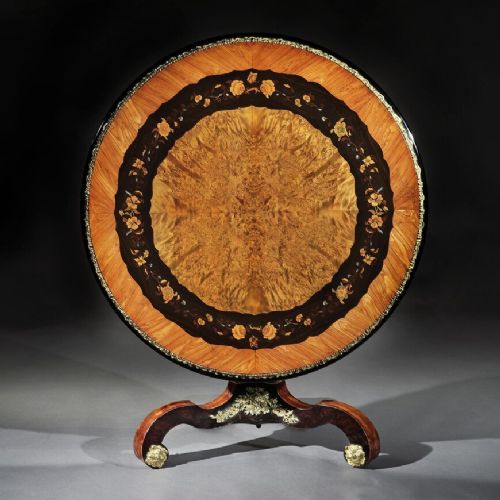
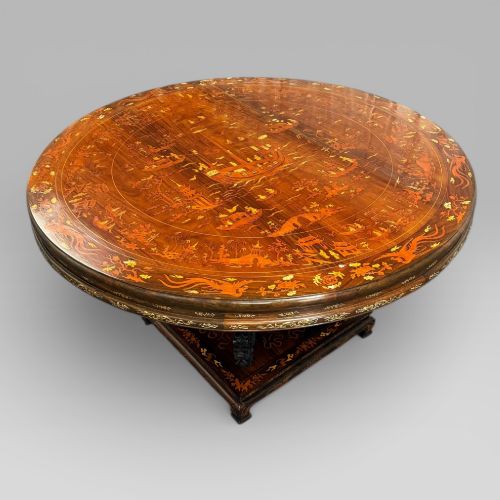
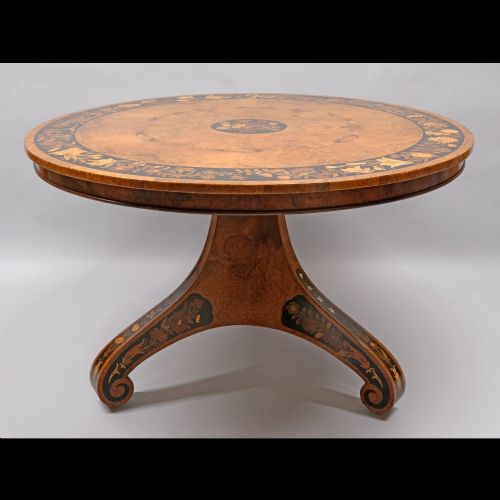
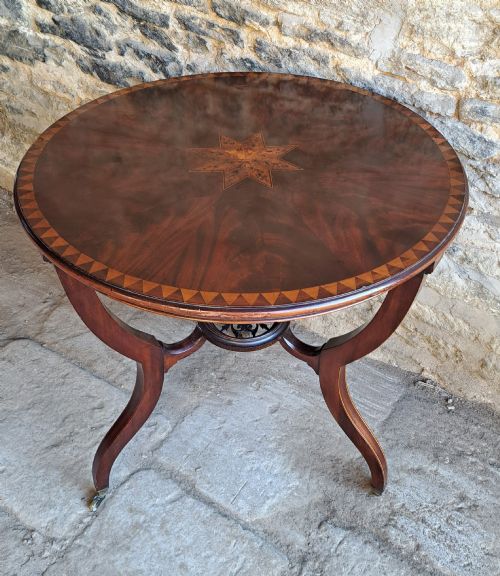
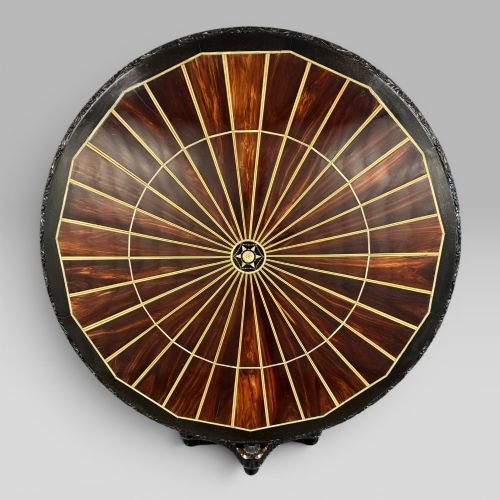
An inlaid circular centre table anchors a room with its balanced proportions and detailed marquetry.
Inlaid Circular Centre Table
An inlaid circular centre table stands freely within a room rather than against a wall, designed to be viewed from all sides. These pieces range from compact occasional tables to substantial dining and library furniture.
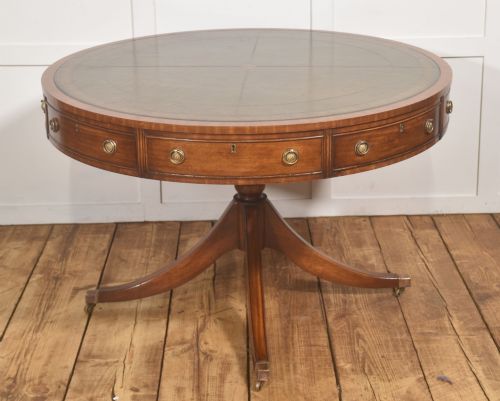
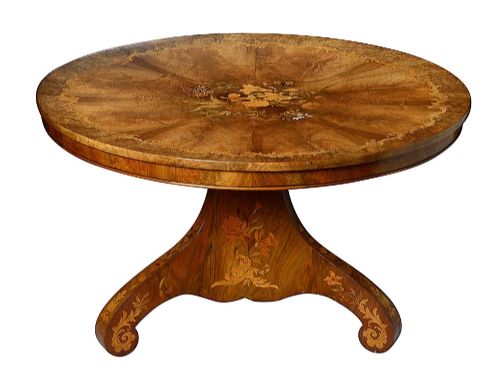
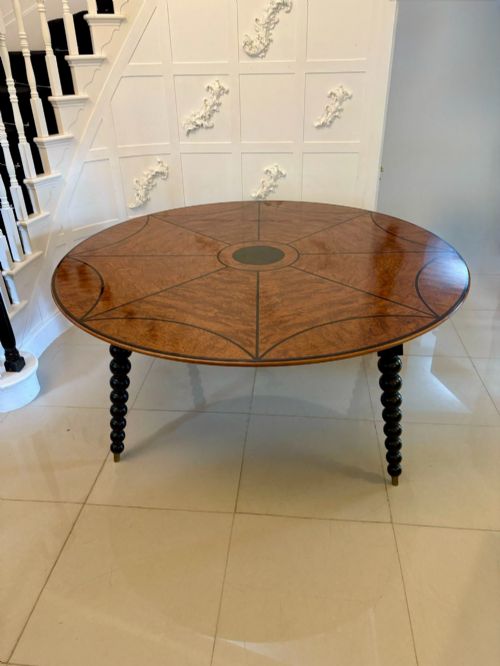
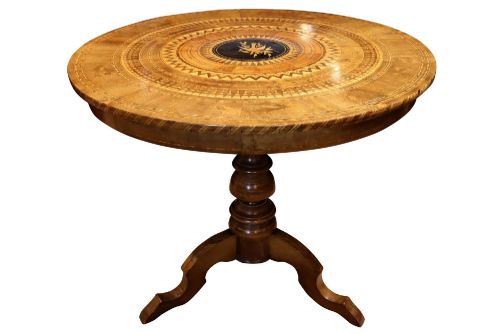
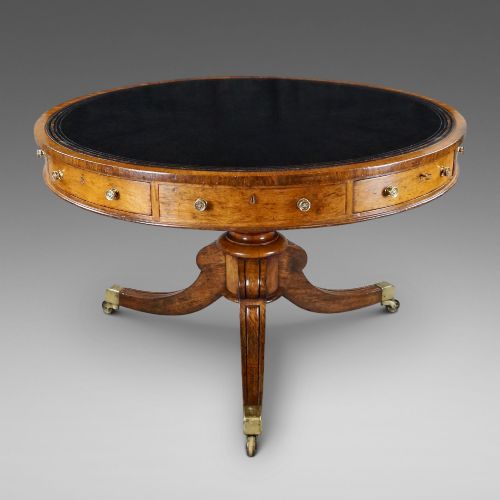
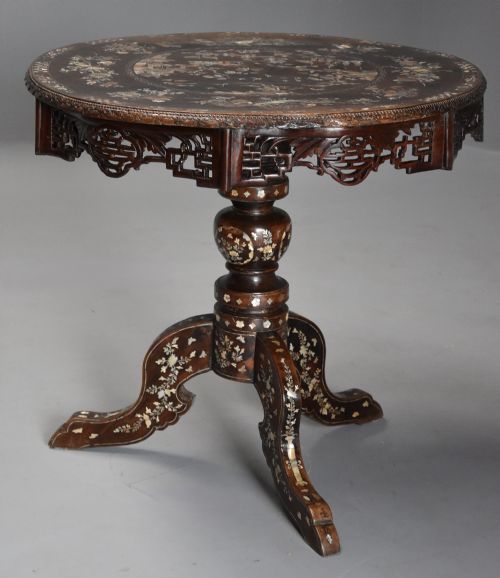
The version most commonly met on this page dates from the nineteenth century, utilising dense timbers such as rosewood, walnut, and mahogany combined with intricate surface decoration. Makers employed circular tops supported on central pedestals or pillar bases, allowing comfortable movement around the circumference.
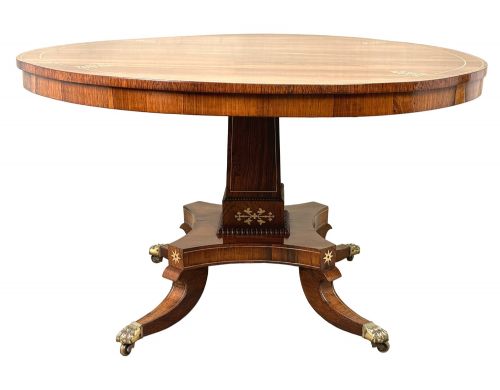
Period examples incorporate styles spanning Regency, Victorian, and Edwardian eras, each bringing distinct decorative programmes. The integration of contrasting woods, brass lines, or marble inserts defines the visual identity of these forms.
How they were made
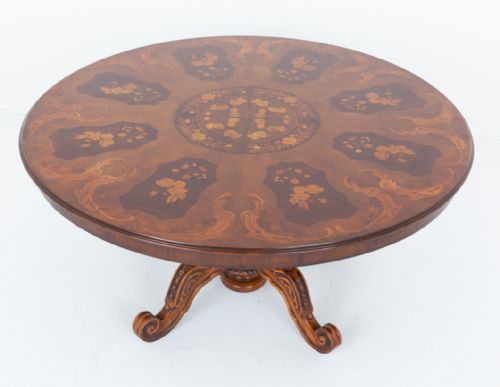
Cabinet makers constructed the circular tops using stable underlying carcases veneered in figured timbers like burr walnut, flame mahogany, or rosewood. Marquetry and parquetry elements were hand-cut from contrasting woods and set directly into the surface.
Metal inlay required precise channel cutting into the solid wood or veneer to receive brass strips or stringing. Pedestal bases relied on robust timber turning and internal weighting to support the heavy tops securely.
Inlaid Circular Centre Table Retail Price Guide 2026
Typical asking prices for inlaid circular centre table among the pieces listed under this phrase on Sellingantiques today, from the lower quarter to the upper quarter. They describe what is for sale here now, not the wider market.
Some nineteenth-century tables hide secret compartments inside their heavy pedestals for storing small valuables.
What varies in quality
Quality rests upon the precision of the timber matching and the execution of the inlay work. Finer examples display seamless transitions between contrasting woods and crisp, sharp engraving within brass elements.
Structural integrity of the central pillar and the stability of the pedestal base dictate longevity. Superior pieces employ dense, well-seasoned primary timbers that resist warping across the broad circular expanse.
Edward Holmes Baldock·Edwards and Roberts·Maples and Co·Holland and Sons·Gillows
The Inlaid Circular Centre Table Glossary
- Marquetry
- The art of creating decorative patterns on a wooden surface by fitting together small pieces of veneer. This technique allows intricate floral or geometric designs to cover the table top.
- Ormolu
- Gilded bronze mounts applied to furniture for decorative enrichment. These metallic elements add contrast to dark woods like rosewood and mahogany.
- Pedestal
- A single central support column rising from a tripod or platform base. This design replaces traditional four-legged configurations on circular tables.
- Stringing
- Thin lines of contrasting wood or light-coloured material inlaid into the surface. It outlines geometric shapes and panels on the table top.
Inlaid Circular Centre Table: Frequently Asked Questions
Where should an inlaid circular centre table go?
These tables function best in the middle of a room where their circular form breaks up linear architectural lines. They provide a natural focal point for lamps, books, or decorative objects.
Because the design allows access from all sides, placement away from walls ensures the piece is fully appreciated in daily use.
How were these tables used historically?
Period households utilised centre tables in libraries, reception rooms, and grand halls for displaying items or holding reading materials. Larger variations served dining or occasional functions when required.
Smaller formats acted as lamp or occasional tables beside seating areas within Victorian and Edwardian interiors.
How do I care for a polished wood surface?
Maintaining the finish involves dusting regularly with a soft, dry cloth and avoiding direct sunlight or excessive heat sources. Waxing periodically preserves the moisture and lustre of rosewood, walnut, and mahogany.
Liquid spills require immediate attention to prevent staining the delicate veneer and inlaid stringing.
How do I distinguish between Regency and Victorian examples?
Regency tables often feature cleaner architectural lines, rosewood surfaces, and precise brass inlay reflecting classical influences. Timber choice tends towards darker, heavily grained hardwoods with restrained ornamentation.
Victorian pieces frequently display denser marquetry, burl veneers, and heavier pedestal constructions with elaborate carved details.