

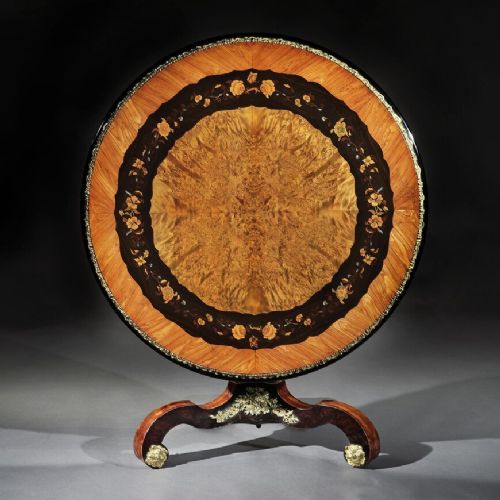
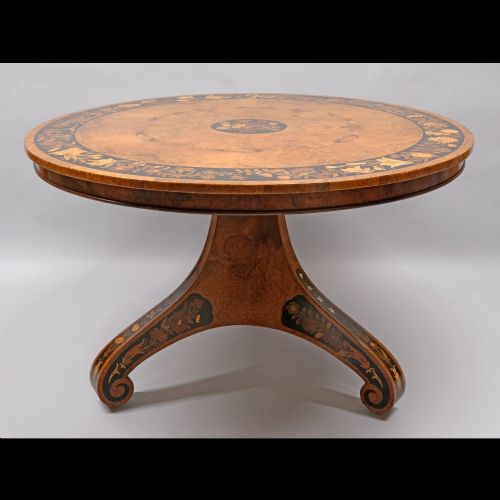
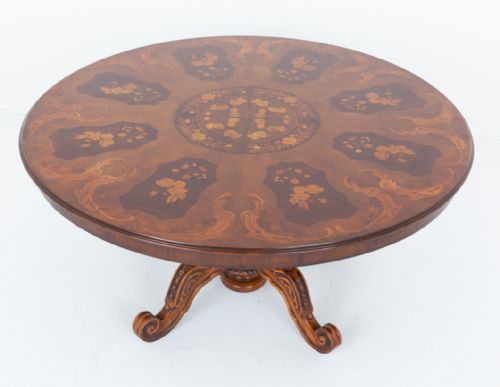


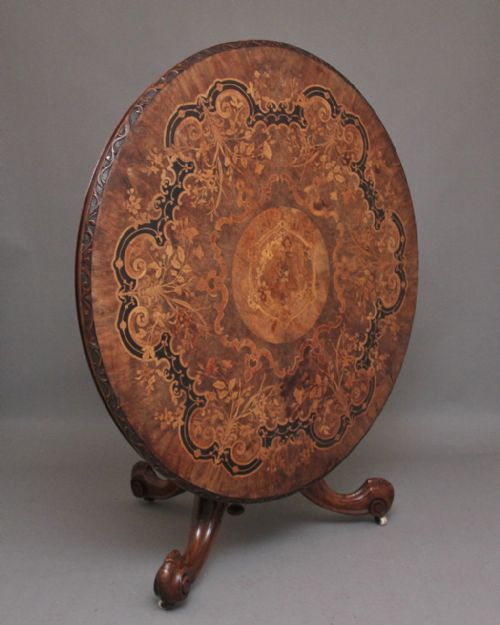


Circular Marquetry Tilt Table
A circular marquetry tilt table brings intricate wood inlay and practical folding tops together, serving as both a display surface and a space-saving centrepiece.
Circular Marquetry Tilt Table
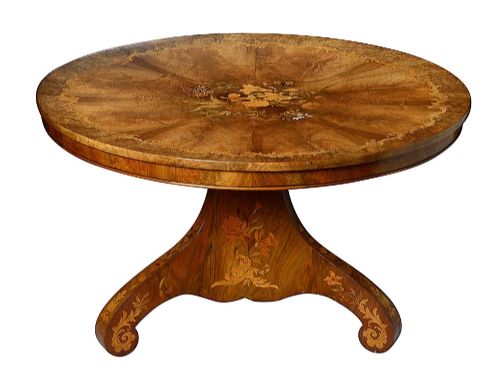
A circular marquetry tilt table represents a versatile form of antique furniture, appearing frequently in Victorian and Regency periods as a dining, breakfast, or occasional table. These pieces combine a round top decorated with detailed wood inlay with a pedestal base, designed to tilt vertically when not in use.
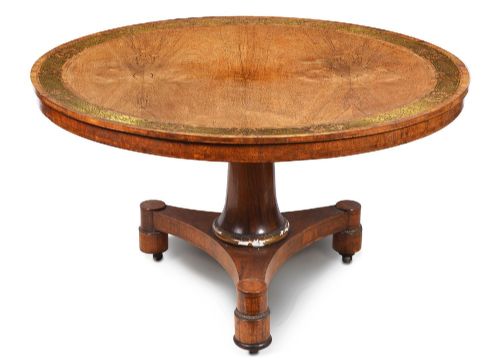
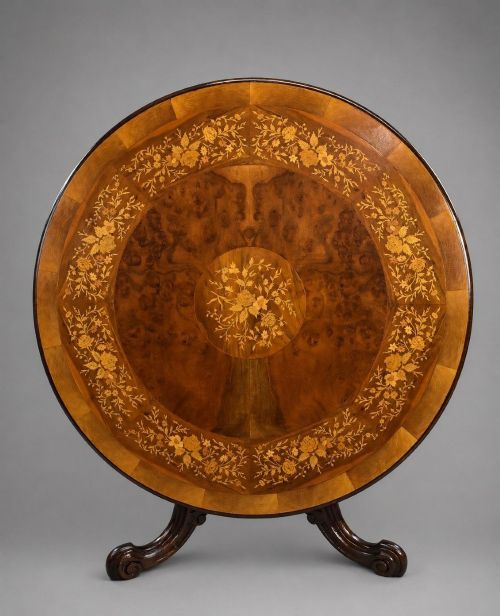
The selection on this page centres primarily on Victorian burr walnut and nineteenth-century marquetry centre tables, alongside earlier Regency rosewood examples and Georgian wine tables. Buyers encounter forms ranging from large four-foot dining surfaces down to smaller occasional and wine tables.
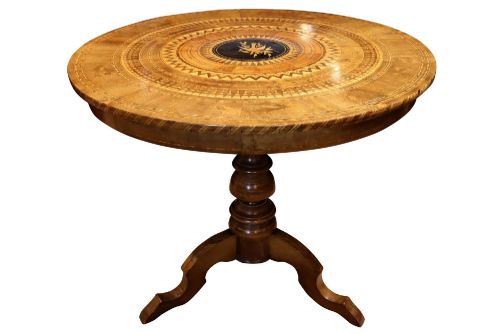
Makers and workshops from the nineteenth century produced these tables in various regional styles, including Italian Sorrento work and French revival designs. The core function remains consistent across periods: a central pillar supports a top that tilts for storage or room clearance.
Materials and construction
Cabinet makers utilised dense native and exotic timbers for these pieces, building structural carcases from mahogany, rosewood, and walnut. Burr walnut and pollard oak frequently provide the figured background veneers needed to highlight the central grain.
Marquetry inlay and wood inlay techniques define the decoration, incorporating fruitwood and various contrasting timbers arranged in geometric or floral patterns. Brass inlay also appears on Regency examples, adding linear contrast to dark rosewood surfaces.
Tilting mechanisms rely on a sturdy central pedestal, often supported by tripod legs or a tripartite platform base. Joinery combines traditional turning with secure pivoting catches to support the weight of the circular top.
Circular Marquetry Tilt Table Retail Price Guide 2026
Typical asking prices for circular marquetry tilt table among the pieces listed under this phrase on Sellingantiques today, from the lower quarter to the upper quarter. They describe what is for sale here now, not the wider market.
Listings feature circular marquetry tilt tables primarily from the Victorian and Regency periods, constructed in walnut, rosewood, and mahogany.
Determinants of quality
The finesse of the marquetry and wood inlay dictates the visual standard of the piece, separating standard production from exceptional workshop output. Tables featuring crisp, highly detailed floral or architectural motifs demonstrate superior craftsmanship.
Timber selection plays a major role in establishing the grade of a table, with richly figured burr walnut and dense rosewood commanding greater visual depth. The stability of the tilt mechanism and the precision of the pedestal turning further distinguish finer examples.
Edward Holmes Baldock·Holland and Sons·John Kendal·George Smith
The Circular Marquetry Tilt Table Glossary
- Marquetry
- The art of applying decorative pieces of veneer to a structure to form intricate designs and pictures. Artisans cut various coloured woods to fit precisely together before gluing them to the tabletop.
- Tilt top
- A pivoting tabletop mechanism that allows the surface to lock horizontally for use or tilt vertically for storage. This clever engineering saved valuable floor space in nineteenth-century drawing rooms.
- Burr walnut
- A prized timber harvested from walnut tree growths, known for its swirling, highly figured grain patterns. Cabinet makers selected these veneers for high-status table surfaces.
- Pedestal table
- A table supported by a single central pillar rather than four corner legs. This construction allows unrestricted seating and forms the base for most tilting breakfast tables.
- Sorrento table
- An inlaid wood table originating from the Italian town of Sorrento during the nineteenth century. These pieces typically feature distinct pictorial marquetry and banded borders.
Circular Marquetry Tilt Table: Frequently Asked Questions
How do I identify a tilt top table?
Look beneath the circular top for a wooden catch, hinge, or brass release mechanism attached to the central pillar. This pivot allows the surface to swing from a horizontal position into a vertical plane.
Once released, the top tips backward so the table can stand flat against a wall when not in use.
Where were these tables used?
These tables served multiple functions in nineteenth-century homes, acting as breakfast tables in morning rooms or centre tables in grand entrance halls. Their mobility allowed servants to clear them away quickly when rooms needed to be transformed for evening entertaining.
Smaller versions functioned as occasional or wine tables in drawing rooms and libraries.
How do I care for a marquetry surface?
Protect the delicate wood inlay by keeping the table away from direct sunlight and strong heat sources, which can dry out the old veneers. Apply a quality beeswax periodically to nourish the timber and maintain a soft sheen.
Avoid placing damp glasses or hot dishes directly onto the polish to prevent staining the grain.
What is the difference between a loo table and a breakfast table?
Loo tables and breakfast tables share similar circular tilting designs from the Victorian and Regency periods, often built from burr walnut or rosewood. The primary distinction lies in their historical usage rather than their construction.
Loo tables specifically accommodated the card game loo, while breakfast tables served morning meals before being tilted away.