

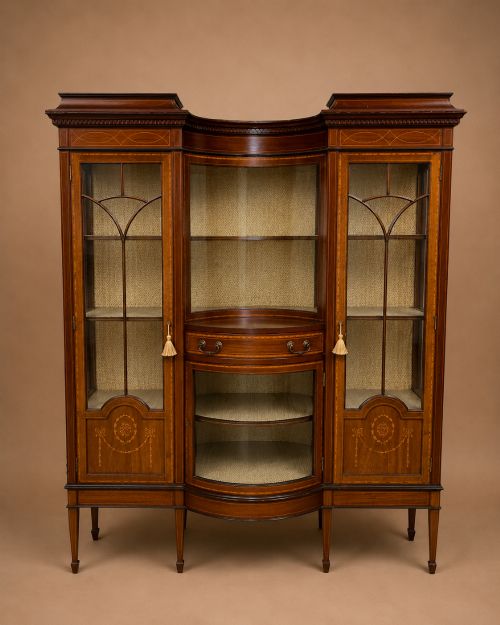
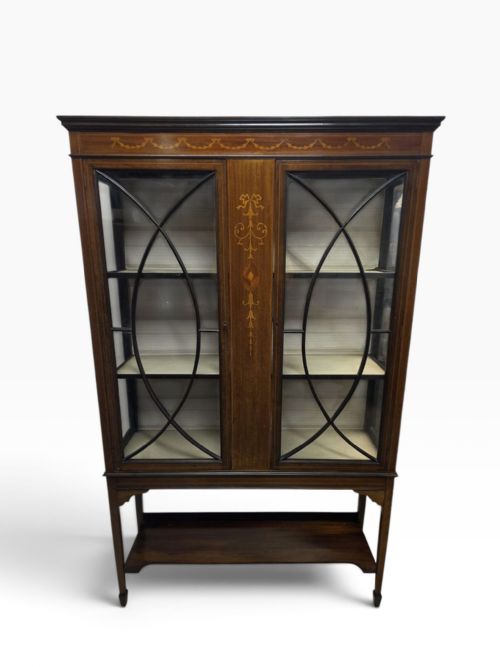

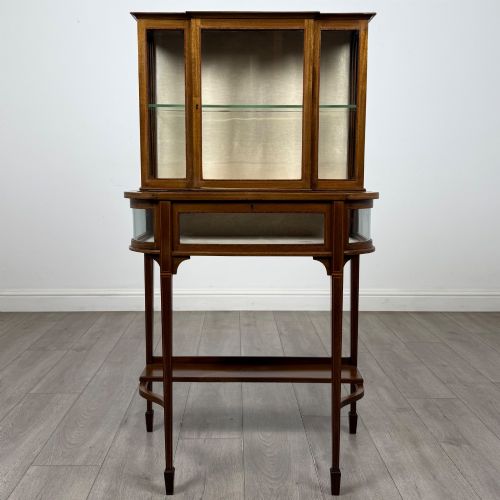
Inlaid China Display Case
An inlaid china display case brings together figured timber, delicate marquetry, and glazed panels to showcase treasured collections.
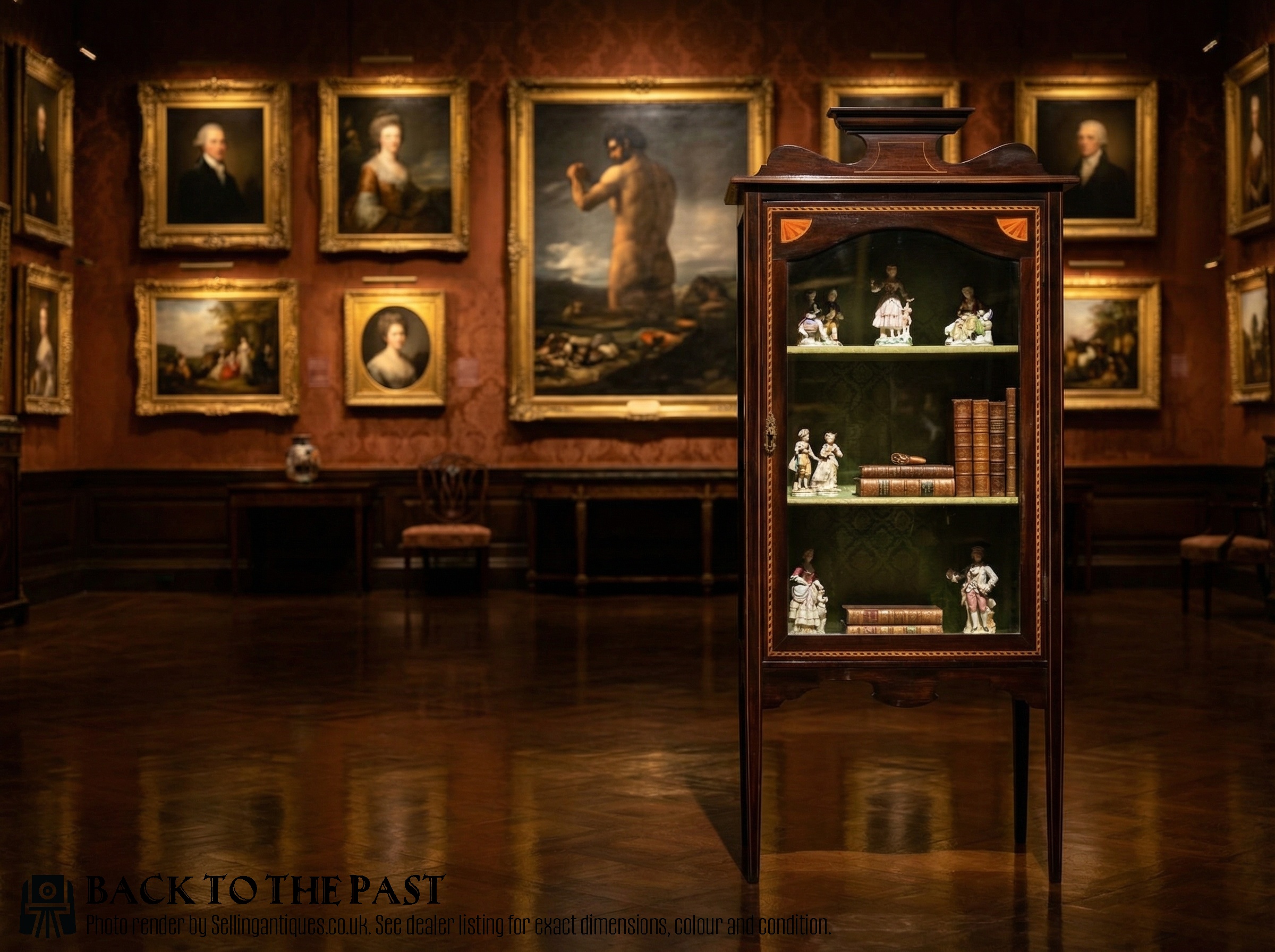
Inlaid China Display Case
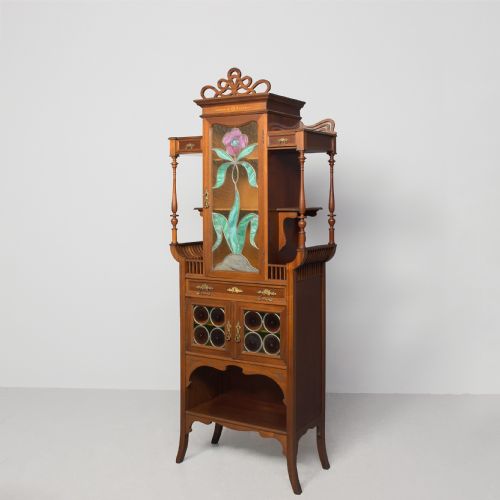
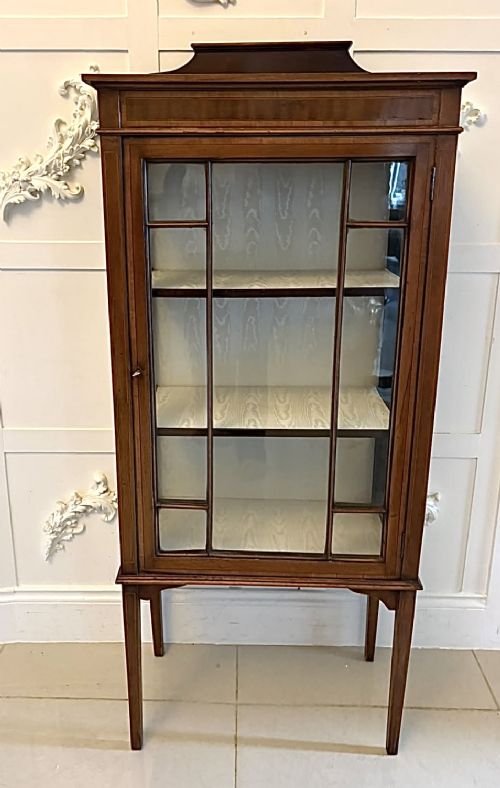
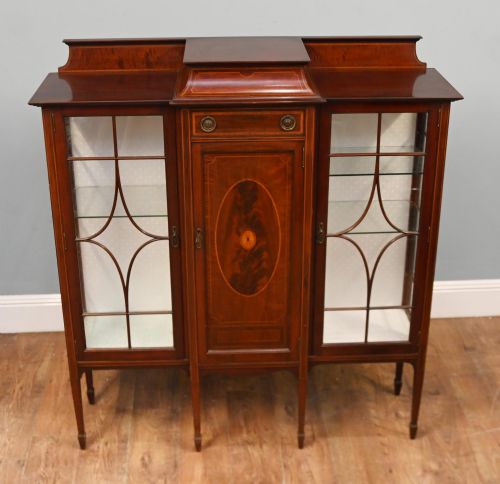
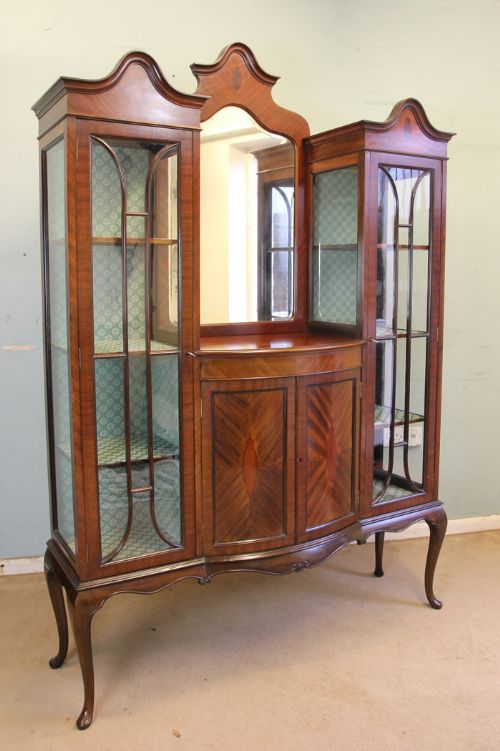
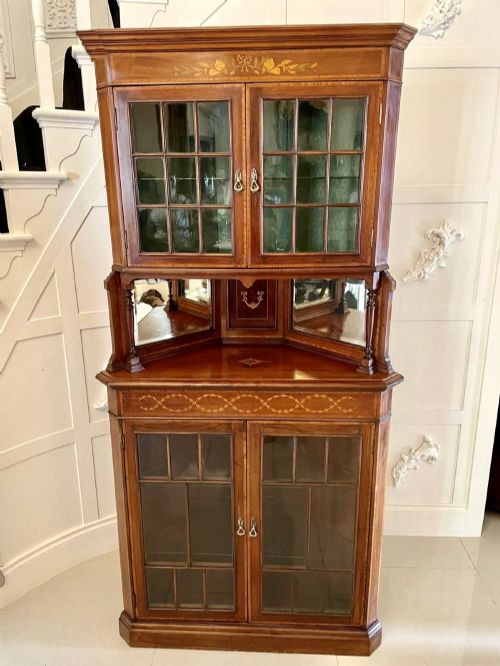
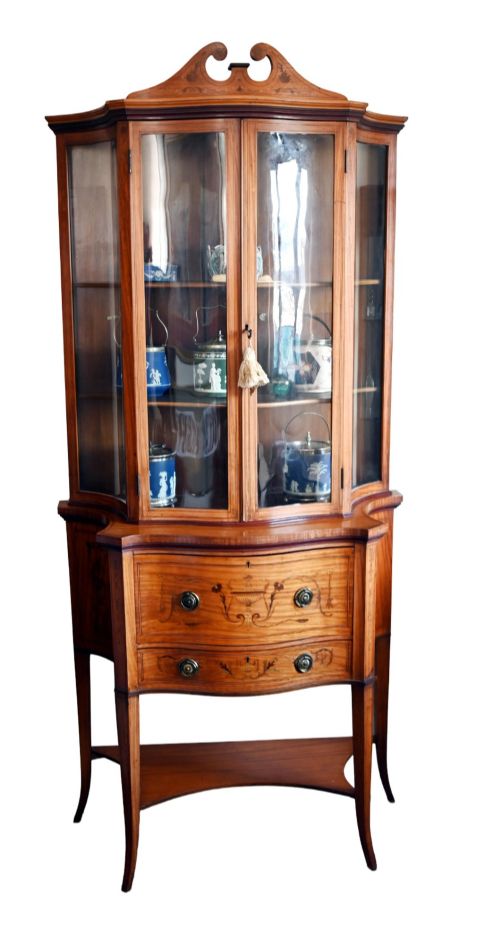
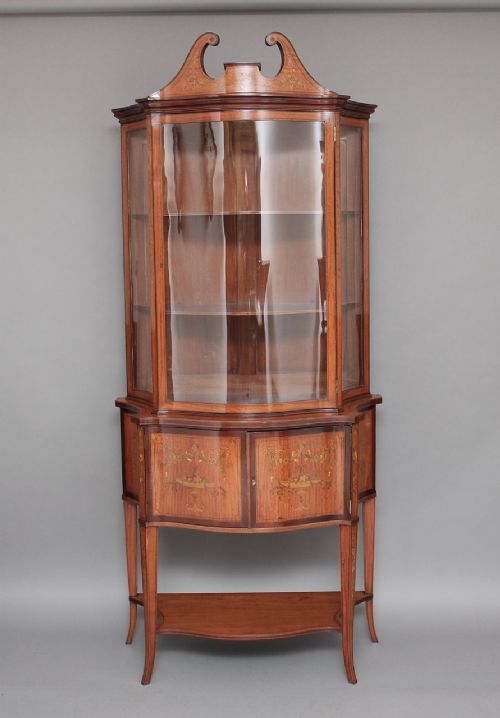
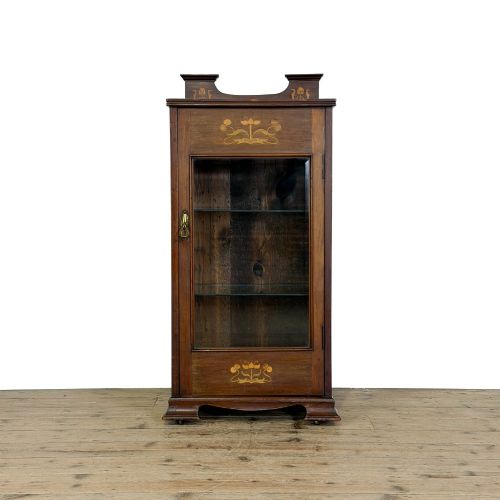
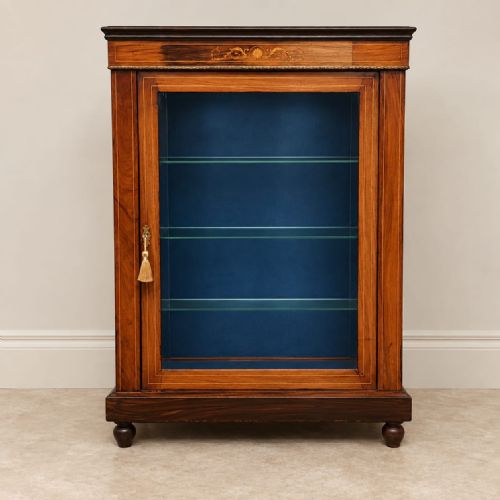
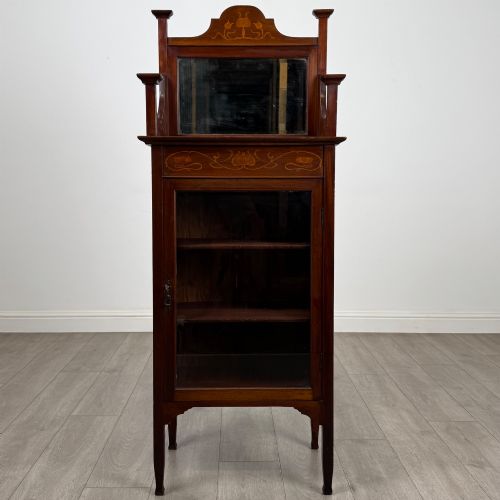
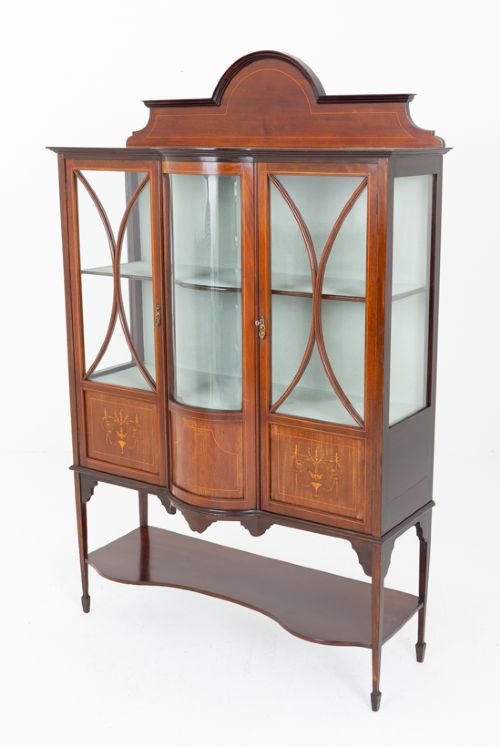
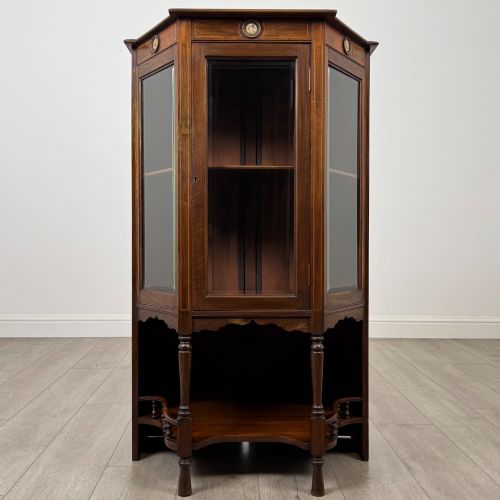
An inlaid china display case serves primarily to protect and exhibit porcelain, glass, and curiosities behind glazed doors. The pieces seen here span periods from the eighteenth century to the early twentieth century, taking the form of freestanding display cabinets, corner cabinets, pier cabinets, and bookcases.
Edwardian and Victorian examples dominate the selection, often rendered in the Sheraton Revival style with slender proportions and refined decoration. Alongside these tall cabinets, collectors encounter smaller pier cabinets and bow-ended vitrines designed for specific domestic corners.
Makers and workshops of the nineteenth and twentieth centuries adapted earlier Georgian and Dutch Baroque precedents to suit contemporary drawing rooms. The resulting furniture balances functional storage with decorative surface enrichment tailored to domestic display.
Materials and Construction
Cabinetmakers constructed the carcass primarily using solid timber and veneer over secondary woods, with mahogany and walnut forming the structural core of most pieces. Satinwood appears frequently as a contrasting veneer for panels and banding, complemented by delicate marquetry and stringing.
Glazing takes the form of framed glass panels, occasionally curved for bow-fronted and bombe shapes, allowing light to reach the interior shelves. Brass hardware, fabric linings, and occasional ormolu mounts complete the construction of these glazed vitrines and cabinets.
Inlaid China Display Case Retail Price Guide 2026
Typical asking prices for inlaid china display case among the pieces listed under this phrase on Sellingantiques today, from the lower quarter to the upper quarter. They describe what is for sale here now, not the wider market.
Listings feature Edwardian, Victorian, and eighteenth-century periods executed in mahogany, walnut, and satinwood with glass and brass elements.
Evaluating Craftsmanship
Quality rests in the precision of the cabinetmaking and the crispness of the inlay work rather than the mere presence of decoration. Superior pieces display finely figured mahogany or walnut veneers matched symmetrically across doors and drawer fronts.
The sophistication of the marquetry and the delicacy of the satinwood inlay distinguish standard production from exceptional examples. Furthermore, the integration of curved glass doors and the retention of original brass fittings indicate a higher tier of manufacture.
The Inlaid China Display Case Glossary
- Vitrine
- A glass-fronted cabinet designed specifically for displaying porcelain, objets d'art, and curiosities. These pieces rely heavily on transparent panels to maximise internal illumination.
- Marquetry
- The art of forming decorative patterns by fitting together contrasting veneer timbers and shells. It differs from inlay by assembling the design as a whole veneer before application.
- Sheraton Revival
- A late nineteenth and early twentieth century style that reinterprets the neoclassical furniture designs of Thomas Sheraton. It relies on satinwood, slender legs, and restrained floral or classical motifs.
- Pier Cabinet
- A low cabinet designed to fit against the narrow section of wall between two windows. Victorian examples often feature glazed doors and elaborate marquetry.
- Stringing
- Thin lines of contrasting timber inlaid into shallow channels on a furniture surface. This technique outlines panels, drawers, and legs to create geometric definition.
Inlaid China Display Case: Frequently Asked Questions
How do I date an inlaid display cabinet?
Dating relies on combining the timber selection, stylistic cues, and construction methods visible in the carcass. Edwardian Sheraton Revival pieces often utilise lighter satinwood banding and machine-sawn veneers.
Victorian and eighteenth-century examples display heavier structural timbers, hand-cut dovetails, and darker walnut or mahogany foundations.
Where should I place a corner display cabinet?
Corner cabinets and cupboards suit unused room junctions where floor space is limited. Their angled backs allow them to fit flush against two adjoining walls.
This placement draws the eye into architectural recesses while keeping valuable porcelain safely enclosed behind glass.
Are the shelves inside adjustable?
Many period display cases feature fixed wooden shelves, though some later Edwardian examples incorporate simple support notches. The internal layout generally reflects the original intention to display specific heights of china.
Care must be taken when altering historical interiors to preserve the structural integrity of the glazed frame.