
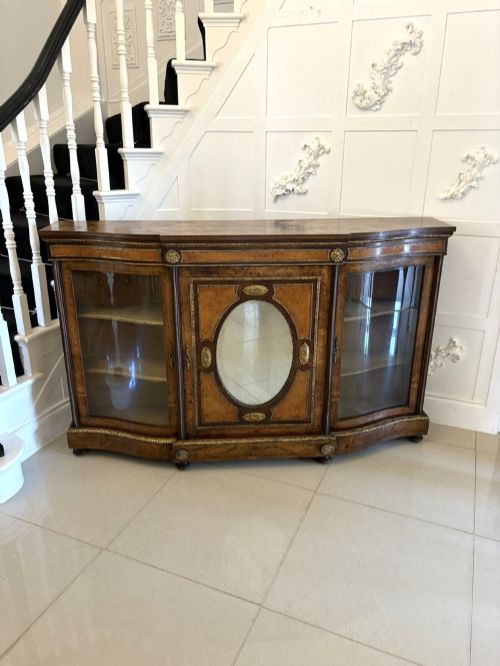
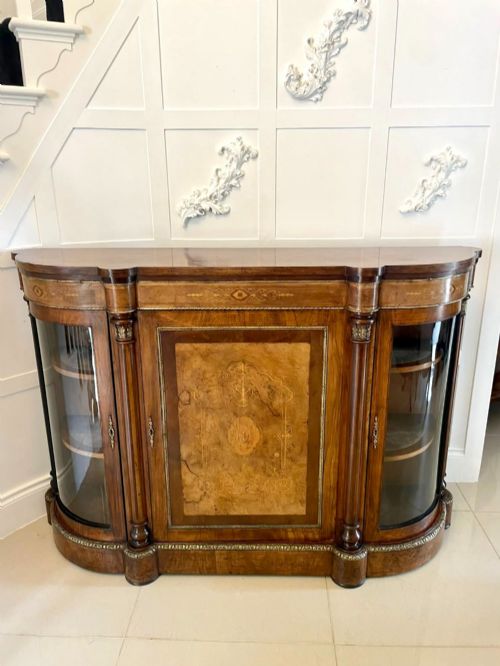
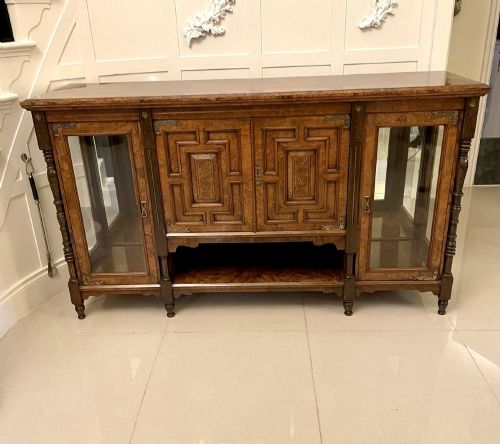
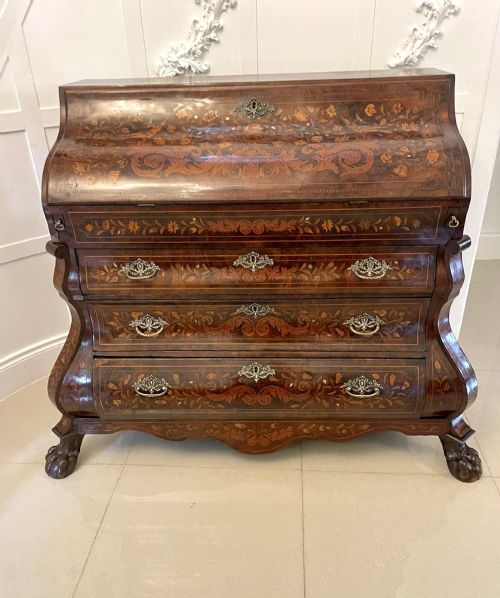


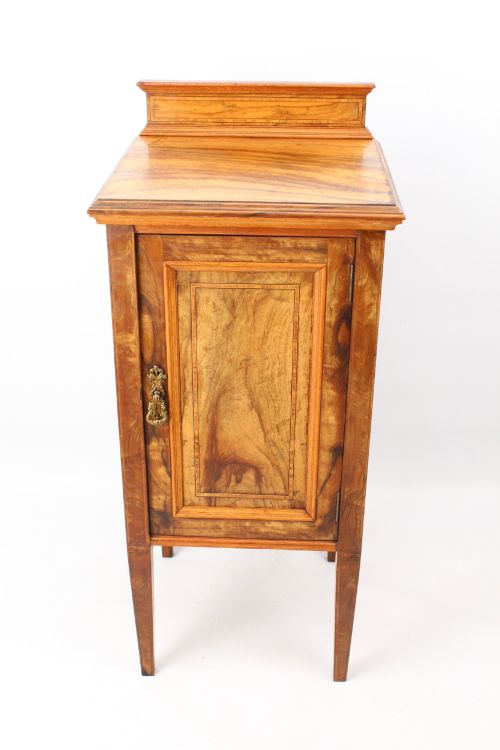
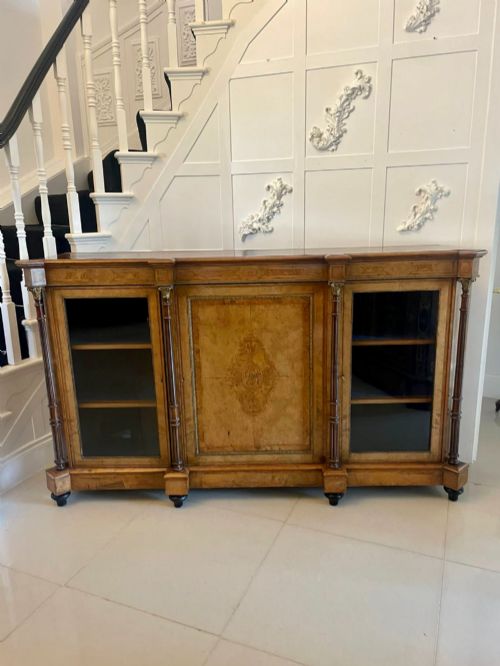
Inlaid Burr Walnut Cabinet
An inlaid burr walnut cabinet brings rich swirling grain and delicate floral marquetry together, offering a stately focal point for holding books, porcelain, or correspondence.
Inlaid Burr Walnut Cabinet
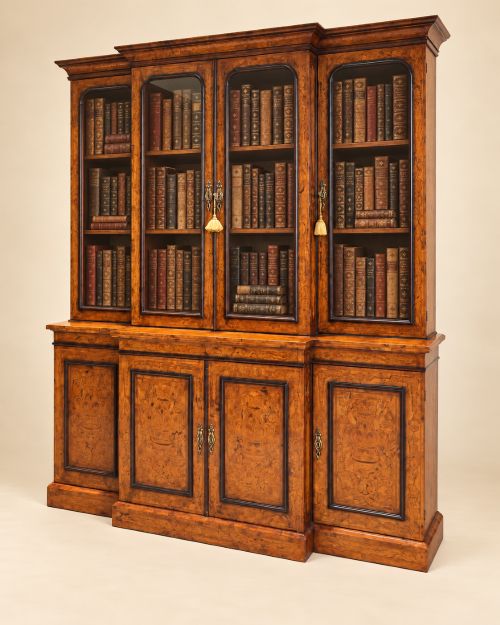
An inlaid burr walnut cabinet encompasses a diverse range of refined storage forms designed for formal rooms, spanning from grand credenzas and glazed display cases to compact pier cabinets and writing desks.
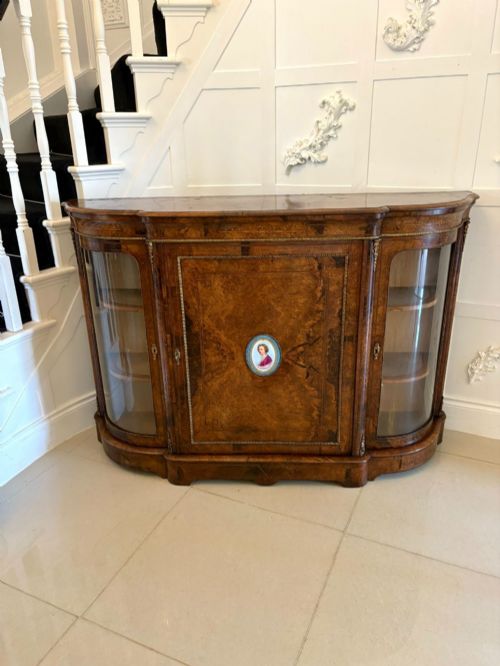
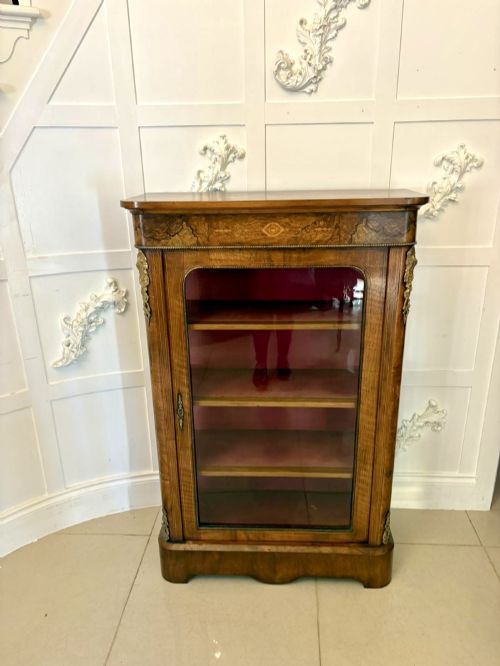
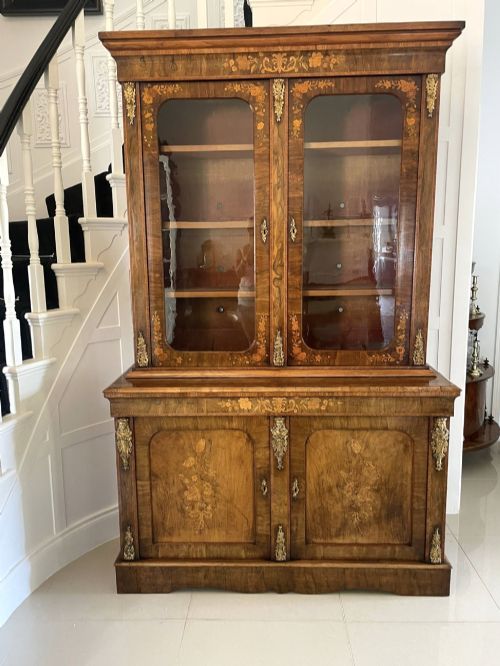
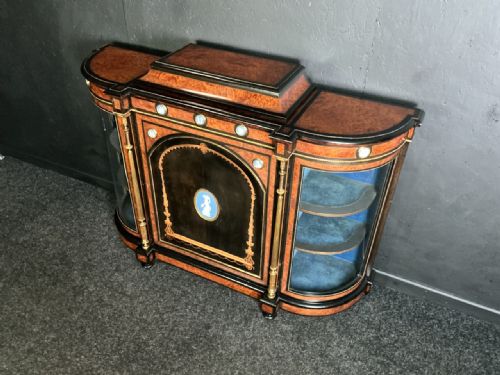
The Victorian incarnation dominates this selection, frequently appearing as serpentine credenzas or upright display cabinets fitted with glass doors and velvet-lined interiors.
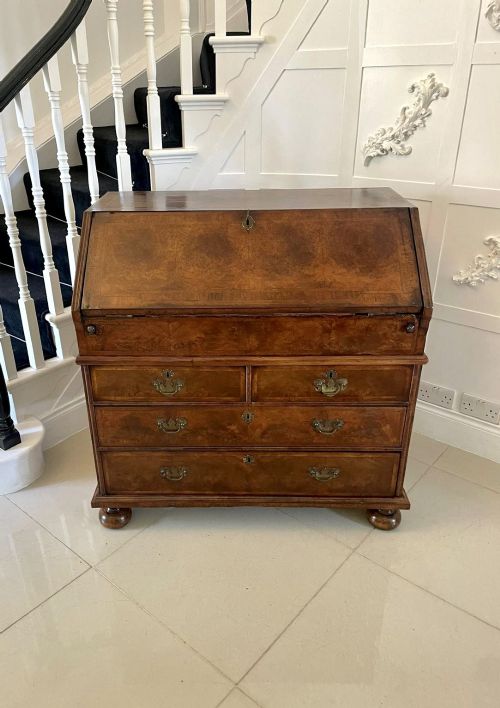
Earlier Georgian and William and Mary iterations also emerge through chest forms and bureaux, showcasing deep herringbone banding and figured veneers from the seventeenth and eighteenth centuries.
What varies in quality
The density and symmetry of the burr walnut grain dictate the visual richness of the piece, with balanced, highly figured surfaces commanding greater visual depth than plain timber.
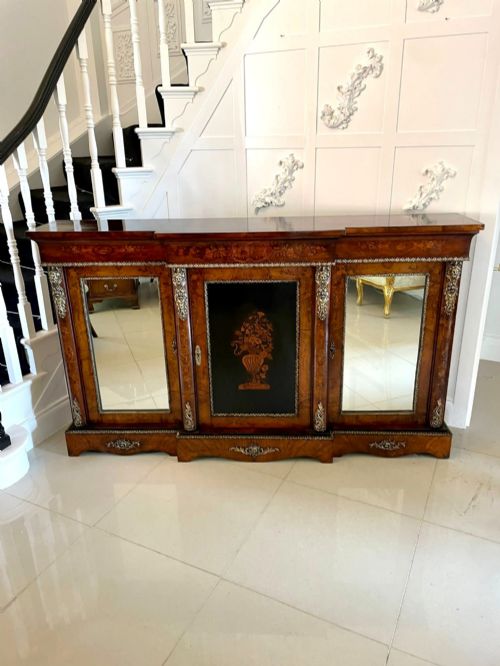
The crispness and complexity of the marquetry work distinguish master craftsmanship, particularly where boxwood inlay lines and floral details show precise cutting and tight jointing.
The integration of heavy cast ormolu mounts, porcelain plaques, and original brass hardware separates standard utility items from exhibition-grade furniture.
The listings on this site span multiple centuries, uniting Victorian walnut credenzas with earlier Georgian chests and Edwardian bedside cabinets.
Maple and Co·Walter Carter Harrods·Gillows
The Inlaid Burr Walnut Cabinet Glossary
- Burr walnut
- A decorative timber veneer harvested from the gnarled growths of walnut trees. It displays swirling, organic patterns that catch the light.
- Marquetry
- The art of applying fitted pieces of veneer to a structure to form decorative patterns. Craftsmen use various coloured woods to depict floral and geometric designs.
- Ormolu
- Gilded bronze mounts cast in ornamental shapes and fixed to furniture. This technique adds metallic highlights and classical detailing to the timber frame.
- Credenza
- A low, formal side cabinet originating in the nineteenth century. These pieces often feature central mirrored or glazed doors flanked by curved side compartments.
- Pier cabinet
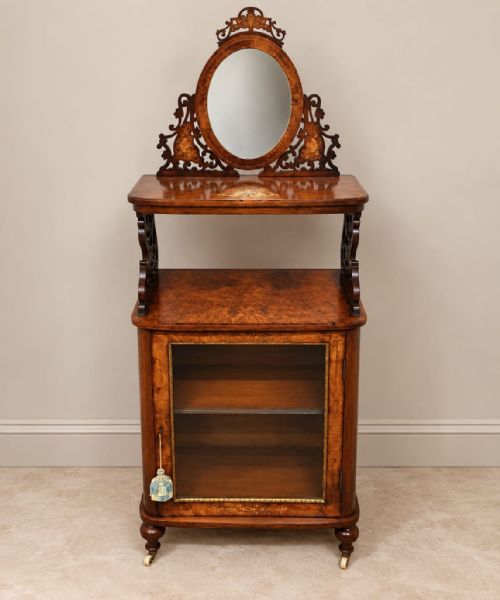
- A narrow display case designed to fit against the wall space between windows. They typically feature glass doors and velvet-lined shelving for porcelain collections.
Inlaid Burr Walnut Cabinet: Frequently Asked Questions
What is an inlaid burr walnut cabinet used for?
These cabinets served primarily as decorative furniture in formal nineteenth-century drawing rooms and reception spaces, designed to display prized porcelain, books, and collections.
Today, they function well in modern interiors as statement storage pieces that bring warmth, texture, and historical character to living areas or studies.
How do I care for burr walnut veneer?
Burr walnut requires stable environmental conditions away from direct sunlight and strong heat sources to prevent the delicate veneer from drying or cracking.
Routine maintenance involves gentle dusting with a soft, dry cloth and occasional treatment with appropriate furniture waxes to nourish the timber.
How can I tell a Victorian cabinet from an earlier piece?
Victorian examples frequently utilise ornate ormolu mounts, porcelain plaques, and extensive floral marquetry within credenza and pier cabinet formats.
Earlier pieces from the Georgian or William and Mary periods tend to rely on architectural proportions, herringbone banding, and bureau or chest configurations.
Are these cabinets suitable for small rooms?
Certain forms, such as upright pier cabinets or compact bedside and music cabinets, offer vertical storage without demanding extensive floor space.
Their glazed doors and reflective glass surfaces also help to keep smaller spaces feeling open while housing meaningful personal collections.