

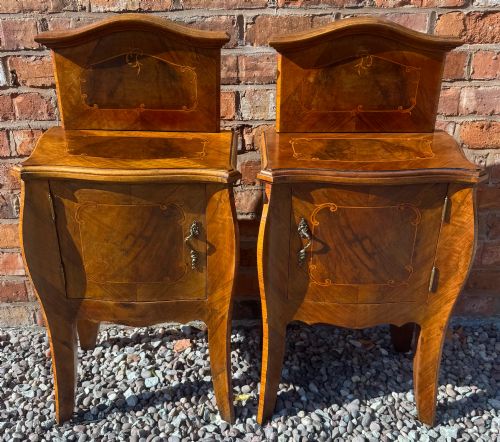
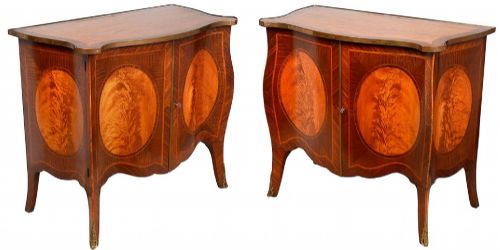
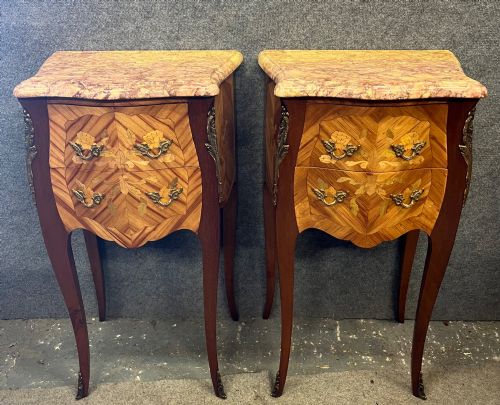
Inlaid Bedside Cupboards
Solid timber and decorative veneer meet at the bedside in these inlaid bedside cupboards, offering practical storage with considerable decorative presence.
Inlaid Bedside Cupboards
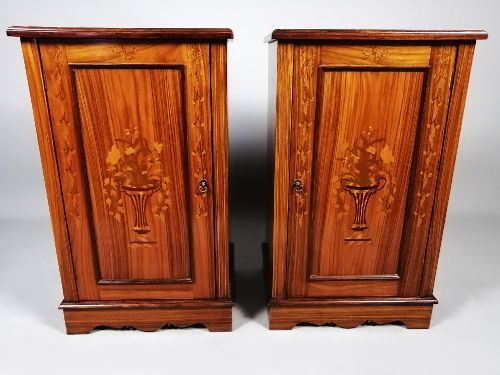
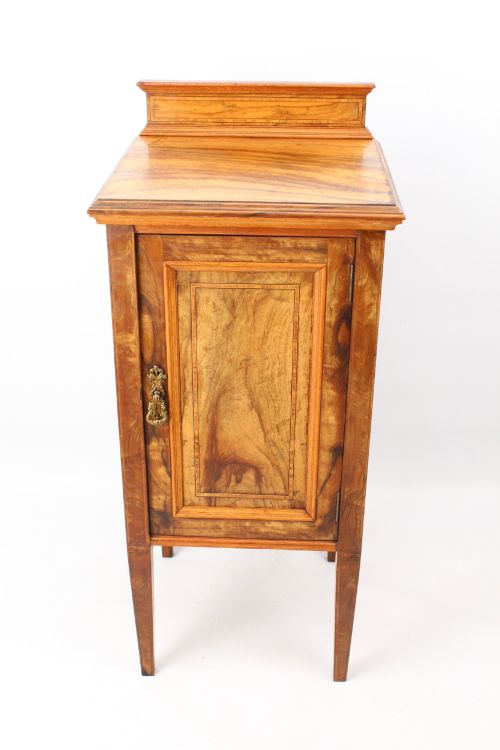
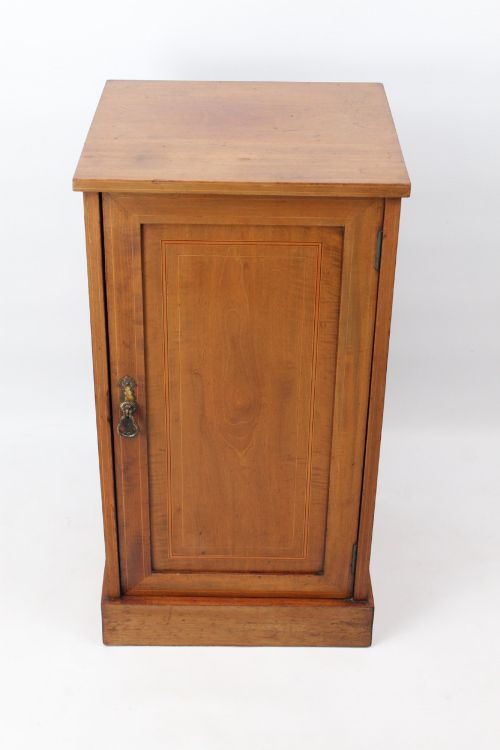
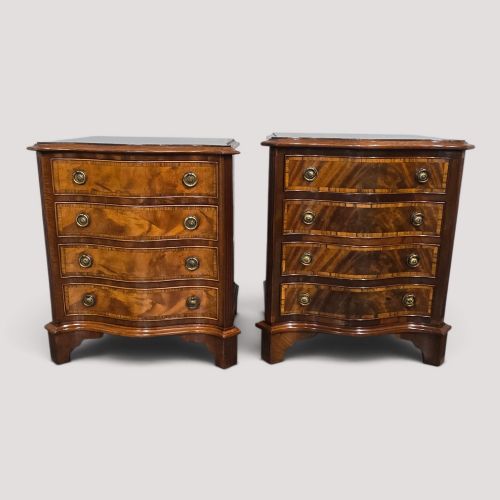
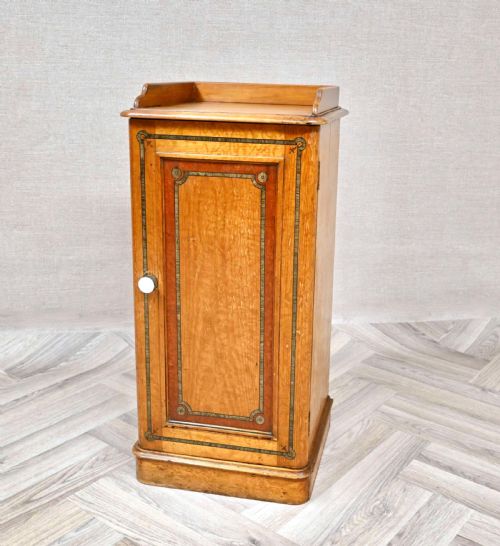
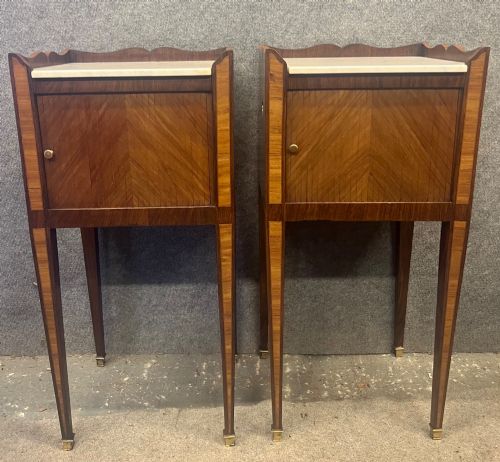
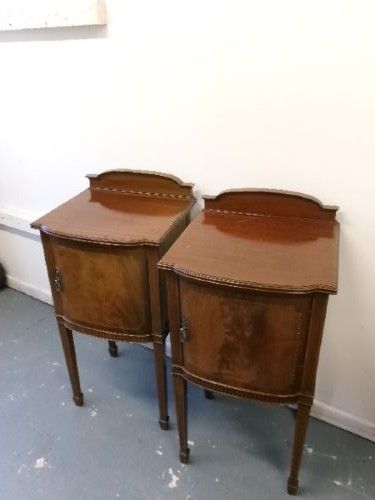
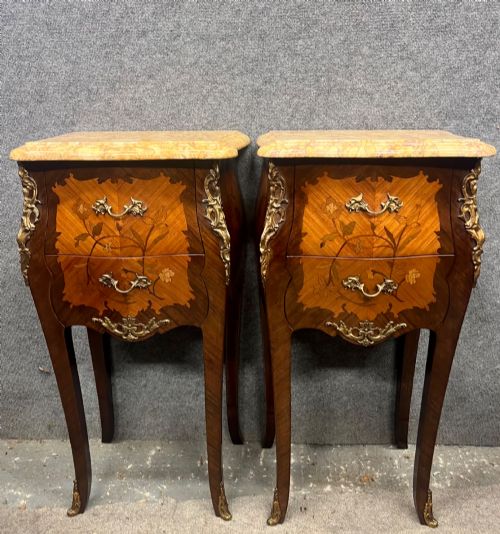
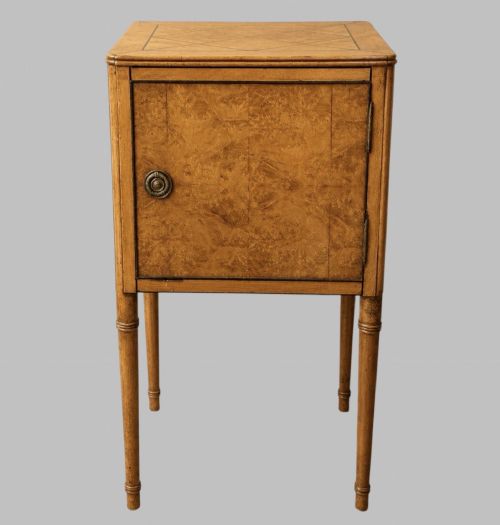
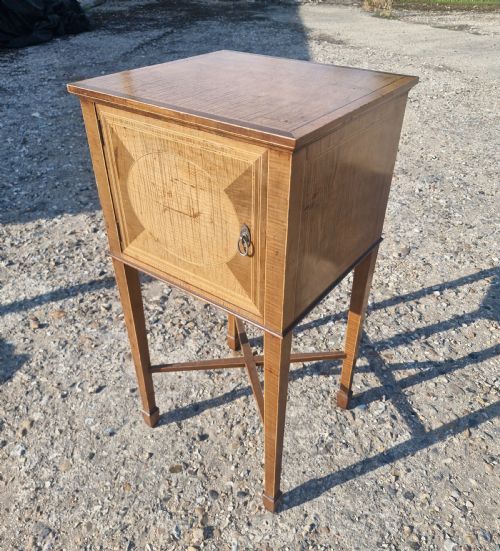
When you search for inlaid bedside cupboards, you find small cabinets and chests designed for nighttime storage beside a bed, frequently encountered in matched pairs from the Edwardian period and the early twentieth century. These pieces range from upright mahogany pot cupboards to French marble-topped marble and kingwood commodes featuring delicate wood veneers.
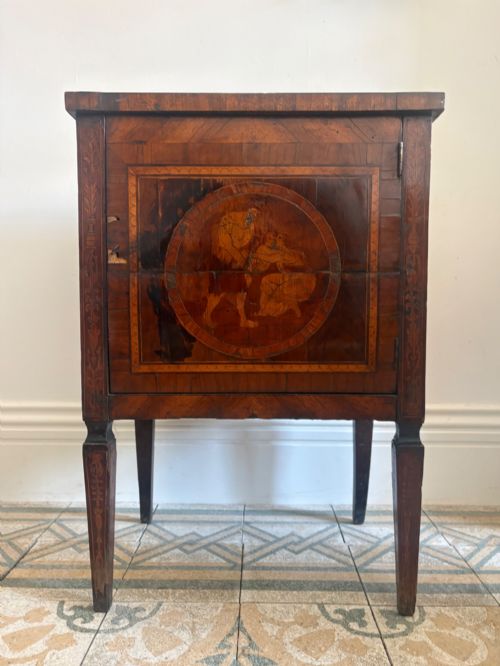
Makers and workshops produced these cabinets in various regional styles, including Sheraton Revival mahogany models, French Louis XV revival bombe shapes, and Italian walnut Commodinos. The core function remains a compact bedside cupboard or chest of drawers, often adapted over time to serve as lamp tables.
How they were made
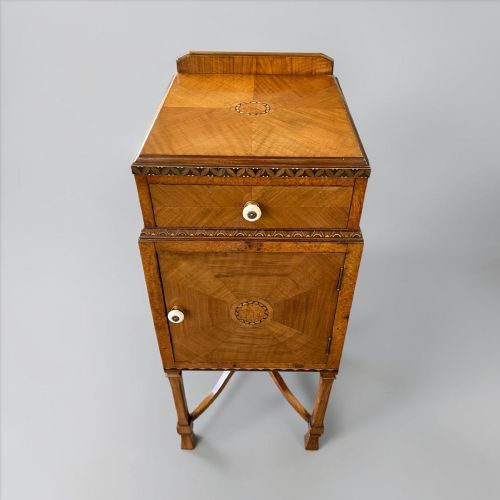
Cabinetmakers built the carcases using solid timbers such as mahogany, walnut, oak, and pine, applying decorative veneers of satinwood, rosewood, and kingwood over the primary structure. Marquetry panels incorporate contrasting woods like boxwood to form floral or geometric motifs, while brass handles and ormolu mounts complete the hardware.
Many French and continental examples feature shaped serpentine or bombe forms paired with inset marble tops, requiring specialist timber bending and stone-cutting techniques. Edwardian and Victorian workshops utilised straightforward carcase construction alongside finely detailed stringing and inlay work.
Listings feature mahogany, walnut, satinwood, and rosewood alongside decorative marquetry and marble tops spanning the eighteenth to the twentieth centuries.
What varies in quality
Quality rests primarily in the crispness of the marquetry inlay and the selection of figured timber, such as flame mahogany or burr walnut, rather than painted imitations. Superior examples exhibit tightly fitted joints, original brass or ormolu hardware, and well-balanced proportions across matched pairs.
The integration of heavy materials like marble tops onto finely veneered carcases distinguishes better workshops from standard production. Consistency in timber matching across both sides of a matched pair dictates the standing of the piece within the range.
Maple and Co·Walter Carter Harrods·Morant and Co·Heals
The Inlaid Bedside Cupboards Glossary
- Marquetry
- Decorative veneer work forming pictures or patterns using various coloured woods. It differs from simple stringing by creating pictorial motifs across the surface.
- Bombe
- An outward-swelling, convex shape characteristic of continental furniture. This curved profile requires expert woodworking to maintain structural integrity.
- Pot Cupboard
- A small bedside cabinet originally designed to house a chamber pot. They frequently feature a single door above or beside a small shelf.
- Serpentine
- A furniture front or top shaped with a convex centre flanked by concave curves. This undulating line adds movement to the piece.
- Stringing
- Thin inlay lines of contrasting wood set flush into the surface of the timber. It outlines panels and drawers on Edwardian and Georgian cabinets.
Inlaid Bedside Cupboards: Frequently Asked Questions
Are these cupboards sold as pairs?
Many listings feature true pairs or closely matched sets intended to flank a bed symmetrically. These companion pieces share identical timber grain, dimensions, and inlay patterns.
Single cabinets also appear frequently, originating from smaller bedrooms or different periods where symmetry was not the primary arrangement.
What is inside a pot cupboard?
A typical pot cupboard contains a simple shelf behind a single door, designed to keep necessities enclosed out of sight. Some variations incorporate a small drawer above the main compartment.
Later Edwardian and Art Deco models often function purely as small bedside chests of drawers or open lamp tables.
How do I identify French styles?
French bedside cabinets often display bombe or serpentine curves, kingwood or walnut veneers, and shaped marble tops. Ormolu mounts and floral marquetry further distinguish continental pieces from British Edwardian furniture.
Italian variants, such as the walnut Commodino, share similar decorative impulses rooted in eighteenth-century traditions.
How do I care for marble tops?
Marble surfaces require gentle cleaning with mild soap and water, avoiding acidic substances that can etch the polished stone. Placing felt pads beneath lamps protects the surface from scratching.
The underlying wood carcase benefits from occasional waxing to maintain the condition of the surrounding veneer.