



Industrial Metal Stool
These industrial metal stool pieces combine robust materials and utilitarian forms, built to endure heavy daily workshop use.
Industrial Metal Stool
An industrial metal stool provides sturdy seating rooted in nineteenth and twentieth century workshops, factories, and commercial spaces. Buyers searching for an industrial metal stool typically encounter practical designs featuring metal frames paired with timber tops.
The selections on this page span several decades, reaching from Victorian examples to pieces from the 1920s and 1930s. Alongside conventional stools, related forms such as bar stools and workshop seating occasionally appear.
Origins vary across British, French, and Spanish traditions, reflecting diverse workshop requirements across Europe. Many items display the straightforward construction methods typical of utilitarian furniture built for endurance.
Materials and construction methods
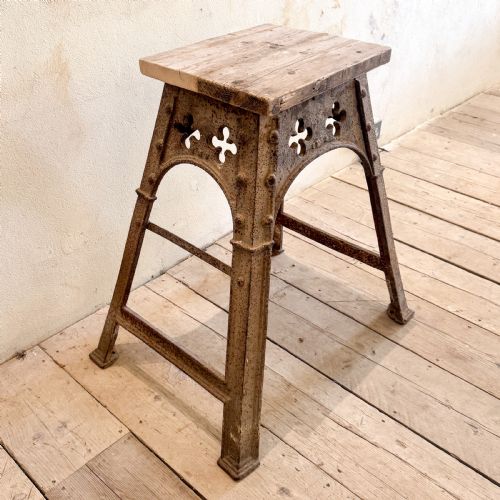
Makers utilised durable metals including cast iron, steel, wrought iron, and brass to form stable, weight-bearing bases. These metal elements were frequently riveted or welded together to withstand rigorous daily employment in factories and drafting rooms.
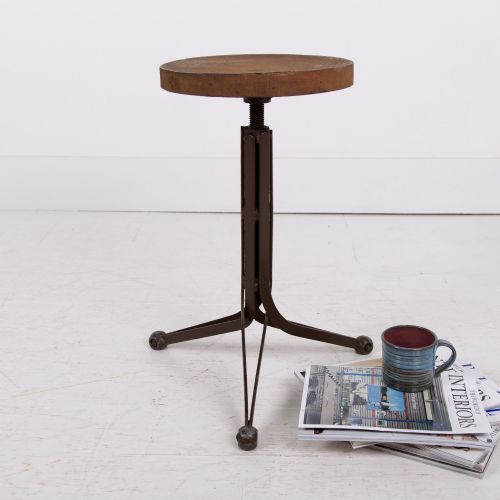
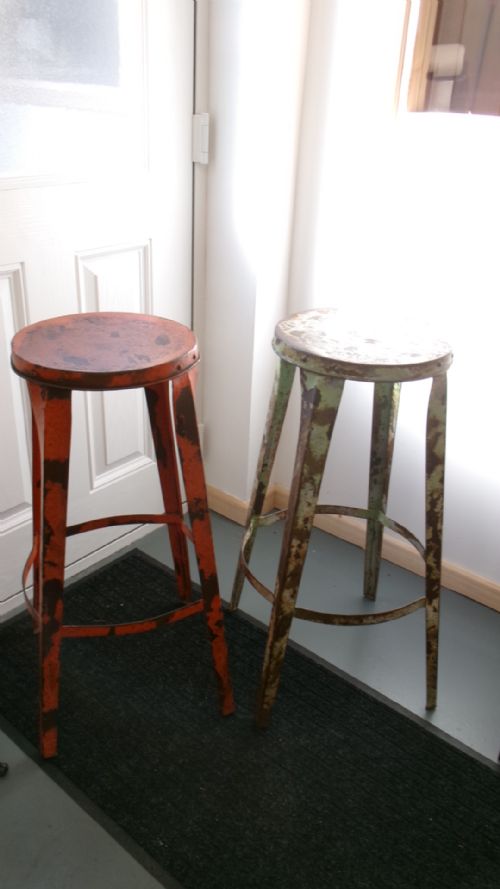
Seats combined hardwood, timber, elm, walnut, and occasionally cowhide or paint finishes to provide functional surfaces atop the metal frames. Revolving mechanisms and adjustable screw stems allowed users to alter seating heights according to their specific tasks.
Factory workers adjusted their seating height by spinning in circles until the screw stem reached the exact eye level required.
Assessing quality in workshop seating
Superior examples demonstrate heavier gauge metals and solid timber components that have aged gracefully through genuine service. The presence of functional mechanical adjustment mechanisms, whether revolving tops or threaded stems, elevates the utility and interest of a piece.
Fine construction is evident in tight joints, robust riveting, and well-cast iron bases that remain entirely stable during use. Surface patination resulting from decades of honest wear distinguishes authentic workshop survivors from later reproductions.
Rubery Owen·Evertaut
The Industrial Metal Stool Glossary
- Cast iron
- A strong, heavy alloy poured into moulds to create intricate and rigid furniture bases. It provides the substantial weight necessary for stable workshop seating.
- Riveted
- Joined together using metal bolts hammered flat at the ends. This technique secures structural joints firmly without modern adhesives.
- Revolving
- Designed to turn in a circular motion on a central axis. This allows the user to adjust seating height or direction conveniently.
- Wrought iron
- Iron beaten into shape by hand tools while hot. It yields tough, fibrous metal components suited to load-bearing frames.
- Patina
- The surface sheen and colour acquired by materials through age and handling. A good patina reflects decades of authentic use.
Industrial Metal Stool: Frequently Asked Questions
What periods do these stools date from?
The pieces span from the Victorian era through the 1920s and 1930s. Each era brought specific mechanical adjustments and material combinations to workshop seating.
Earlier examples often feature heavier cast iron bases, while 1930s designs frequently incorporate steel and more streamlined workshop adjustments.
How were these stools used originally?
Factories, drafting offices, and workshops utilised them for workers who needed sturdy, height-adjustable seating during long shifts.
Their robust metal frames and swivel mechanisms allowed operators to move quickly and reach various parts of machinery or workbenches.
Are the seat heights adjustable?
Many examples feature threaded steel stems or revolving tops that raise or lower the seating surface. This functionality was essential for matching workers to different industrial machinery.
Buyers should check individual listings to confirm whether a specific mechanical adjustment mechanism remains fully operational.
What materials make up the seats?
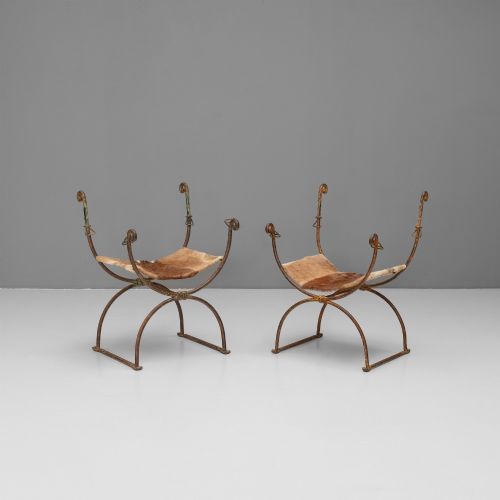
Timber is the most common seat material, with hardwoods, elm, and walnut frequently employed for durability. Some variations also include painted finishes, leather upholstery, or simple wooden discs.
These natural materials provided a firmer, more resilient surface than upholstered domestic chairs during demanding industrial tasks.
How do I care for industrial metal furniture?
Regular dusting and occasional application of wax to wooden seats preserve the materials while maintaining the historic surface finish. Metal frames benefit from gentle cleaning to protect the existing patina.
Keeping these pieces away from excessive moisture prevents further oxidation of the iron and steel components.