
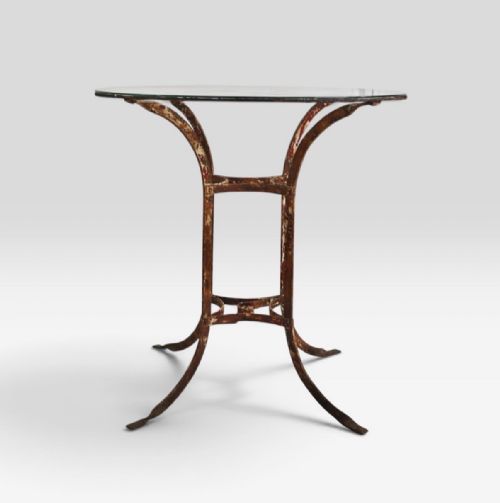


Wrought Iron Bistro Furniture
Wrought iron bistro furniture brings enduring outdoor charm to patios and gardens through practical French and Victorian metalwork.
Wrought Iron Bistro Furniture
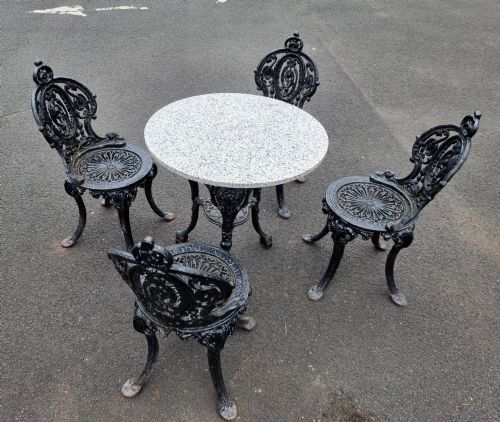
Wrought iron bistro furniture encompasses compact garden tables, chairs, and benches designed for outdoor dining and seating. These sets originate from periods spanning the Victorian era through the 1930s, featuring distinct styles like French Provincial, Art Deco, and wirework.
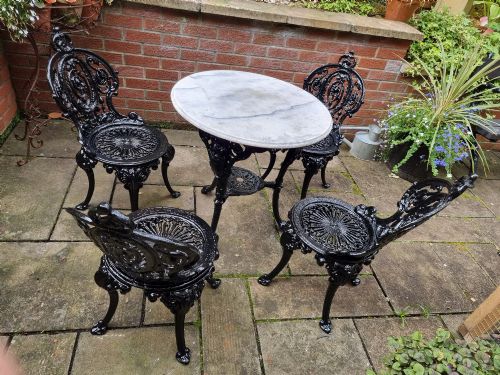
Buyers most frequently encounter complete garden dining sets comprising a table paired with four chairs. Pieces emerge from French country and industrial traditions, often combining robust metal frames with contrasting tops.
How they were made
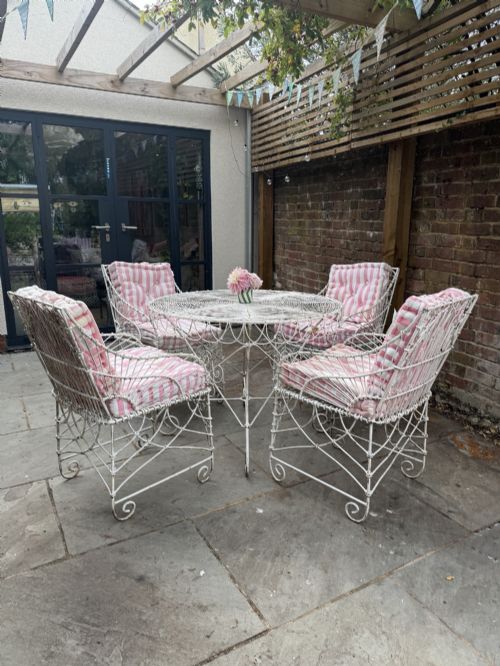
Maker construction relies heavily on cast iron, wrought iron, and steel frameworks shaped into intricate or industrial forms. Wirework techniques appear in specific Victorian garden tables and chairs, demonstrating specialised bending methods.
Surfaces frequently incorporate protective paint finishes alongside heavy stone elements like marble and granite for table tops. Strapp work and folding mechanisms provide both decorative detail and practical utility in early twentieth-century examples.
Some folding garden tables from 1920 still snap shut with a satisfying click after a century outdoors.
What varies in quality
Quality differentiates through the substantive weight of the metal and the complexity of the foundational casting or forging. Heavy cast-iron sets demonstrate superior material density compared to lighter industrial configurations.
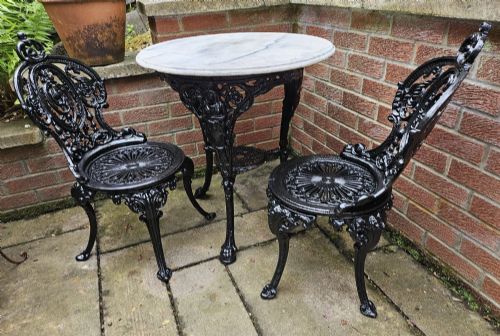
The integration of premium surface materials, such as fitted marble or granite tops, elevates individual pieces above standard painted metal variations.
The Wrought Iron Bistro Furniture Glossary
- Wrought iron
- A tough, malleable form of iron suitable for forging into detailed structural components and outdoor furnishings. It differs from cast iron by containing less carbon and featuring a fibrous structure.
- Cast iron
- Iron melted and poured into a mould to create rigid components with decorative or structural patterns. This material provides the substantial weight found in many garden sets.
- Wirework
- Metal furniture constructed from bent wire mesh or strands, characteristic of Victorian garden design. This technique allows for lighter, airy patterns compared to solid plate metal.
- Strapp work
- A decorative metalwork technique utilising flat strips of metal riveted or joined in geometric patterns. It appears on specialised garden tables from the early twentieth century.
- Arras
- A distinct style of French garden seating known for specific construction details and robust metal framing. Pieces bearing this attribution represent sought-after examples of nineteenth-century metalwork.
Wrought Iron Bistro Furniture: Frequently Asked Questions
What periods do these sets come from?
These pieces date from the late nineteenth century through the 1930s. The selection spans Victorian designs and early twentieth-century French production.
Production methods shifted during this timeframe from ornate wirework and traditional forging toward industrial cast-iron patio sets and Art Deco influences.
Are these sets suitable for outdoor use?
These furnishings were originally built for gardens, patios, and outdoor dining. Their durable metal construction withstands exterior placement when properly maintained.
Many examples feature protective painted surfaces and heavy stone tops that resist weathering, making them practical for modern garden use.
What materials are used in the tops?
Table surfaces vary between solid metal, painted finishes, and heavy stone inserts. Examples include marble and granite tops supported by cast or wrought iron bases.
These stone surfaces add distinct weight and visual contrast to the surrounding metal framework.
How do French and Victorian styles differ?
Victorian examples often incorporate elaborate wirework and traditional nineteenth-century silhouettes. French designs frequently lean toward industrial bistro aesthetics or provincial garden styles.
Both traditions emphasise durable metal construction but express regional preferences in ornamentation and folding mechanisms.