
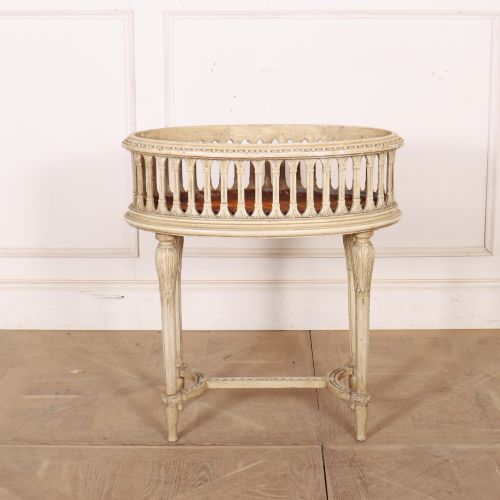


Indoor Plant Table Stand
These indoor plant table stand pieces bring nature indoors with architectural elegance, offering raised surfaces designed specifically to display greenery and flowering pots.
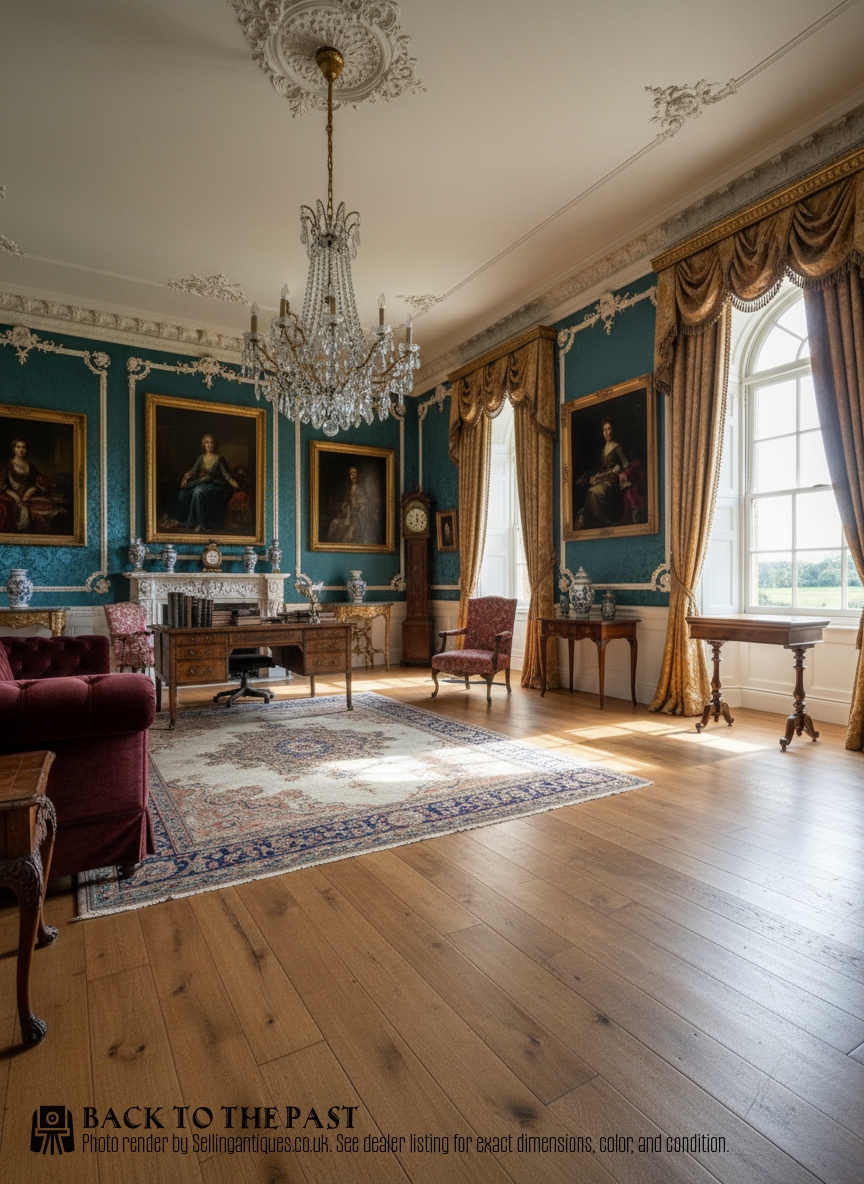
Indoor Plant Table Stand
An indoor plant table stand provides an elevated platform for horticulture inside the home, protecting floors while framing foliage as a decorative focal point. These functional furnishings merge domestic joinery with botanical display.
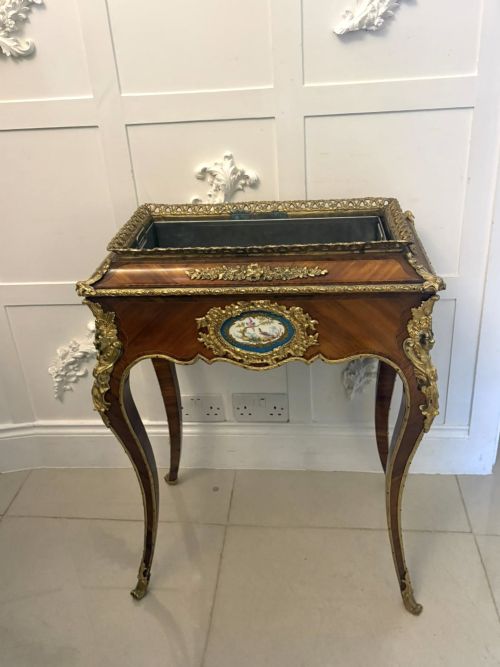
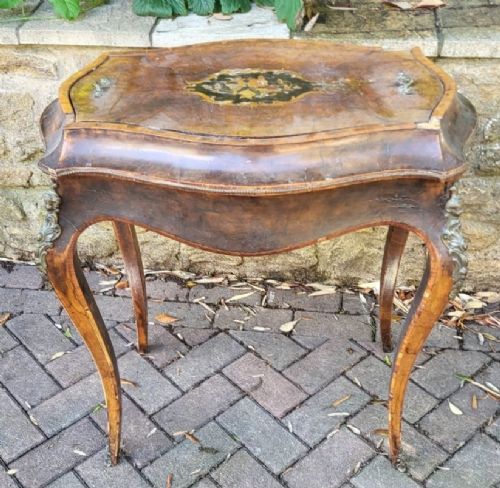
You will most frequently encounter walnut and mahogany planter tables dating from the Victorian and Edwardian periods, often featuring marquetry inlay or lift-off lids. French regional designs, particularly in the Louis XV and Napoleon III styles, appear alongside British iterations.
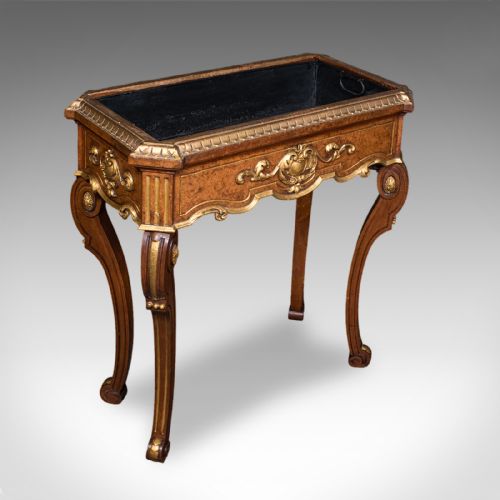
Formations range from dedicated jardiniere tables with removable metal liners to simpler plant stands and column supports. The defining characteristic is a surface or well engineered to hold moisture-bearing pots safely within a principal room.
How they were made
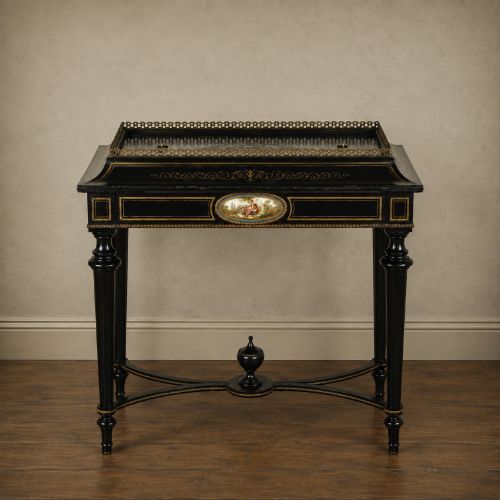
Cabinetmakers constructed the main bodies of these pieces using native and exotic timbers such as walnut, satinwood, kingwood and mahogany, frequently applying intricate burr veneers and floral marquetry. Ebonised finishes and gilt metal mounts provide contrasting decoration.
Many examples incorporate cast bronze, brass, or ormolu mounts to edge tops and highlight cabriole legs, alongside original zinc liners or porcelain plaques. These metal elements required specialist foundry work and secure mechanical fastening to timber.
Listings feature pieces spanning the Regency, Victorian, and Edwardian eras, constructed from walnut, mahogany, ormolu, and porcelain.
What varies in quality
Quality rests in the precision of the cabinetwork and the calibre of the secondary materials, such as the thickness of the walnut veneer and the crispness of the bronze or ormolu chasing. Superior examples display seamless timber matching across the lid and sides.
The integration of the interior lining determines the structural integrity of the piece over decades of exposure to damp soil and water. Better items retain their purpose-built metal liners and sound, secure joints without visible warping.
The Indoor Plant Table Stand Glossary
- Jardiniere
- A decorative ornamental pot or stand designed to hold growing plants or flowers. They often feature protective metal liners to catch drainage water.
- Ormolu
- Gilded bronze used as decorative mounts on furniture. It involves applying a mercury and gold amalgam to cast bronze before firing.
- Marquetry
- Decorative veneer work forming pictures or patterns using thin slices of wood. Craftsmen piece together contrasting timbers like satinwood and walnut.
- Kingwood
- A dense, richly figured timber native to Brazil used extensively in fine cabinetmaking. Its distinct dark grain patterns suit high-status French furniture.
- Burr walnut
- Timber taken from the abnormal growth of a walnut tree, yielding complex, swirling grain patterns. It requires careful cutting into thin veneers.
Indoor Plant Table Stand: Frequently Asked Questions
What is an indoor plant table stand?
An indoor plant table stand is a decorative furniture piece designed to hold potted plants at a comfortable viewing height within a room. These stands combine cabinetry with botanical utility, protecting interior surfaces from water.
They appear in various forms, from side tables with recessed wells to taller columnar stands. The genre encompasses multiple historical periods, predominantly featuring mid to late nineteenth-century craftsmanship.
How were planter tables used historically?
Historically, these tables brought growing ferns, palms, and flowering plants into Victorian and Edwardian parlours and drawing rooms. They allowed homeowners to incorporate living greenery into formal interior schemes.
The inclusion of a metal liner protected the surrounding timber framework from moisture and soil. Servants would tend to the plants and lift out the containers for watering.
How do I care for the wood surface?
Protect the timber surface by ensuring pots possess saucers or waterproof barriers before placing them inside the liner. Regular dusting with a soft cloth maintains the finish of the veneer.
Avoid placing these items near direct heat sources or strong sunlight, which can dry out burr walnut and mahogany. Periodic application of appropriate wax preserves the historic polish.
How can I tell Victorian from Edwardian stands?
Victorian pieces often display heavier proportions, rich burr walnut veneers, elaborate marquetry, and ornate ormolu mounts influenced by French revival styles. They prioritize ornate decorative impact.
Edwardian stands typically present lighter construction, frequently utilising mahogany or satinwood with more restrained inlay work. The overall aesthetic shifts toward greater simplicity and lighter interior colour palettes.