
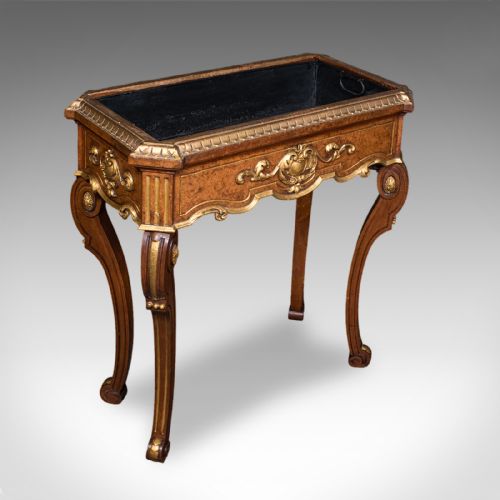
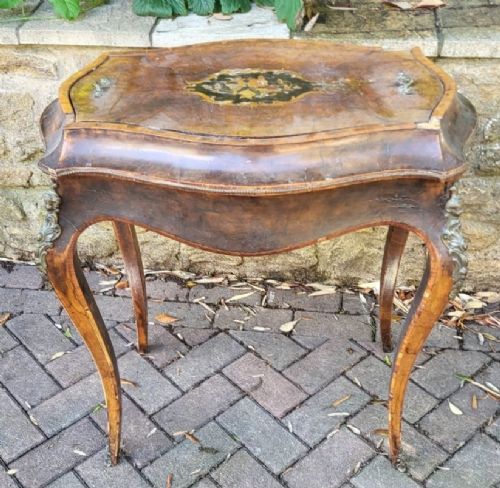
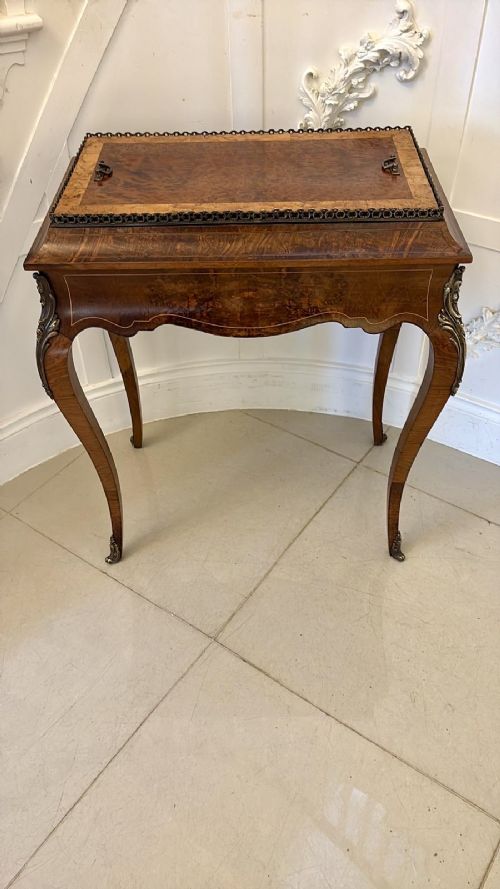


Burr Walnut Planter Table
A burr walnut planter table brings rich timber figure and practical display into a room, combining the roles of a plant stand, side table and cellarette.
How they were made
Cabinet-makers relied heavily on burr walnut veneers applied over solid timber carcases, creating intricate and swirling grain patterns across the tops and sides. Marquetry inlay frequently decorates the surfaces, adding floral or geometric motifs executed in contrasting woods.
Mounts in ormolu and brass accentuate the curves of the framework, particularly on French pieces following Louis XV revival designs. Metal or zinc linings protect the interior woodwork from moisture when holding plants, while porcelain plaques sometimes augment the exterior decoration.
What varies in quality
Quality rests upon the selection and matching of the burr walnut veneer, where symmetrical grain alignment across a lid or tabletop marks superior workmanship. Finer examples display crisp, well-cast ormolu mounts and precise marquetry rather than simple painted or stamped decoration.
Structural complexity also defines the better pieces, such as those incorporating lift-off lids, fitted interiors, or free-standing forms finished on all sides. The integration of high-grade metal linings and Sevres-type porcelain plaques separates standard production items from distinguished cabinet-maker commissions.
Several of these botanical display tables doubled as discreet wine cellarettes when the begonias were cleared away for evening entertaining.
The Burr Walnut Planter Table Glossary
- Burr walnut
- A figured wood obtained from the abnormal growth or burl of a walnut tree, highly prized for its swirling grain patterns. Cabinet-makers sliced this wood into thin veneers to cover furniture surfaces.
- Jardiniere
- A decorative pot or stand designed to hold growing plants or flowers indoors. In nineteenth-century furniture, it often forms the central well of a specialised table.
- Ormolu
- Gilded bronze mounts applied to furniture for decorative enrichment, particularly prominent in French revival pieces. The technique involves treating bronze with an amalgam of gold.
- Marquetry
- The art of applying decorative veneer pieces to a structure to form intricate patterns or pictures. Craftsmen used various contrasting timbers to achieve pictorial depth.
- Cellarette
- A lockable container or cabinet used for storing bottles of wine or spirits near a dining table. Some planter tables served this dual purpose through their deep internal wells.
Burr Walnut Planter Table: Frequently Asked Questions
What is a burr walnut planter table?
A burr walnut planter table is a nineteenth-century furniture piece designed with an integrated well for holding plants or flowers. It combines the decorative presence of figured wood veneers with the utility of a side table or stand.
Many examples feature lift-off lids, allowing the owner to conceal the planting well and use the surface for general display. French and Victorian makers produced these items in various revival styles, often incorporating metal liners and brass mounts.
How were these tables used originally?
These tables stood in Victorian and nineteenth-century reception rooms to bring greenery indoors while demonstrating household refinement. The waterproof interior liners accommodated potted plants without damaging the surrounding fine woodwork.
When not housing plants, the tables functioned as side tables, decanter caddies, or wine coolers. Some versions accommodated lamps or served multiple roles depending on whether the lid was in place.
How do I tell French and Victorian pieces apart?
French pieces frequently display pronounced Louis XV or Rococo revival curves, accompanied by heavy ormolu mounts and elaborate marquetry. They often lean towards lighter, more sweeping lines associated with continental craftsmanship of the mid-nineteenth century.
Victorian pieces tend to exhibit slightly more robust proportions, sometimes focusing on the rich figuring of the burr walnut itself rather than ornate metal embellishments. English examples may also show characteristic internal construction methods distinct from French workshop practices.