
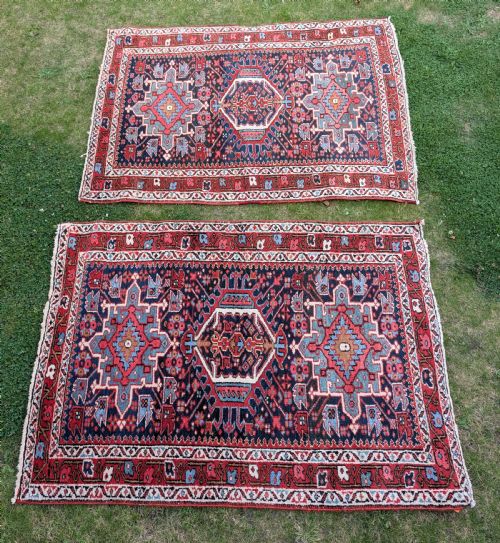
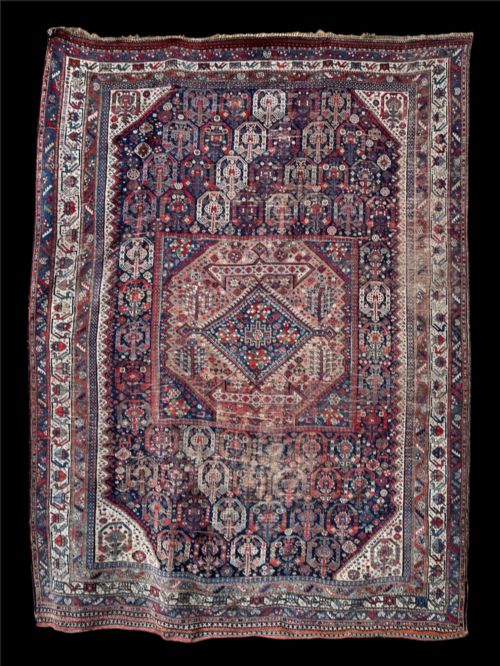


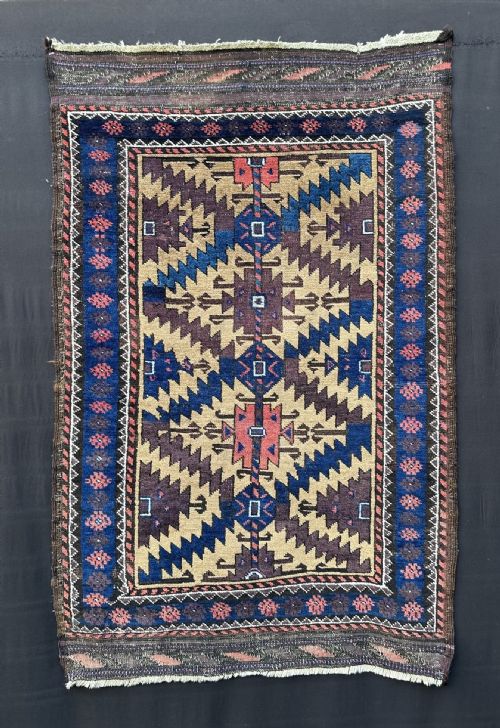

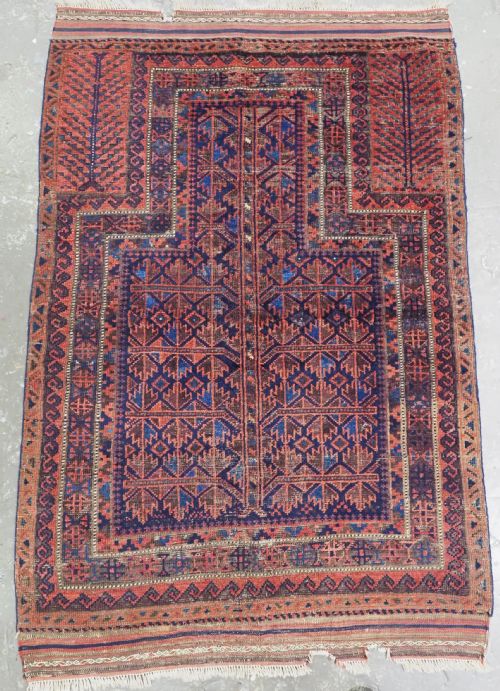
Indigo Tribal Mat
An indigo tribal mat brings deep botanical blue and nomadic weaving straight to the floor.
Indigo Tribal Mat
When you search for an indigo tribal mat, you encounter hand-knotted woolen rugs and small nomadic textiles originating from nineteenth and early twentieth century tribal workshops across Persia, Afghanistan, and the Caucasus. These pieces include prayer rugs, saddlebags, torba faces, and small floor coverings woven by village and nomadic weavers using traditional wool and cotton foundations.
The most common forms on this page are Baluch prayer rugs and Afghan village rugs featuring rich blue grounds, alongside Khamseh, Afshar, and Caucasian tribal pieces. Each format reflects the distinct regional patterns and utilitarian needs of pastoral groups who valued portability and durability in their textiles.
Dating primarily from the 1870s to the 1920s, these indigo tribal mats showcase traditional village iconography such as rams horn mihrabs, herati motifs, and repeat leaf designs. Collectors appreciate them for their unpretentious domestic origins and the depth of colour achieved through natural dye processes.
Materials and construction
Weavers constructed these mats predominantly with hand-spun wool and cotton, utilising vegetable dyes derived from natural sources to achieve deep blue grounds and contrasting accents. The organic nature of these materials means the wool holds rich lanolin, giving the pile a resilient handle and a subtle sheen.
Nomadic and village artisans tied dense knots on flexible foundations, accommodating the smaller formats such as pushti faces and prayer rugs that required swift transport or specific ritual use. The integration of wool pile on sturdy warps ensured the textiles withstood generations of daily domestic wear.
The site currently showcases various regional forms including Baluch prayer rugs, Khamseh saddlebags, and Caucasian mats.
Judging quality and character
Quality in these textiles rests upon the saturation and consistency of the natural dyes, particularly the depth of the indigo ground, alongside the crispness of tribal motifs such as kepse guls or seh mihrabs. Superior examples display masterful handling of wool quality and precise knot density that holds intricate patterns sharp.
The distinction between standard village production and exceptional collector pieces often lies in the scarcity of the format, such as unusual blue ground prayer rugs or specific regional groups like Sarakh and Timuri variants. Original complete edges and well-preserved pile enhance the overall integrity of the textile without masking its authentic age.
The Indigo Tribal Mat Glossary
- Mihrab
- A niche design on a prayer rug representing the direction of prayer, often shaped with arches or rams horns. It serves as the focal point for tribal prayer textiles.
- Torba
- A large wall hanging or storage bag face produced by Turkmen and related tribal groups. These items display characteristic gul patterns and refined wool work.
- Pushti
- A small mat or rug used for sitting upon the floor or placed on low furniture. This compact format is common among Baluch and Persian village weavers.
- Gul
- A repeating medallion or octagonal motif used extensively in tribal carpet design. Different tribes developed distinct gul variants to signal lineage and origin.
- Ground
- The main background field of a rug upon which the primary design and secondary motifs rest. In these pieces, deep blue indigo grounds predominate.
Indigo Tribal Mat: Frequently Asked Questions
How were indigo tribal mats used originally?
Nomadic and village groups utilised these small textiles as prayer mats, decorative wall hangings, and functional storage bag faces within portable dwellings. Their manageable size allowed for easy transport during seasonal migrations.
Over time, these pieces also served everyday domestic functions on earthen floors, providing insulation and comfort inside tribal tents and rural village houses.
How do I care for an antique tribal mat?
Protect your textile from direct, harsh sunlight to prevent natural indigo and secondary dyes from fading over the years. Gentle vacuuming without a rotating brush roll keeps dust from settling into the wool pile.
Allow professional textile conservators to handle any deep cleaning or structural repairs. Proper rug underlays also prevent slipping and reduce friction against hard floors.
How can I tell different tribal designs apart?
Study the specific structural traits, such as the prayer formats of Baluch weavers featuring seh mihrabs or the distinct guls associated with Yomut Turkmen groups. Regional colour palettes and wool characteristics offer further clues to origin.
Consulting reference literature on nineteenth century village and nomadic carpets helps connect specific motifs, such as the herati pattern, to their respective geographic provinces.
What makes the blue colour special?
The deep blue shades come from traditional botanical indigo vats prepared by skilled village dyers. This method creates subtle variations in tone known as abrash, giving the surface a living, luminous quality.
Synthetic dyes lack this complex tonal movement, making natural indigo a primary indicator of nineteenth-century authenticity and craft heritage.