


Antique Timuri Carpet
An antique timuri carpet brings the rich tribal heritage of nomadic weavers from the borderlands of Persia and Afghanistan into your home.
Antique Timuri Carpet
An antique timuri carpet originates from the tribal groups inhabiting the borderlands of north-east Persia and north-west Afghanistan, as well as western Afghanistan. Buyers searching this phrase encounter nomadic weaving traditions passed down through generations, often linked closely with Baluch styles.
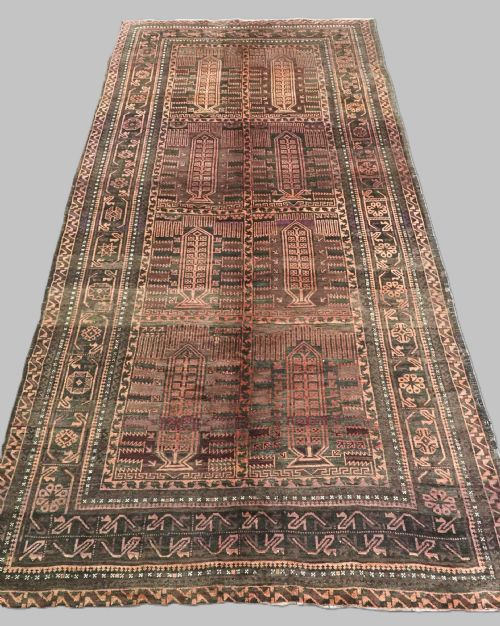
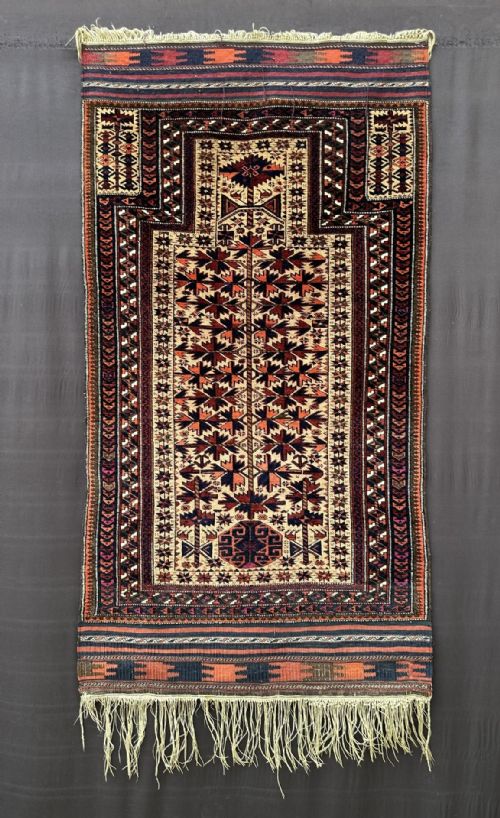
The pieces available span various formats, including main carpets, prayer rugs, small mats, and utilitarian items such as salt bags and rug korsi covers. Main carpets and prayer rugs dominate the selection, frequently displaying classical tribal motifs rather than rigid court designs.
The visual vocabulary relies on traditional layouts like the pencil box pattern, small shrub designs, and the dokhtar-e-qazi format. These tribal textiles reflect the specific artistic repertoire of sub-tribes including the Yaqoub Khani and Sangtschuli.
How they were made
Weavers utilised hand-spun wool for the pile, often combining it with structural elements of cotton or goat hair, and occasionally incorporating camel hair for soft, undyed brown tones. These natural materials provided durability suited to nomadic life while offering varied textures across the surface.
The deep, rich hues characteristic of these textiles stem from natural dyes, which yield shifting tonal qualities over time. Artisans tied dense pile knots onto flexible foundations, creating resilient floor coverings and portable furnishings.
Some weavers tucked tiny protective amulets directly into the foundation wool, ensuring the finished rug guarded the nomadic tent against misfortune.
What varies in quality
The distinction between tiers rests upon the clarity of the design drawing and the vibrancy of the natural dye palette. Weavings that display crisp execution of motifs like the pencil box or shrub patterns command greater appreciation.
Material selection also dictates overall merit, particularly the inclusion of fine hand-spun wool and soft camel hair. Additionally, structural integrity and the preservation of original outer borders influence the standing of an individual piece.
The Antique Timuri Carpet Glossary
- Pencil box
- A classical repeating design motif, also known as kalam donneh, featuring stacked diagonal compartments filled with stylised floral or geometric elements. It serves as a defining identifier for specific main carpets.
- Prayer rug
- A format characterised by a distinct mihrab or arched niche at one end, designed to direct the placement of the head during daily devotions. These rugs frequently incorporate tree of life or repeat leaf symbols.
- Dokhtar-e-qazi
- A specific prayer rug design tradition associated with these tribal weavers, typically featuring compact shrub or repeat motifs within the field. The name translates traditionally to the judge's daughter.
- Ru korsi
- A specialised square or rectangular rug utilised traditionally in the region to drape over a low charcoal heater table during cold winter months. They are woven with sturdy structures to withstand everyday domestic interaction.
- Salt bag
- A utilitarian nomadic container woven in flatweave or pile techniques, used historically for household storage or transport during tribal migrations. These smaller textile pieces often feature dense geometric ornamentation.
Antique Timuri Carpet: Frequently Asked Questions
Where were antique timuri carpets made?
These carpets were woven by nomadic and semi-nomadic tribes inhabiting the borderlands between north-east Persia and north-west Afghanistan, as well as western Afghanistan. The makers moved across these arid landscapes, carrying their upright or horizontal looms with them.
Because these tribal groups shared stylistic traditions with neighbouring Baluch populations, many surviving examples share overlapping design characteristics and structural methods.
What is a pencil box design?
The pencil box design, locally called kalam donneh, is a classical repeating pattern composed of stacked, slanted compartments filled with tiny floral or geometric motifs. It creates a structured yet rhythmic field across the main carpet.
This distinct pattern is one of the most recognisable signatures of nineteenth-century weaving from these specific tribal groups.
How do I care for a tribal rug?
Protect your textile by placing it in a low-traffic area away from direct, harsh sunlight to preserve the integrity of the natural dyes. Gentle vacuuming without a rotating power brush helps remove embedded dust without stressing the wool pile.
Professional cleaning tailored for antique vegetable-dyed wool should be undertaken infrequently and only when necessary to maintain the natural oils within the fibres.
How can I tell the age of these rugs?
Dating relies on observing structural clues such as the handle of the wool, the depth and oxidation of natural dye colours, and the complexity of the tribal iconography. Pieces produced in the nineteenth century often display softer, burnished colour transitions resulting from decades of use and light exposure.
Examining the selvedges, end finishes, and the presence of hand-spun materials provides further context for determining whether a piece dates to the nineteenth or early twentieth century.