


Indigo Blue Wool Rug
An indigo blue wool rug brings deep, rich dye tones and tribal geometry into a room, offering durability and historical warmth.
Indigo Blue Wool Rug
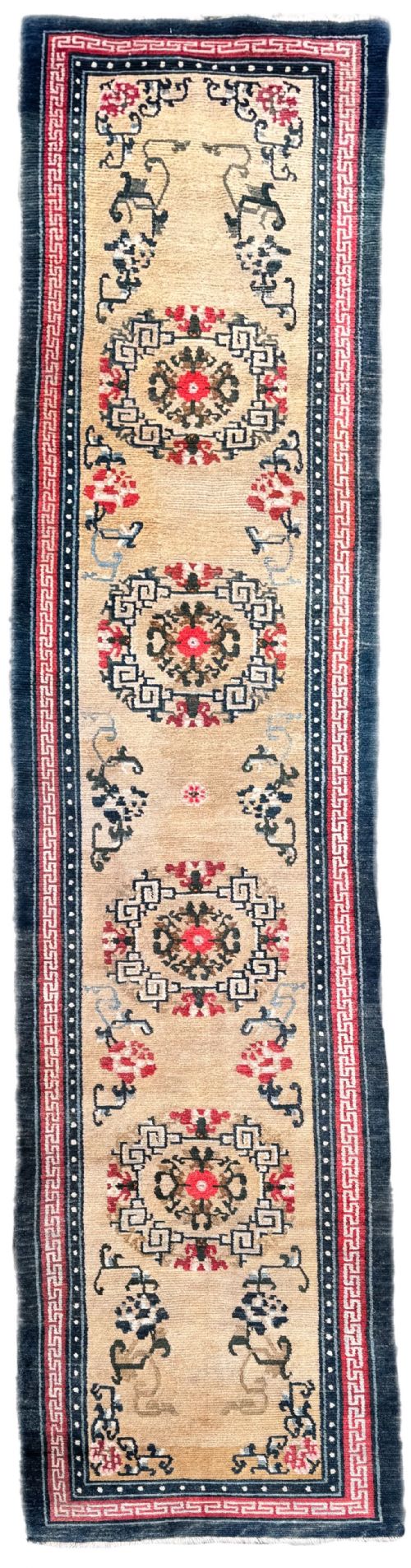
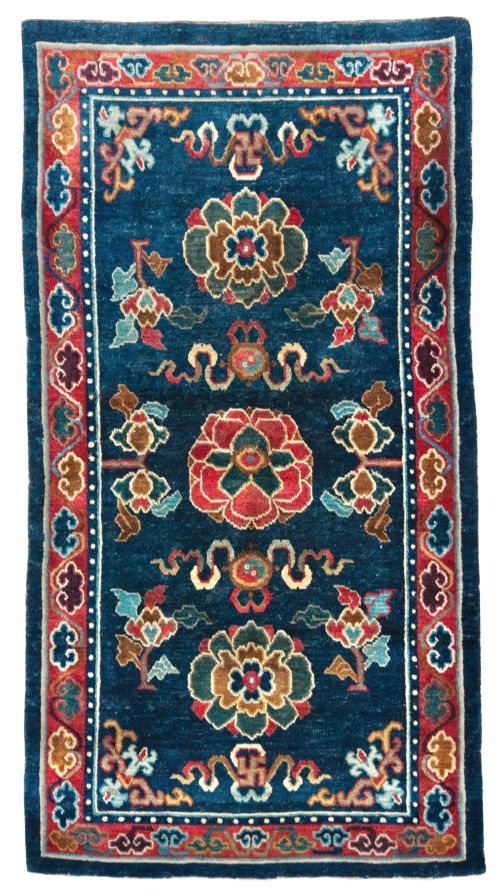
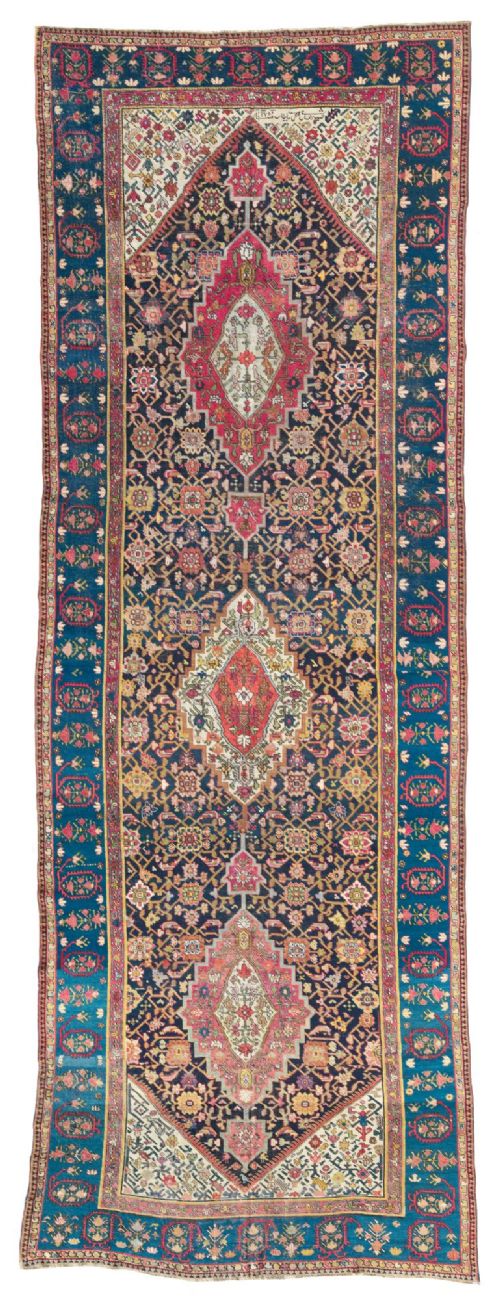
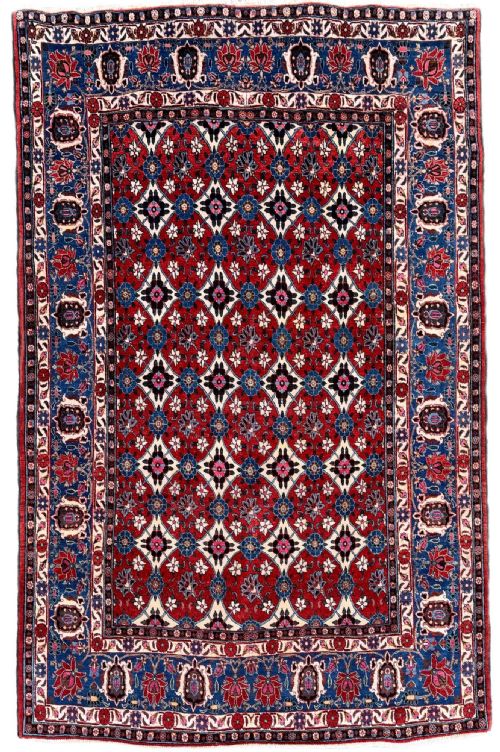
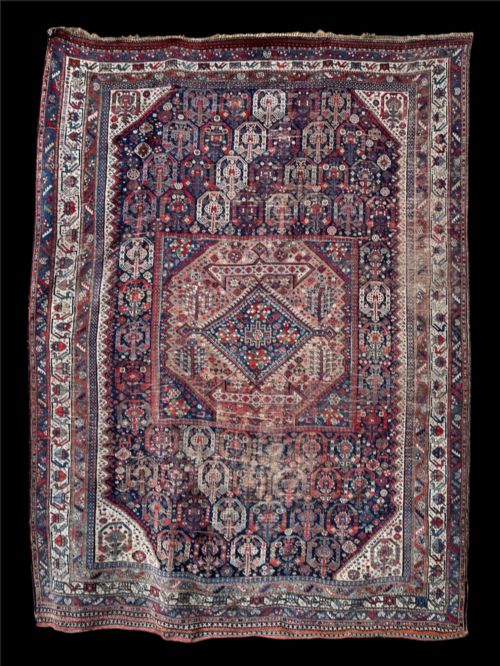
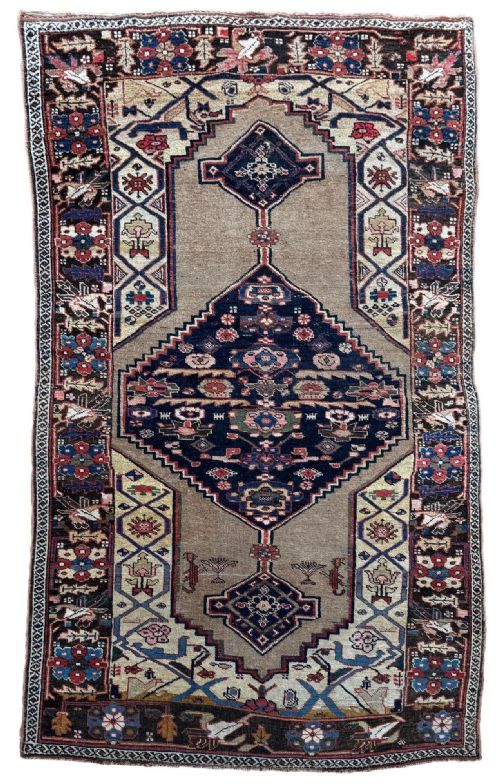
When you search for an indigo blue wool rug, you are looking at hand-knotted and flat-woven floor coverings originating from nineteenth and early twentieth century workshops and nomadic traditions. The selection spans Persian tribal weaves, Caucasian village pieces, and Tibetan runner formats.
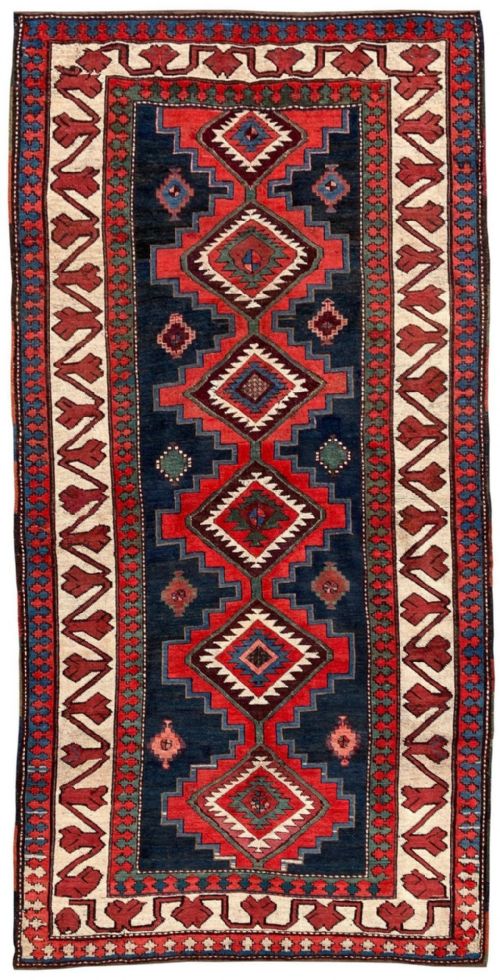
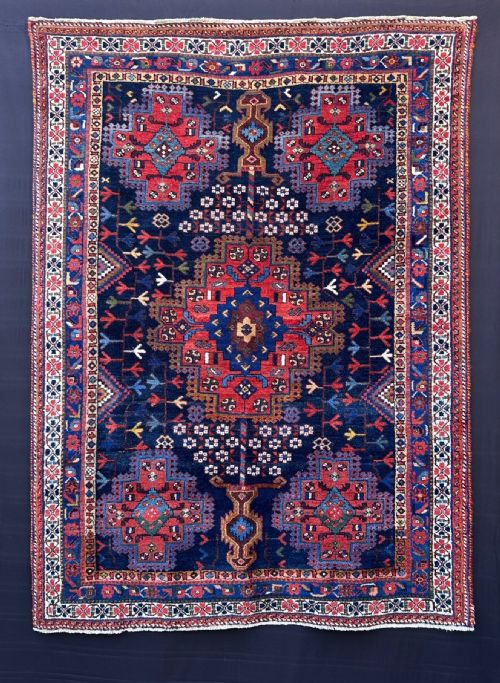
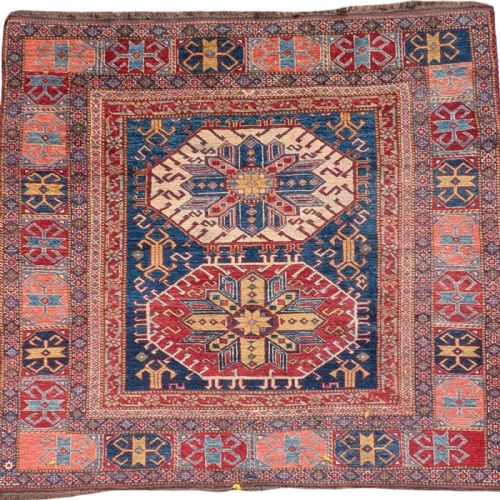
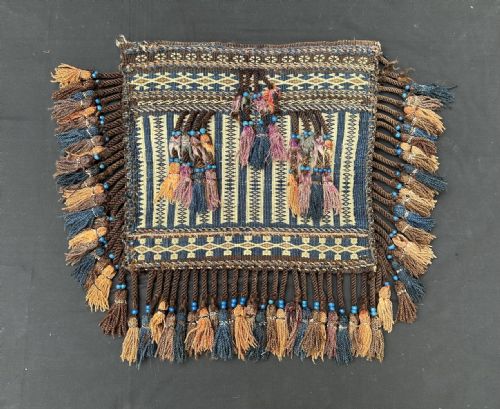
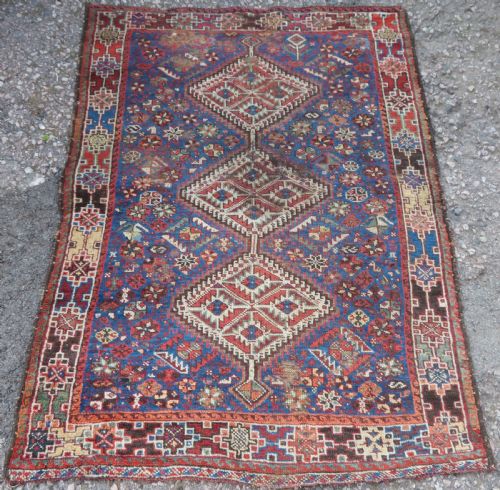
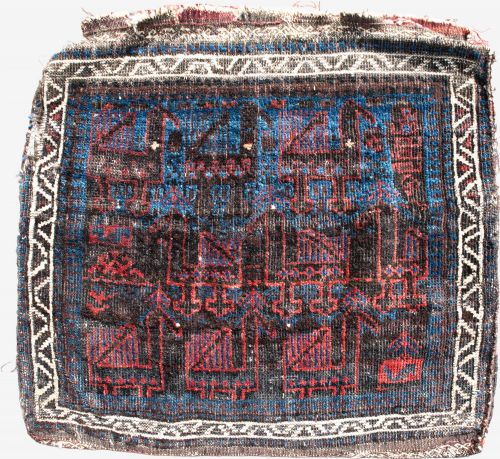
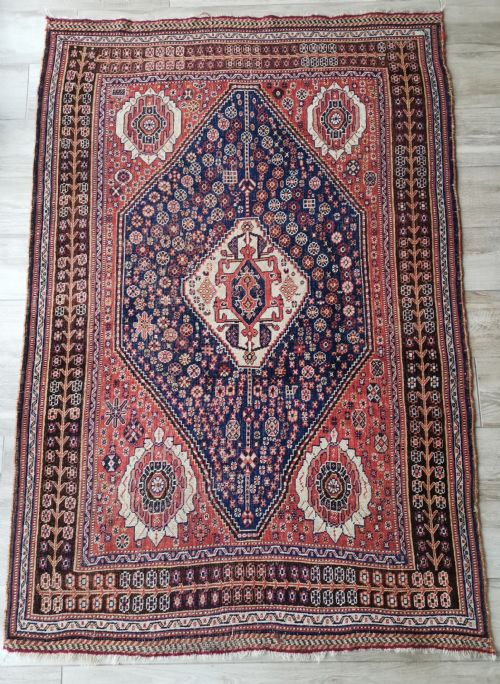
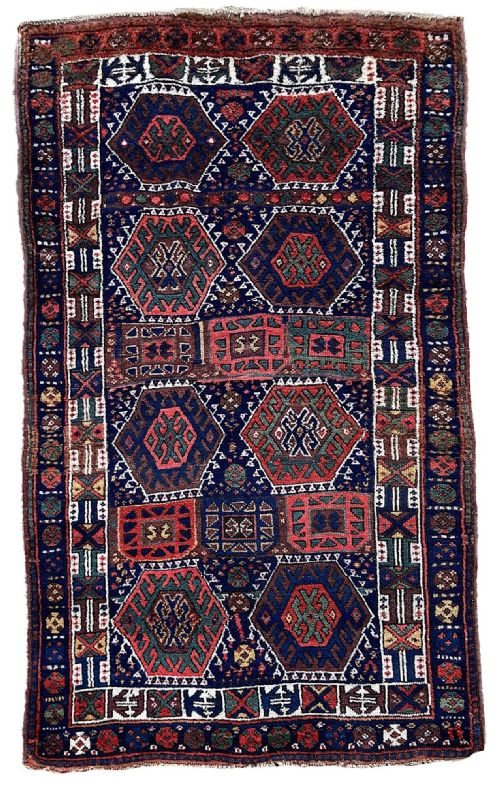
The version you are most likely to meet on this page is a regional village carpet or runner, often woven by Baluch, Khamseh, Afshar, or Kazak makers. These pieces utilise deep indigo fields alongside geometric medallions and natural dyed motifs.
Beyond standard floor rugs, the category encompasses specialised utilitarian textiles such as storage bags, sofhrah eating cloths, and seating mats. Each form reflects the specific domestic requirements of the weaving communities across the Caucasus, Persia, and Central Asia.
Materials and construction
The foundation of these pieces relies primarily on sturdy wool spun by hand, occasionally combined with cotton warps and supplemental goat hair or glass bead embellishments. Artisans sourced local fleeces yielding resilient pile that endured generations of nomadic or village use.
Colour comes from natural dyes, with indigo yielding the characteristic deep blue grounds that define many Caucasian and Persian regional rugs. Dyers combined plant and mineral extracts to achieve saturated tones that mellow gradually over decades of exposure and wear.
Object forms represented here range from standard area rugs and long runners to specialised tribal bags, flat-weave kilims, and seating mats.
Assessing quality
Quality rests upon the density of the knotting and the crispness of the geometric drawing executed by the weaver. Finer foundation tension and precise control over the pile create structural integrity and sharper motif definition.
The depth and saturation of the natural indigo dye play a significant role in visual impact. Variations in hue and the successful retention of secondary accent tones distinguish standard village production from exceptional collector grade examples.
The Indigo Blue Wool Rug Glossary
- Kazak
- A style of rug originating from the Caucasus region known for bold geometric medallions and primary colour palettes. These pieces typically display robust wool and distinctive tribal iconography.
- Kilim
- A flat-woven carpet or textile produced without pile by tightly interweaving warp and weft threads. This technique creates a lightweight, reversible fabric often featuring sharp geometric patterns.
- Sofreh
- A woven spread or cloth traditionally used for communal dining or food preparation among nomadic groups. They frequently double as flat-woven textiles featuring symbolic tribal markers.
- Kelleh
- A large format rectangular carpet traditionally proportioned for specific room dimensions in Persian households. They offer extended field areas suited to repeating medallion designs.
- Natural Dyes
- Colourants derived from organic sources such as plants, insects, and minerals prior to the introduction of synthetic aniline alternatives. These dyes produce complex, muted patinas over time.
Indigo Blue Wool Rug: Frequently Asked Questions
How do I clean an antique wool rug?
Gentle surface brushing and professional specialist washing form the safest maintenance approach for historic pile carpets. Avoid immersion in water or harsh chemical detergents that strip natural lanolin from the wool.
Regular light vacuuming without a rotating beater bar prevents dust accumulation within the foundation. Promptly blot liquid spills with a clean, dry white cloth without rubbing the pile fibres.
Are these rugs suitable for high traffic areas?
Sturdy wool construction and dense knotting allow many antique village rugs to withstand normal residential foot traffic. Placing a quality underlay beneath the carpet cushions the foundation and reduces friction against hard flooring.
Finer flat-weaves and fragile antique runner formats benefit from placement in lower traffic zones to preserve structural integrity. Rotating the rug periodically ensures even exposure and wear patterns across the surface.
How can I tell a tribal rug from a workshop piece?
Tribal rugs display asymmetric designs, spontaneous colour shifts, and geometric motifs woven from memory by nomadic or village makers. Their structures often incorporate coarser wool and irregular outer edges.
Workshop pieces feature balanced symmetry, refined floral or curvilinear medallion layouts, and precise knot counts. Urban looms operated under strict supervision, producing uniform dimensions and formal design standards.
What causes the blue colour variation in antique rugs?
Natural indigo extraction yields varying depths of blue depending on the fermentation bath and the wool's ability to absorb the pigment. Variations in dye concentration create subtle tonal shifts known as abrash across the field.
Exposure to light over decades softens the initial dark indigo into nuanced slate and denim shades. Hand-spun wool absorbs these dye variations unevenly, adding organic depth to the finished surface.