
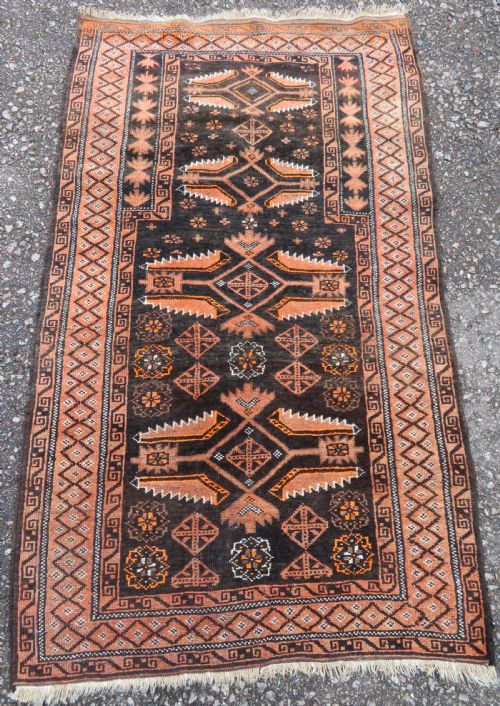
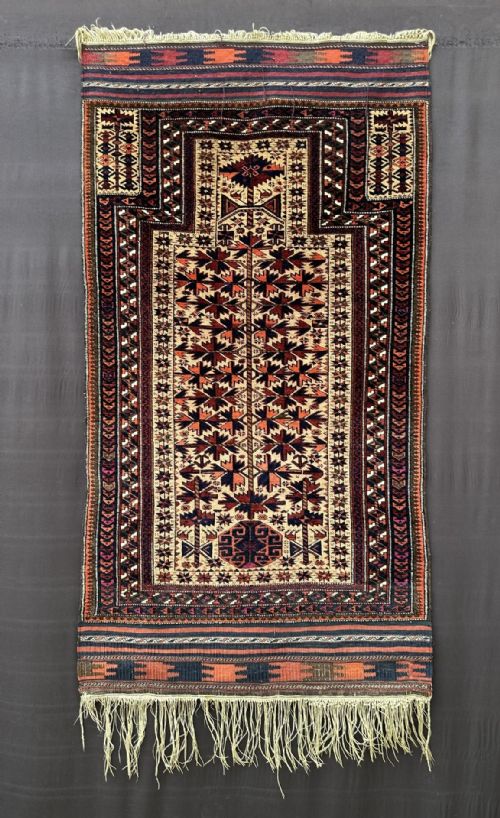


Brown Wool Prayer Mat
These pieces are a brown wool prayer mat, woven by tribal and village makers for personal devotion.
Brown Wool Prayer Mat
A brown wool prayer mat represents tribal and village weaving traditions from regions including Afghanistan, Persia, and Anatolia. When searching for a brown wool prayer mat, collectors encounter pieces originating from the nineteenth and early twentieth centuries. These floor coverings typically display specific prayer niches or architectural motifs intended for daily ritual use.
The versions most common on this page are Baluch, Taimani, and Kizil Ayak tribal rugs featuring wool pile and characteristic dark or camel-ground tones. Many examples incorporate single, double, or triple mihrab designs alongside traditional motifs such as the tree of life or lotus leaf patterns. These mats reflect the domestic and nomadic heritage of the weavers who produced them.
Materials and technique
Weavers constructed these mats using hand-spun sheep wool, often incorporating camel wool, camel hair, or goat hair to achieve natural textural variation. Artisans employed natural dyes derived from local plants and minerals, creating deep brown, earthy, and muted polychrome palettes. Mixed techniques occasionally appear, combining pile knotting with flatwoven kilim ends for structural durability.
The foundations typically consist of wool or cotton warps and wefts that support the dense pile. Tribal workshops utilised traditional upright or horizontal looms, tying asymmetrical or symmetrical knots depending on the specific regional group. Long kilim finishes and reinforced selvedges frequently terminate the ends of these village and nomadic carpets.
Occasional weaver whimsy appears in the knotting, including unexpected human figures woven right into the prayer field.
Quality variations
The distinction between standard and superior pieces rests on the handled quality of the wool and the precision of the tribal design. Finer examples display tightly packed knots, supple handles, and exceptionally lustrous fleece derived from well-nourished sheep or camel hair. Inferior or heavily worn specimens exhibit dry wool, stiff foundations, and compromised structural integrity.
Artistic execution and design clarity also separate exceptional pieces from ordinary examples. A well-drawn mihrab, balanced proportions, and inventive secondary motifs such as human figures or mosque designs elevate a carpet's visual interest. The depth and stability of the natural dyes further indicate the original weaver's skill and material selection.
The Brown Wool Prayer Mat Glossary
- Mihrab
- The arched niche found on prayer rugs that indicates the direction of prayer towards Mecca. This architectural feature forms the visual focal point of the field.
- Seh Mihrab
- A triple-arched prayer niche design frequently encountered in Baluch and Taimani tribal rugs. This format displays three distinct arches across the top of the field.
- Kilim end
- A flatwoven section of warp and weft threads extending beyond the knotted pile at the ends of a rug. These protective borders prevent the pile from unravelling.
- Camel ground
- A background colour field composed of undyed camel wool or hair, yielding natural fawn and brown tones. This material offers notable softness and durability.
- Tree of life
- A symbolic motif depicting a branching plant rising from a base, representing spiritual growth and eternity. Weavers often place this central symbol beneath the prayer arch.
Brown Wool Prayer Mat: Frequently Asked Questions
How were these mats used?
These mats served primarily as personal portable spaces for daily prayers performed by nomadic and village people. Owners rolled them up between prayer times and transported them during seasonal migrations.
Because they functioned as sacred textiles for daily rituals, weavers constructed them with durable materials designed to withstand regular kneeling and kneeling movement.
How do I identify a Baluch prayer rug?
Baluch prayer rugs generally feature rich dark brown, oxblood, or camel-ground colour palettes combined with geometric patterns and wool foundations. They often incorporate goat hair in the outer corded selvedges for added strength.
Collectors look for distinctive prayer niches, camel wool highlights, and regional motifs that link the weaving to specific tribal groups of the borderlands.
Can I use these antique mats on the floor?
Many collectors place these sturdy wool pieces in light-traffic areas or mount them securely on walls as textile art. Their durable natural wool pile handles gentle walking when supported by an appropriate rug underlay.
Avoiding direct, intense sunlight and heavy foot traffic helps preserve the fragile natural dyes and older wool foundations over time.
What does a double niche mean?
A double niche design incorporates two prayer arches, often positioned at opposite ends or mirrored within the central field of the rug. This uncommon layout appears in specific Turkmen and Afghan village traditions.
Such variations reflect the creative freedom of tribal weavers who adapted standard devotional layouts according to local preferences.