

Indian Carved Wooden Stand
When you search for an indian carved wooden stand, you find intricate tables, folding book pedestals and plant supports brought back during the nineteenth and early twentieth centuries.
Indian Carved Wooden Stand
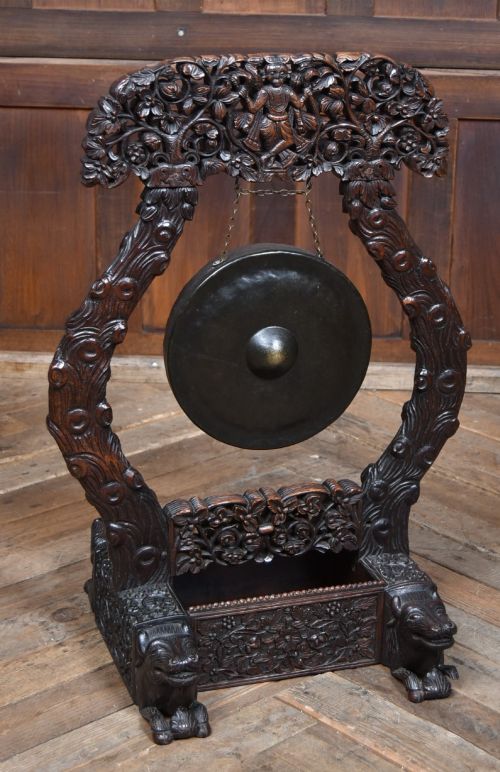
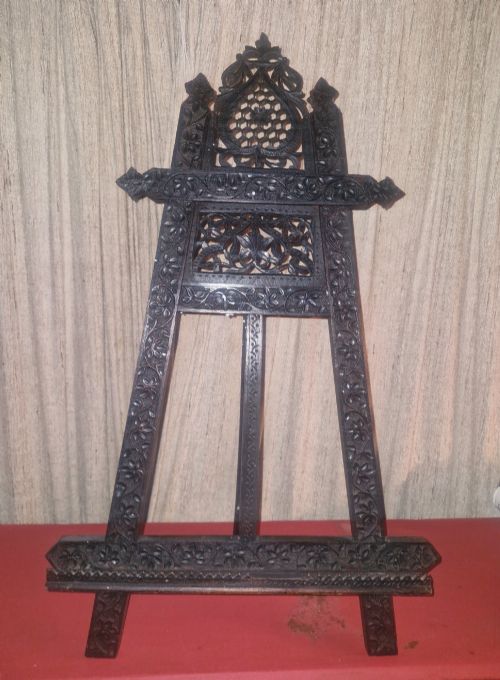
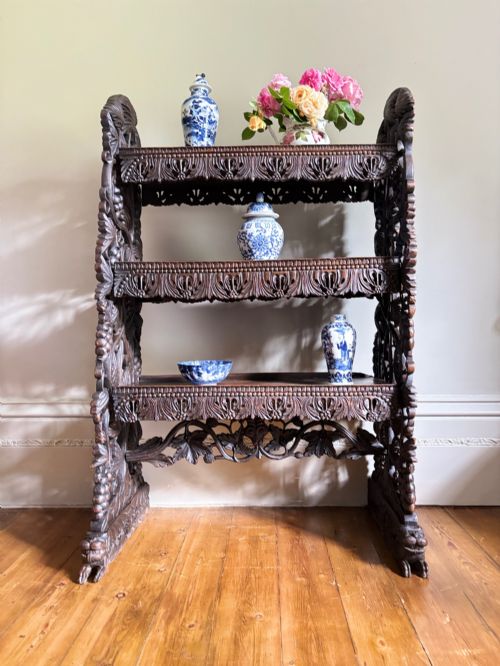
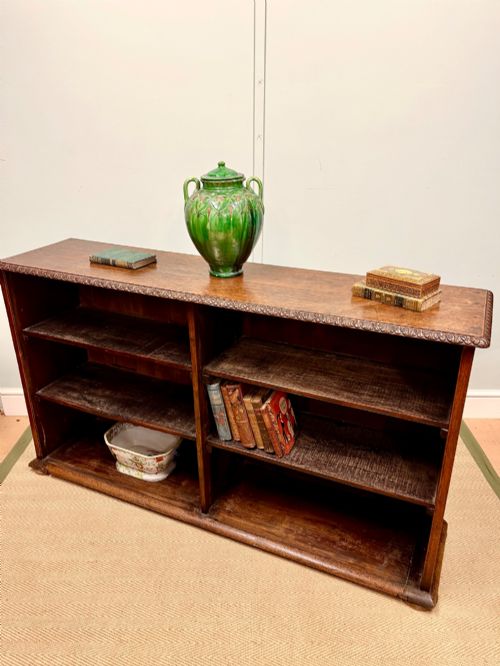
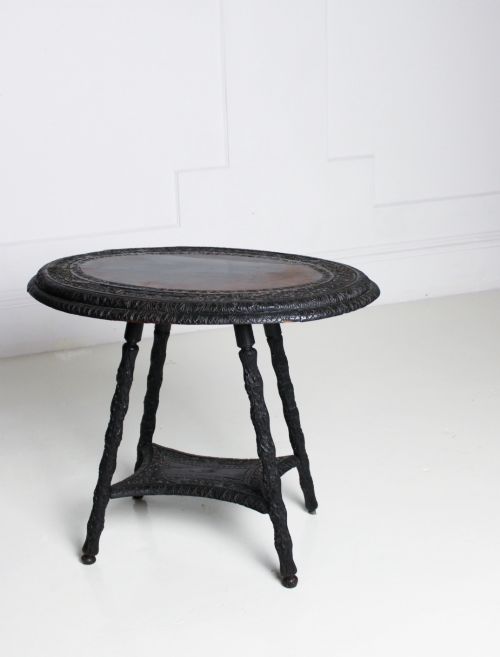
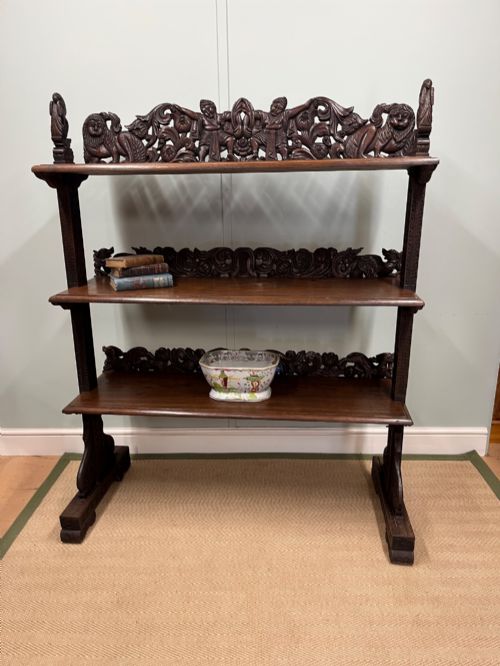
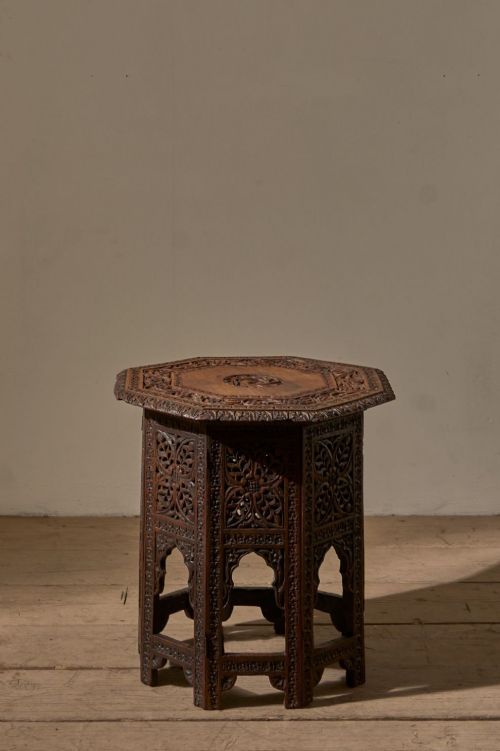
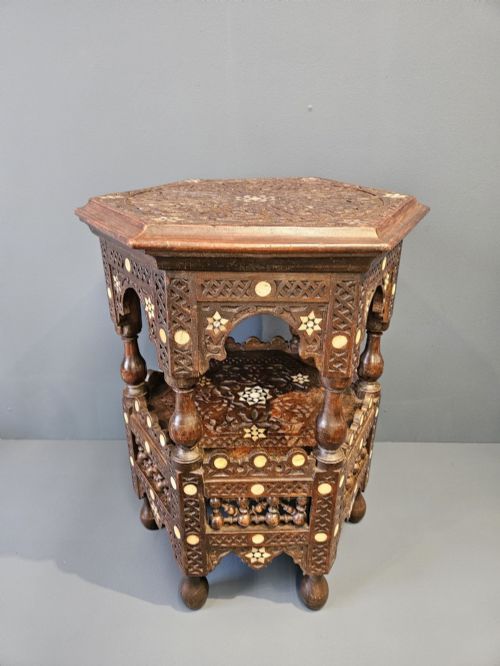
An indian carved wooden stand encompasses a range of domestic furniture including octagonal tables, folding campaign tea tables, plant stands, book rests and tiered buffets. The pieces on this page span the nineteenth century through to the nineteen thirties, with a strong representation of Victorian production and Anglo-Indian regional variants.
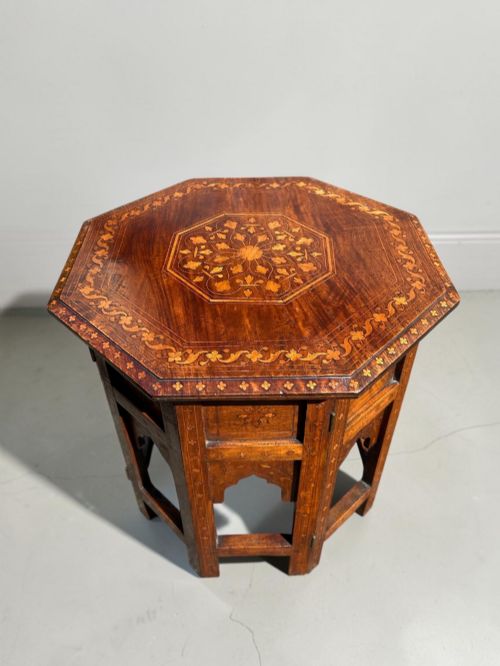
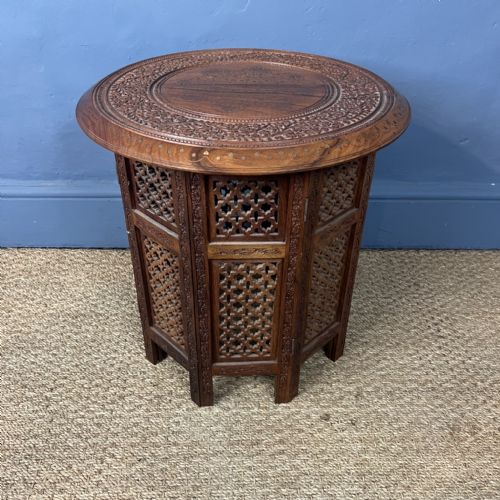
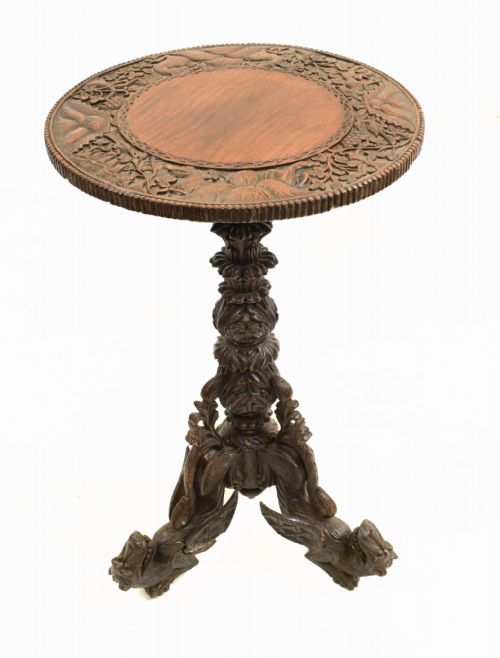
The most common formats you encounter are octagonal and circular occasional tables resting on folding or tripod bases, frequently embellished with animal motifs or geometric inlay. Alongside these small tables appear reading stands, magazine racks, display easels and occasional lamp tables originating from centres such as Hoshiarpur and the Bombay Presidency.
Materials and construction
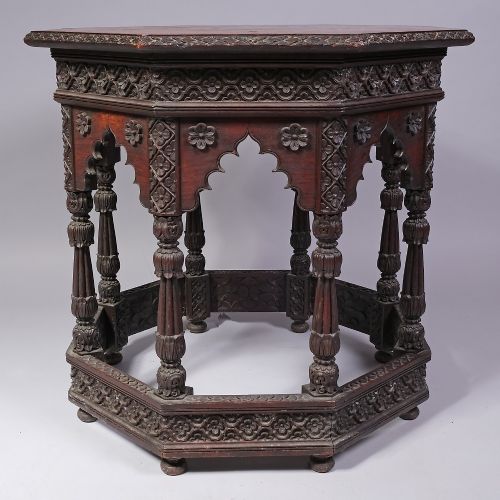
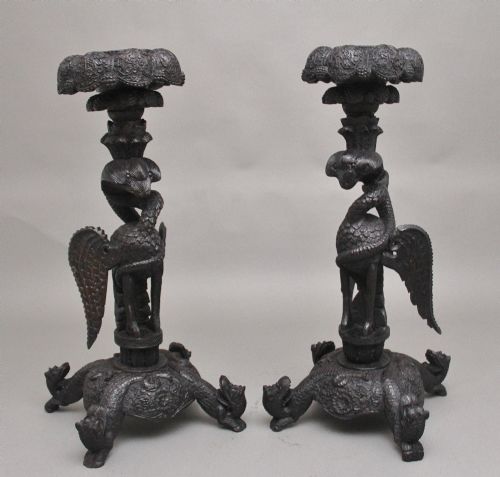
Makers utilised dense native timbers such as teak, padauk, ebony and solid rosewood, which provided a stable foundation for deep relief carving and pierced fretwork. These woods were often worked by hand using traditional chisels to create dense foliage, dragons, peacocks and elephant figures.
Surface enrichment frequently involves contrasting inlays of brass wire, bone, mother-of-pearl or copper sheeting set flush into the timber. Folding mechanisms on tables and book stands rely on articulated wooden hinges and pegged joints that allow the structures to collapse flat.
Listings feature items dated from the mid nineteenth century through to the nineteen thirties, encompassing teak, rosewood, brass and bone inlay.
Evaluating the carving and materials
The distinction between ordinary and superior examples lies in the crispness and depth of the chisel work. Finer pieces display sharply defined undercut foliage and expressive animal forms without splintering or hasty finishing in the recessed areas.
Material selection also dictates quality, as heavier solid hardwoods and complete, undisturbed bone or brass inlays command greater respect than lighter secondary timbers with partial surface decoration.
The Indian Carved Wooden Stand Glossary
- Anglo-Indian
- A descriptive term for furniture made in India during the British period, combining traditional local craftsmanship with European furniture forms. These pieces often exhibit dense overall carving and exotic timber construction.
- Hoshiarpur
- A Punjabi town renowned for intricate woodwork, specifically characterised by octagonal tables and folding stands densely inlaid with bone, brass or plastic details. The entire surface is typically covered in geometric or floral patterns.
- Padauk
- A heavy, durable tropical hardwood with a reddish-brown hue utilised by makers in South Asia. It provides an excellent dense surface for detailed relief carving.
- Jardinière
- A decorative pot or stand designed to hold plants or flowers, often constructed from carved hardwood or inlaid teak with a protective interior liner.
- Tripod Base
- A three-legged support structure commonly found on small occasional tables and plant stands, allowing the piece to sit firmly on uneven floors.
Indian Carved Wooden Stand: Frequently Asked Questions
How do I fold an indian carved wooden stand?
Many octagonal and occasional tables utilise interlocking hinged panels or folding lattice bases that collapse flat by lifting the top slightly and pivoting the frame.
Take care not to force joints that have settled over decades; gently support the weight while releasing the wooden pegs or hinges.
What wood are these stands made from?
The primary timbers recorded in these pieces include teak, rosewood, padauk and general hardwoods native to South Asia.
These dense materials were chosen for their ability to hold intricate chisel work and withstand deep piercing without structural failure.
How do I clean an inlaid wooden stand?
Dust the carved recesses regularly with a soft dry brush to prevent dirt accumulation in the intricate grooves and pierced fretwork.
Avoid liquid polishes that can seep under bone or brass inlays and loosen the historical adhesives holding them in place.
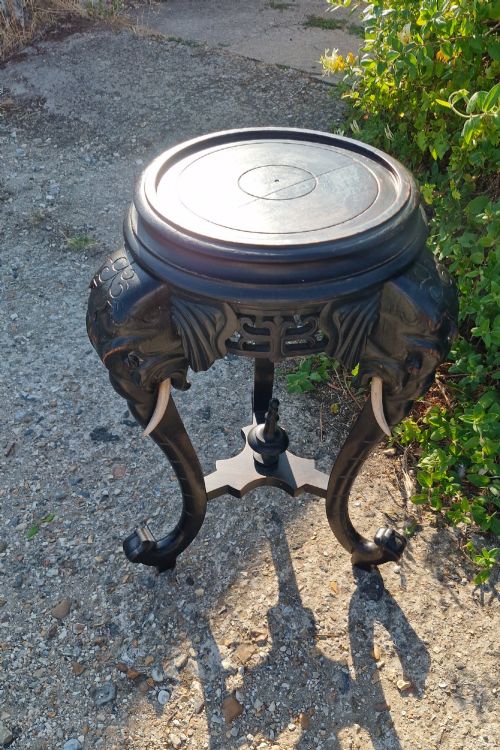
What is an elephant table?
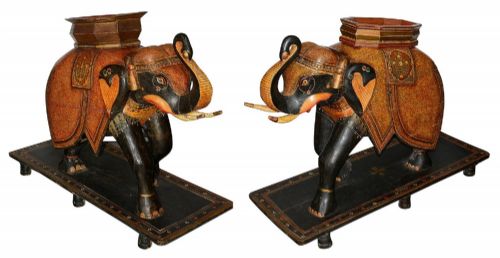
An elephant table is an occasional or side table featuring carved elephant heads, tusks or full sculptural figures supporting the top surface.
These pieces were typically produced in the Bombay Presidency and Hoshiarpur during the late nineteenth and early twentieth centuries.