
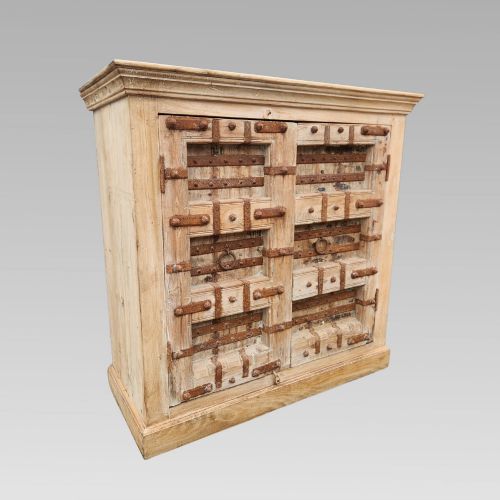
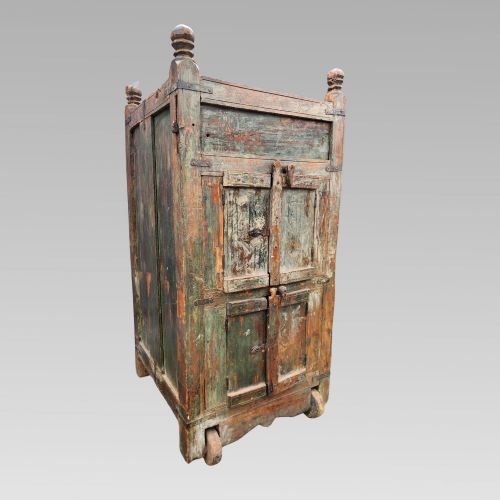
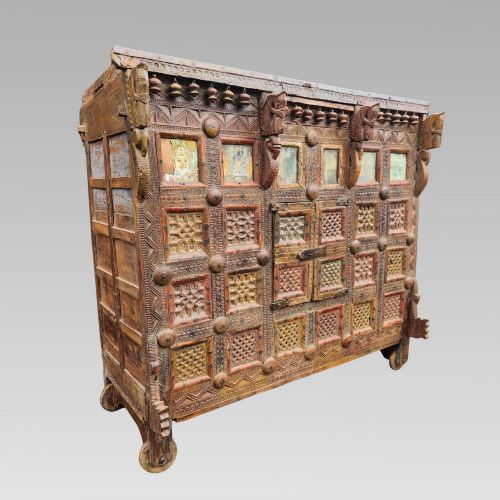
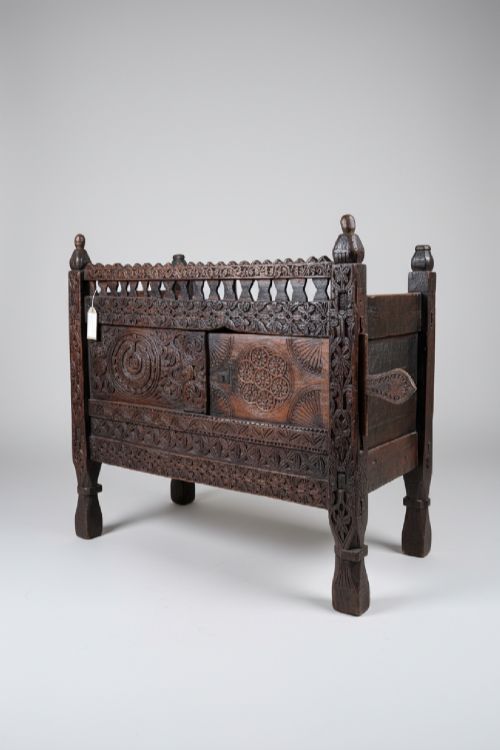


Indian Carved Storage Chest
An indian carved storage chest brings substantial timber, intricate chisel work and utilitarian heft into a room.

Indian Carved Storage Chest
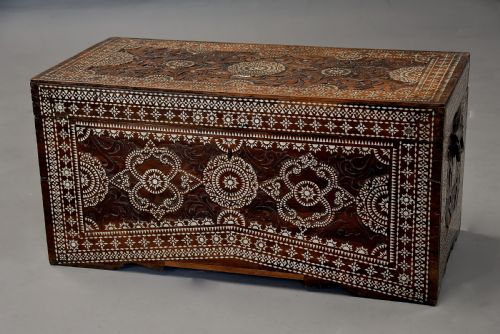
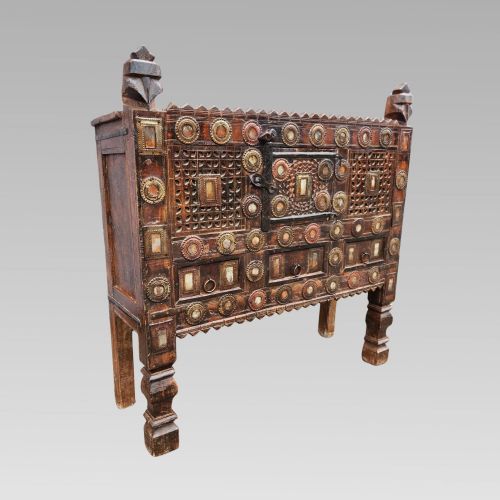
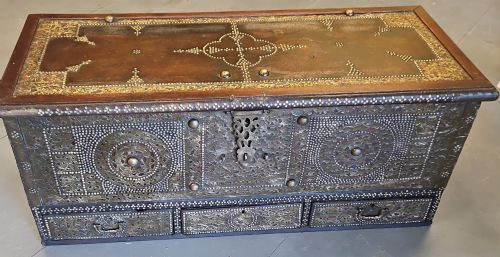
An indian carved storage chest encompasses domestic vessels made for holding blankets, spices, dowry goods and personal valuables across various regions. Buyers encounter pieces taking the form of heavy trunks, coffers, damchiyas and storage cabinets originating from the nineteenth century and the early decades of the twentieth century.
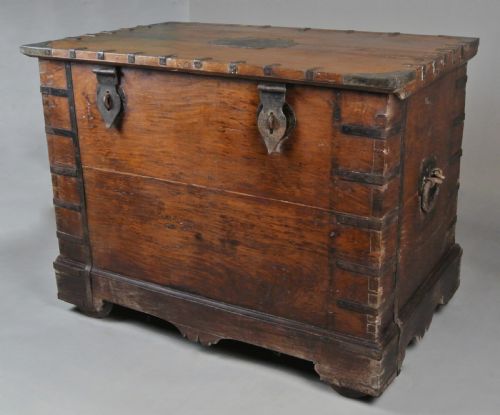
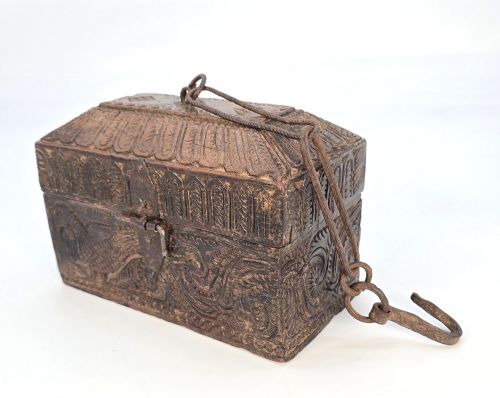
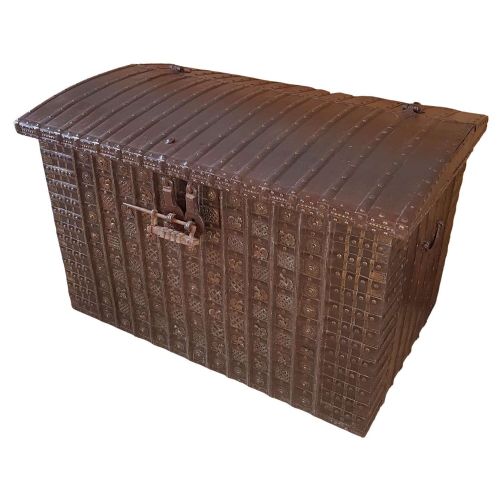
The selection on this page leans heavily towards regional iterations such as Zanzibar traders chests, Rajasthan damchiyas and Swat Valley dowry chests. These objects range from massive iron-bound receptacles down to smaller tabletop boxes and spice containers.
Materials and Construction
Constructed predominantly from durable timbers like teak, hardwood, satinwood, ebony and camphor wood, these chests rely on dense woods selected to withstand tropical climates and heavy use. Makers reinforced structural joints and enhanced security using forged iron bands, hinges and brass stud decoration.
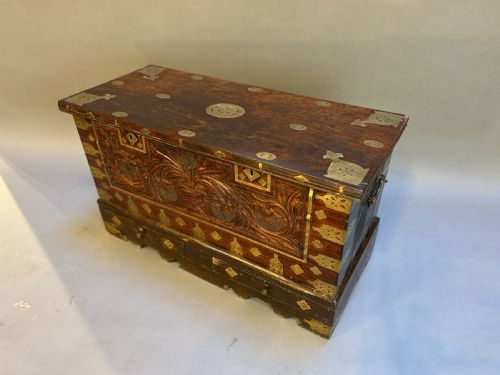
Surface ornamentation relies on deep relief carving, inlaid mother of pearl, lacquerwork and specialised joinery suited to traditional domestic architecture. Metal components such as locks and corner brackets are typically hand-hammered and fixed directly into the timber frame.
Periods represented span from the eighteenth century through Victorian production and into the 1930s.
Quality and Execution
Execution of the carved motifs dictates much of the distinction between standard utilitarian boxes and finer examples. Crisp, deeply undercut foliage and geometric patterns require skilled handwork, whereas lesser pieces display shallow or repetitive stamping.
The integrity of the original hardware, including functional locks, strap hinges and brass studwork, determines the merit of a piece. Survival of original surface treatments, whether natural wood patina or applied lacquer, preserves the historic character of the chest.
The Indian Carved Storage Chest Glossary
- Damchiya
- A traditional low storage chest or cupboard from regions such as Gujarat and Rajasthan, often featuring carved panels and recessed compartments. These units served as dowry furniture in domestic households.
- Zanzibar chest
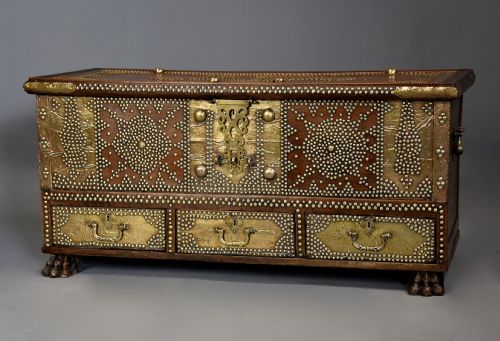
- A heavy wooden trunk characterised by brass studding, strapwork and often a concealed interior drawer. They reflect maritime trade routes linking western India with the East African coast.
- Dowry chest
- A large receptacle commissioned or acquired for a bride to transport her household goods and textiles into a new marital home. They frequently display the finest carving workmanship available to the family.
- Cellarette
- A specialised cabinet or box designed to hold bottles of wine or spirits securely. In colonial contexts, these were adapted for transport and domestic service.
- Coffer
- A robust box with a hinged lid used primarily for safe storage of valuables and documents. They sit directly on the floor or on short feet rather than elevated stands.
Indian Carved Storage Chest: Frequently Asked Questions
What were these chests used for?
These chests functioned as secure containers for household valuables, textiles, spices and dowry items. Families relied on them to protect precious goods from humidity, insects and theft.
Larger versions doubled as seating or benches within domestic spaces. Their sturdy construction also made them suitable for overland and maritime transport during trading voyages.
How do I care for a wooden chest?
Maintain the timber by keeping the chest away from direct heat sources and sudden humidity changes. Apply a neutral wax polish sparingly to nourish dry wood surfaces.
Avoid placing wet items or heavy moisture directly onto the unsealed interior or exterior panels. Gentle dusting with a dry cloth prevents dirt accumulation within deep carvings.
How do I distinguish regional styles?
Zanzibar chests are readily identified by dense brass studding, corner brackets and strapwork applied to dark hardwood bodies. Rajasthan damchiyas feature distinct architectural carvings, low profiles and specific front-opening panel configurations.
Swat Valley pieces display geometric folk art carving styles unique to northern mountain regions. Burmese and Ceylonese examples often utilise specific regional timbers like satinwood or camphor alongside localized carving motifs.
Are these chests heavy to move?
Most specimens are exceptionally heavy due to the dense tropical hardwoods used in their construction. Iron banding and brass hardware add further weight to the overall structure.
Lifting requires multiple people, and clearing items from inside is recommended before attempting relocation. Many historical examples were built specifically for infrequent transport rather than daily rearrangement.