

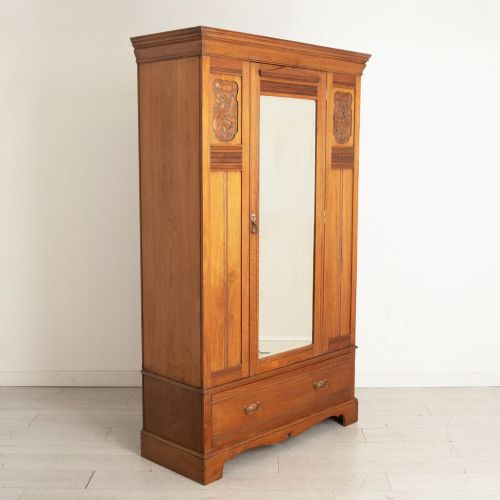
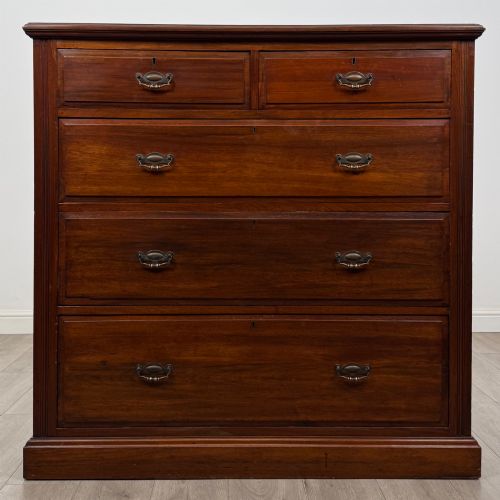
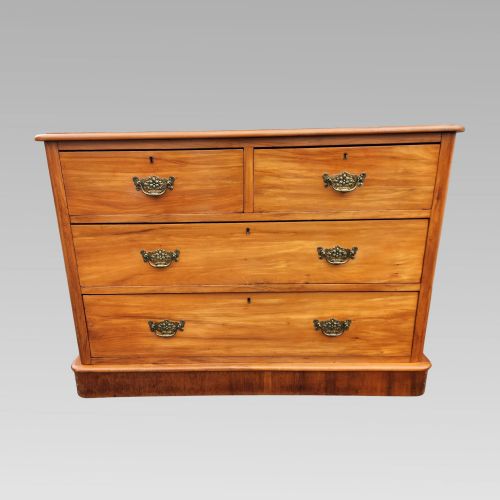


Carved Timber Bedroom Drawers
Carved timber bedroom drawers bring substantial storage and distinct regional ornament to a room.
Carved Timber Bedroom Drawers
Carved timber bedroom drawers encompass chests of drawers, commodes, and dressing chests spanning the Victorian, Edwardian, and earlier periods. These pieces serve primarily for garment storage while introducing varied stylistic influences from French Provincial to Anglo-Indian designs.
The version most commonly met on this page is the Edwardian satinwood or mahogany chest of drawers, alongside taller Victorian mahogany examples and occasional Continental commodes. Makers worked within established historical revivals, applying decorative carving to standard bedroom forms.
Buyers encounter items ranging from simple pine and satin walnut utilities to elaborate burr walnut, oak Jacobean pieces, and imported North African or Anglo-Indian models. Each object carries the specific joinery methods and timber choices of its origin decade.
Materials and construction
Makers utilised solid hardwoods like mahogany, oak, and walnut, frequently pairing them with secondary softwoods such as pine for internal framing and drawer linings. Satinwood and satin walnut provided lighter exterior surfaces with distinctive grain patterns.
Construction relied on traditional dovetail joints for drawer boxes and mortise and tenon frames for the main carcase. Carved ornamentation was executed directly into the timber or applied as separate decorative moulding.
Surface finishing involved hand-applied polish, wax, or painted schemes, complemented by brass hardware such as original drop handles and escutcheons.
Carved Timber Bedroom Drawers Retail Price Guide 2026
Typical asking prices for carved timber bedroom drawers among the pieces listed under this phrase on Sellingantiques today, from the lower quarter to the upper quarter. They describe what is for sale here now, not the wider market.
An unexpected Anglo-Indian visitor brings seven drawers to the bedroom.
Distinctions in craftsmanship
Quality separates pieces by the crispness of the hand-carving and the selection of timber veneers, such as figured mahogany or burr walnut. Superior examples display tight dovetailing and clean internal secondary woods.
The integrity of the original hardware, handles, and locks influences the standing of a piece. Finer items retain their matching brass fittings and exhibit balanced proportion across the drawers and cornices.
The Carved Timber Bedroom Drawers Glossary
- Commode
- A low cabinet or chest of drawers, often French in origin, featuring decorative painted surfaces or serpentine fronts. They functioned originally for storage in domestic chambers.
- Dovetail
- A joint formed by interlocking wedge-shaped fingers, crucial for securing drawer corners together with lasting strength. It represents standard high-grade cabinet making.
- Wellington chest
- A tall, narrow chest of drawers secured by a locking side flap that fastens over the drawer edges. This Victorian form maximises vertical storage space.
- Satinwood
- A durable, dense timber yielding a lustrous, yellow-toned surface favoured by Edwardian cabinet makers for fine bedroom suites. It accepts detailed carving and polishing exceptionally well.
Carved Timber Bedroom Drawers: Frequently Asked Questions
How do I date a chest of drawers?
Dating relies on examining the construction methods, such as hand-cut dovetails versus machine-made joints, alongside the prevailing timber choices and hardware styles of the period.
Reference points include the specific characteristics of Victorian mahogany or Edwardian satinwood to narrow down the decade of manufacture.
What is the difference between a commode and a chest?
A commode typically refers to a lower, more decorative French-style cabinet with painted finishes or serpentine fronts designed for formal chambers.
Standard chests of drawers focus primarily on utilitarian vertical storage using hardwoods like oak, mahogany, or walnut.
Are original handles important?
Original brass handles and escutcheons contribute significantly to the authenticity and visual harmony of antique bedroom furniture.
Replacements are common, but matched period hardware preserves the intended appearance of the piece.
How do I maintain timber drawer surfaces?
Maintenance requires occasional application of quality furniture wax to nourish the wood and protect the polished finish from moisture.
Avoid placing pieces in direct sunlight or near heat sources to prevent timber shrinkage and splitting.