

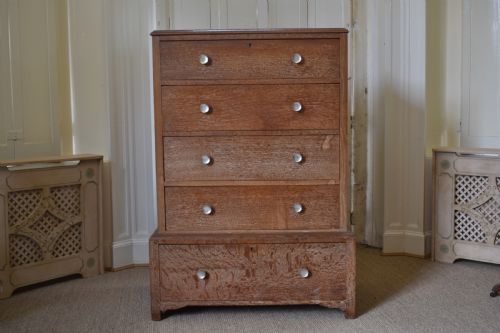
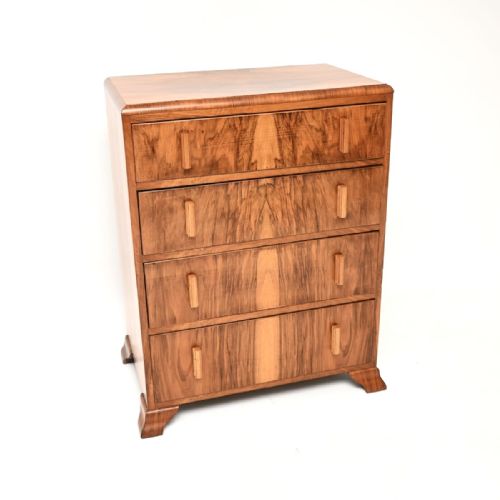
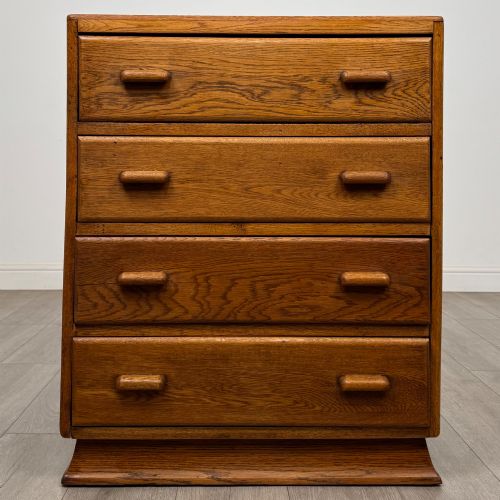
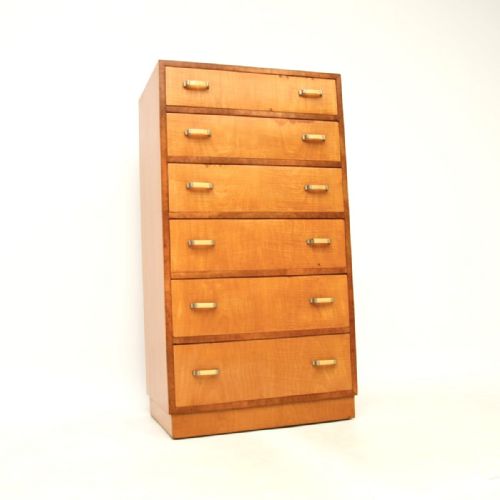

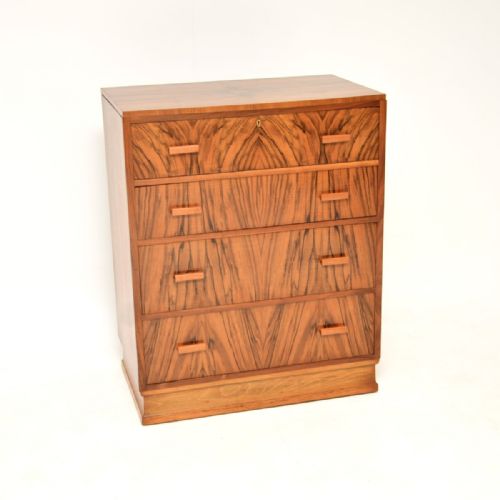
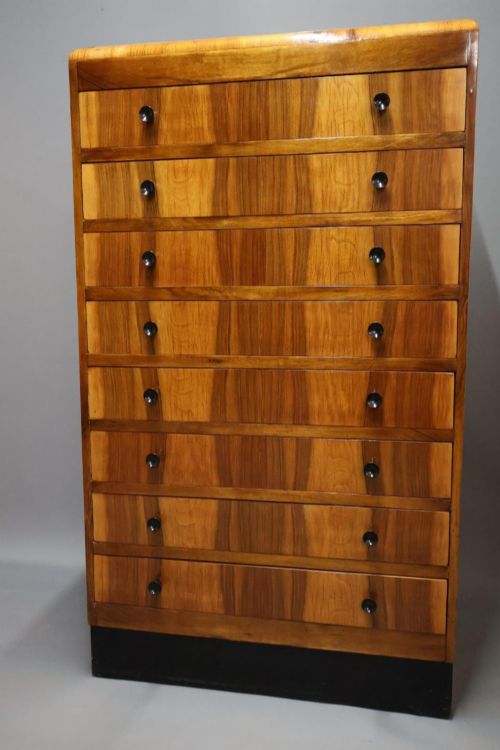
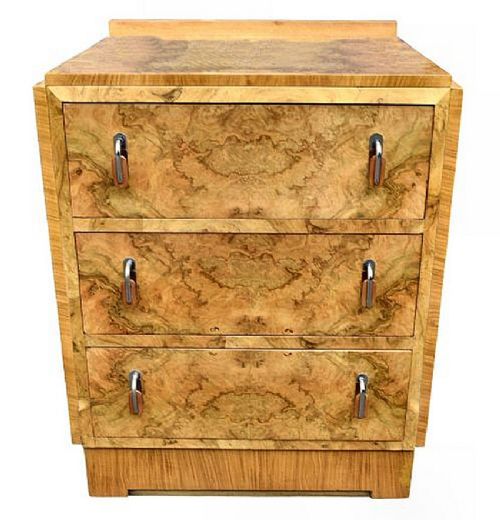
1930s Tallboy Drawers
These 1930s tallboy drawers combine vertical storage with striking grain patterns, offering a practical solution for modern rooms needing character.

1930s Tallboy Drawers
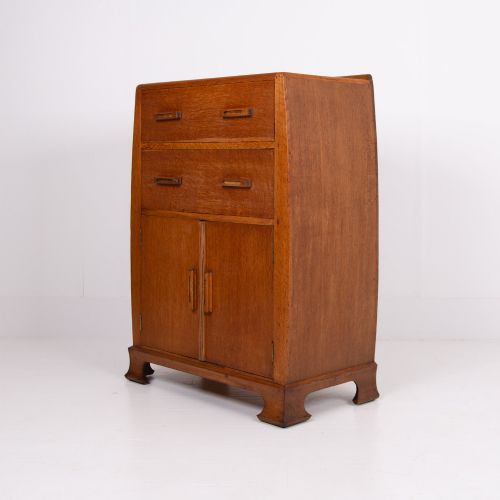
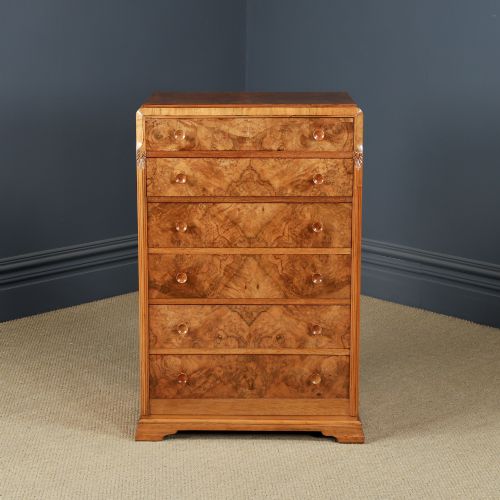
When hunting for 1930s tallboy drawers, collectors encounter upright chests that maximise vertical space while keeping a modest footprint. These pieces span utility forms and decorative items, predominantly originating from the Art Deco period.
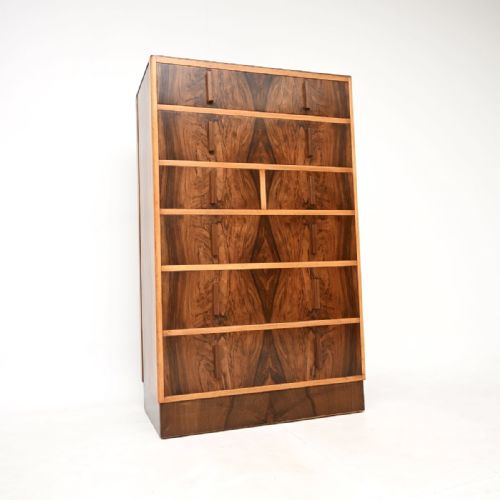
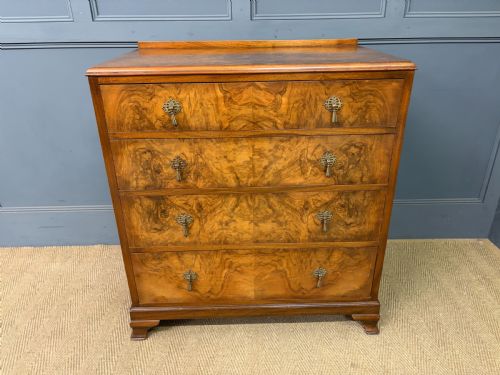
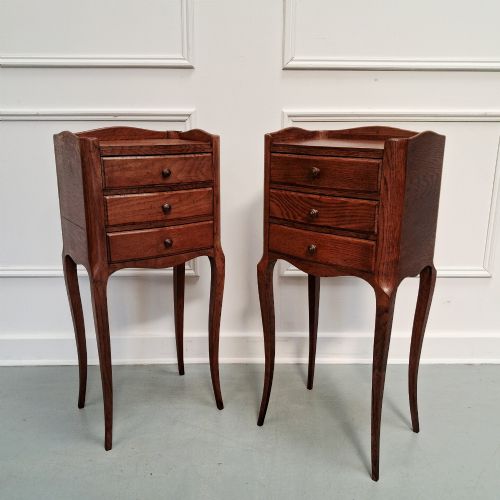
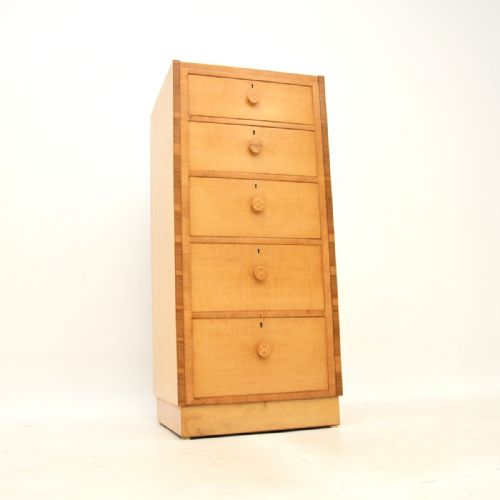
The pieces on this page include upright chests, tallboys, compactums and bedside cabinets. Oak, walnut, and maple form the structural backbone of these taller drawer units.
Art Deco styling dominates the selection, though Edwardian and mid-century influences appear alongside French Louis XV styles and Anglo-Indian carvings. Buyers find both simple limed oak and highly figured burl veneers.
What varies in quality
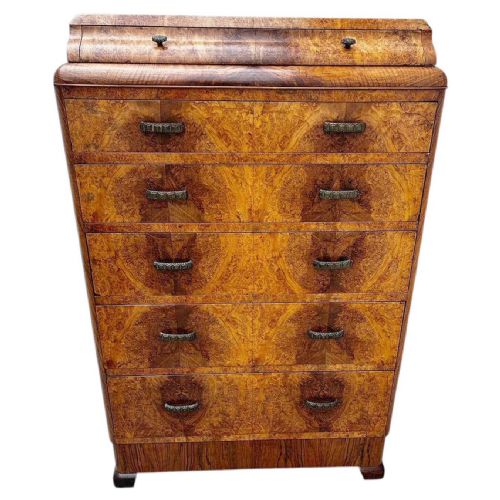
The grade of timber veneer dictates the visual impact, with figured, burr, and blonde walnut commanding attention over plain surfaces. Matched grain patterns across multiple drawer fronts demonstrate superior cabinetmaking skill.
The integration of secondary materials like brass hardware, bakelite details, or inset marble tops separates standard production furniture from workshop-attributed pieces. Construction depth and drawer runner precision determine daily utility.
1930s Tallboy Drawers Retail Price Guide 2026
Typical asking prices for 1930s tallboy drawers among the pieces listed under this phrase on Sellingantiques today, from the lower quarter to the upper quarter. They describe what is for sale here now, not the wider market.
Listings span the Edwardian era through the 1940s, with a heavy concentration of pieces dated to 1930.
Hille·Betty Joel·Heal's
The 1930s Tallboy Drawers Glossary
- Tallboy
- A tall chest of drawers, often comprising a wardrobe section or multiple stacked drawers rising higher than a standard dressing chest.
- Compactum
- A fitted wardrobe or multi-compartment storage cabinet combining drawers, shelves, and hanging space in a single tall unit.
- Veneer
- A thin layer of figured wood, such as walnut or maple, applied over a stable secondary timber carcase to display decorative grain.
- Art Deco
- A design style spanning the 1920s and 1930s characterised by clean geometric lines, stylised motifs, and luxurious materials.
- Limed oak
- Timber treated with a white pigment or lime finish to highlight the open grain pattern while lightening the overall tone.
1930s Tallboy Drawers: Frequently Asked Questions
What is a tallboy?
A tallboy is an elevated chest of drawers designed to provide substantial vertical storage capacity without occupying a wide floor area. These pieces frequently combine multiple drawers in a single tall frame.
In the selection here, many tallboys date from the interwar years and employ decorative wood veneers to soften their height.
How do I identify Art Deco furniture?
Art Deco furniture relies on symmetrical geometries, stepped forms, and contrasting veneers like walnut and maple. Hardware tends to feature geometric shapes in brass or bakelite.
Pieces from this movement prioritise sleek silhouettes over historicist carving.
What is a compactum?
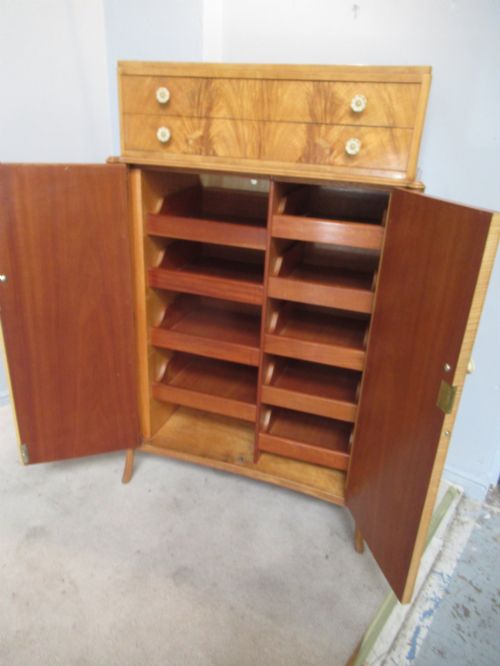
A compactum is a multi-functional storage unit combining drawers, cupboards, and sometimes hanging space within a single tall cabinet. They were designed to hold complete wardrobes in compact urban spaces.
Examples on this page include ladies compactums finished in figured walnut.
Are these pieces English or continental?
The inventory includes both English workshop pieces and continental imports, such as French marble-topped chests and bedside cabinets. Construction methods and wood species often signal the geographic origin.
English pieces frequently utilise oak and walnut, while French examples employ kingwood and marble.
How do I care for walnut veneer?
Walnut veneer requires protection from direct sunlight and extreme humidity fluctuations to prevent fading and lifting. Regular dusting with a dry cloth maintains the polished surface.
Avoid silicone-based polishes that can penetrate old lacquer.