



Indian Brass Mounted Chest
An indian brass mounted chest brings rich colonial timber and heavy metalwork into a room, offering practical storage with distinct historical travel origins.
Indian Brass Mounted Chest
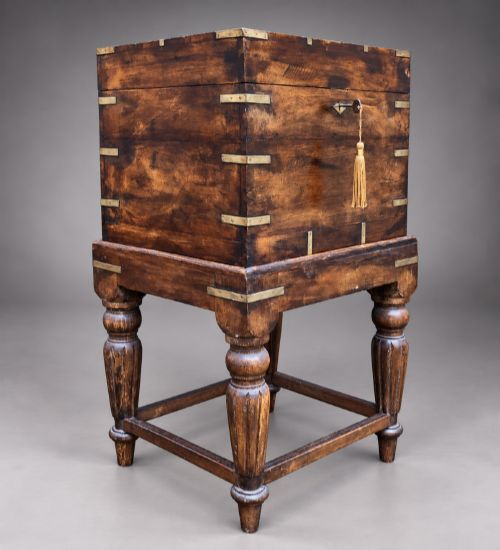
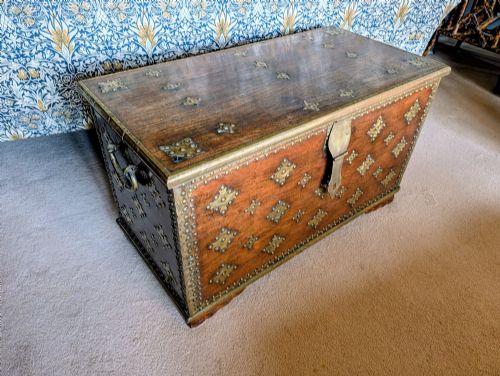
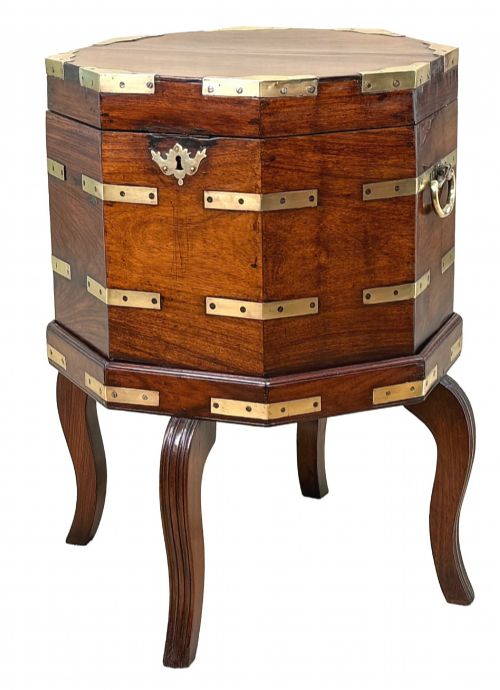
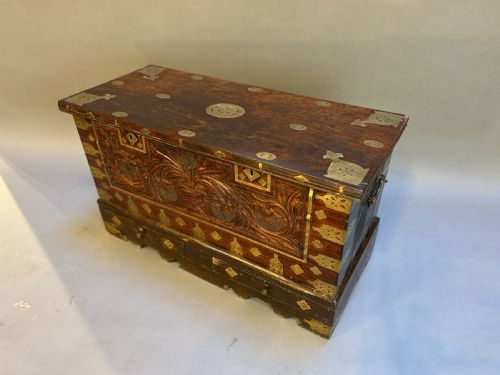
An indian brass mounted chest encompasses heavy storage trunks, blanket boxes, and cellarettes made for colonial travel and trade. Buyers searching for an indian brass mounted chest typically encounter nineteenth century examples featuring dense tropical timbers and protective metal mounts.
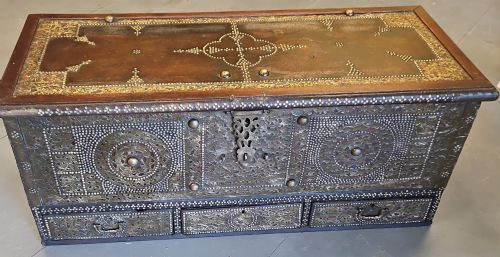
The forms range from utilitarian military campaign boxes made in sections to heavily decorated merchant and dowry trunks. Many pieces display Anglo-Indian or Zanzibar origins, reflecting global trade routes of the period.
Most items date from the Victorian era and the nineteenth century, utilising hardwoods built to withstand long journeys. These pieces function today as coffee tables, blanket boxes, or statement storage furniture.
How they were made
Cabinetmakers constructed these pieces using durable tropical timbers such as teak, padouk, camphor wood, and satinwood. These dense woods resisted humidity and insect damage during transport.
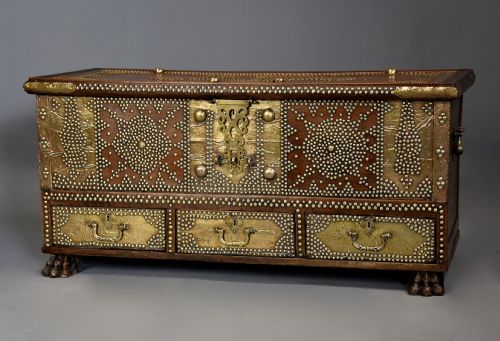
Heavy brass straps, corner brackets, and studwork reinforced the structural joints while protecting the timber from heavy handling. Iron fittings also appear on utility boxes and campaign pieces.
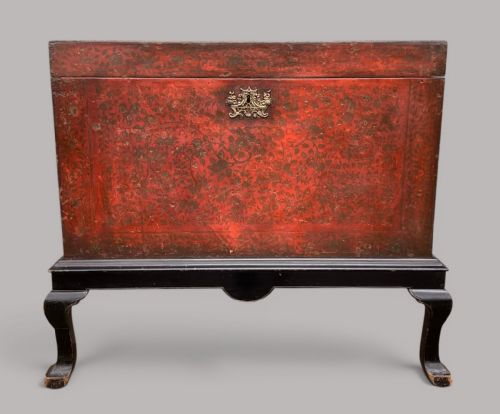
Surface treatments include traditional red lacquering and polished hardwood finishes that highlight the natural grain. Joinery often incorporated recessed brass handles and secure locking mechanisms for travel.
Listings feature nineteen century dates predominantly, spanning from the eighteenth century through to nineteen hundred.
What varies in quality
The calibre of craftsmanship shows in the precision of the brass strapwork and the complexity of the stud patterns. Finer examples feature intricate incised brass decoration and well-fitted internal compartments.
Timber selection distinguishes standard utility boxes from high-status merchant or dowry pieces. Solid padouk, ebony details, and finely figured camphor wood indicate higher original cost and superior material grade.
Proportion and form heavily influence desirability, particularly in specialised items like cellarettes on stands or miniature military chests. Original mounts and uncompromised structural integrity preserve the authentic character of the piece.
The Indian Brass Mounted Chest Glossary
- Campaign chest
- A piece of furniture designed to dismantle or fold for easy transport by military officers on colonial campaigns. These usually feature brass corners and flush handles.
- Cellarette
- A lockable container used for holding bottles of wine or spirits. In colonial contexts, these often stood on dedicated frames.
- Padouk
- A heavy, durable tropical hardwood with a distinctive reddish-brown colour. Cabinetmakers favoured it for high-end colonial furniture.
- Zanzibar chest
- A heavy storage trunk characterised by brass studding and elaborate brass plate decoration. They reflect trade connections across the Indian Ocean.
- Dowry chest
- A traditional trunk created to hold gifts and household goods for a bride. These often feature decorative brass mounts and regional Indian motifs.
Indian Brass Mounted Chest: Frequently Asked Questions
What is an indian brass mounted chest?
An indian brass mounted chest is a sturdy wooden storage trunk featuring protective metal fittings and straps. These boxes were produced during the nineteenth century for colonial use and trade.
They combine utilitarian durability with decorative metalwork, utilising dense timbers like teak and padouk. Today they serve as practical storage items with distinct historical character.
How were campaign chests used?
Campaign chests served as portable wardrobes and desks for British officers and officials on the move. Their modular construction allowed them to break down into manageable sections for shipping.
Recessed brass handles and reinforced corners protected the wood during rough transit. This functional design gives them their characteristic industrial aesthetic.
What wood was used for these chests?
Cabinetmakers utilised dense tropical hardwoods capable of withstanding harsh climates and heavy travel. Teak, camphor wood, padouk, and satinwood appear frequently in these listings.
Camphor wood was particularly popular for clothing trunks because its natural aroma repelled insects. Ebony and rosewood also appear as decorative accents on finer pieces.
How do I style a chest at home?
These chests function well as living room coffee tables while providing hidden storage for blankets and books. Their substantial timber and brass details anchor a room with a sense of history.
Smaller boxes and miniature chests sit comfortably on sideboards or desks. They pair naturally with neutral interiors that let the rich wood grain stand out.
How do I date a nineteenth century chest?
Dating relies on examining the timber, construction methods, and style of the brass hardware. Pieces from the mid-nineteenth century often reflect strict military campaign specifications.
Later Victorian examples from around 1900 sometimes incorporate more decorative studwork and regional carving styles. The specific combination of wood and brass work helps narrow down the decade.