





Indian Brass Box
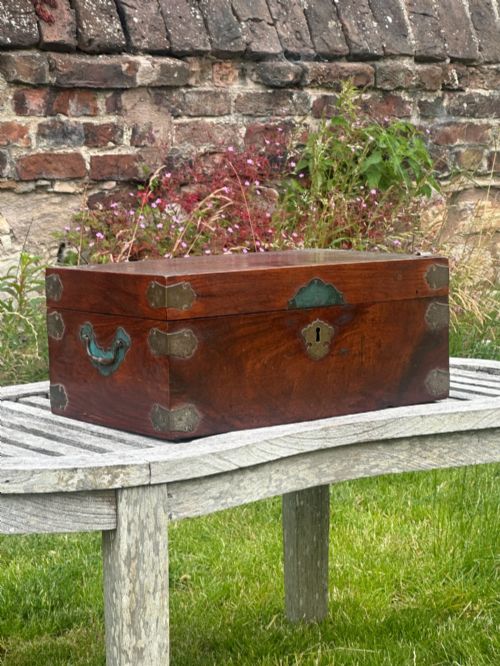
An indian brass box brings heavy colonial timber and striking metal reinforcement together in a portable form made for travel or secure storage.
Indian Brass Box
When you search for an indian brass box, you encounter nineteenth-century chests, writing desks, and small storage vessels originating from British colonial trade routes. These pieces range from substantial camphor wood and teak trunks with heavy metal mounts down to smaller desktop correspondence boxes and cigarette keepers.
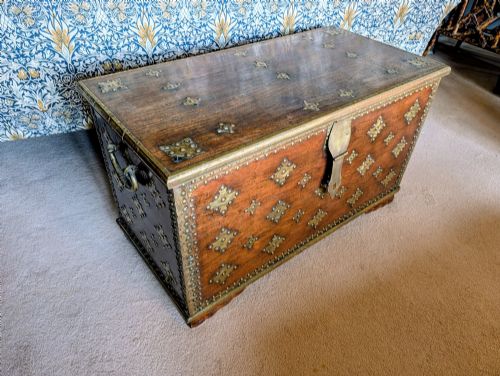
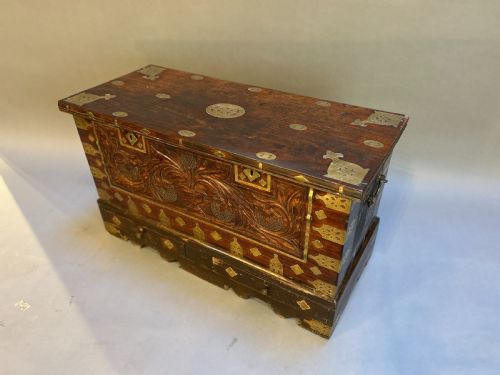
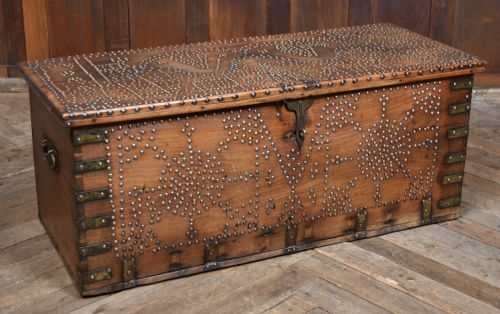
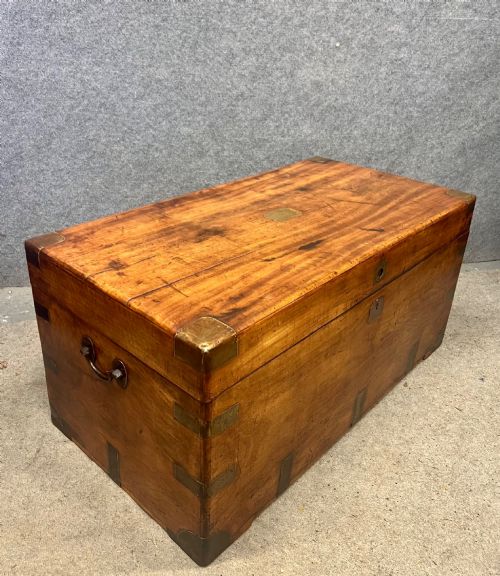
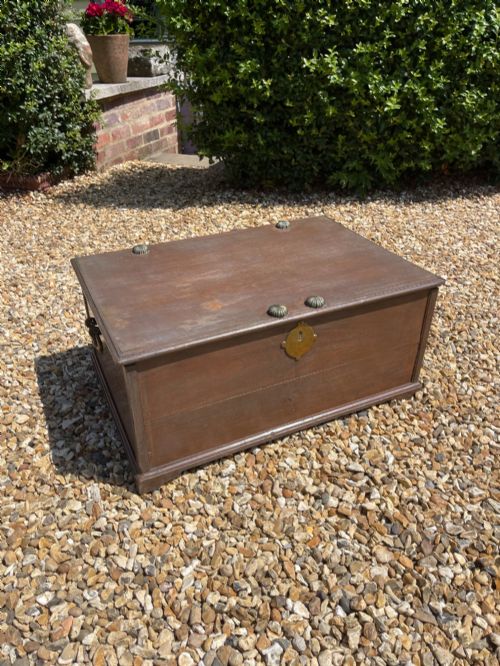
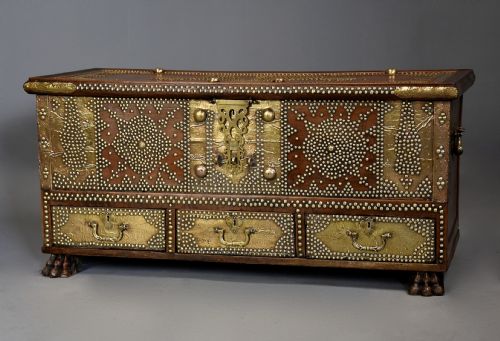
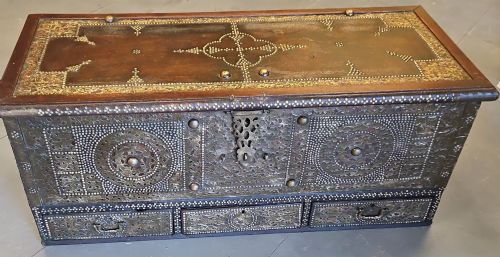
The most common examples on this page are Anglo-Indian campaign chests, blanket boxes, and Zanzibar storage chests constructed from dense exotic timbers. They often display extensive brass banding, corner brackets, and stud work designed to protect the wood during long journeys.
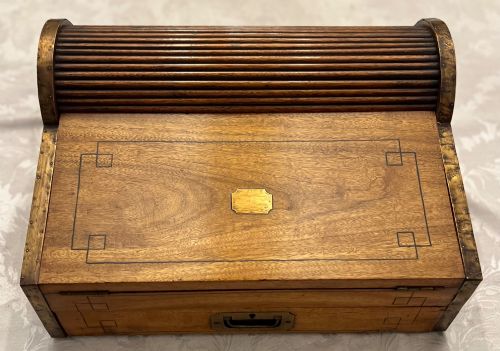
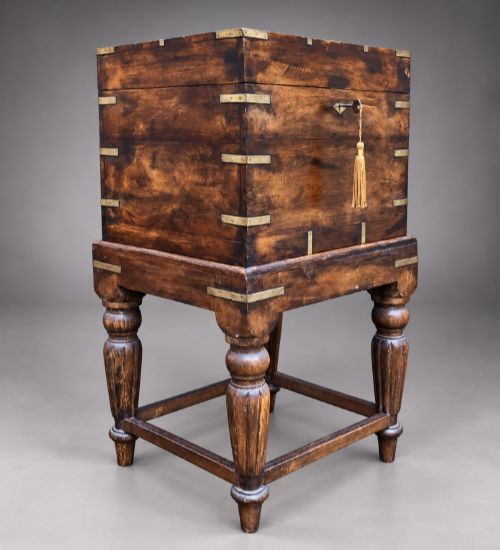
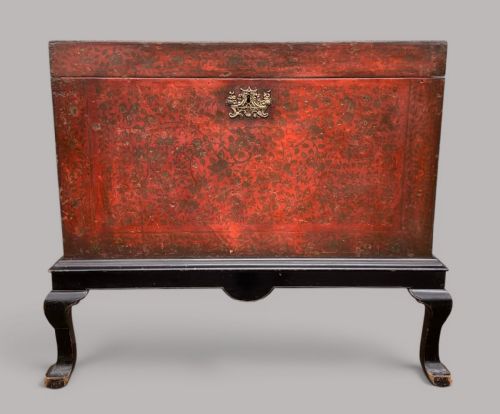
Alongside large trunks, you find specialised forms such as cellarettes, dowry chests, and miniature military writing boxes. Dating predominantly from the Victorian era and the broader nineteenth century, these objects reflect a distinct crossover of British military requirements and Indian cabinet-making skills.
Materials and construction
Maker workshops utilised durable tropical hardwoods including camphor wood, teak, padouk, and satinwood to withstand humid climates and constant transit. Camphor wood was particularly favoured for chests because its natural scent repelled insects from stored textiles and documents.
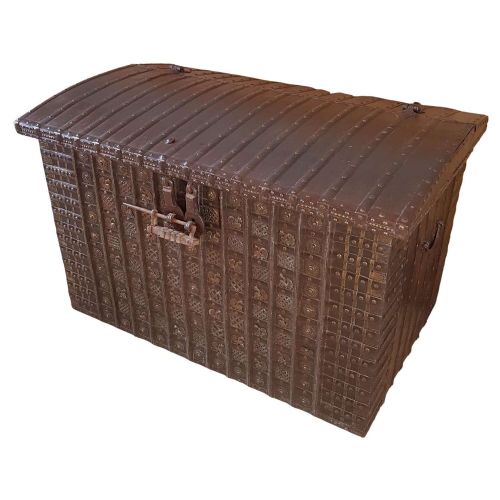
Sheet brass, straps, and corner brackets were fastened to the timber frames using numerous small pins or studs to reinforce joints against heavy handling. Iron banding also appears on select dowry chests and coffers, adding structural rigidity to the heavier storage forms.
Indian Brass Box Retail Price Guide 2026
Typical asking prices for indian brass box among the pieces listed under this phrase on Sellingantiques today, from the lower quarter to the upper quarter. They describe what is for sale here now, not the wider market.
The listings here span the nineteenth century, featuring teak, camphor wood, padouk, and iron-banded storage forms.
Quality variations
The distinction between ordinary utility pieces and superior examples rests on the precision of the brass inlay, the intricacy of the corner bracing, and the selection of the timber grain. Finer boxes display heavier gauge brass plates meticulously flush-fitted into the wood rather than simply nailed to the surface.
Internal arrangement and secondary woods further separate standard trunks from exceptional pieces. Superior writing boxes and correspondence chests feature fitted interior compartments, secret drawers, and secondary hardwoods like ebony, whereas basic storage trunks remain plain inside.
The Indian Brass Box Glossary
- Campaign chest
- A modular chest of drawers or storage box built in sections with recessed brass handles and corner protectors to facilitate transport by military officers.
- Zanzibar chest
- A heavy hardwood storage chest featuring elaborate brass stud work, strapwork, and often a concealed interior compartment known as a secret till.
- Cellarette
- A lockable container designed specifically to hold wine bottles or decanters safely during travel or dining use.
- Damchiya
- A traditional Indian dowry chest or cabinet featuring panelled construction and decorative metalwork.
- Padouk
- A dense, heavy tropical hardwood prized for its reddish-brown colour and stability in various climates.
Indian Brass Box: Frequently Asked Questions
What are indian brass boxes made from?
These pieces combine tropical hardwoods such as camphor wood, teak, padouk, and satinwood with structural brass mounts, straps, and corner brackets.
Iron banding and studs also appear on specific heavy-duty transport and dowry chests to provide extra reinforcement.
How were these boxes originally used?
Officers and traders utilised campaign chests, writing boxes, and correspondence cabinets to transport personal documents, valuables, and clothing securely during nineteenth-century journeys.
Larger blanket boxes and Zanzibar chests served permanent storage functions in colonial homes for textiles and family possessions.
How do I identify a nineteenth-century piece?
Look for period construction methods including hand-cut dovetail joints, thick timber boards, and genuine patination on the brass mounts.
Nineteenth-century items often exhibit the characteristic aroma of camphor wood or the deep reddish tones of padouk and teak.
How do I care for a camphor wood chest?
Keep the wood away from direct heat sources and sudden temperature fluctuations to prevent the timber from splitting.
Clean the brass mounts gently with a dry cloth and avoid harsh chemical polishes that can stain the surrounding hardwood.