

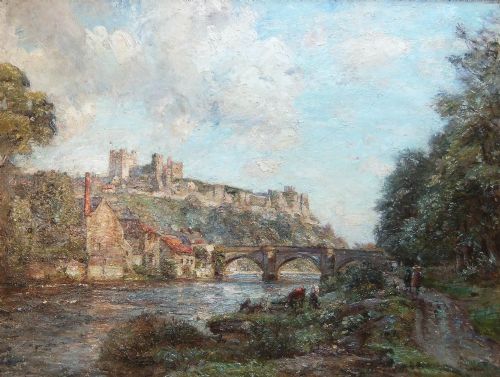


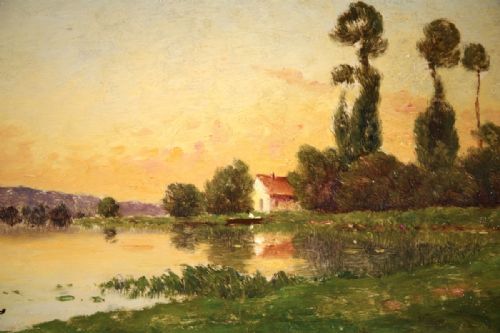


Impressionist River Scene Painting
An impressionist river scene painting captures shifting light on water through loose brushwork and vibrant tones, offering a timeless window into pastoral and urban waterways.
Impressionist River Scene Painting
An impressionist river scene painting depicts natural waterways, bridges, and riparian life through expressive brushstrokes that capture atmospheric effects. The inventory ranges from nineteenth-century British watercolours to mid-century French and Dutch canvases.
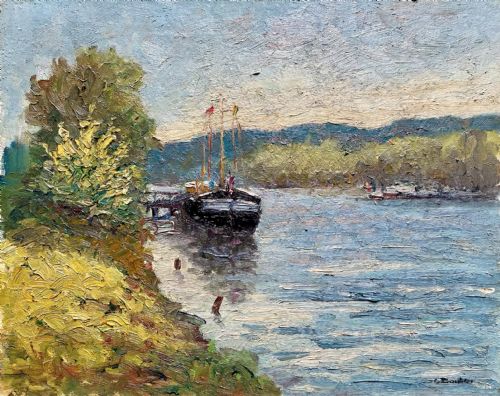
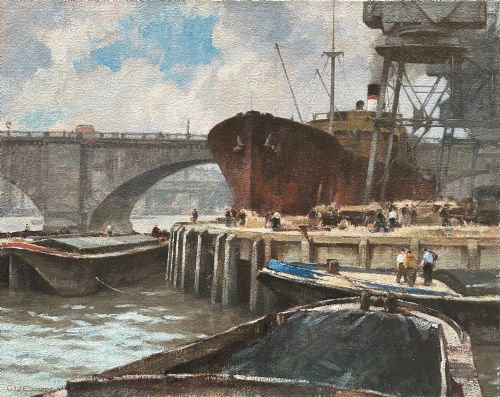
Most examples originate from the nineteenth and twentieth centuries, produced across Britain, France, and the Netherlands. These works frequently feature motifs such as fishermen, barges, canals, and riverbanks rendered in oil or watercolour.
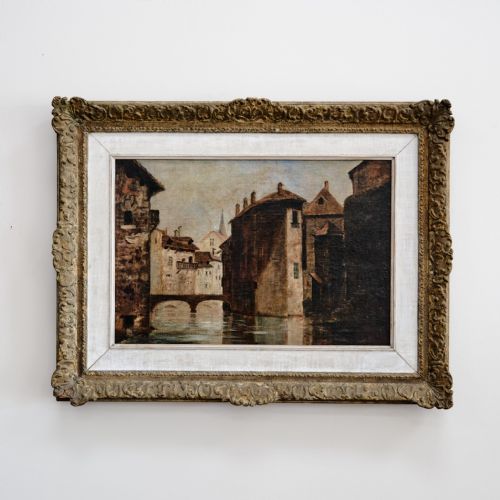
Buyers encounter both intimate wood panels and expansive canvases framed in period gesso. The selection spans distinct regional movements, including British Impressionism, Scottish painting, and French Post-Impressionism.
Materials and Technique
Artists painted primarily with oil on canvas or wood panel, applying pigment to capture transient effects of light and weather. Some works utilise watercolour on paper to achieve lighter, translucent effects.
Impasto techniques appear frequently across mid-century pieces, building thick textures of oil paint that catch the light physically. Supporting structures typically involve canvas stretched over wooden frames or rigid wood panels prepared with gesso.
Countless nineteenth-century artists packed folding easels and collapsible paint tubes to capture the exact second a fish broke the river surface.
Distinctions in Quality
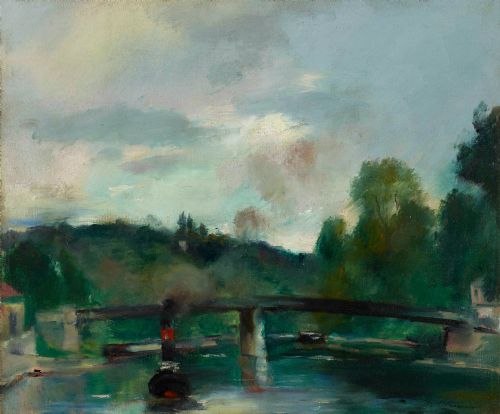
Quality rests upon the artist's handling of light, colour harmony, and spatial depth rather than mere subject matter. Superior compositions demonstrate confident, purposeful brushwork that defines water and atmosphere without excessive detailing.
The integration of the supporting material, whether canvas texture or wood grain, influences the tactile presence of the finished surface. Stronger works maintain compositional balance across the entire canvas, anchoring figures or boats naturally within the landscape.
George Graham·Cyril Walduck Edwards·Henri Ottmann·Herbert Royle·Florence Adelina Hess·Hubert Wellington·Honore Cavaroc·Archibald Kay·Henri Jaques Delpy·Arthur Herbert Rigg·Ron Folland·David Watts·William Grant Murray·Berthe des Clayes·Armand Guillaumin·William Tatton Winter·Edmond Defonte·Robert Lesley Howey·Henry Sykes·Alois Arnegger·Franz Reder Broili·George F Wetherbee
The Impressionist River Scene Painting Glossary
- Impressionism
- A nineteenth-century painting style focused on capturing the visual impression of the moment, particularly shifting light and ordinary subject matter.
- Impasto
- The process of laying paint thickly on a canvas so that it stands out from the surface, creating visible texture and depth.
- Gesso
- A white paint mixture consisting of a binder mixed with chalk, gypsum, or pigment, used to prepare wood panels or canvases for painting.
- Plein air
- Painting outdoors to capture direct observations of landscape and natural light directly upon the panel or canvas.
Impressionist River Scene Painting: Frequently Asked Questions
What defines an impressionist river scene?
These paintings focus on natural waterways and aquatic life using visible brushwork and keen attention to changing daylight. Artists sought to record fleeting atmospheric conditions rather than precise topographical details.
Subjects range from busy Parisian quaysides and commercial canals to quiet rural riverbanks with fishermen or moored boats. The emphasis remains firmly on light, reflection, and movement across the water's surface.
How do I date a river painting?
Dating relies upon stylistic markers, materials, and framing conventions associated with specific decades between the nineteenth and mid-twentieth centuries. Canvas types, stretcher construction, and artist signatures often provide clear chronological clues.
Mid-century works frequently display heavier impasto and brighter palettes compared to earlier Victorian watercolours or muted nineteenth-century oils. Documentation or signatures recorded on the reverse of the panel also help establish precise periods.
Where were these river scenes painted?
The works originate from diverse European artistic centres, documenting specific rivers including the Seine, the Thames, the Danube, and the Loire. Artists travelled extensively to paint specific regions known for particular qualities of light.
British and Scottish landscapes sit alongside French Normandy views and Dutch river scenes. Each location inspired distinct regional palettes and painting techniques among local artists.
How should I display a vintage painting?
Displaying these works requires stable indoor environments away from direct sunlight and excessive humidity to protect canvas, wood panels, and historic gesso frames. Proper wall placement ensures the piece remains safe from temperature fluctuations.
Lighting should enhance the brushwork and colour harmony without generating excessive heat close to the painted surface. Hanging the artwork at eye level allows optimal appreciation of the artist's handling of light and texture.