


Impressionist River Landscape Artwork
Impressionist river landscape artwork captures light and water across British and European waterways through painterly brushwork.
Impressionist River Landscape Artwork
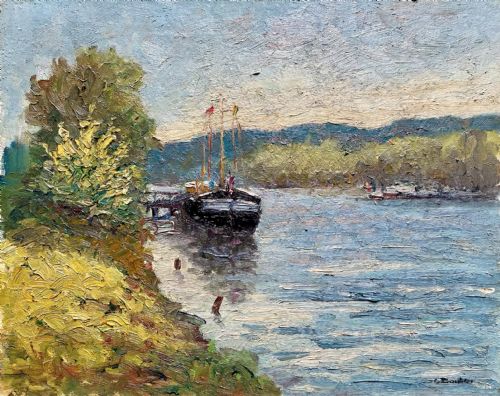
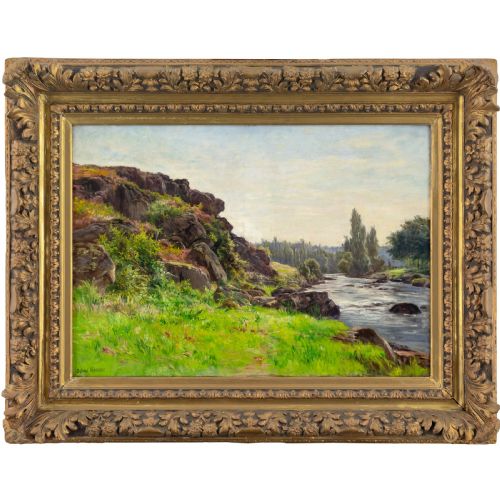
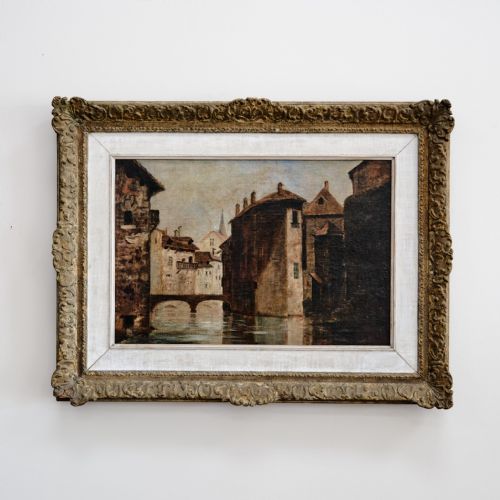
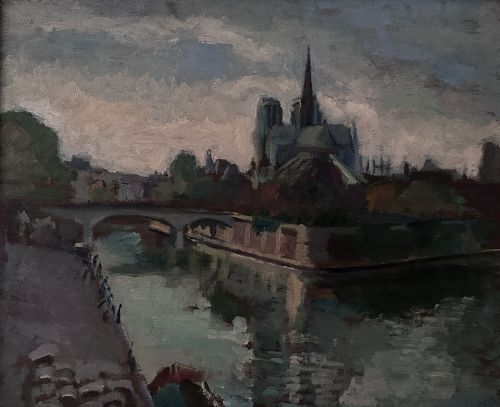
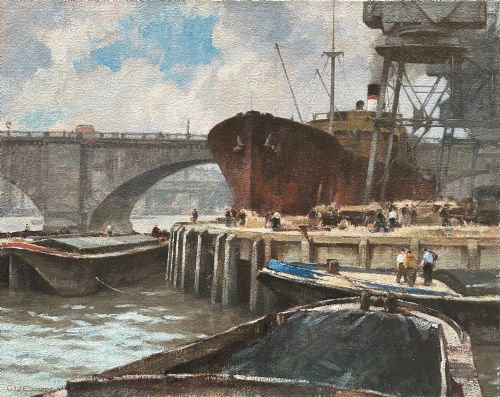
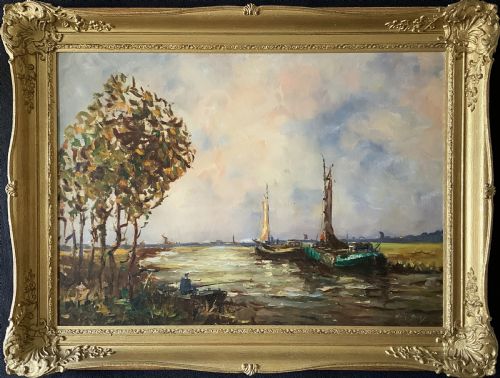
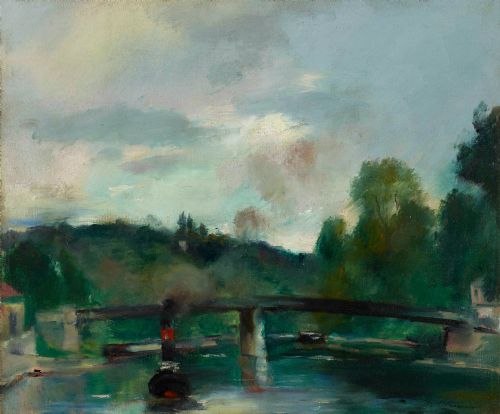
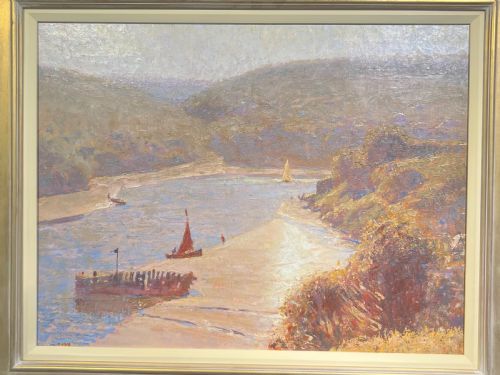
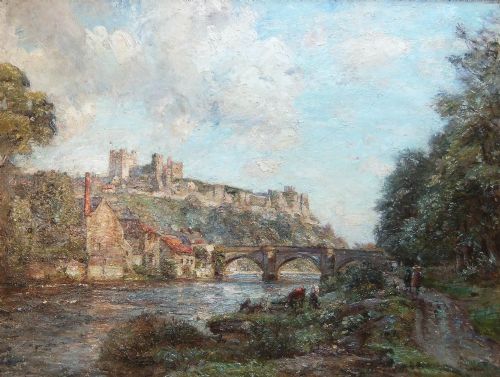
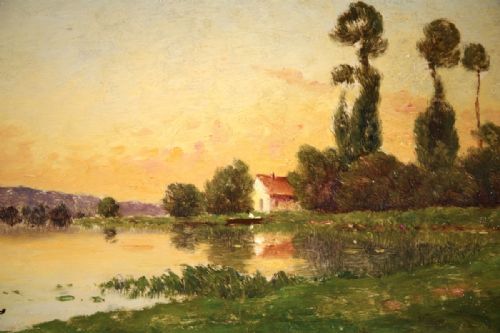
Impressionist river landscape artwork focuses primarily on water, bridges, and riverbanks captured through loose, expressive brushstrokes. These pieces typically depict scenes from British, French, and Dutch locations, ranging from quiet rural streams to bustling urban canals.
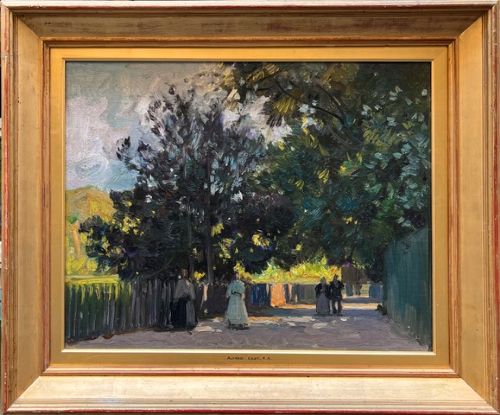
The most common examples on this page are oil paintings on canvas or wood panel, originating from the nineteenth and twentieth centuries. Buyers frequently encounter framed works displaying rural waterways, footbridges, and river paths executed in distinctive impressionist or post-impressionist styles.
Makers and artists represented span regional British painters, Scottish associates, and continental European schools working from the Victorian era through to the mid-century period. These works reflect changing light and atmospheric conditions along natural and industrial waterways alike.
How They Were Made
Artists painted primarily using oil paint applied to stretched canvas, wooden panels, or occasionally heavy paper support. The application involves varied brush techniques, from smooth blended strokes to thick impasto that creates tangible texture on the surface.
Supports often include prepared wood panels or primed canvases framed with gesso mouldings, sometimes finished with gilt accents. Watercolour on paper appears occasionally alongside the dominant oil medium for water-based landscape subjects.
Works originate from British, French, and Dutch schools working within impressionist and post-impressionist traditions.
What Varies In Quality
Quality rests in the handling of light and atmosphere, where confident brushwork conveys movement in water and sky rather than rigid photographic detail. The strength of composition and the artist's ability to capture transient weather conditions distinguish finer works from simpler decorative studies.
Condition of the physical medium matters greatly, particularly the stability of the oil paint layer, the absence of extensive retouching, and the preservation of the original wooden panel or canvas support. Original framing elements also contribute to the overall integrity of the piece.
Gabriel Mathieu·Cyril Walduck Edwards·Willem Bos·Henri Ottmann·Sir Alfred East·Cecil Allan Mould·Herbert Royle·Florence Adelina Hess·John Horace Hooper·Hubert Wellington·Honore Cavaroc·Archibald Kay·Charles Clair·Henri Jaques Delpy·Sir David Murray·Arthur Reginald Smith·Mario Pinetti·Arthur Herbert Rigg·Ron Folland·Owen Bowen·E A Minardo·David Watts·Maud Raphael Jones·Fred Stead·Phyllis Morgans
The Impressionist River Landscape Artwork Glossary
- Impressionism
- A nineteenth-century painting movement characterised by relatively small, thin, yet visible brush strokes and an emphasis on accurate depiction of light. It originated with a group of Paris-based artists whose independent exhibitions brought them to prominence.
- Impasto
- Paint applied thickly to a canvas, leaving the marks of the brush or palette knife clearly visible. This technique adds literal dimension and texture to water surfaces or foliage within a landscape.
- Gesso
- A plaster mix used as a base coat for painting on wood panels or canvas. It provides a smooth, stable surface for oil pigments.
- Post-Impressionism
- A predominantly French art movement that developed from about 1886 to 1905, extending impressionism while rejecting its limitations. Artists favoured more symbolic content, distinct brushwork, and geometric forms.
- Barbizon School
- A collective of French painters associated with the village of Barbizon near the Fontainebleau Forest, who championed tonal realism and direct observation of nature. Their outdoor studies influenced later impressionist approaches to landscape painting.
Impressionist River Landscape Artwork: Frequently Asked Questions
What subjects appear in these river landscapes?
Paintings show rural rivers, bridges, footpaths, and industrial canals across Britain and continental Europe. Common motifs include fishermen, barges, and waterways near cities like Paris or Rotterdam.
Scenes frequently capture specific times of day, such as morning light or autumn sunsets, reflecting the impressionist focus on changing atmospheric conditions.
Are these works painted on canvas or wood?
The pieces utilise both stretched canvas and solid wood panels as painting supports. Oil paint is the primary medium applied across these surfaces.
Some works also employ gesso priming beneath the oil layers to prepare the wooden or canvas base for pigment application.
How do I date an impressionist river painting?
Dating relies on artist biographical records, stylistic markers, and framing materials. Many works are signed by the artist or carry exhibition labels on the reverse.
Periods range from late nineteenth-century Victorian pieces through to mid-century modernist interpretations of European waterways.
How should I display an oil painting at home?
Oil paintings on canvas or panel benefit from stable indoor environments away from direct sunlight and excessive humidity. Proper hanging hardware attached to a secure wall ensures physical safety for the wooden stretcher or panel.
Allowing natural ambient light to strike the surface enhances the visible brushwork and impasto texture characteristic of impressionist artwork.