




Canvas Oil River Landscape
These canvas oil river landscape paintings capture flowing water and picturesque banks across the nineteenth and twentieth centuries.
Canvas Oil River Landscape
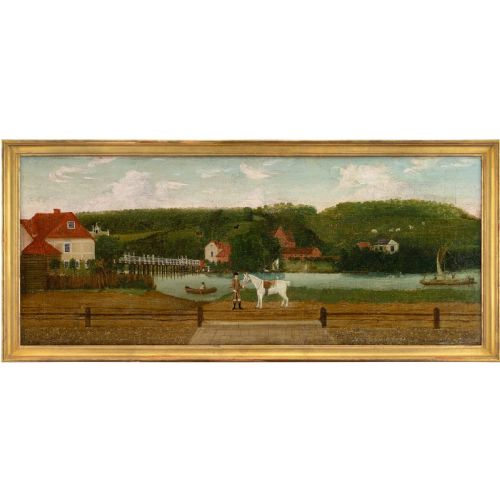
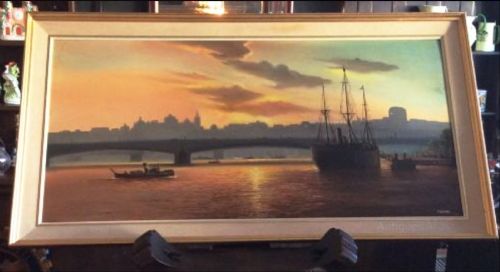
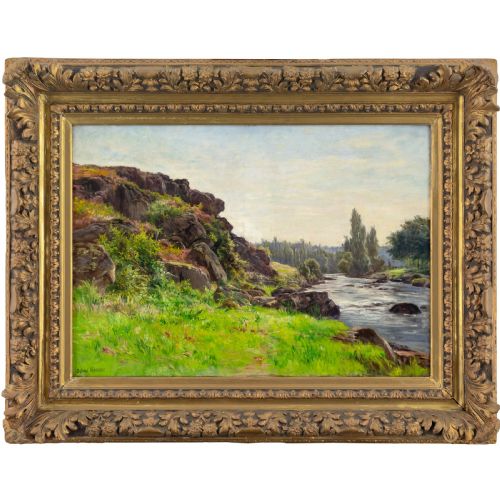
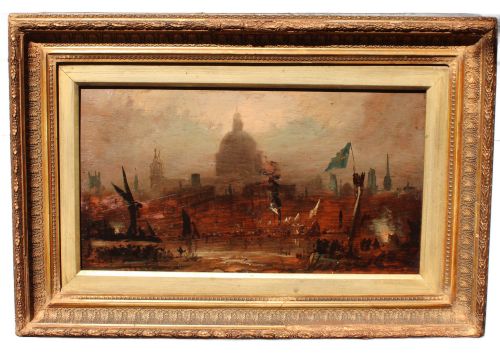
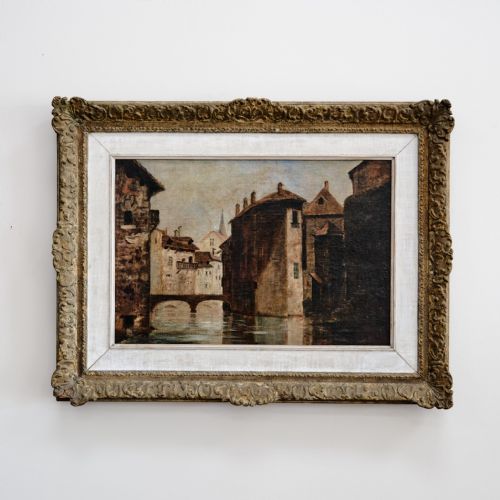
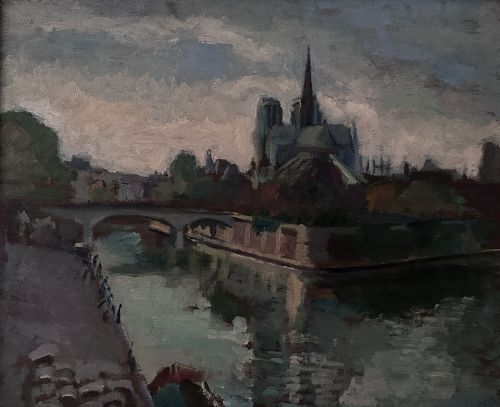
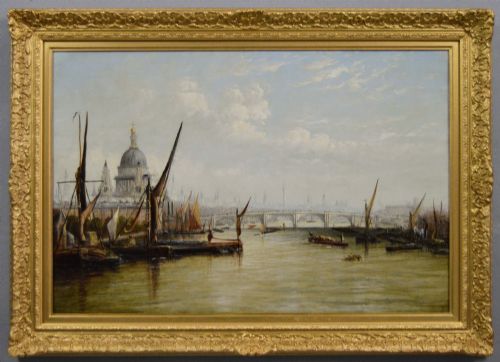
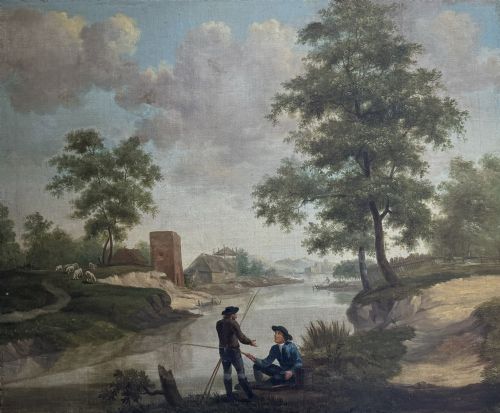
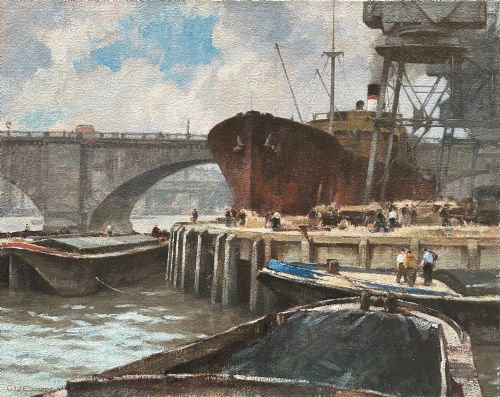
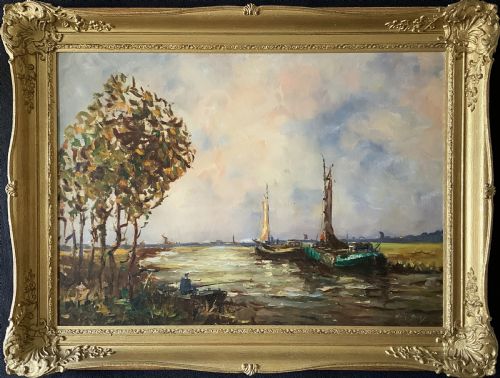
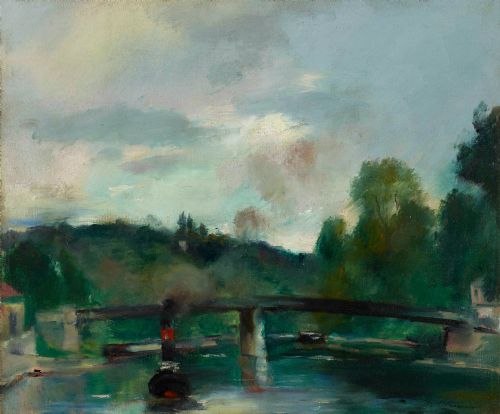
When searching for a canvas oil river landscape, a buyer encounters original framed works depicting waterways, bridges, and pastoral riverbanks. These paintings span from the Victorian period through to the mid twentieth century, featuring British, French, and Dutch scenes.
The most common pieces on this page are nineteenth-century British and European oil paintings on canvas or canvas board. They portray rural streams, busy urban rivers like the Thames, and quiet agricultural waterways.
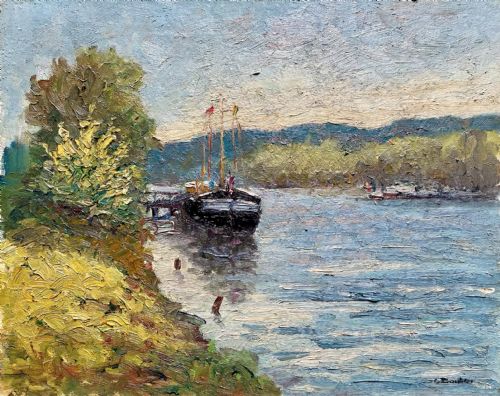
Works range from intimate river studies to expansive pastoral views created within artistic movements such as Romanticism, Realism, and Impressionism. Collectors find both signed professional works and atmospheric pieces from regional schools.
How They Were Made
Artists built these compositions using oil paint applied to stretched canvas, frequently supported by wooden stretchers or mounted onto board. Many works incorporate a prepared gesso ground beneath the pigment to seal the fabric and provide a stable working surface.
Brushwork varies from tight nineteenth-century academic realism to looser impressionistic strokes that capture the play of light on water. Surviving pieces are often housed in period wooden gilt frames adorned with decorative moulding.
Several river views hide tiny painted fishermen waiting patiently on the banks for a bite.
What Varies in Quality
Quality in these river scenes rests upon the artist's handling of atmospheric perspective and the natural movement of light across water. Superior examples demonstrate confident brushwork, a coherent palette, and a strong sense of depth within the landscape.
The sophistication of the composition and the subtlety of the colour harmonies distinguish master works from routine regional painting. Original period frames that complement the age and scale of the canvas also elevate the presentation.
Francis Moltino·Willem Bos·Sir Alfred East·Paul Désiré Trouillebert·Henry H Parker
The Canvas Oil River Landscape Glossary
- Canvas
- A heavy woven fabric stretched across a wooden frame to serve as a support for oil painting. It provides the primary textured surface for the majority of these works.
- Gesso
- A primer mixture of binder mixed with chalk or plaster applied to prepare a canvas for oil painting. This layer prevents the oil paint from rotting the fabric fibres.
- Barbizon School
- A French movement of painters who worked directly from nature during the mid nineteenth century. Their focus on rural riverbanks and atmospheric light heavily influenced later landscape painting.
- Impressionism
- An art style characterised by relatively small, thin yet visible brush strokes and an emphasis on accurate depiction of light. Artists applied these principles to capture transient effects on open-air waterways.
- Gilt Frame
- A wooden picture frame coated with gold leaf or metallic paint. These decorative surrounds protect the edges of the canvas and define the viewing window.
Canvas Oil River Landscape: Frequently Asked Questions
What periods do these river paintings represent?
The selection spans primarily from the early nineteenth century through to the mid twentieth century, encompassing Victorian, Edwardian, and mid-century modern eras.
Buyers will find nineteenth-century realism alongside impressionistic works from the early nineteen-hundreds and later twentieth-century interpretations.
Where were most of these landscapes painted?
Many works depict recognizable British waterways including the River Thames, the Tees, and various Yorkshire and Welsh rivers. European scenes featuring French rivers, Dutch canals, and Prague bridges also appear frequently.
Artists frequently painted en plein air along local riverbanks, capturing specific regional topography and architectural landmarks.
Are these paintings supplied with frames?
Many listings include period wooden frames, often featuring original gilt decoration that matches the age of the canvas. Specific framing details are noted in individual descriptions.
Buyers should examine the photographs to confirm whether a period frame accompanies the artwork.