





Riverbank Landscape Fine Art
Riverbank landscape fine art captures the quiet stillness of water and shore through the brush of nineteenth and twentieth-century painters.
Riverbank Landscape Fine Art
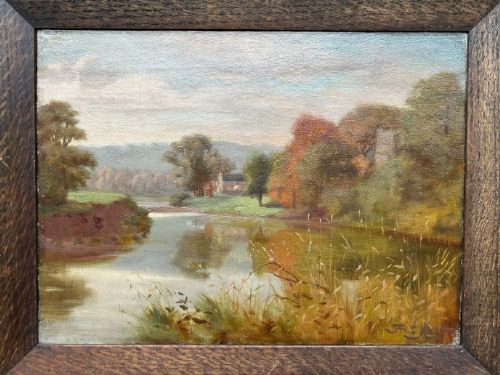
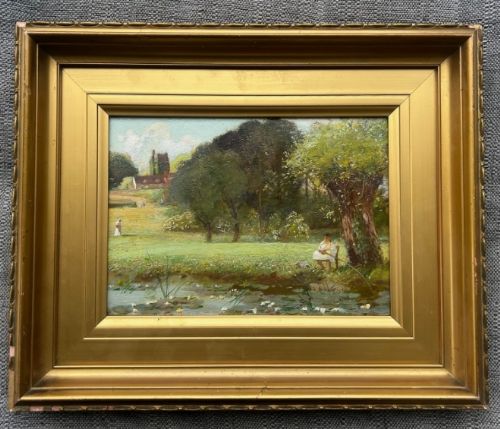
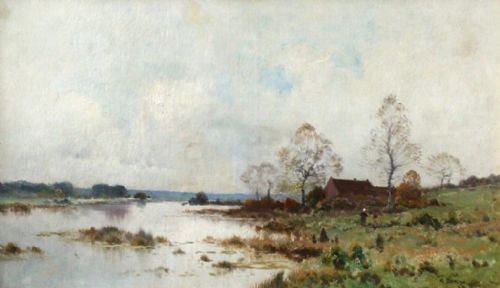
Riverbank landscape fine art encompasses oil paintings and watercolours depicting rivers, lakes, and water edges across various periods. These works capture scenes ranging from pastoral river fishing to figures gathered by the water.
The pieces on this page span the nineteenth century through the mid-twentieth century, showing shifts from Victorian naturalism to impressionist and mid-century interpretations. English country school and Barbizon influences appear alongside British impressionism.
Buyers will find works on canvas, wood panel, and paper, housed in traditional frames including oak. Some pieces bear signatures from known artists, while others remain atmospheric studies of water and light.
Materials and methods
Artists painted these riverbank scenes primarily using oil paint on canvas or wood panel, applying pigment to build texture and depth. A smaller number of works utilise watercolour on paper to capture the fluid quality of the subject.
Support materials range from stretched canvas to solid wood panels, often set within period frames made of oak or other timbers. The handling of the medium shifts from the tight detail of Victorian naturalism to the looser brushwork of impressionist schools.
Several artists could not resist painting cattle standing squarely in the middle of a peaceful riverbank view.
Quality and execution
Quality in these paintings rests on the artist's handling of light, atmosphere, and the reflective surface of the water. Stronger works demonstrate confident brushwork and a balanced composition that draws the viewer into the landscape.
The preservation of the paint surface and the originality of the mounting frame also influence the standing of a piece. Works by listed academic painters or signed examples generally command closer attention from collectors.
Frederick Marriott·Archibald Kay·Sir David Murray·Walter Follen Bishop·Phyllis Morgans·Pierre Emmanuel Eugene Damoye·T.B. Garvie·George Neil
The Riverbank Landscape Fine Art Glossary
- Wood Panel
- A rigid wooden support used as a base for oil painting instead of canvas. It provides a stable surface that allows for fine detail and enduring strength.
- Oil on Canvas
- A technique involving pigment suspended in drying oils applied to a woven fabric stretched over a wooden frame. This combination became standard for fine art paintings from the nineteenth century onward.
- Impressionism
- A nineteenth-century painting style focused on capturing the visual impression of a moment, particularly shifting light and natural scenes. Brushstrokes are typically visible and unblended.
- Barbizon School
- A French art movement of the mid-nineteenth century emphasising realism, naturalism, and plein-air painting of landscapes. Its influence spread widely among British and European painters of river and forest scenes.
Riverbank Landscape Fine Art: Frequently Asked Questions
How do I date an old river painting?
Dating relies on stylistic markers, framing materials, and the canvas preparation used by the artist. Signatures and biographical records of the painter provide the most secure timeframe.
Changes in artistic movements, from Victorian naturalism to mid-century impressionism, help place the work within a specific decade or era.
What is the difference between canvas and panel works?
Canvas paintings utilise stretched fabric over a wooden stretcher, offering a slightly resilient surface with visible weave texture. Wood panels provide a completely rigid support that often preserves fine detail exceptionally well.
Both supports were common across the nineteenth and twentieth centuries, chosen by artists depending on the desired scale and handling.
Are watercolours framed differently than oils?
Watercolour paintings require glass protection to shield the paper and pigment from atmospheric moisture and dust. They are typically mounted with paper mats inside glazed frames.
Oil paintings on canvas or wood do not require glass, allowing the textured surface of the dried paint to remain exposed to the air.
How should I clean an antique oil painting?
Surface dust can be gently removed with a very soft, dry brush by someone experienced in handling delicate art. Deeper cleaning or varnish removal requires a professional conservator to avoid damaging the original paint layers.
Keeping paintings away from direct sunlight and stable humidity levels prevents cracking and fading over time.