
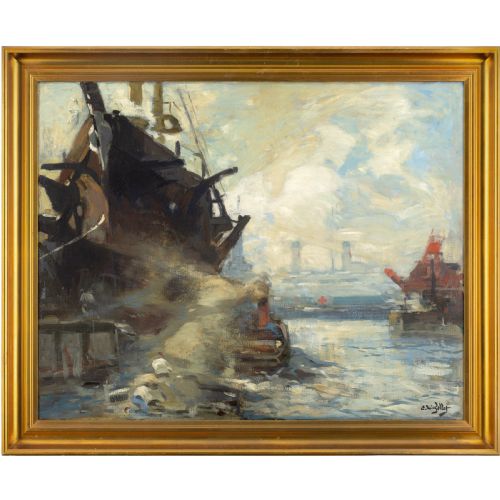
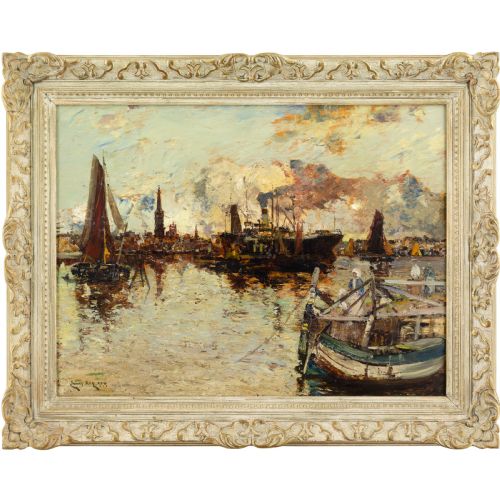
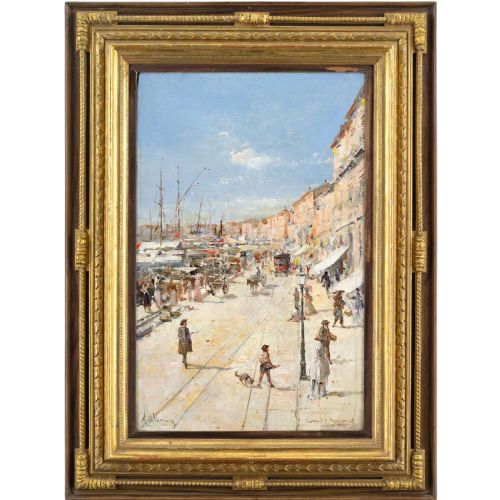
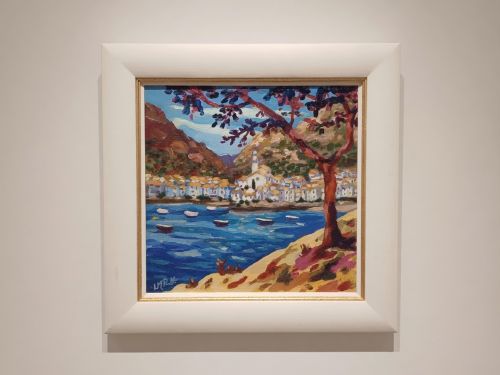
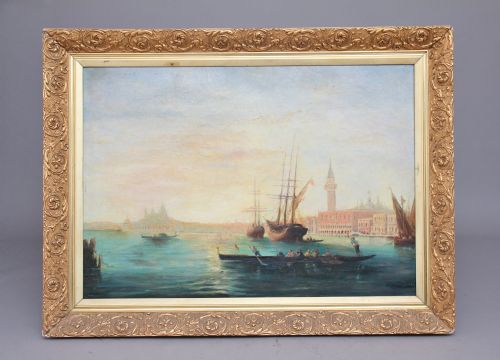
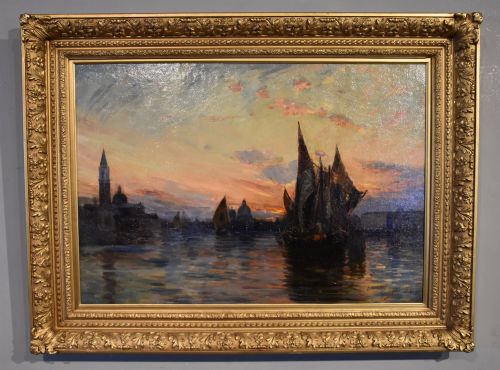


Impressionist Harbour Oil Painting
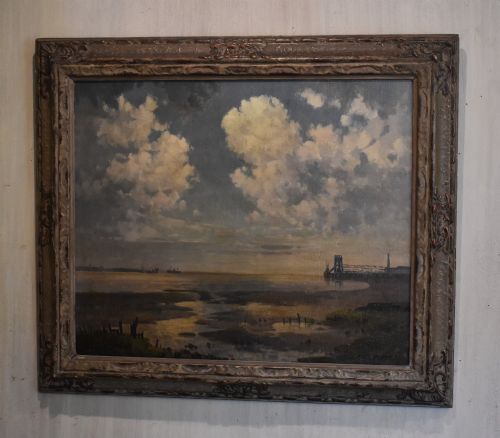
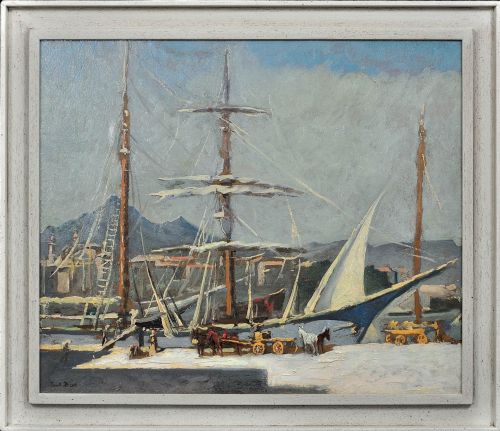
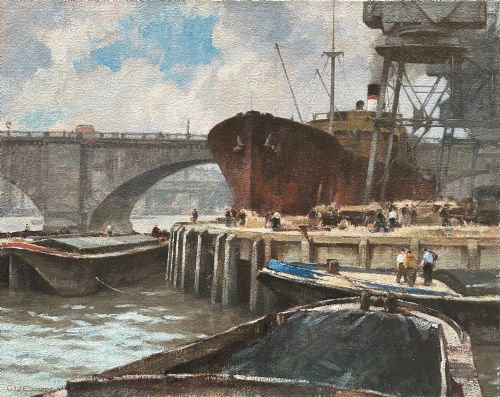
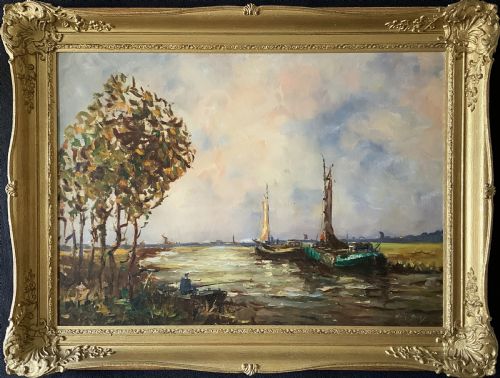
When you search for an impressionist harbour oil painting, you find works capturing maritime light and coastal life across Britain and Europe.
Impressionist Harbour Oil Painting
An impressionist harbour oil painting captures maritime scenes, coastal inlets, and working ports through loose brushwork and atmospheric colour. These works focus on the play of light across water, hulls, and stone quays rather than rigid architectural detail.
The pieces on this page span from the late nineteenth century through to the mid-twentieth century, with strong representation from British, French, and European coastal locations. You will frequently encounter Cornish fishing ports, Mediterranean anchorages, and busy northern waterways.
Common formats include canvas and board supports, often framed in period wooden mouldings that reflect the aesthetic of their decade of creation. Subjects range from quiet estuaries to bustling wartime ports and sunlit southern quays.
How They Were Made
Artists painted primarily with oil paint on prepared canvas or wooden board, applying pigment with loaded brushes or palette knives to build rich textures. This medium allowed painters to capture transient effects of weather and shifting tides in real time.
Support materials varied from traditional stretched linen canvas to sturdy wooden boards, occasionally accented with gold leaf details on the frame. The tactile application of oil paint created visible ridges and impasto that define the impressionist surface.
Listings feature oil paintings on canvas and board spanning periods from 1890 through the 1960s.
What Varies in Quality
Quality rests upon the artist's command of light and tonal balance, where superior works convey immediate atmospheric depth rather than static representation. Strong compositions manage complex reflections on water and structural perspective with confident, economical brushstrokes.
The harmony between the canvas and its period frame also influences the overall integrity of the piece. Works that retain their original integration of surface texture and housing offer a more complete historical record.
Eugène-Louis Gillot·James Kay RSW·Augusto Alberici·Lucy Pratt·Clive Browne·Paul Bret·Cyril Walduck Edwards·Willem Bos·Thomas Hodgson Liddell·Paul-Jean Anderbouhr·Edward Matthew Elliott·Gyrth Russell·Jean-Baptiste Olive·Raymond Picque·Fred Pailhes·George Turland Goosey·Doyly-John·Pauwels·Owen Bowen·William Lambert Bell·James Torrington Bell·Herbert Royle·Jack R Mould·Antonio Godoy·H. Hadfield Cubley
The Impressionist Harbour Oil Painting Glossary
- Impressionism
- A style of painting emphasising loose brushwork, open composition, and the accurate depiction of light in its changing qualities. This approach shifted focus from academic precision to sensory experience.
- Impasto
- The process of applying paint thickly on a canvas so that it stands out from the surface. Artists used this technique to render sparkling water and rough stone walls with physical presence.
- Post-Impressionism
- A subsequent artistic movement extending impressionism while rejecting its limitations. Painters explored vivid colours and expressive forms to structure their coastal subjects.
- Estuary
- The tidal mouth of a large river, where the tide meets the stream. These locations provided artists with shifting expanses of water and mudflats to study.
- Provenance
- The chronology of the ownership or location of a historical object. Documented origins help confirm the attribution and date of regional paintings.
Impressionist Harbour Oil Painting: Frequently Asked Questions
How do I date an impressionist harbour oil painting?
Dating relies on stylistic evidence, artist signatures, and framing methods typical of specific decades from the late nineteenth to the mid-twentieth century.
Changes in palette and brushwork also offer clues, moving from traditional realism towards freer post-impressionist and mid-century modern interpretations.
Where were these coastal scenes usually painted?
Painters worked across notable maritime hubs in Britain, such as St Ives, Whitby, and Mevagissey, as well as continental ports in France, Italy, and the Netherlands.
Artists frequently gathered in established art colonies to capture local fishing fleets, quaysides, and tidal estuaries.
Are these paintings executed on canvas or board?
Surviving works utilise both stretched canvas and rigid wooden boards as supports for the oil paint.
Board was often favoured for smaller plein-air studies, while larger finished exhibition pieces typically employed canvas.
How should I care for a vintage oil painting?
Keep paintings away from direct sunlight, high humidity, and rapid temperature fluctuations to protect the oil paint and wooden support.
Dust the surface gently with a soft, dry brush and avoid using liquid cleaners on the paint layer or frame.