





Impressionist Coastal Canvas
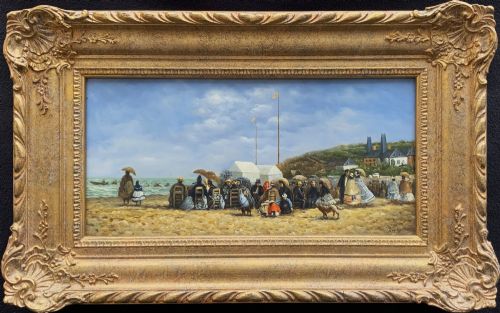
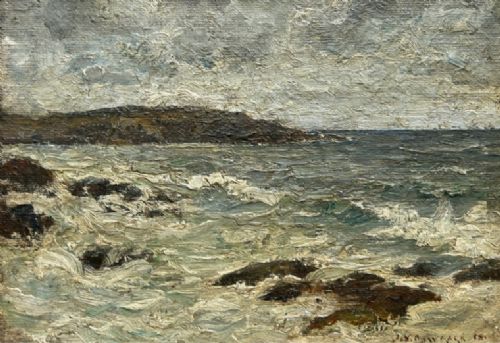
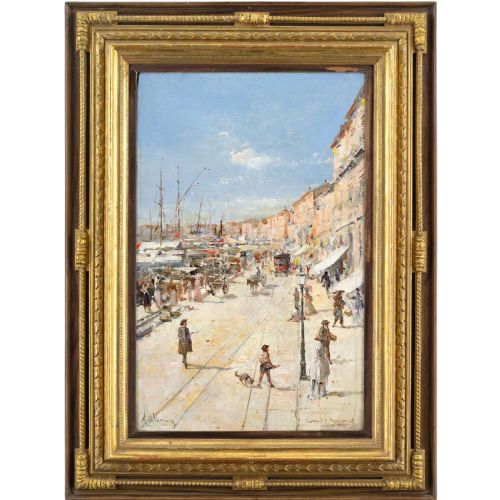
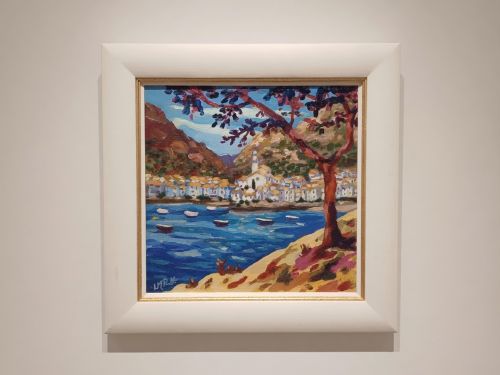
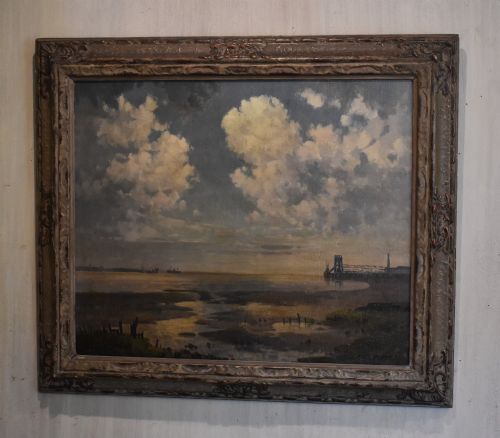
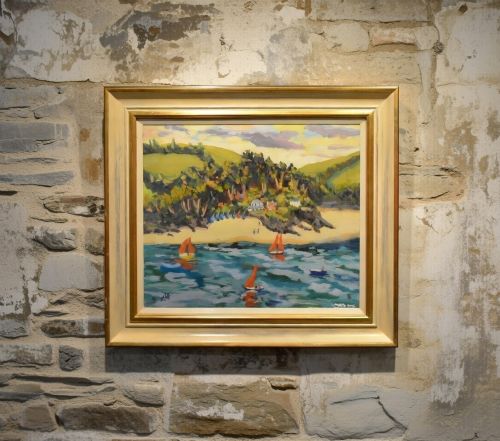
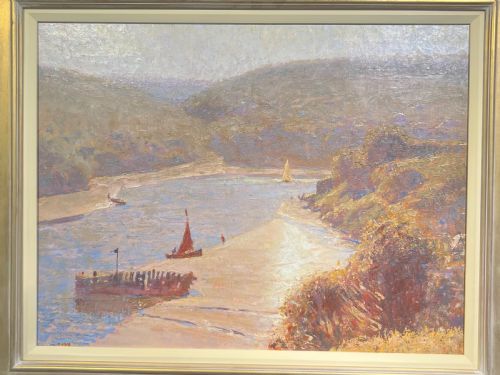
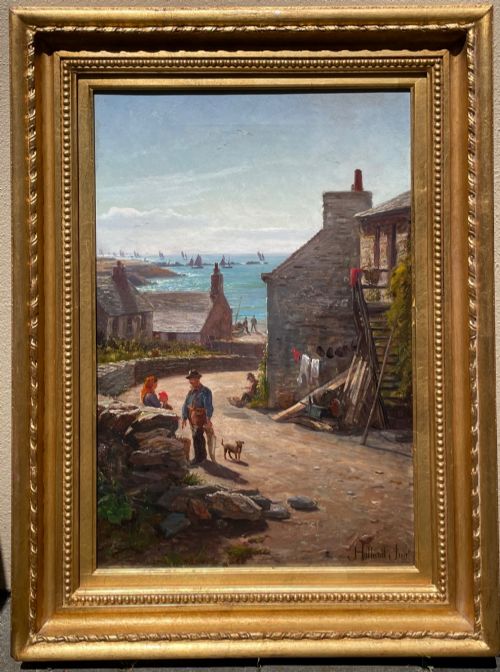
An impressionist coastal canvas captures the play of light and atmosphere by the shore, drawing collectors toward vibrant seascapes and harbour views.
How they were made
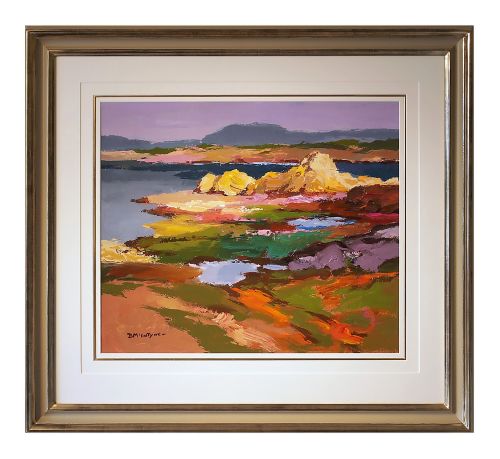
These works are executed in oil paint applied to stretched canvas, occasionally appearing on board or within textured print formats. Artists utilised visible brush strokes and impasto techniques to build surface texture and convey the shifting qualities of light on water.
Framing often incorporates wood and gold leaf surrounds that complement the palette of the oil paintings. The combination of pigment and canvas preserves the gestural marks made by painters working outdoors or in the studio.
What varies in quality
The strength of an impressionist coastal canvas lies in the handling of light and the surety of the brushwork. Works that successfully convey atmospheric conditions through decisive pigment application stand apart from more static compositions.
Surface preservation of the oil paint and the integrity of the original canvas support contribute to the overall standard of a piece. The quality of the accompanying wood frame and its harmony with the artwork also influence the presentation.
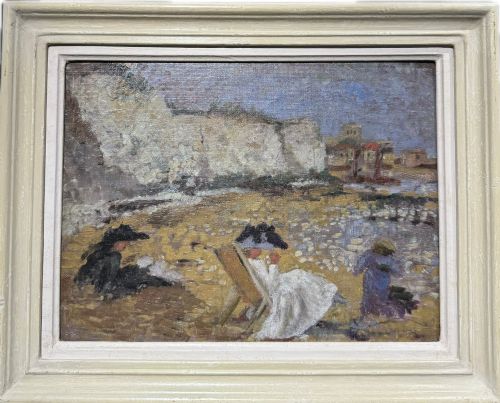
Several canvases record spirited holidaymakers sunbathing on cliffs long before modern beachwear existed.
Clifford Hanney·Augusto Alberici·Clive Browne·Paul Bret·Donald McIntyre·Cecil Allan Mould·Erich Mercker·John Holland·Raymond Moritz·Joseph Edward Hennah·Louis Suire·Gustave Vidal·Gyrth Russell·Jean-Baptiste Olive·Raymond Picque·George Turland Goosey·Norman Lloyd·Herbert Royle·William Greaves·Charles Malfroy·Edward Seago·C Caldwell·Roger de la Corbiere·Owen Bowen·Harry Pennell
The Impressionist Coastal Canvas Glossary
- Impressionism
- A nineteenth and twentieth century painting style focused on capturing light and fleeting moments through visible brush strokes. This approach prioritises overall atmospheric effect over tight academic detail.
- Impasto
- Paint applied thickly to a canvas so that the strokes stand proud of the surface. This technique adds tactile dimension and catches light across the painted scene.
- Post-Impressionism
- An art movement extending impressionist methods while exploring bolder structures and personal expression. Artists working in this manner often emphasised distinct outlines and symbolic colour.
- Marine landscape
- A genre of art depicting the sea, ships, coastal views, and maritime activities. These works document harbours, cliffs, and shoreline gatherings.
- Oil paint
- A slow-drying paint made with pigments suspended in a drying oil, typically linseed oil. It allows for rich blending, layering, and varied surface textures on canvas.
Impressionist Coastal Canvas: Frequently Asked Questions
What subjects appear in these paintings?
The works depict marine landscapes, harbours, beaches, and coastal cliffs. Scenes often include fishing boats, shipping activity, and figures near the shore.
Locations range from British coastal villages in Cornwall and Yorkshire to French ports along the Mediterranean and Atlantic coasts.
How do I date an oil painting?
Dating relies on recorded artist lifespans, stylistic indicators, and inscribed dates on the canvas or reverse. Comparative examination of framing materials also aids in establishing the period.
Mid-century examples often show distinct modernist influences, whereas works from the early nineteen hundreds retain traditional impressionist brushwork.
Where were these coastal scenes painted?
Artists worked across diverse European coastlines, recording specific harbours, estuaries, and seaside gatherings. Locations include St Ives, Mevagissey, Brittany, and various Sicilian ports.
Many practitioners travelled to coastal regions to capture direct observations of maritime light and tidal movement.
How should I display an oil painting?
Paintings on canvas benefit from stable indoor environments away from direct sunlight and excessive humidity. Proper wall placement protects both the oil paint and the supporting wood frame.
Matching the artwork with a suitable period or complementary frame enhances the visual impact of the coastal scene.