
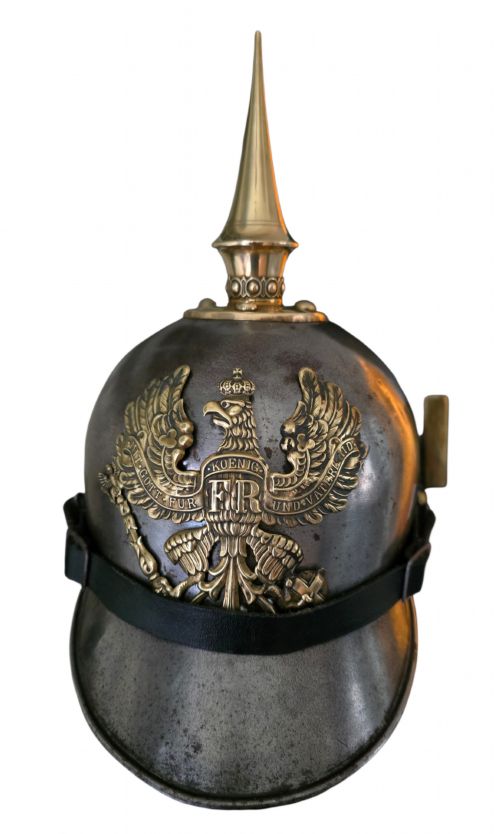


Imperial Prussian Helmet
An imperial prussian helmet is a commanding piece of military history, prized for its distinctive spiked profile and solid construction.
Imperial Prussian Helmet
When you search for an imperial prussian helmet, you encounter striking examples of military headgear from the nineteenth and early twentieth centuries. These helmets belong to the wider spectrum of imperial german military history, reflecting the structured discipline of the era.
The version you are most likely to meet on this page is the pickelhaube, frequently dated from the nineteen tens or the broader nineteenth century. These military helmets often display characteristic brass fittings and regimental plate details associated with the kaiserreich period.
How they were made
Makers constructed these helmets using durable materials like leather, boiled leather, and steel to provide robust protection in the field. Artisans reinforced the structure with heavy brass fittings and metal components to secure the iconic spike and chin scales.
Details such as horsehair, wool, and felt often lined the interior or adorned specific parade variants for officers and other ranks. Each material served a practical function, balancing rigid defence with the formal requirements of nineteenth century military uniform.
A proud spike stands ready to catch the eye, though its original owner probably ducked beneath low tavern doors.
What varies in quality
The distinction between a standard soldier helmet and an officers helmet largely determines the refinement of the materials and metalwork. Officer variants frequently display crisper detailing on the eagle plate and finer finishes across the brass fittings.
Preservation of the original boiled leather or steel shell alongside intact interior linings dictates the overall integrity of the piece. Helmets retaining their original horsehair or wool elements present a more complete historical record than those lacking these components.
The Imperial Prussian Helmet Glossary
- Pickelhaube
- A spiked helmet worn by nineteenth and early twentieth century German military forces. This term covers both enlisted personnel and officer variants.
- Kaiserreich
- The period of the German Empire spanning from eighteen seventy-one to nineteen eighteen. Items from this era carry distinct imperial symbolism.
- Boiled leather
- A hardened organic material shaped to form rigid protective headgear. This technique offered lightweight durability for military use.
- Brass fittings
- Metal attachments fixed to helmets for structural reinforcement and ornamentation. These elements include front plates, spikes, and trim.
Imperial Prussian Helmet: Frequently Asked Questions
What is a pickelhaube?
A pickelhaube is a spiked military helmet worn by German forces during the nineteenth and early twentieth centuries. It served as standard headgear for infantry and cavalry units.
These helmets evolved through several model changes, reflecting shifts in military tactics and imperial design. They remain central to collections focusing on imperial german history.
How do I identify an officer helmet?
Officer helmets typically feature finer metallic components and upgraded insignia compared to standard soldier issues. The construction often incorporates superior materials and more intricate cockades.
Examining the interior lining and the quality of the brass fittings helps distinguish higher-ranking examples from routine military headgear.
What materials were used?
Builders relied heavily on leather, boiled leather, and steel to form the protective shell of the helmet. These materials were chosen for their strength and resilience.
Additional elements like brass, wool, horsehair, and felt completed the exterior ornamentation and interior comfort. Each material contributes to the historical authenticity of the piece.
How should I display my helmet?
Displaying these helmets requires stable support that avoids putting undue stress on the leather or interior lining. Keeping them away from direct sunlight preserves the original materials.
Maintaining a stable room temperature prevents the boiled leather and fabric components from drying out over time.