
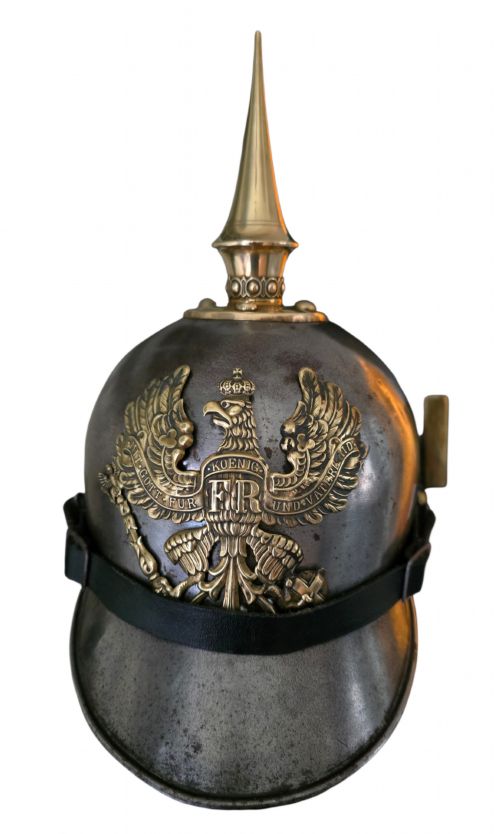


Brass Prussian Helmet
These brass prussian helmet examples are historic military headgear carrying distinct Imperial German style, prized by collectors for their striking spiked appearance and rich heritage.
Brass Prussian Helmet
When you search for a brass prussian helmet, you are looking at military headgear originating from the Imperial German and Kaiserreich periods. These pieces span from the mid nineteenth century through the early twentieth century, including examples from the First World War.
The versions you are most likely to meet on this page include the iconic pickelhaube helmet featuring brass fittings alongside other military headgear forms. They originate primarily from the 1860, 1870, 1900, and 1910 periods, as well as the broader nineteenth century.
How they were made
The construction of these pieces relies heavily on robust metals and moulded hides, specifically combining brass components with leather and boiled leather foundations. Additional structural and decorative elements incorporate steel, felt, wool, and fabric.
Makers utilised horsehair for specific crests and plumes on certain officer and other ranks variants. This combination of materials created durable military headgear designed for both ceremonial use and field service.
Materials documented across these pieces include brass, leather, horsehair, boiled leather, steel, felt, wool, and fabric.
What varies in quality
The distinction between standard soldier pieces and officer grade variants largely determines the refinement of the metalwork and the finishing of the leather body. Superior examples display crisper detailing on the brass plates and finer integration of the fittings.
Preservation of the organic materials such as leather, felt, and horsehair significantly impacts the overall integrity of the helmet. Pieces that retain their original structural form without excessive replacement parts command greater interest from discerning collectors.
The Brass Prussian Helmet Glossary
- Pickelhaube
- A spiked military helmet worn by nineteenth and early twentieth century German soldiers, firemen, and police. This form is the most recognisable style associated with the search phrase.
- Kaiserreich
- The German Empire period spanning from 1871 to 1918. Items from this era reflect the military organisation of Imperial Germany.
- Boiled leather
- Leather that has been hardened by immersion in hot water or wax. This technique provided rigid protection for military headgear before modern composite materials.
- FR plate
- A specific state or regiment front plate insignia found on Imperial German helmets. These brass emblems denote the specific unit or loyalty of the wearer.
Brass Prussian Helmet: Frequently Asked Questions
How do I date a helmet?
Dating involves examining the specific model type, structural materials like boiled leather or steel, and associated brass plates. Imperial German military headgear evolved significantly between the 1860s and the First World War.
Maker markings, unit stamps, and the evolution of the metal fittings provide further clues to the exact period of manufacture.
Were these helmets made of brass?
The helmets incorporate brass primarily for their distinctive front plates, spikes, chin scales, and trim fittings. The main body of the helmet itself was typically constructed from leather, boiled leather, or later steel.
This combination ensured the headgear remained relatively lightweight while displaying polished metal ornamentation for parades and service.
What is the Kaiserreich period?
The Kaiserreich period refers to the German Empire lasting from 1871 until the end of the First World War in 1918. Military equipment from this era standardises many of the classic Prussian helmet designs.
Collecting items from this timeframe allows enthusiasts to study a rapidly changing era of military history and uniform design.